

Psalm 31:1–5, 15–16 • Acts 7:55–60 • 1 Peter 2:2–10 • John 14:1–14
Our theme for today is Jesus is the way to the Father. In our call to worship passage the psalmist finds God’s love to be his true rock and refuge. In Acts Stephen witnesses the glory of Jesus and the Father, even as he faces his own martyrdom. In Peter, the “rock” imagery continues as Peter points out that Jesus is the Rock our faith is built upon. And in our gospel passage for today Jesus comforts his disciples at the last supper.
Reminder: This introductory paragraph is intended to show how the four RCL selections for this week are connected and to assist the preacher prepare the sermon. It is not intended to be included in the sermon.
How to use this sermon resource.
Jesus Is the Way to the Father
John 14:1–14 ESV
“Let not your hearts be troubled. Believe in God; believe also in me. In my Father’s house are many rooms. If it were not so, would I have told you that I go to prepare a place for you? And if I go and prepare a place for you, I will come again and will take you to myself, that where I am you may be also. And you know the way to where I am going.”
Thomas said to him, “Lord, we do not know where you are going. How can we know the way?” Jesus said to him, “I am the way, and the truth, and the life. No one comes to the Father except through me. If you had known me, you would have known my Father also. From now on you do know him and have seen him.”
Philip said to him, “Lord, show us the Father, and it is enough for us.” Jesus said to him, “Have I been with you so long, and you still do not know me, Philip? Whoever has seen me has seen the Father. How can you say, ‘Show us the Father’? Do you not believe that I am in the Father and the Father is in me? The words that I say to you I do not speak on my own authority, but the Father who dwells in me does his works. Believe me that I am in the Father and the Father is in me, or else believe on account of the works themselves.
“Truly, truly, I say to you, whoever believes in me will also do the works that I do; and greater works than these will he do, because I am going to the Father. Whatever you ask in my name, this I will do, that the Father may be glorified in the Son. If you ask me anything in my name, I will do it. John 14:1–14 ESV
On the night before Jesus is arrested and executed on a cross, Jesus begins with these words: “Let not your hearts be troubled. Believe in God; believe also in me.”
Jesus has just shared a final meal with his closest followers, the 12 disciples. During that meal, he told them that one of them would betray him, that he was going away, and that they could not follow him where he was going — at least not yet.
For his disciples, this must have been shocking and frightening. They had left their jobs and families to follow Jesus. They believed he was the one who would change everything. Now he is talking about leaving them.
They don’t yet understand that he is about to be crucified. They don’t understand resurrection. All they likely feel is confusion and fear.
In John 14 Jesus speaks into that fear. This passage is a deeply personal moment — a teacher comforting his devastated friends on the worst night of their lives.
Jesus explains that his leaving is not abandonment. It is purpose. It is preparation. It is love moving toward completion. And he begins with comfort.
Let not your hearts be troubled. John 14:1 ESV
The trouble is real; pain is coming. But Jesus speaks directly into it. Do not let fear be the final word.
And that message is true for us too. Don’t be troubled because Jesus is the way to the Father.
He reassures them that their relationship with God is secure, and that their life with him is not ending.
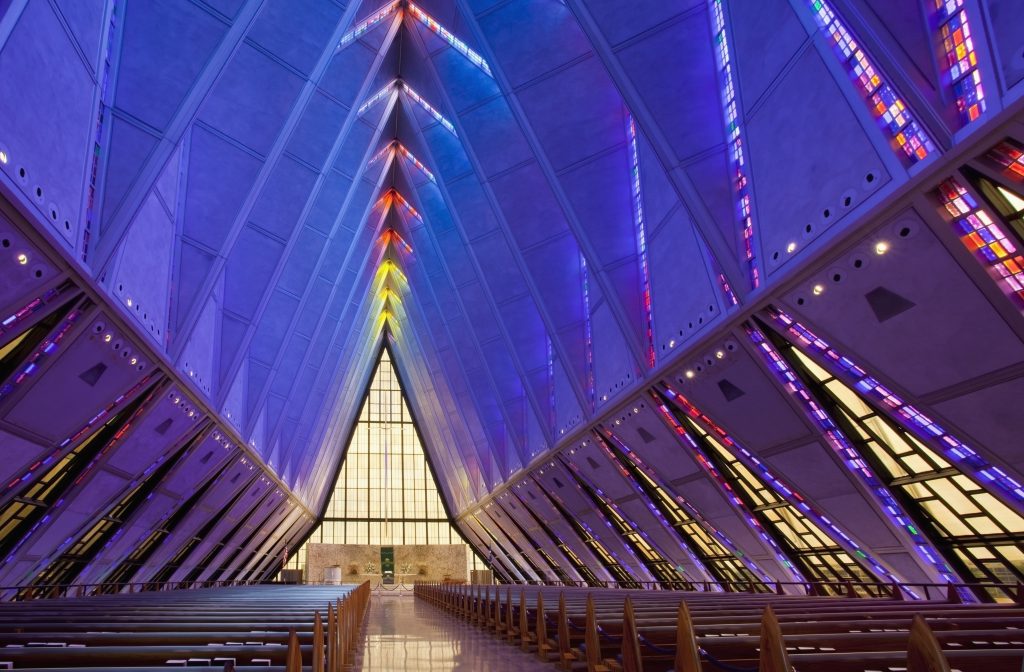
Many Rooms
In this passage, Jesus tells them not to be troubled because he is going to the Father to prepare a place for them.
My Father’s house has many rooms… I am going there to prepare a place for you. John 14:2 ESV
Jesus uses an image they would recognize: a family home expanded over time to make room for more loved ones. The typical first-century home in Palestine consisted of a number of rooms, built around a common center courtyard. As the family grew, each son would add or “prepare” a room for his wife and future children.
This was the custom of the day, and disciples would have immediately understood the reference to the father’s house.
It’s a way of saying that his leaving is not abandonment — it is preparation. He is going ahead of them to make sure they belong, that they will be received, that their future with God is secure.
And Jesus promises his followers that they will be with him again. “Where I go, you may be also.”
Jesus is the way to the Father.
So, in simple terms, Jesus says: “You have a future with God. You have a place. I’m going ahead to make sure of it.”
He assures his followers that their relationship with God is not fragile or temporary — it is secure and prepared by Jesus himself. “I’m going to the Father, and you will be with the Father also.”
This is exactly where the good news of this passage comforts us too.
When Jesus says he is “going to prepare a place,” he is talking about what he is about to do through his death, resurrection, and ascension.
He goes ahead of us by going into death itself.
On the cross, Jesus steps into everything that separates us from God — our sin, our guilt, our fear, even death. He carries it. He exhausts it. He breaks its power. His death is not an accident; it is him clearing the road home.
Then, in the resurrection, death does not hold him. He comes out the other side alive. Not just resuscitated — but risen into a new, indestructible life.
Jesus “prepares a place” by making a way where there was no way. He makes room by giving himself. He opens the way by passing through the grave.
Because he entered death and overcame it, our death is no longer a wall. It becomes a doorway. Because he lives, we are promised resurrection.
And when he ascends to the Father, he goes as one of us — still human — bringing our humanity into the very life of God. We are in union with Jesus, so when Jesus ascended, we ascended with him.
So, the good news is this:
Jesus does not simply tell us there is room in the Father’s house.
He makes room.
He secures it with his own life.
He goes ahead of us through the worst that can happen — and comes back to say, “You will come through too.”
I will take you to myself, that where I am you may be also. And you know the way to where I am going. John 14:3–4 ESV
We know the way to where Jesus is going because he is the way. Jesus is the way to the Father.
Our future with God is not wishful thinking.
It rests on something that has already happened:
Christ has died. Christ is risen. Christ has gone ahead.
And because of that, death is not the end of our story.
Life with God is.
The Way, the Truth, and the Life
Thomas, honest as ever, interrupts.
“Lord, we do not know where you are going. How can we know the way?”
And Jesus answers with one of the most important sentences in the New Testament:
I am the way, and the truth, and the life. No one comes to the Father except through me. John 14:6 ESV
Notice what he does not say.
He does not say, “I will show you the way.”
He does not say, “I will teach you the truth.”
He does not say, “I will give you life.”
He says: I am.
The way is not a map. The truth is not a concept. The life is not an abstract spiritual force.
It is a person.
Jesus is saying: If you want to come to the Father, you come through me — because the Father and I are not separate projects.
If you had known me, you would have known my Father also. From now on you do know him and have seen him. John 14:7 ESV
Philip still struggles.
Lord, show us the Father, and it is enough. John 14:8 ESV
And Jesus replies with tender frustration:
Have I been with you so long, and you still do not know me? Whoever has seen me has seen the Father. John 14:9 ESV
This is where we step into the mystery and beauty of the Trinity. That sentence opens the door to the Christian understanding of the Trinity.
There is one God, not three gods.
The Father is God.
The Son (Jesus) is God.
The Holy Spirit is God.
Yet the Father is not the Son, the Son is not the Spirit, and the Spirit is not the Father. They are distinct Persons, but they share one divine life.
So, when Jesus says, “I am in the Father and the Father is in me,” he is describing this eternal, living communion within God himself. The Father loves the Son. The Son loves the Father. The Spirit is the bond of that love. There has never been a moment when the Father existed without the Son or the Spirit. God has always been relational.
This means their unity is not merely cooperation — like two people agreeing on a plan. It is deeper than agreement. They share the same being, the same divine life, the same glory. What the Father wills, the Son wills, and the Spirit empowers. What the Son does by the Spirit, the Father is doing. There is no rivalry, no tension, no division.
And this triune nature of God is good news for the Church. It means that God is love in his very being — not lonely power, but eternal relationship.
Salvation is not just rescue from sin; it is being drawn into the shared life of Father, Son, and Spirit. The unity of the Church reflects the unity already present in God.
When Jesus says, “I am in the Father and the Father is in me,” he is inviting us to see that in him, the inner life of God has come near. And through him — by the Spirit — we are welcomed into that communion.
So, the Trinity is the deep reality that God is eternally loving communion — and in Christ, we are brought into that love.
Knowing Jesus is the same as knowing God because he and the Father are one. He also promises that those who believe in him will continue his work and can pray in his name, and he will act so that God is glorified.
Jesus reassures his followers that he is the only way to God, that he perfectly reveals who God is, and that those who trust him will have ongoing access to God and continue his mission through prayer and faith.
Jesus is the way to the Father.
Anything in my name
Taken out of context John 14:14 can sound like a blank check:
If you ask me anything in my name, I will do it. John 14:14 ESV
But in this passage, Jesus is not offering a formula for getting whatever we want. He is speaking about continuing the Father’s work through his followers.
Here’s how the context shapes the meaning: the conversation is about God’s work.
In verses 10–11, Jesus says the Father is doing his works through him.
In verse 12, he says those who believe in him will do those works too.
In verse 13, he says prayer in his name leads to the Father being glorified. In other words, the beauty and goodness of God is revealed.
So, the flow is:
The Father works through Jesus. Jesus’ followers continue that work. Prayer fuels that work. The result is the Father’s glory, the Father being made known to the world.
The focus is not private, individual wishes — it is participation in God’s mission.
In the ancient world, someone’s “name” represented their authority, character, and will. So, to pray “in Jesus’ name” is to pray in alignment with who Jesus is and what he’s doing, and in alignment with the Father’s purposes
It’s prayer that is connected to the works of the Father revealed in Jesus — healing, reconciling, restoring, revealing truth, drawing people to God. Jesus is promising his power for his mission. So “that the Father may be glorified in the Son” (John 14:13 ESV).
Prayer in Jesus’ name is prayer that advances the visible beauty, mercy, truth, and saving work of God. When the church asks for boldness, wisdom, provision for ministry, healing, reconciliation, justice, or open hearts — those prayers align with the Father’s work in the Son.
Jesus, by the Spirit, empowers his people to carry forward his work in the world.
The risen Christ Jesus continues his work through his people, and the Father’s love is revealed.
Jesus is the way to the Father.
What can we, the Church, learn from this passage about being a sent people?
The Church will continue Jesus’ works.
The Church will do them in union with Jesus.
The Church will ask for God to be made known to the world, and Jesus will act.
The church is not a group of people trying to build a religious organization. It is a community participating in the ongoing mission of Jesus in the world.
When the church prays for what Jesus himself desires —
when we ask for courage to witness,
for love that crosses boundaries,
for healing in broken places,
for justice where there is oppression,
for hearts awakened to God —
we are praying inside the current of God’s own mission.
And Jesus promises to act.
How does this passage nourish our shared life as Jesus’ Body? How are we being shaped by this message?
-
- “Do not let your hearts be troubled.” Our peace flows from Jesus. We are being formed as a non-anxious presence in a fearful world.
- “I am the way, the truth, and the life.” Our identity flows from Jesus. We are being formed to live as people whose life belongs to the Father, in Jesus.
- “Ask in my name, and I will do it.” Our access to the Father flows from Jesus. We are being formed to become less self-reliant and more prayerful, expecting Christ to act among us. prayer is participation in Jesus’ ongoing work.
- “Whoever believes in me will also do the works that I do; and greater works than these will he do, because I am going to the Father.” Our participation in God’s work flows from Jesus. We are being formed as a community of witnesses.
Be encouraged.
This word first came to people with trembling hands and confused hearts. It was spoken to disciples who felt like the ground beneath them was giving way. And Jesus spoke into it: “Let not your hearts be troubled.” Not because trouble isn’t real — but because God is real.
So, when your life feels uncertain, when grief presses in, when the news makes your chest tight, when the church feels small or tired, when you wonder what comes next — hear Jesus say again: “Let not your hearts be troubled.”
You have a place.
You belong.
Your future with God is not fragile because Jesus has gone to the Father — and his going was not abandonment.
Jesus has prepared our place there. Jesus is in the Father, and the Father is in Jesus. They are one. Jesus has brought us into his relationship with the Father by the Spirit.
Jesus is the way to the Father.
Carlos Padilla—Year A Easter 5




Listen to audio: https://cloud.gci.org/dl/GReverb/GR075-Padilla-YearA-Easter5.mp3
Sunday, May 3, 2026 — Fifth Sunday of Easter
John 14:1–14 NRSVUE
CLICK HERE to listen to the whole podcast.
If you get a chance to rate and review the show, that helps a lot. And invite your fellow preachers and Bible lovers to join us!
Follow us on Spotify and Apple Podcast.
Program Transcript
Carlos Padilla—Year A Easter 5
Anthony: And let’s transition to the text that we’re here to discuss today. We’re in the month of May in terms of the pericopes. Our first passage of the month is John chapter 14:1–14. I’ll be reading from the New Revised Standard Version, the updated edition, which is the Revised Common Lectionary passage for the fifth Sunday of Easter, May 3.
Do not let your hearts be troubled. Believe in God; believe also in me. 2 In my Father’s house there are many dwelling places. If it were not so, would I have told you that I go to prepare a place for you? 3 And if I go and prepare a place for you, I will come again and will take you to myself, so that where I am, there you may be also. 4 And you know the way to the place where I am going.” 5 Thomas said to him, “Lord, we do not know where you are going. How can we know the way?” 6 Jesus said to him, “I am the way and the truth and the life. No one comes to the Father except through me. 7 If you know me, you will know my Father also. From now on you do know him and have seen him.” 8 Philip said to him, “Lord, show us the Father, and we will be satisfied.” 9 Jesus said to him, “Have I been with you all this time, Philip, and you still do not know me? Whoever has seen me has seen the Father. How can you say, ‘Show us the Father’? 10 Do you not believe that I am in the Father and the Father is in me? The words that I say to you I do not speak on my own, but the Father who dwells in me does his works. 11 Believe me that I am in the Father and the Father is in me, but if you do not, then believe because of the works themselves. 12 Very truly, I tell you, the one who believes in me will also do the works that I do and, in fact, will do greater works than these, because I am going to the Father. 13 I will do whatever you ask in my name, so that the Father may be glorified in the Son. 14 If in my name you ask me for anything, I will do it.
“Do not let your hearts be troubled.” It’s a bold and I think maybe even a potentially troubling statement during troubling times. Carlos, for me, it’s akin to when somebody says to me, “Don’t take this the wrong way….” Guess what? It has 0% chance of being successful. I’m already taking it the wrong way. So, when he tells us to not let our hearts be troubled, when it’s so troubling about us, is he setting us up for failure? Reveal something about Jesus’s authority and pastoral care here.
Carlos: Yeah. Oh, man. Talk about subversion when you meet Jesus, right? He’s the way, the life, and the truth as we just read. So, everything he says, everything he breathes, everything he eats, the way he walks is not only fulfillment of our humanity, but it also serves as a contradiction to what we think we believe about him, right? So, when I look at these with this statement, obviously there’s a lot there, but what Jesus is revealing to these — really just look at it.
He’s given the last call for alcohol. He’s about to walk into the crucifixion. He just washed the disciples’ feet, and they can’t understand that he’s leaving. And he’s confronting that. The disciples believe that the story’s ending, but what he’s really saying is no, it’s about to begin.
And what I’m about to do is going to subvert everything you think you know about God and me. And I know in that, and we’ll talk about this later, but in that day, you will know that I’m in the Father and he’s in me, and that we are one. And this is just and this is what revelation’s all about, where Jesus is not just trying to reveal something about himself, but reveal the Father and how the Trinity works in its essence and its oneness and its homoousion in life in live broadcasts.
What he’s talking about is the authority in the pastoral care; says that it starts with union. That the only thing that’s going to give you comfort past these days, even when you don’t understand that I’m not the God you think I’m going to be, I’m not the God who’s going overthrow the Romans, give people back the temple, and put prayer back in school, but rather, I’m going be the one who’s going to be crucified by humanity and use it for their subversion and their acceptance.
And in there, you’ll see that we are one. In there, you’ll know that I am the true God. In there, you’ll know that as he sent me, I send you. And in there, you’ll find everlasting life.
Anthony: Let me ask you this, how exclusive or expansive, or both is Jesus’ claim, “No one comes to the Father except through me?”
Carlos: Wow. If you would’ve asked me that a couple of years ago, I would be frightened to give an answer. Because that seems very exclusive, that it’s a narrow way, that the only way to the Father is through Jesus. And is that true? That’s absolutely 100% true. But growing up I was taught to read the Scriptures with an exclusive lens to see where the limitations of God’s mercy was, to see where God draws the lines between in and out. But now when you read this verse through a Christocentric lens or through a Trinitarian lens, and you know the inclusivity about what Jesus accomplishes for all mankind on the cross, united in his death, burial, and resurrection, ascension and co-seatedness, now this gives me a lot of hope, this verse. So, I don’t see this verse as exclusive anymore, but I see it as the most inclusive verse we have in our text. Because Jesus says, I’m the only way to the Father. Is that true? Yes. Is that an arrogant statement? Just so God’s favorites can go to heaven? No. What he’s saying is that there’s no other way to experience my relationship with God except through me.
Now the inclusivity comes; it is where the economy of what Jesus accomplishes on the cross and in his life, death, and resurrection, which I think TF Torrance would call the vicarious humanity of Christ, where he’s the representation for all of humanity, just as Adam was universal representation at one time, where there’s a greater representation and that’s the creator himself, Jesus Christ in the flesh burying our sin, but yet giving our perfect response back to the Father.
I believe that statement right there is no longer an exclusive thing where God’s trying to pick some or the others, but rather, in the light of what Jesus has done for all of humanity, it has to be the most inclusive and most engaging, and that right there is where the gospel reveals to the depths of my heart, the joy that God has from me without my permission, without my obedience, without my devotion, but in seeing that it actually transcends and supplies the obedience, the faith, and everything I need to experience this everlasting life.
Anthony: Yeah. You mentioned Jesus has the second Adam, and I think one of the questions we have to ask ourselves as followers of Jesus is, who do we put the weight on: the first Adam or the second Adam? And often the way I hear the “gospel” presented, it’s as if the first Adam won and the second Adam looks like kind of a weakling next to him as if he can only be a potential second Adam who is overcome. But let’s reference Barth here, who was quoted as saying in writing, “Christ accomplishes the reality of our reconciliation with God, not its possibility.”
He’s done it. Hallelujah. Praise God.
Program Transcript
Carlos Padilla—Year A Easter 5
Anthony: And let’s transition to the text that we’re here to discuss today. We’re in the month of May in terms of the pericopes. Our first passage of the month is John chapter 14:1–14. I’ll be reading from the New Revised Standard Version, the updated edition, which is the Revised Common Lectionary passage for the fifth Sunday of Easter, May 3.
Do not let your hearts be troubled. Believe in God; believe also in me. 2 In my Father’s house there are many dwelling places. If it were not so, would I have told you that I go to prepare a place for you? 3 And if I go and prepare a place for you, I will come again and will take you to myself, so that where I am, there you may be also. 4 And you know the way to the place where I am going.” 5 Thomas said to him, “Lord, we do not know where you are going. How can we know the way?” 6 Jesus said to him, “I am the way and the truth and the life. No one comes to the Father except through me. 7 If you know me, you will know my Father also. From now on you do know him and have seen him.” 8 Philip said to him, “Lord, show us the Father, and we will be satisfied.” 9 Jesus said to him, “Have I been with you all this time, Philip, and you still do not know me? Whoever has seen me has seen the Father. How can you say, ‘Show us the Father’? 10 Do you not believe that I am in the Father and the Father is in me? The words that I say to you I do not speak on my own, but the Father who dwells in me does his works. 11 Believe me that I am in the Father and the Father is in me, but if you do not, then believe because of the works themselves. 12 Very truly, I tell you, the one who believes in me will also do the works that I do and, in fact, will do greater works than these, because I am going to the Father. 13 I will do whatever you ask in my name, so that the Father may be glorified in the Son. 14 If in my name you ask me for anything, I will do it.
“Do not let your hearts be troubled.” It’s a bold and I think maybe even a potentially troubling statement during troubling times. Carlos, for me, it’s akin to when somebody says to me, “Don’t take this the wrong way….” Guess what? It has 0% chance of being successful. I’m already taking it the wrong way. So, when he tells us to not let our hearts be troubled, when it’s so troubling about us, is he setting us up for failure? Reveal something about Jesus’s authority and pastoral care here.
Carlos: Yeah. Oh, man. Talk about subversion when you meet Jesus, right? He’s the way, the life, and the truth as we just read. So, everything he says, everything he breathes, everything he eats, the way he walks is not only fulfillment of our humanity, but it also serves as a contradiction to what we think we believe about him, right? So, when I look at these with this statement, obviously there’s a lot there, but what Jesus is revealing to these — really just look at it.
He’s given the last call for alcohol. He’s about to walk into the crucifixion. He just washed the disciples’ feet, and they can’t understand that he’s leaving. And he’s confronting that. The disciples believe that the story’s ending, but what he’s really saying is no, it’s about to begin.
And what I’m about to do is going to subvert everything you think you know about God and me. And I know in that, and we’ll talk about this later, but in that day, you will know that I’m in the Father and he’s in me, and that we are one. And this is just and this is what revelation’s all about, where Jesus is not just trying to reveal something about himself, but reveal the Father and how the Trinity works in its essence and its oneness and its homoousion in life in live broadcasts.
What he’s talking about is the authority in the pastoral care; says that it starts with union. That the only thing that’s going to give you comfort past these days, even when you don’t understand that I’m not the God you think I’m going to be, I’m not the God who’s going overthrow the Romans, give people back the temple, and put prayer back in school, but rather, I’m going be the one who’s going to be crucified by humanity and use it for their subversion and their acceptance.
And in there, you’ll see that we are one. In there, you’ll know that I am the true God. In there, you’ll know that as he sent me, I send you. And in there, you’ll find everlasting life.
Anthony: Let me ask you this, how exclusive or expansive, or both is Jesus’ claim, “No one comes to the Father except through me?”
Carlos: Wow. If you would’ve asked me that a couple of years ago, I would be frightened to give an answer. Because that seems very exclusive, that it’s a narrow way, that the only way to the Father is through Jesus. And is that true? That’s absolutely 100% true. But growing up I was taught to read the Scriptures with an exclusive lens to see where the limitations of God’s mercy was, to see where God draws the lines between in and out. But now when you read this verse through a Christocentric lens or through a Trinitarian lens, and you know the inclusivity about what Jesus accomplishes for all mankind on the cross, united in his death, burial, and resurrection, ascension and co-seatedness, now this gives me a lot of hope, this verse. So, I don’t see this verse as exclusive anymore, but I see it as the most inclusive verse we have in our text. Because Jesus says, I’m the only way to the Father. Is that true? Yes. Is that an arrogant statement? Just so God’s favorites can go to heaven? No. What he’s saying is that there’s no other way to experience my relationship with God except through me.
Now the inclusivity comes; it is where the economy of what Jesus accomplishes on the cross and in his life, death, and resurrection, which I think TF Torrance would call the vicarious humanity of Christ, where he’s the representation for all of humanity, just as Adam was universal representation at one time, where there’s a greater representation and that’s the creator himself, Jesus Christ in the flesh burying our sin, but yet giving our perfect response back to the Father.
I believe that statement right there is no longer an exclusive thing where God’s trying to pick some or the others, but rather, in the light of what Jesus has done for all of humanity, it has to be the most inclusive and most engaging, and that right there is where the gospel reveals to the depths of my heart, the joy that God has from me without my permission, without my obedience, without my devotion, but in seeing that it actually transcends and supplies the obedience, the faith, and everything I need to experience this everlasting life.
Anthony: Yeah. You mentioned Jesus has the second Adam, and I think one of the questions we have to ask ourselves as followers of Jesus is, who do we put the weight on: the first Adam or the second Adam? And often the way I hear the “gospel” presented, it’s as if the first Adam won and the second Adam looks like kind of a weakling next to him as if he can only be a potential second Adam who is overcome. But let’s reference Barth here, who was quoted as saying in writing, “Christ accomplishes the reality of our reconciliation with God, not its possibility.”
He’s done it. Hallelujah. Praise God.
Small Group Discussion Questions
- How does understanding the cross and resurrection as “preparing a place” deepen your sense of security in God?
- Jesus is the way, so what does it mean in practical terms to center your life around a person rather than just beliefs or values?
- How does this shape the identity of our congregation?
- How is this understanding of prayer different from simply asking God for what we want?

Please note that comments are moderated. Your comment will not appear until it is reviewed.