

The inclusion of children is not a problem to solve
but a practice we steward together.
 By Elizabeth Mullins, Publications Editor
Durham, North Carolina, U.S.
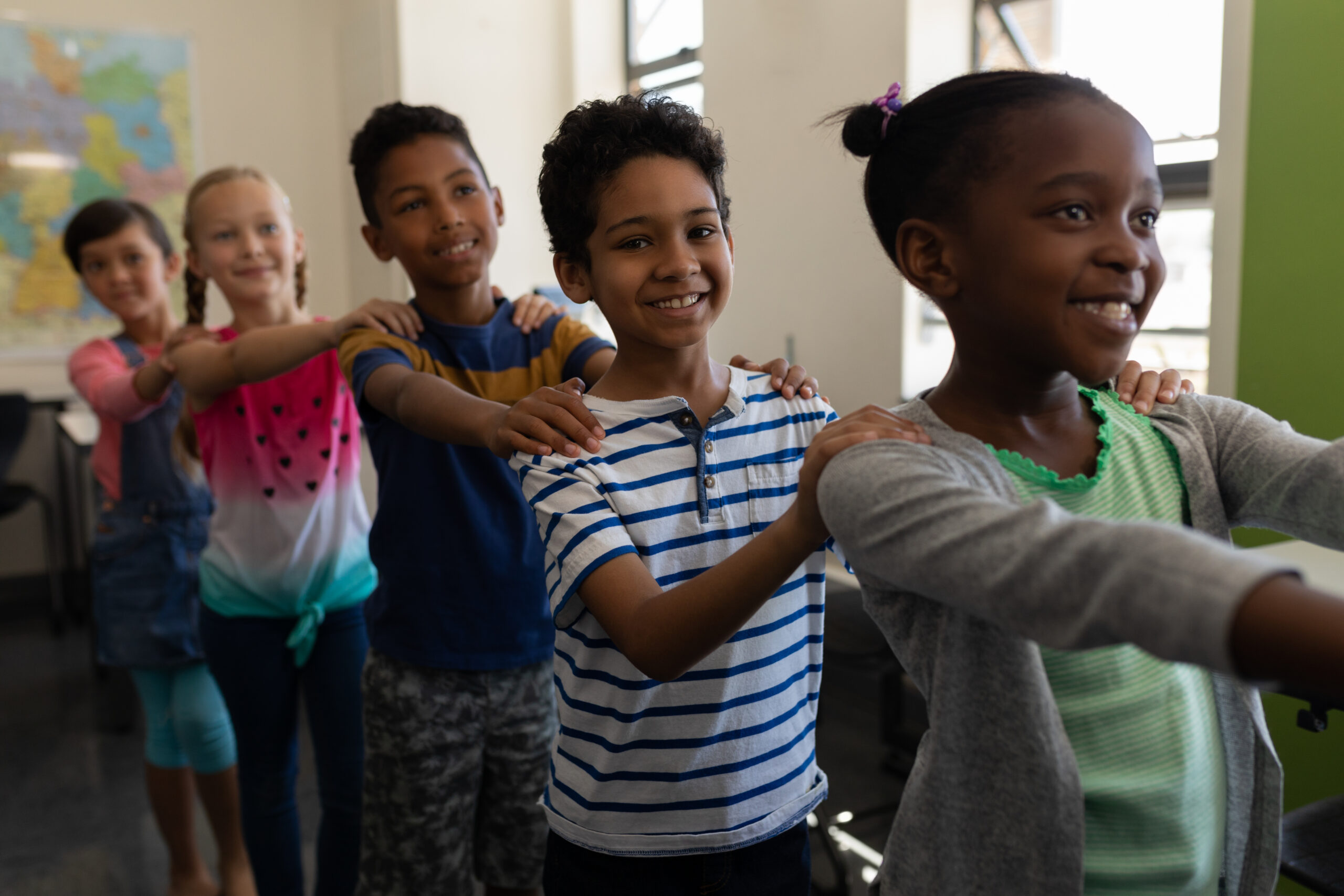
GCI affirms that children are not future members of the church — they are members now. In home‑based connect groups, the question is not whether children belong, but how they are welcomed, cared for, and included in healthy, sustainable ways.
Below we offer some models, simple discernment tools, and shared language so leaders do not have to reinvent the wheel.
Sample Models (Concrete, Repeatable)
Model A: Fully Integrated (Intergenerational Table)
Best for: Small groups with mostly elementary-aged kids, relational depth, flexible discussion style.
How it works
-
- Children remain with the group the entire time.
- Discussion uses open-ended, story-based questions.
- Children participate through:
- Drawing responses
- Short verbal sharing
- Simple prayer prompts
Rhythm
-
- Shared meal (kids help serve)
- Icebreaker for all ages
- Scripture/story told aloud (not read silently)
- Adults discuss while kids:
- Answer a simplified version of the same question
- Or draw / build / act out themes
- Group prayer (children invited but not forced)
Strengths
-
- Embodies “ministry with children”
- No separate childcare needed
- Builds family culture
Challenges
-
- Requires patient facilitation
- Less content-heavy
Model B: Split-Flow (Short Integration + Child Space)
Best for: Groups with mixed ages, desire for deeper adult discussion.
How it works
-
- Children start with the group, then transition.
- A designated adult rotates as Child Facilitator.
Rhythm
-
- Opening welcome and prayer (all together)
- Scripture moment or object lesson (all together)
- Children dismissed to:
- Adjacent room
- Backyard
- Dining area
- Adults continue discussion
- Group reconvenes briefly at the end
Key detail: The child space is not babysitting; it has a simple plan:
-
- Bible story
- Craft or game tied to the theme
- Prayer
Strengths
-
- Honors inclusion and adult needs
- Predictable for families
Challenges
-
- Requires volunteer coordination
- Needs clear safety expectations
Model C: Rotational Care (Shared Responsibility)
Best for: Parent-heavy groups, strong trust, limited volunteers.
How it works
-
- Parents take turns stepping out with children.
- No one adult bears the full burden.
Rhythm
-
- Week 1: Family A facilitates kids
- Week 2: Family B facilitates kids
- Rotation scheduled monthly
Strengths
-
- Sustainable
- Reinforces shared community responsibility
Challenges
-
- Parents miss some discussion
- Requires buy-in and planning
Model D: Family-Centered (Parallel Experience)
Best for: Groups primarily made up of families.
How it works
-
- Adults and children engage the same theme differently.
- Parents disciple their own kids during group time.
Rhythm
-
- Opening together
- Break into family units
- Provided prompts guide parents
- Regather for prayer
Strengths
-
- Empowers parents
- Minimal volunteers needed
Challenges
-
- Less cross-family interaction
- Requires prepared materials
Decision Trees (Discernment, Less Guesswork)
Decision Tree 1: Inclusion vs. Care
Start here:
Are there children under age 4 present?
-
- ⮑ Yes → Prioritize safety + care (Model B or C)
- ⮑ No → Continue
Are most children elementary-aged or older?
-
- ⮑ Yes → Consider Model A or D
- ⮑ No → Continue
Is deep discussion a core goal of this group?
-
- ⮑ Yes → Model B or C
- ⮑ No → Model A
Decision Tree 2: Capacity and Sustainability
Ask honestly:
Do we have at least 1–2 willing adults to rotate child facilitation?
-
- ⮑ Yes → Model B or C
- ⮑ No → Model A or D
Is the host home suitable for child movement/noise?
-
- ⮑ Yes → Any model
- ⮑ No → Avoid Model A

Please note that comments are moderated. Your comment will not appear until it is reviewed.