GCI Equipper

Christ Who Forms Community

Christ Who Forms Community | March 2026

In this series, we delve into our 2026 theme, Kingdom Living, with GCI Superintendents from around the globe.

Each message will explore how God transforms us into kingdom disciples. Join Daphne Sidney, GCI Superintendent for Australasia, as she reflects on Jesus’ deep love for his disciples. Jesus’ love is expressed in humble service, shared community, and a prayer that we would be one as we are sent into the world.

Program Transcript


Christ Who Forms Community | March 2026
Daphne Sidney

The Gospels reveal how Jesus built his ministry around relationships rather than possessions. From the outset with his disciples, his focus was clear. Come, “Follow Me, and I will make you fishers of men” (Matthew 4:19 NKJV). In this process, Jesus drew a diverse group of disciples, drawing them into community for a shared journey with their Master. Day by day, they had opportunity to learn from Jesus. He taught through his words and actions revealing the Father’s love for them and for all peoples. As scripture tells us, “For God so loved the world that he gave his one and only Son …” (John 3:16 NIV).

The most profound part of their journey was seeing Jesus fulfil his ultimate purpose on the cross. Yet, before that momentous time, Jesus gathered his disciples around a table. He spent time with them to prepare them for what lay ahead, knowing his time had come.

The apostle John wrote, “Having loved his own who were in the world, he now showed them the full extent of his love” (John 13:1–2 NIV 1984). Jesus’ deep love for the disciples was so evident despite their failings, “loving them to the last” as it can also be expressed.

Even knowing betrayal was near, Jesus chose to serve every one of his disciples, including the one who would soon betray him. In a powerful act of love, after the meal, he took a towel and began washing their feet (John 13:5). This demonstration of service and humility towards his disciples was teaching them the very heart of God’s love and how to become fishers of men.

Afterward, Jesus prayed for them. “Holy Father, protect them by the power of your name, the name you gave me, so that they may be one as we are one” (John 17:11b NIV). He first prayed they would be one, as he was with his Father. And as Jesus continued to pray, he reminded them of their mission. “As you sent me into the world, I have sent them into the world” (John 17:18 NIV). Then his prayer extended to future believers, sending them that many may enjoy the oneness with the Father through Jesus.

Just as Jesus gathered his disciples throughout his earthly ministry, may we also gather and grow into a strong community. Empowered by the Spirit, we continue his work of bringing the kingdom near. As we participate in this relational ministry, may God unite us as one as we follow Christ. From this unity, may we welcome and faithfully disciple others into this loving relationship where belonging and community can flourish.


Jesus’ Love Reflected

Trust that connections can start
small but gain momentum over time.

By Randall Bourchier, Pastor
Mooroolbark, Victoria, Australia

During the past twenty years, our triune God has generously and faithfully opened doors of opportunity for Grace Communion Mooroolbark (GCM) to share the love of Jesus — to be a gift of God to the community where we meet. More recently, we have been intentional in seeking to connect our community involvement back into the life of the congregation.

One example of this is our free community meal, started in 2011. We serve this free meal every two weeks. For the past two years, we’ve been offering a short devotional prior to the meal for those interested. These interactive sessions have each centred around a Gospel story of Jesus, with attendees sharing what they have learned about Jesus in the story.

The devotionals begin and close with prayer, including various prayer requests from the group. At a recent meal, an attending couple requested their new baby be blessed during the mealtime. This past year has seen a handful of regulars attending our Sunday services, either regularly or from time to time.

The second example emerged from some interconnected community-serving activities that GCM had been involved with for many years. What God provided was testament to his long-term faithfulness and was most certainly something we’d never planned or foreseen!

Since 2000, up to 8000 Chin refugees who fled from violence and persecution in Myanmar have settled in our region. Our connections with these lovely people started small but recently gathered a surprising momentum.

Some of the earliest connections arose from our involvement in KidsHope Australia — a World Vision initiative. The program matches church congregations with a local primary school in order to provide trained mentors for children who would benefit from a trusted adult relationship. A number of us have mentored Chin children over the years and become known to the Chin community.

The first Chin pastor in the area, Japheth, reached out to our congregation during 2011 requesting a mentoring relationship with me. For a couple of years, we visited together for coffee, conversation, and prayer. GCM published his inspiring and tenacious story in an edition of our Living Today in Mooroolbark. It’s a quarterly magazine which we publish as a gift to our community. In subsequent years, we’ve stayed connected, and a group of our members continue to serve in local community organisations with some of the leaders of Japheth’s large local congregation.

In 2024, our Chin neighbours were shocked by a succession of tragic deaths. The local council reached out to GCM to help conduct a public memorial service as a way of supporting the Chin through sharing their grief.

Early in 2025, we met one of the first Chin “rough sleepers” in our area who previously had suffered with loneliness, substance use, and debt. (“Rough sleeper” is a term for an unhoused individual.) He has abstained or been “dry” for more than ten years now. Thankful to God and grateful for the love and support of his wife, Van permitted us to publish his story in Living Today, in the hope that his life might encourage and inspire others. Chin leaders expressed their gratitude for the story and an accompanying article about the settlement challenges that refugees face.

Later in 2025, we got to know Uk, a Chin integration aide working at the school where we mentor. Little did we know …

After being asked, and refusing several times, my wife and I accepted a chaplaincy role with the Hornbills, a local Chin sporting group fielding men’s soccer and women’s volleyball teams. Yes, you guessed it — Uk is the president of the club.

Our GCM pastor Matt also mentors at the primary school and a relationship between he and Uk was also developing. Uk, who also pastors a small Chin congregation requested pastoral mentoring.

Recently, GCM enjoyed a visit of a group from Uk’s congregation at one of our services. Prayerful conversations are continuing as we explore what God may have in mind for a closer relationship between our two groups.

As we continue our engagement with our Chin friends, we’d seek your prayers — not only for discernment — but especially gratitude for the way Jesus faithfully, surprisingly, and over the long-term continues to provide GCM opportunities to reflect his love into our neighbourhood.

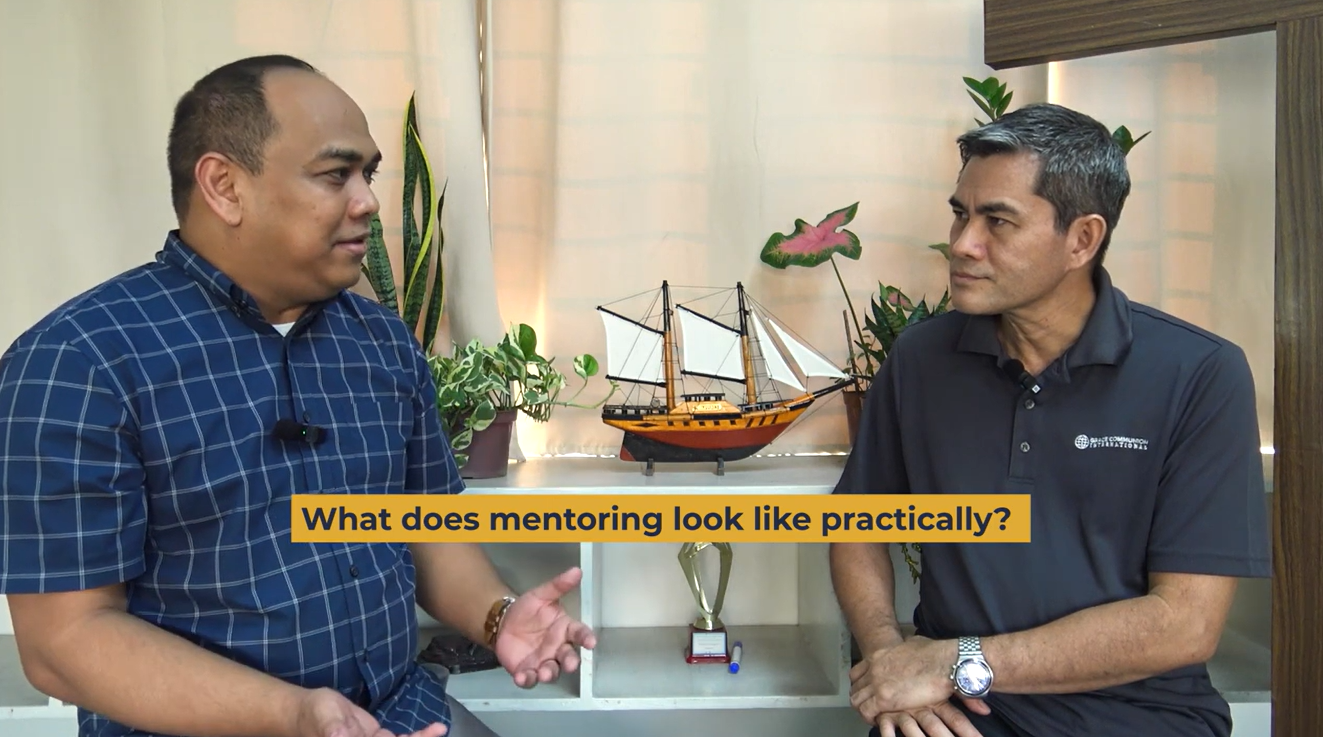
The Art of Mentoring

Mentoring is a powerful discipleship practice.

Michelle Hartman, Communications Director
Steele Creek, North Carolina, US

Our Art of Mentoring series invites us to live out Kingdom Living in practical and relational ways. Mentoring is not just another ministry program. It is a way of walking together, sharing time, wisdom, and experience as God forms us through relationships. This series includes real stories and conversations that show how mentoring has shaped lives and ministries, from seasoned pastors walking with younger leaders to everyday ministry partnerships that reflect Jesus’ love and care.

As ministry workers, we know that leadership is shaped not only by what we teach, but by whom we journey with. The Art of Mentoring resources at resources.gci.org/mentoring offer clear, Christ-centered examples and tools for both mentors and mentees. Whether you are considering mentoring someone or reflecting on your own growth, I encourage you to revisit this series and listen for how God may be inviting you to invest in others as part of Kingdom Living.

Watch the full series here.

Connect Groups

A new person may be more comfortable coming to
somebody’s living room than coming to a church building

Enjoy the following except from a GC Podcast episode. In it, Greg Williams and the host, Anthony Mullins, discuss the Faith Avenue and connect groups. It’s a reminder of the importance of discipleship and community-building activities outside the Sunday gathering. We are Jesus’ Church, not just on Sunday, but every day.

Listen to the full episode here.


[00:13:56] Greg: … these connect group gatherings are designed to help build the believer and help to build the believer as they grow in their walk with Christ. But [they] also help to build the community of the church. Believers are getting to know each other; they’re loving each other. They’re caring for each other.

And as much as the connect groups are really designed to build the community, the church, they might end up being a front door for someone who is a new person. It very well could be that a new person is more comfortable coming to that type of gathering in somebody’s living room setting as opposed to coming to a church building. …

[00:15:46] Anthony: … as you said, these connect groups can be a front door to the church, as it were. Just as an example. A small group that my wife and I were hosting in our home. She had a friend in the neighborhood that started attending that group. And at this point in his journey with Jesus, he probably would not come to our formal Hope Avenue gathering on Sunday.

But he loves showing up and sharing a meal on Wednesday night and talking about God. Is that not church? And is that not a place where he can feel comfortable in a smaller group format, where there’s a little more intimacy in the relationship? And we pray one day he will step in the doors of the formal church setting on Sunday morning, but even if he does not, he’s being discipled there.

Talk more about the connect groups and … how you see the connect groups working in this healthy church vision and how really it is vital to the life of the local church.

[00:17:21] Greg: … Recently I was meeting with some leaders with the Christian Missionary Alliance Church. … And one of their ministry leaders there was saying, before COVID, 80% of our time and energy was all going toward our Sunday service. Everything was so focused on what we were doing on Sunday morning. But because of COVID, it’s making us think, are we distributing our time, attention, and resources in the way that we should?

So, you can see where the Faith Avenue really comes into that. And the thing about the connect groups — the connect groups are not just the traditional small groups that we think of the past.

I like the fresh expression of using the term connect group because it makes you think, okay, how is this going to be different from what we’ve done in the past?

Because in the past, there have been churches who’ve done small groups. Some have done them very well; some of them have struggled, and it did not go so well. But a lot of times when we would think of small group, we would think, okay, the pastor’s coming to give us a Bible study with a group of eight or 10 or 12 people, and that’s what that’s going to look like.

A connect group is not really about the pastor giving another Bible study to a small group of people. In fact, I hope for a lot of our pastors, they do not really have to facilitate a connect group. I hope that our pastors can participate in connect groups; they can actually be ministered to as well through their participation.

But you make a great point, Anthony. Do we count someone as being an active church member who does not show up at a Sunday morning service? I think we’re going to have to be challenged and be willing to rethink that. There is something about being in the connect group where you do feel a sense of being loved, of being understood, of being seen, and being heard that a lot of times in a larger church gathering, you just get lost in the sea of people. So, the connect groups really do support the kind of love and experience that we want someone to have.

And they’re very much a part of the church by being a part of a connect group.

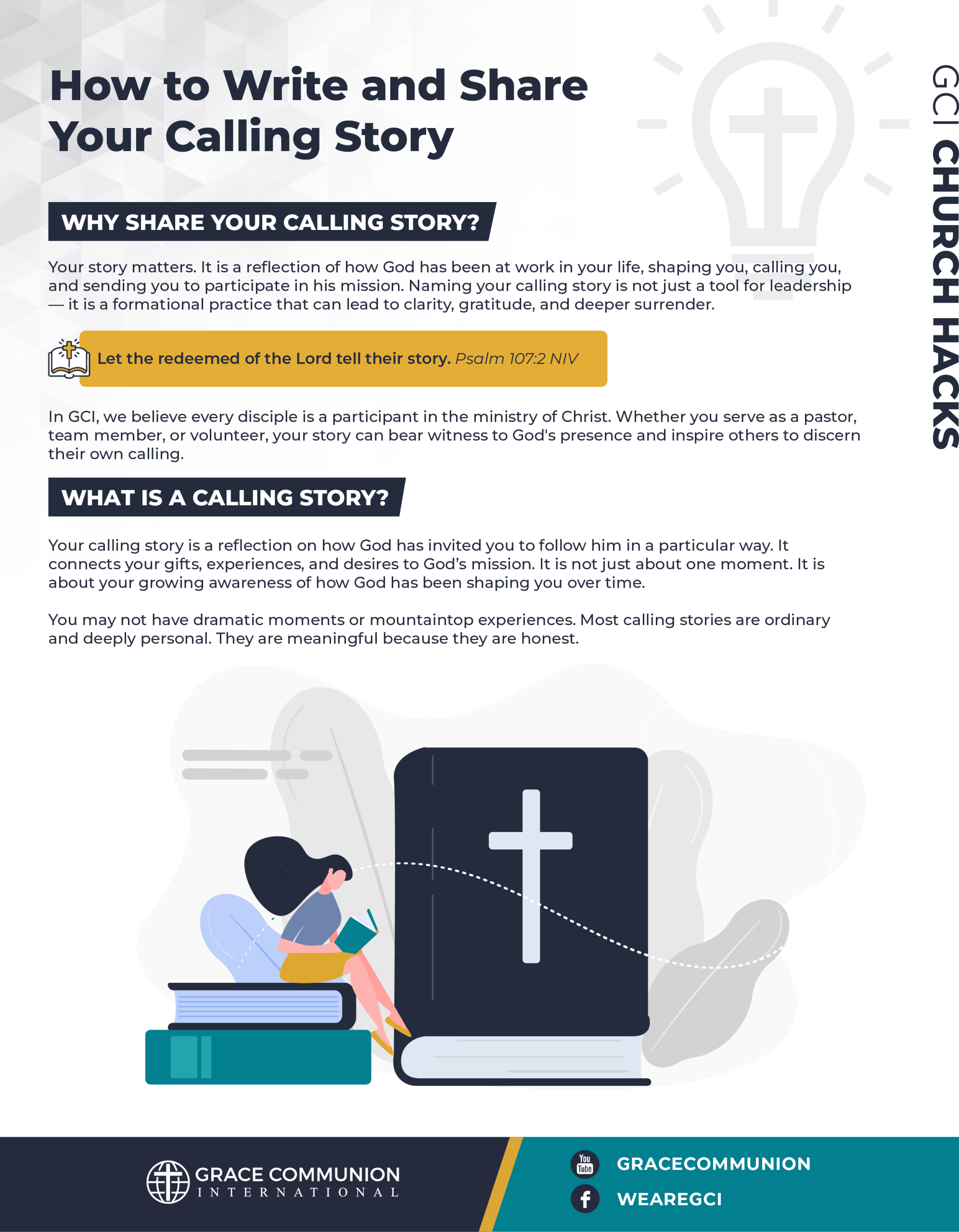
Church Hack—How to Write and Share Your Calling Story

Your story matters because it bears witness to how God has been at work in your life. This Church Hack offers a prayerful framework for writing and sharing your calling story with clarity and grace. Take time to reflect, write, and share, trusting that your story may invite others to discern God’s call in their own lives.

Read the full Church Hack here.

Formation—Easter Preparation

Spiritual disciplines position us to become open
and available to God’s invitation.

By Carmen Fleming
Orlando, Florida, U.S.

Calendars influence us more than we realize. Their power lies in reminding us of important events that shape our identity, bind together our communities, and deepen our relationships. The benefit of the Christian calendar is that it trains our hearts to be countercultural by celebrating who God is as reflected in Jesus.

Lent is a season of self-examination through spiritual practices like prayer, fasting, acts of service, and worship.[1] These spiritual disciplines position us to become open and available to God’s invitation to change and the grace to respond to him. They are simply the means to place us before God who takes this simple offer of ourselves and creates a person who embodies the goodness of God — one who can come to truly love his enemies. [2]

As Jesus works to transform me, he has helped me to see how much I have been shaped by my cultures. The American culture instilled in me self-sufficiency, independence, and productivity. The Latin culture instilled the importance of relationships, family loyalty, and community. I benefited from these cultures, but I often struggle to receive God’s invitation to be still to listen and learn from him. Because family loyalty and relationships are so important to me, I struggle to let God have the last word on who I am. Through prayer and reflection Jesus invites me to discern what love calls for at any given moment, even if it means placing family loyalty, productivity, and independence secondary to a greater allegiance to his will.

Jesus continues to smooth the sharp edges of my personality and to empower me to die to distorted images of God, myself, and others. The small tastes of freedom and God’s promises of restoration keep me hopeful of full deliverance.

This prayer from Henri Nouwen can help frame our prayer time for the season of Lent:

The Lenten season begins. It is a time to be with you, Lord, in a special way, a time to pray to fast, and thus to follow you on your way to Jerusalem, to Golgotha, and to the final victory over death.

I am still so divided. I truly want to follow you, but I also want to follow my own desires and lend an ear to the voices that speak about prestige, success, pleasure, power, and influence. Help me to become deaf to these voices and more attentive to your voice, which calls me to choose the narrow road to life.

To find spiritual practices that invite the Holy Spirit to do deep inner work in us these questions from Matthew 6 are helpful:

    • How will I give? (v. 2–3) Lent is a time for “giving things up” balanced by “giving to” those in need.
    • How will I pray? (v. 5–13) As we “give up” some of our usual distractions, it creates more space for prayer. Perhaps there is a prayer practice (such as fixed hour prayer) that God is inviting us to during Lent.
    • Who do I need to forgive and from whom do I need to seek forgiveness? (v. 14, 15) Seeking forgiveness and offering forgiveness creates space for God’s grace to flow in our lives.
    • How will I fast? What is distracting me from my relationship with God? What do I need to abstain from to create more space for God and attentiveness to God? (v. 16-18)
    • What earthly treasures am I attached to and how can I let go? The way we use our time, financial resources, and energy reflects what we treasure. Is there any specific way in which God is inviting us to “let go” of our attachment to some earthly treasure — at least for this season?[3]

As we pray, fast, and serve, may the Holy Spirit transform us deep inside where it matters most to him and where it matters most to us as ministers who point others to Jesus.


For further reflection during the Lent season, you might find a booklet by Ruth Haley Barton useful: Lent A Season of Returning, Reflections for Walking through the Lent Season Together.

[1] Understanding the liturgical calendar | ResourceUMC 12/10/25

[2] Connecting with God, A Spiritual Formation guide

[3] Lent: An Invitation to Return to God – Transforming Center


Connect Groups with Children

The inclusion of children is not a problem to solve
but a practice we steward together.

By Elizabeth Mullins, Publications Editor
Durham, North Carolina, U.S.

GCI affirms that children are not future members of the church — they are members now. In home‑based connect groups, the question is not whether children belong, but how they are welcomed, cared for, and included in healthy, sustainable ways.

Below we offer some models, simple discernment tools, and shared language so leaders do not have to reinvent the wheel.


Sample Models (Concrete, Repeatable)

Model A: Fully Integrated (Intergenerational Table)

Best for: Small groups with mostly elementary-aged kids, relational depth, flexible discussion style.

How it works

    • Children remain with the group the entire time.
    • Discussion uses open-ended, story-based questions.
    • Children participate through:
      • Drawing responses
      • Short verbal sharing
    • Simple prayer prompts

Rhythm

    1. Shared meal (kids help serve)
    2. Icebreaker for all ages
    3. Scripture/story told aloud (not read silently)
    4. Adults discuss while kids:
      • Answer a simplified version of the same question
      • Or draw / build / act out themes
    5. Group prayer (children invited but not forced)

Strengths

    • Embodies “ministry with children”
    • No separate childcare needed
    • Builds family culture

Challenges

    • Requires patient facilitation
    • Less content-heavy

Model B: Split-Flow (Short Integration + Child Space)

Best for: Groups with mixed ages, desire for deeper adult discussion.

How it works

    • Children start with the group, then transition.
    • A designated adult rotates as Child Facilitator.

Rhythm

    1. Opening welcome and prayer (all together)
    2. Scripture moment or object lesson (all together)
    3. Children dismissed to:
      • Adjacent room
      • Backyard
      • Dining area
    4. Adults continue discussion
    5. Group reconvenes briefly at the end

Key detail: The child space is not babysitting; it has a simple plan:

    • Bible story
    • Craft or game tied to the theme
    • Prayer

Strengths

    • Honors inclusion and adult needs
    • Predictable for families

Challenges

    • Requires volunteer coordination
    • Needs clear safety expectations

Model C: Rotational Care (Shared Responsibility)

Best for: Parent-heavy groups, strong trust, limited volunteers.

How it works

    • Parents take turns stepping out with children.
    • No one adult bears the full burden.

Rhythm

    • Week 1: Family A facilitates kids
    • Week 2: Family B facilitates kids
    • Rotation scheduled monthly

Strengths

    • Sustainable
    • Reinforces shared community responsibility

Challenges

    • Parents miss some discussion
    • Requires buy-in and planning

Model D: Family-Centered (Parallel Experience)

Best for: Groups primarily made up of families.

How it works

    • Adults and children engage the same theme differently.
    • Parents disciple their own kids during group time.

Rhythm

    1. Opening together
    2. Break into family units
    3. Provided prompts guide parents
    4. Regather for prayer

Strengths

    • Empowers parents
    • Minimal volunteers needed

Challenges

    • Less cross-family interaction
    • Requires prepared materials

Decision Trees (Discernment, Less Guesswork)

Decision Tree 1: Inclusion vs. Care

Start here:

Are there children under age 4 present?

    • ⮑ Yes → Prioritize safety + care (Model B or C)
    • ⮑ No → Continue

Are most children elementary-aged or older?

    • ⮑ Yes → Consider Model A or D
    • ⮑ No → Continue

Is deep discussion a core goal of this group?

    • ⮑ Yes → Model B or C
    • ⮑ No → Model A

Decision Tree 2: Capacity and Sustainability

Ask honestly:

Do we have at least 1–2 willing adults to rotate child facilitation?

    • ⮑ Yes → Model B or C
    • ⮑ No → Model A or D

Is the host home suitable for child movement/noise?

    • ⮑ Yes → Any model
    • ⮑ No → Avoid Model A

Now Hiring—Digital Content Developer

Grace Communion International is seeking a Digital Content Developer to serve on our Media Team. This full-time, non-exempt position is based in Charlotte, NC, and reports to the Media Coordinator.

The Digital Content Developer helps tell the story of what God is doing through Grace Communion International by creating thoughtful, engaging digital content including video, podcasts, and graphics. This role collaborates closely with the Media Team to develop projects from concept through completion.

We are looking for someone who values creative excellence, collaboration, and lifelong learning, and who resonates with GCI’s commitment to sharing the gospel and participating in the love and life of the triune God.

Applicants should have relevant education or experience in digital media production and be aligned with GCI’s mission and theological commitments. See the job description here.

If you would like further details on the position or would like a GCI job application, please contact Human Resources at humanresources@gci.org or 980-495-3960.

Please share this announcement with qualified candidates who may be gifted for this position at the Home Office.

New Member Management System

A New Giving and Member System Is Coming in 2026 for U.S.-based congregations.

Every year brings a sense of expectancy, and in 2026, our congregations will be stepping into something new. Grace Communion International will soon begin using an updated system to help U.S.-based congregations care for members and manage giving more effectively.

Our current online system (iMIS) has reached the end of its life, so we are transitioning to a new, modern system, Ministry Platform, which will better support both U.S.-based local congregations and the wider GCI fellowship.

What This Means for You

While much of this transition will happen behind the scenes, members can expect several benefits over time, including:

    • Easier and more flexible options for online giving
    • Improved communication from your local congregation
    • Better coordination of events, small groups, and ministry activities
    • Tools that help churches care well for members and guests

Change always takes time, and we are committed to moving at a thoughtful and measured pace. Pastors, treasurers, and ministry leaders will receive training and ongoing support as the new system is introduced. Additional features will be added gradually throughout the year to ensure a smooth transition for congregations and members alike.

Moving Forward Together

Whether you feel curious, excited, or cautious about this change, we are grateful to walk this journey together. We trust that this update will support our shared mission and help us continue living and sharing the gospel in our congregations and communities.

Robert Meade, GCI Comptroller
Charlotte, North Carolina, U.S.

2026 Denominational Celebration

The Denominational Celebration
will be held
in Dallas, Texas, U.S.
on
July 23-26, 2026.

Registration for the 2026 Denominational Celebration is open!

We would love for you to participate in our time together. This gathering gives our fellowship time to worship, learn, and enjoy being together. The schedule offers steady rhythms of teaching, connection, and shared worship.

Our theme for this celebration is Kingdom Living. Throughout the event, we will explore how God invites us to participate in his life, reflect his goodness, and join his ongoing work in the world. The theme will guide our worship, breakout sessions, and main teachings. It will help us focus on the hope we share and the way we live it out in our daily lives.

Join us for:

      • Daily worship setting a hopeful tone each day
      • Breakouts that explore discipleship, calling, and mission
      • Messages from our leaders, including Greg Williams
      • Interviews with leaders who will share insights and stories
      • Communion that reminds us of our shared life in Jesus
      • Time for meals, fellowship, and personal reflection

Save your spot and register today!


Catherine Toon—Year A Easter 1–4

Catherine Toon—Year A Easter 1–4

John 20:1-18 ♦ John 20:19-31 ♦ Luke 24:13-35 ♦ John 10:1-10

The host of Gospel Reverb, Anthony Mullins, welcomes Dr. Catherine Toon to discuss the April 2026 RCL pericopes. Catherine is a Christian author, speaker, and coach who shows you how to experience God so you can confidently live out your God-breathed purpose. She is the author of Marked By Love and several other books. She has her own podcast called “Perspectives with Catherine Toon” which you can find on YouTube.


Sunday, April 5, 2026 — Resurrection of the Lord
John 20:1-18 NRSVUE

Sunday, April 12, 2026 — Second Sunday of Easter
John 20:19-31 NRSVUE

Sunday, April 19, 2026 — Third Sunday of Easter
Luke 24:13-35 NRSVUE

Sunday, April 26, 2026 — Fourth Sunday of Easter
John 10:1-10 NRSVUE


If you get a chance to rate and review the show, that helps a lot. And invite your fellow preachers and Bible lovers to join us!

Follow us on Spotify and Apple Podcast.


Program Transcript


Welcome to the Gospel Reverb podcast. Gospel Reverb is an audio gathering for preachers, teachers, and Bible thrill seekers. Each month our host, Anthony Mullins, will interview a new guest to gain insights and preaching nuggets mined from select passages of Scripture in that month’s Revised Common Lectionary. The podcast’s passion is to proclaim and boast in Jesus Christ, the one who reveals the heart of God, Father, Son, and Holy Spirit. And now onto the episode.

Anthony: Hello friends, and welcome to the latest episode of Gospel Reverb. Gospel Reverb is a podcast devoted to bringing you insights from Scripture found in the Revised Common Lectionary and sharing commentary from a Christ-centered and Trinitarian view.

I’m your host, Anthony Mullins, and it’s my delight to welcome our guest, Dr. Catherine Toon. Catherine is a Christian author, speaker, and coach who shows you how to experience God so that you can confidently live out your God-breathed purpose. She’s the author of the book Marked by Love and several others. And she has her own podcast called Perspectives with Catherine Toon, which you can find on YouTube, and I encourage you to do.

Catherine, thanks for being with us and welcome to the pod. And since this is your first time here, we’d like to get to know you a little bit, your story, and especially what has you experiencing delight these days.

[00:01:30] Catherine: Thank you so much. This is a joy and an honor, and I’m so happy to be here. And I love that question.

I don’t get that question. What is giving you delight these days? And I think. Probably how to answer that is just in our communion with this gorgeous God that is so wild about us and experiencing his delight over us. He is delighted in his kids. And I know early on when I wrote the book, the Lord said, “Catherine, you’re the fabric of my delight.”

And this is how he sees us. This is not just me. And this is how he feels about us. So, his delight is our delight. And he’s such good Father, such a good Son, such a — the Holy Spirit in us, through us, moving around us — is such a — the person of God is delightful. And just experiencing his delight is my delight.

And when we’re able to slow down, we’re able to see that in small things. We’re able to see that all around, every day. When we’re frantic and driven and fearful, we miss out. So, one of the things he’s been doing is slowing me down, which takes some doing by the way. And that’s been a work in progress and I’m doing pretty good, I have to say.

And he’s telling me I’m doing pretty good, so I can actually say that. But with that, I’ve been able to savor things that I’ve missed. And so that’s been a joy. That’s been something beautiful that comes to bear in the midst of life, which is life in all its variegated flavors.

[00:03:34] Anthony: Yeah, it’s so wonderful to hear you talk about God delighting in us. I grew up with unfortunately this misconstrued idea of who God was and I just felt he was constantly, at least had a low-grade disappointment in me. So, to think of a God who delights, it’s just it felt too wonderful to imagine back then and so to come into this apprehension. I don’t fully comprehend it, but this apprehension of the goodness of God revealed in Jesus Christ. It changes everything, doesn’t it, Catherine? And you find delight, like you said, in the small things.

I’m fascinated by your background, if this is correct. I read that you were a board-certified internal medicine medical doctor, and I’d love if you’re willing to share to know the backstory of how you left behind that vocation of internal medicine to practice another kind of internal medicine that God has prescribed to us, and that’s God’s love revealed in Jesus Christ. Would you mind sharing?

[00:04:37] Catherine: I would be delighted to.

[00:04:39] Anthony: There you go.

[00:04:41] Catherine: Yes, I practice as a board-certified in internal medicine physician, actually in the Colorado Springs area where I am now. And that was my original vocation because of difficulties, dysfunction when I was growing up, I learned the lie that you’re worth and value is what you can do.

So, in my mind, my little 7-year-old brain, I just thought what’s the hardest thing I can think of? And so that was being a physician. And so, I had been having encounters with the Lord, but I didn’t bother asking him if this was the direction he had for me.

And so, I just pursued it. I just threw myself into it and there were a lot of really good things about it. The challenge is that it fit until it didn’t, and the grace for it really lifted. And I got very burned out. I loved my patients. I loved the intellectual challenge, everything else I did not love. And so, I was very burnt out. And then I also met my husband, wanted to raise a family, and there are ways to do that, but I really wanted to be there with my kids. And God and his mercy, his goodness, his delight helped me pay off all my loans, helped me practice for a while after all of that.

And then I was able to come home. And part of that was because my husband was in the Navy. So, I asked the Lord to settle down with someone and put down roots, and he gave me a Navy man, go figure. And so, we danced around the country for a long time, and every time I’d move to another place, I’d say I really need to get my license and practice.

And I just couldn’t do it. I just did not have the desire and just really wanted to be with my kids. So that happened. And then this funny thing happened as I was diving into really getting to know this God. I was not born in a Christian home. I’d say I was born in a religious home. It was a secular humanism, religious home.

And then, so I projected a lot of that mess on God in terms of performance and that sort of thing. And that I would say more than vague disapproval, I would say flat out distance or flat out never good enough type of internalized mess. And that had to be cleaned up.

And so, God led me through that process and then he did this really weird thing. He called me into ministry. I became one of those weird people that I had thought was like, dang, who are these Christian people? And so that set me on a journey through multiple streams in the body of Christ. Things that were excellent, things that were out in that religious things mixed bag until he led me through where we’ve landed now in this Trinitarian stream, this God who embraces all that sort of thing.

And so, I’ve been camping out there, served in various capacities, helped plant a church, all these different things. And then he finally called me out on my own as I launched my first book, Marked by Love. And then called me to continue what I was already doing in terms of coaching and mentoring and then of course teaching and then called me with a podcast. And so that’s been a really encapsulated historical overview.

[00:08:32] Anthony: Yeah. And I’m going to make this personal, if I may, as someone who is still recovering from performance-based religion and someone who is sometimes identified, I don’t know if you’ve done any work with the Enneagram, but I’m a three, known as a performer, achiever. Always trying to strive for love. Like, how what was the process for you to be led by the Spirit, ah, to overcome this need for performance to achieve love. What was it for you?

[00:09:05] Catherine: That is, that’s, I would say, it’s an ongoing process.

Anthony: Sure.

Catherine: Because when I arrive, I will come find you. But it was really encounter with this God. I’m very prophetic and so I get a lot of things visually. I get a lot of things in an auditory capacity and just learning to settle down and let him love me. Like he would refuse to let me do anything.

And there were seasons in my life where he literally he had a prophet come one time and she was. Just bless her heart. She was just very strange, but I knew she was the real deal. Okay? And she sat me down and she said, “Catherine, I really feel the Lord is saying for the next two weeks, just spend 45 minutes and just sit there listening to worship music and resting.”

And I knew it was God. So, I obeyed. But it was hell because everything in me wanted to get up. Because I felt like I was born behind. Like the best I could do is strive to fall behind at a slower rate. And so, this had to be a process where the Lord led me into rest because I switched where I was overdriving from medicine, to my family, and then to ministry. And he really had to work it out me. And in some ways very gently and some ways just pulling me up short. And he had me on a kind of, on a shelf for a while because he really needed to make it about me and him.

And so, it felt like in my flesh, we’ll say, it felt like sort of rejection and being sidelined and all that. And it was. No, it was because he loves me so much and he loves all of us so much that he wants nothing to have us except him first. And then out of that place we get everything because we’re starting from him as the source.

Anthony:  Yeah.

Catherine: And so, he refuses to allow us to stay in the place that he did. Now, practically I got a lot of coaching. I did multiple ministries to help recover because there was very serious abuse in my past, and I really needed a lot of help. God will lead you into what you need, but a lot of times there have been periods where it’s been very quiet and I’ve had to find my satisfaction, my worth and value, my significance in him and his adoration and how he sees me.

And it’s amazing. I love to talk to God because he always has something good to say. It’s really amazing, even in correction, he has something good to say because he refuses to leave us alone because of how he sees us and our intrinsic worth and value in his sight.

[00:12:12] Anthony: He is so good. Yes, you did it. It’s in him. It’s resting in him and knowing there’s never a point that we get to and say, oh, God is good, but this is the cap of it. He doesn’t go any further. We never find the depths of his goodness. And to rest in that is a very freeing, liberating thing.

So, let’s be liberated by God through the Scriptures. That’s why we’re here. So, let’s turn our attention to the first pericope of the month. It’s John 20:1–18. I’ll be reading from the New Revised Standard Version, the updated edition. It is a Revised Common Lectionary passage for the Resurrection of Our Lord, Easter Sunday, April 5, and it reads:

Early on the first day of the week, while it was still dark, Mary Magdalene came to the tomb and saw that the stone had been removed from the tomb. 2 So she ran and went to Simon Peter and the other disciple, the one whom Jesus loved, and said to them, “They have taken the Lord out of the tomb, and we do not know where they have laid him.” 3 Then Peter and the other disciple set out and went toward the tomb. 4 The two were running together, but the other disciple outran Peter and reached the tomb first. 5 He bent down to look in and saw the linen wrappings lying there, but he did not go in. 6 Then Simon Peter came, following him, and went into the tomb. He saw the linen wrappings lying there, 7 and the cloth that had been on Jesus’s head, not lying with the linen wrappings but rolled up in a place by itself. 8 Then the other disciple, who reached the tomb first, also went in, and he saw and believed, 9 for as yet they did not understand the scripture, that he must rise from the dead. 10 Then the disciples returned to their homes. 11 But Mary stood weeping outside the tomb. As she wept, she bent over to look into the tomb, 12 and she saw two angels in white sitting where the body of Jesus had been lying, one at the head and the other at the feet. 13 They said to her, “Woman, why are you weeping?” She said to them, “They have taken away my Lord, and I do not know where they have laid him.” 14 When she had said this, she turned around and saw Jesus standing there, but she did not know that it was Jesus. 15 Jesus said to her, “Woman, why are you weeping? Whom are you looking for?” Supposing him to be the gardener, she said to him, “Sir, if you have carried him away, tell me where you have laid him, and I will take him away.” 16 Jesus said to her, “Mary!” She turned and said to him in Hebrew, “Rabbouni!” (which means Teacher). 17 Jesus said to her, “Do not touch me, because I have not yet ascended to the Father. But go to my brothers and say to them, ‘I am ascending to my Father and your Father, to my God and your God.’” 18 Mary Magdalene went and announced to the disciples, “I have seen the Lord,” and she told them that he had said these things to her.

So, Catherine, if you were sitting having coffee or tea or whatever you enjoy drinking with a dear friend who’s unsure about God’s love for them, and you had this text open, what would you say from the text? And it’s just an opportunity to herald some good news.

[00:15:34] Catherine: Yeah. Thank you. There are multiple things in here that are going on. When you look at the “characters” in the story and marrying the story and the other disciples, they are traumatized.

And it’s interesting because Jesus had mentioned his resurrection coming multiple. I need to, I will die, I will be resurrected. We can only receive to a certain point. So, he had prepared and they were yet not fully prepared. And so, this is what they come to and she sees this tomb.

And when you think of it, you think of the places that have represented death in our own lives, right? Loss in our own lives. And I love the way there is such a tender ministry that’s going on that starts with the angel, starts with the angelic, and they have the perspective of Jesus, the Christ as he is resurrected.

And so, meeting us in our humanity, we’re weeping because all we see is loss. Everything I put my hopes, my life, everything that was good died in that tomb. And died on the cross rather, and was put in that tomb. And then to have the humiliation of that body being taken away, all of that. She is traumatized.

And so, the angelic meets her with this question, why are you weeping? And it seems so obvious, right? I’ve lost; we’ve lost Jesus. They’ve taken away my … we don’t even have his body. It’s been desecrated. And then very personally, Jesus meets her in her trauma and there’s no condemnation.

But there’s that question, why are you weeping? He’s asking her like, duh, okay. In our place of weeping, there is a limited perspective. And then he adds what the angels didn’t. Whom are you looking for? And so, she’s looking for her Lord that she thinks is dead. She’s looking for the body.

And he’s veiled to her. And in so many places, God is veiled to us in our weeping, right? He’s with us in our weeping, he weeps when we weep, right? It’s very tender. But he’s also bringing us in the place of something bigger going on that will dry all those tears.

And the thing that prompted the veil off her eyes to be lifted, is when this beautiful God who is meeting her right where she’s at, with no condemnation, says her name. And there’s something about our God saying our name to us, we are known. And that’s when she was able to recognize the one she loved, right? That was when she was able to see the teacher.

But the one that she had followed and based her whole life off of. And he reveals something so tender to her in this, do not touch me because I’ve not yet ascended to the Father. This is revelation. Wow, you’re going back to the Father. And I love this. I’m ascending to my Father and your Father.

[00:19:46] Anthony: Amen.

[00:19:46] Catherine: That he accepts you are not an orphan. I may physically be leaving, but you’re one, you’re accepted and it’s personal to my God and your God. You know the humility of that with Jesus saying Father is my God and he’s your God. We are included in the fullness of his relationship with his Father in the Holy Spirit.

And so, this did something to her soul, that she was able to be the apostle to the apostles and proclaim the risen Christ. And because her heart was, she could see it now and she didn’t need to weep. And what does that mean to us personally? Number one, he knows our name. And says our name tenderly and draws us up out of our limited perspective to see that we had everything in him as the risen Christ and that we are one with our Father, one with him, one in the Holy Spirit. We have all things and everything that maybe was destroyed, a loved one dying, or whatever was lost, is all bound up in him. He loses nothing. Every fragment of our souls that feel shattered, he’s got them and he knows how to bring it together. Because if he can be the resurrected Christ coming from where he came from, he can resurrect things in our lives that seem hopelessly broken and lost.

[00:21:40] Anthony: That’ll preach on Easter Sunday for sure. Thank you.

It strikes me that this had to be a day of extreme highs and deep lows for Mary. So, let’s spiritually imagine for a moment what this Jesus meant to her. You’ve alluded to it, but tell us more.

[00:21:59] Catherine: Yeah. Her very world hinged on him. This is why it was so traumatic, because her whole world hinged on this one that she knew as Messiah, and it is mind blowing to imagine him being taken away, but much less with crucifixion and everything that she actually witnessed.

And so, everything in her world hinged on this one, and it made no sense. She was with him to witness all of these things. And so, if Jesus is your everything and there’s a revelation of him that she didn’t know, and honestly, we don’t know. We’re all growing in wisdom and revelation that our whole being, the whole cosmos, everything that matters is connected to, is upheld by this one.

And so, you go from this complete desolation, you go from — it’s amazing the amount of trauma that these disciples did — and the ones that particularly could handle it and stayed faithful with him in this process and witnessed the whole thing, but not understanding the other side.

But this is — their everything was in context of Jesus. And so, for him to be resurrected means that everything, all things are possible. Truly all things are possible. What is impossible? That God is faithful being himself, but not violating anything in his own ministry. Because he said, “I give you a new commandment, that you love as I love.”

And so, his being willing to bow down to human rage and bow down to death, and bow down to all these things so that he could consume it in himself, on our behalf and be resurrected and resurrecting us with him. Of course, she didn’t have that revelation yet, but this was everything. She had a revelation of something that is so huge, that yes, this is the one, this is the one we’ve set all our hopes in. We put all our eggs in the Jesus basket, right in the issue with the basket. And he did not fail us.

[00:25:00] Anthony: No ma’am. Grace was lavished on us and he took us with him. Oh, it’s such a …. For me, Easter Sunday, it’s like this wonderful time to proclaim the good news, but it’s also can be a, like, how do you say it all? Like, how do you encapsulate what has transpired here? It’s so awesome. But it’s my prayer that as we come together as brothers and sisters in Christ and hear this word proclaimed, we will be once again filled with awe and wonder of this amazing God revealed in Jesus. Amen and amen.

[00:25:39] Catherine: Amen.

[00:25:44] Anthony: This transition to our next Bible passage of the month, it’s John 20:19–31. It is the Revised Common Lectionary passage for the second Sunday of Easter, April 12. Catherine, would you read it for us, please?

[00:25:57] Catherine: I would be so delighted to do that.

When it was evening on that day, the first day of the week, and the doors were locked where the disciples were, for fear of the Jews, Jesus came and stood among them and said, “Peace be with you.” 20 After he said this, he showed them his hands and his side. Then the disciples rejoiced when they saw the Lord. 21 Jesus said to them again, “Peace be with you. As the Father has sent me, so I send you.” 22 When he had said this, he breathed on them and said to them, “Receive the Holy Spirit. 23 If you forgive the sins of any, they are forgiven them; if you retain the sins of any, they are retained.”24 But Thomas (who was called the Twin), one of the twelve, was not with them when Jesus came. 25 So the other disciples told him, “We have seen the Lord.” But he said to them, “Unless I see the mark of the nails in his hands and put my finger in the mark of the nails and my hand in his side, I will not believe.” 26 A week later his disciples were again in the house, and Thomas was with them. Although the doors were shut, Jesus came and stood among them and said, “Peace be with you.” 27 Then he said to Thomas, “Put your finger here and see my hands. Reach out your hand and put it in my side. Do not doubt but believe.” 28 Thomas answered him, “My Lord and my God!” 29 Jesus said to him, “Have you believed because you have seen me? Blessed are those who have not seen and yet have come to believe.” 30 Now Jesus did many other signs in the presence of his disciples that are not written in this book. 31 But these are written so that you may continue to believe that Jesus is the Messiah, the Son of God, and that through believing you may have life in his name.

[00:28:33] Anthony: Hallelujah. I like the way you intentionally said peace be with you.

Catherine: Yeah.

Anthony: What a glorious declaration from the risen Lord Jesus to his friends. And like humanity sometimes paralyzed with fear. How might that be good news today?

[00:28:53] Catherine: Yeah. We as human beings, we suffer with so much fear and we couch it with a lot of different verbiage: anxiety, trauma. Sometimes we couch it as like concern or anxiety, but at the end of the day, it is fear. And fear says it’s not going to be okay. I’m not going to be okay. There will be loss. Ultimately, Hebrews says, it’s fear of death and Jesus overcame death. And as the risen Christ, he can speak unto us, “Peace be with you.”

And there is an empowerment. This is not something that we have to jockey up our faith to apprehend peace. It’s what we get out of our communion with the One who is the Prince of Peace. He causes us to transcend the issues, the torments, the anxieties, the pain, the confusion, the uncertainty, the feeling that we’re not in control.

And honestly, control is an illusion anyway.

Anthony: Amen.

Catherine: Right? And so how can we be peaceful when we don’t have control? Because it was never up to us. It is from our place of our oneness and our union with this God who transcended death, who transcended sin, who transcended everything in order to grab hold of humanity and pull us out of darkness and meet us in the places where subjectively we’re experiencing all of that, we have the objective truth of what was accomplished on the cross, a death, burial, and resurrection.

And then we have the subjective truth of where we meet him, where he meets us in our felt life. And so, the beautiful thing is that there’s always a place to go. And when I’m struggling with something, I have this thing that I’ll walk around and I’ll think of something like that would create anxiety and I literally say out my mouth, this is funny, but it works for me. Nobody panic. Okay, there’s no one there but me, my Father, Son, and Spirit, right? We’re all one. They’re not panicking. So clearly, it’s me, but it helps me apprehend my haywire mind and what’s going on in my emotions so that I can go inside and connect with the one who is my peace. Because one way or the other it is going to be okay.

If somehow Jesus wasn’t this masterful Savior, if somehow, he wasn’t able to redeem all things and hold all things in himself then we might have a justifiable reason to be anxious, to be fearful. And life happens. There are things that will squash you. It is a thing. But in that, he causes us to transcend as he transcended, because we are one with this One who carries peace.

And so, this is peace beyond our comprehension, beyond our ability to understand. Because I don’t know how it’s all going to work out. But one way or the other, it’s going to be okay. One way or the other, it’s going to be good because we’re journeying in this with this God who says, “My peace I give to you.” “Peace be with you.” And we can commune in this place of peace so that somehow, we’re able to navigate whatever comes before us, and then we’re able to give out of that place.

So, when people are freaking out and there is a lot of freak out, yeah, we’re able to minister that which is inside us because we’re carriers of Christ who is our peace. And that also allows us to come up with creative solutions to the problems that comes up because our mind’s not so haywire. Yeah.

[00:33:31] Anthony: Yeah, for sure. It’s when he says peace be with you. He can do that with integrity because peace is embodied. Peace has a name. His name is Jesus. And I’m with you. And I love that. I often call this upper room the panic room, and he enters as the unanxious presence in the room. And sometimes I think we think we want God to be just as fired up or as, just as …. No, I want God to be the One who holds the beginning from the end and is unanxious. And as I keep my eyes fixed on him, my anxiety begins to dissipate because he’s, as you said, he’s not freaking out. He’s the Lord. And he actually, even though I wouldn’t say God is in control, because we just have such a fallen understanding of control. He does have everything in his hand.

Catherine: Yeah.

Anthony: And he’s okay. And that’s such good news in an age of outrage. You mentioned Catherine, that there is an objective and subjective perspective. And I think that’s really helpful when reading Scripture, and maybe that will help frame this next question. What does it mean as it says in verse 22 to receive the Holy Spirit?

[00:34:50] Catherine: I love that question and you totally set me up, so this is great.

[00:34:54] Anthony: Good. Go for it.

[00:34:56] Catherine: What a generous host. So objectively, right? We’re all in Christ. Christ is in us. God is omnipresent. So that means where is God not present? Where is his Spirit not present? “If I make my bed in the midst of Sheol, you are there.” And we make a lot of beds in Sheol. Just a thing in our mind and just in our experience, not “our fault,” but just a fallen world.

And so where is this Spirit? And so, if the Spirit is in Sheol and in him, we live and move and have our being, okay? To be, is to be in Christ in the Spirit. So, it’s not like Jesus, the Spirit wasn’t there, and then suddenly, Poof! Spirit’s there. Holy Spirit is that called the modesty of God, does not point to himself, but points to Christ.

Anthony: Yes.

Catherine: But he moves and he’s in us. I remember growing up, I was not raised in a Christian home. I didn’t say those sinner’s prayer until 27. Okay? But I had massive encounters with the Lord that literally saved my sanity in areas that were very … I knew God. Now there was a lot to that story and I don’t want to go haywire with it, but I knew God and he knew me. I knew he loved me. And I loved him. And that was pretty much my theology, which is actually dang good theology right there. And that’s what I needed to survive a traumatic childhood, right?

[00:36:46] Anthony: Yeah.

[00:36:47] Catherine: And in order this thought that somehow, like I say, the magic prayer and the Spirit just pops inside now. And I didn’t know? Of course, I knew him before, but this is an awakening. Like Mary, when she couldn’t see the embodied Christ before, the incarnate Christ before her until the veil was lifted. We don’t always recognize the Spirit that dwells in us, that inhabits us, that in him, we live and move and have our being until that’s unveiled.

So, we’re talking about an objective reality and objective truth that Holy Spirit is everywhere. And in us. I remember when I was … I got through a period of God I was so angry with God because everything in my life fell apart. And I was just like, “I don’t want to hear from you.” “I don’t want to see you.”

And he was like, “Okay, Catherine, I understand,” but he wouldn’t leave me. And so even when it was giving him the flying fingers. “That’s okay, babe. When you’re ready, you’ll come around.” He’s so patient.

I have a chapter in my book called Annoying Relentless Love, because he would not leave me alone. Okay. This is the God that you can’t shake even if you want to, because we are one with him. But this is our issue as human beings, that we are veiled. We don’t experience. We experience things over time. Things are unveiled to us. And this, any sense of separation is in our minds. We’re alienated in our minds.

And this is God, healing our minds, healing our ability to see what already is, because the breath of God, the ruach of God was with us in the very beginning. When you talk about Genesis and Adam and Eve walked with him in the cool of the day. Adam walked with him in the cool of, he walked in …  the ruach is “cool of the day.”

We were walking in the Spirit. You can’t shake him, but we need to wake up to him. In Galatians 1, it talks about, Paul was talking about how he had been set apart from his mother’s womb and called by his grace, “was pleased to reveal his Son in me.”

Did the Holy Spirit suddenly hop in there? No. It was a revelation, a revealing and unveiling of the Spirit already present. And in this thing — so it wasn’t that Jesus was going to give them this theological thing — “so let me just, guys, let me just help you here. Holy Spirit’s already here.” He didn’t do that. He did something practical. I love God for so many reasons, but I love the way he moves practically.

We need sacrament, we need laying on of hands. We need Jesus to breathe on us. We need something so that we can apprehend what is already true and live in it.

[00:40:06] Anthony: No, that’s so good. The sacraments, that which physically makes manifest the unseen reality of what is true and that. That the lights would come on in our minds, and it would reach our hearts. This is, oh, we could spend days talking about this, that God has objectively made it so. May we receive what is already ours. In essence, receive what is already ours in Christ. Amen and amen.

All right, our next text is Luke 24:13–35. It is a Revised Common Lectionary passage for the third Sunday of Easter, April 19. And it reads:

Now on that same day two of them were going to a village called Emmaus, about seven miles from Jerusalem, 14 and talking with each other about all these things that had happened. 15 While they were talking and discussing, Jesus himself came near and went with them, 16 but their eyes were kept from recognizing him. 17 And he said to them, “What are you discussing with each other while you walk along?” They stood still, looking sad. 18 Then one of them, whose name was Cleopas, answered him, “Are you the only stranger in Jerusalem who does not know the things that have taken place there in these days?” 19 He asked them, “What things?” They replied, “The things about Jesus of Nazareth, who was a prophet mighty in deed and word before God and all the people, 20 and how our chief priests and leaders handed him over to be condemned to death and crucified him. 21 But we had hoped that he was the one to redeem Israel. Yes, and besides all this, it is now the third day since these things took place. 22 Moreover, some women of our group astounded us. They were at the tomb early this morning, 23 and when they did not find his body there they came back and told us that they had indeed seen a vision of angels who said that he was alive. 24 Some of those who were with us went to the tomb and found it just as the women had said, but they did not see him.” 25 Then he said to them, “Oh, how foolish you are and how slow of heart to believe all that the prophets have declared! 26 Was it not necessary that the Messiah should suffer these things and then enter into his glory?” 27 Then beginning with Moses and all the prophets, he interpreted to them the things about himself in all the scriptures. 28 As they came near the village to which they were going, he walked ahead as if he were going on. 29 But they urged him strongly, saying, “Stay with us, because it is almost evening and the day is now nearly over.” So he went in to stay with them. 30 When he was at the table with them, he took bread, blessed and broke it, and gave it to them. 31 Then their eyes were opened, and they recognized him, and he vanished from their sight. 32 They said to each other, “Were not our hearts burning within us while he was talking to us on the road, while he was opening the scriptures to us?” 33 That same hour they got up and returned to Jerusalem, and they found the eleven and their companions gathered together. 34 They were saying, “The Lord has risen indeed, and he has appeared to Simon!” 35 Then they told what had happened on the road and how he had been made known to them in the breaking of the bread.

Catherine, what would you want our audience to know about this road to Emmaus experience?

[00:43:35] Catherine: I think that we all are on our own roads to Emmaus they’re things …

[00:43:43] Anthony: Come on.

[00:43:44] Catherine: … that as we’re journeying with the Christ, that we are not seeing him, that once again, our eyes are shut. I think there’s a little bit of a theme going on. And I love his … I just think it’s so adorable that he chastises in this sweet way. “Oh, how foolish you are and slow of heart to believe all the prophets have declared ….” Who cannot find themselves in this verse?

Anthony: Sure.

Catherine: And in that place, though, he’s still delighted in us. He still adores us, but he’s diagnosing as the great physician. Yeah, we’re foolish. “The fool in his heart says there is no God.” There are these places in us that aren’t getting it yet, and sometimes our hearts are just slow. We’re dumber than rocks, and but …

[00:44:40] Anthony: Speak for yourself.

[00:44:41] Catherine: Yes, I’m speaking for myself but we’re adored. I remember one time I was so frustrated because I was trying to understand, I think it was this rest thing and I was so frustrated and I was like. “God, I just can’t get this. I’m just so clueless.”

And I heard the Lord as clear as day. He goes, “Catherine, you’re so adorable when you’re clueless.” And I really feel his compassion to meet us where we’re clueless, where we’re foolish and enlighten us, right? Walk with us on this road and start to unveil things to us.

And I love the fact that in this very relational passage, because God is always relational, he acted as if he was going on and then they had to ask, “Stay with us.” And in this place where it’s not like God goes anywhere, but there are times when we need to turn our affection to us and pull him in.

And that is what causes our hearts to be more receptive. And so, as he continued to commune with them in very practical things — they were eating a meal. And ding to ding. Wow! It was when he broke the bread and blessed it and gave it to them, that their eyes were opened. And this is me. I am the bread. I am the one, the night before in the upper room, I broke the bread with you. I drank the wine of the new covenant. This is you and me, and I’m revealing myself in this sacrament once again. And this is why he tells us, do this in remembrance, that we need to remember. We need to piece it together in our beings.

And then what I love about this, it says, were not our hearts burning as we’re engaging with God and walking with him on our Emmaus roads. He brings things in our hearts that start to burn. And as we commune with him, he opens our eyes to see more of who he is, more of who Father God, Holy Spirit are, more of who we are in him and what that means for us as we’re walking out our daily lives.

[00:47:04] Anthony: You’ve already alluded to this, but I’d love for you to say more about this affection of inviting God to stay with us. That’s what the brothers asked for. Tell us more about this.

[00:47:18] Catherine: It’s interesting. We are, as human beings — I’ll speak for myself again — easily distracted.

Anthony: What?

Catherine: Easily squirrelled. Easily pulled away. Our affections drawn to the next shiny thing, or distracted by our pain, distracted by the fear we have, distracted by the lack or something that’s in front of us, distracted by just human suffering. And in that place, we can shut off really easily and just switch into this mode where we’re trying to figure out the problems, work out our plan, come up with solutions, figure it out, what do we need to do?

And this place of communion is where we receive all things. As you remain in me and I in you. Apart from me, you can do no dang thing. That’s a capital advice, standard vision, right?

Anthony: Yes.

Catherine: There’s nothing we can do. So, why are we distracted way out here trying to find a solution as if it’s out there. When the one that we’re one with holds all things. He is our wisdom. He is our healing, deliverance, sanctification, protection, wisdom, guidance, provision, pick a card and healing, right? Pick a card.

And so, this place of pulling on him, we don’t need to convince him to be good. Good is just who he is. We’re stuck with good.

Anthony: Yes.

Catherine: But in the “stay with us,” it’s a pull on him to reveal himself in a fresh way, which requires us to turn away from all of these ways of being that are so distracted and so fragmented and maybe closed off. And in a way we’re inviting him in deeper communion.

We have to understand that God is relational and he longs for communion with us. There are times when I’ll be ministering to people all day. I’ll be connecting with God really well, and I’ll put my little head on the table and it has just been straight up flat running all day. And I’ll say, “Jesus, I just didn’t spend 15 minutes with you personally for me. I’m so sorry.” And you know what he said to me? He goes, “Catherine, I’m just so glad that you’re doing it now.” No condemnation. No, “You didn’t. Can you not spend an hour with me?” I woke up and sprung out of bed, but this is the longing of his heart, and he’s so gracious. And when we make that turning of our affection, he reveals himself more and more.

And so, part of this is are the disciplines of lingering with God, quieting ourselves down. And as you said, the sacraments help us do that, right? And so, this is where he reveals himself to us in the ways that we need it.

[00:50:27] Anthony: A previous surgeon general of the US said that one of the greatest health issues that we have in these United States is loneliness. And the solution is community, which is communion. And I just, when I think of stay with us and abiding and remaining, yes, there’s this very personal, never private, but very personal relationship that we have with the Lord. But one of the great ways that we experience that relationship is with others, and even lingering with others, reveals something about the goodness of God.

We need one another. And thanks be to God that he refuses to be God without us. He goes with us. He stays with us. Amen. And amen.

We’re into the home stretch. We’ll pivot to our final pericope of the month. It’s John 10:1–10. It is Revised Common Lectionary passage for the fourth Sunday of Easter, April 26. Catherine, do the honors for us please.

[00:51:36] Catherine: I would love to.

“Very truly, I tell you, anyone who does not enter the sheepfold by the gate but climbs in by another way is a thief and a bandit. 2 The one who enters by the gate is the shepherd of the sheep. 3 The gatekeeper opens the gate for him, and the sheep hear his voice. He calls his own sheep by name and leads them out. 4 When he has brought out all his own, he goes ahead of them, and the sheep follow him because they know his voice. 5 They will not follow a stranger, but they will run from him because they do not know the voice of strangers.” 6 Jesus used this figure of speech with them, but they did not understand what he was saying to them. 7 So again Jesus said to them, “Very truly, I tell you, I am the gate for the sheep. 8 All who came before me are thieves and bandits, but the sheep did not listen to them. 9 I am the gate. Whoever enters by me will be saved and will come in and go out and find pasture. 10 The thief comes only to steal and kill and destroy. I came that they may have life and have it abundantly.

[00:53:03] Anthony: Whew. That’s some good news.

Catherine: Yes.

Anthony: He calls his own sheep by name and leads them out. And I’m thinking back to our previous passage of Jesus saying, “Mary.” And leading her out of her distress and grief. Hallelujah.

[00:53:20] Catherine: Yeah.

[00:53:20] Anthony: So, I’m going to invite you to contrast the shepherd and the thief.

[00:53:25] Catherine: Yeah.

[00:53:26] Anthony: The contrast is distinctive and it’s real. But I’m curious, in what ways might we, I don’t know, unwittingly walk in step with a thief instead of the good shepherd.

[00:53:37] Catherine: Yeah. And I think this is part of our malady, right? When we operate from a place of separation — the Word says that we’re alienated in our minds — and there are places in our minds that are truly broken, right? Our minds, our wills, our emotions, and in those places we can want what is destructive and reject what is life-giving.

And so, God has this ministry that he does in us in healing this, healing our will, so we want what is good. We don’t want the thief. A thief steals, right? A thief kills. A thief destroys. A thief is after what they can get at the expense of the sheep, …

Anthony: Come on.

Catherine: … at the expense of us. And the Good Shepherd is there for our wellbeing. He’s the one who loves us in our denseness. He loves us in our brilliance. He loves us on our good hair days, our bad hair days, our good behavior days, our crappy behavior days. He is wild about us and he’s not leaving us. He’s the gate through which we experience everything that is already ours in him.

So, we have intrinsic ownership to everything restored to us in Christ. And so, we’re not having to convince God to be good, to be gracious, to meet our needs and the desires of our hearts. God is personal and God is universal. He calls us by name and attunes us to his voice. And so, this is the voice from the inside out that our hearts start to resonate with as the fog starts to lift.

As we start to be able to recognize that thing that I thought would bring me life is an idol, is a thief that will sap life from me, and I can start to listen to the voice of the one who loved me and gave him himself up for me and follow that voice personally as he leads me out in wholeness, right?

The religious voices, which were the thieves. This, the context of this is the voices of religion. The people that came, the people that were false, that were posers, that were liars, condemners, and thieves. Christ is the entry point for an objective and subjective relationship with Trinity, where all life, light, truth, and love dwell, right? Where peace dwells.

Religion is like plastic fruit at best, right? It promises something. It may look good, but it destroys. There’s death in it. It steals. It’s deadly at worst. And so, this is why God hates that spirit of religion, because it harms his sheep, right? So, as we partake of Christ in all things, we partake of everything according to life and godliness and the divine nature, which is ours by partaking of him. And we can do that in abundance because we’re following the shepherd that we can trust with everything that we are.

[00:57:12] Anthony: And I think that’s one of the reasons John the Apostle in his gospel account repeatedly talks about belief, which is translated trust. Just trust me. I am good. I am for you. I am the good shepherd.

And guess what? I came, to give you life. Matter of fact, I am your life. And in me you have abundance. So, as we close our time together, Catherine, I want to give you an opportunity to simply riff on this gospel declaration. Let’s hear some good news. Preach, preacher.

[00:57:45] Catherine: Yay. Jesus said that I have come, I came. This is past tense, that you may have life and have it abundantly. So, God is life. You are one with the Person who is life. He. Is your life. And a little dab doesn’t do. He’s abundant in all his goodness and what he brings to us. And the more we partake of him, the more we partake of his gracious nature, the happier he is.

He wanted us to eat the entire lamb. He wanted, wants us to feed off of him. He is our source. He is the vine. We’re the branches. This is where we get to suck his goodness, partake of his goodness and fullness so that everything comes to life. What looks like it was dead is deceitful. Okay. Because the God of life is there in abundance and he also, he not only promises that, but he empowers what he promises, our ability to connect with that in a subjective thing that we just, if you’re not seeing it, just go deeper. Just go deeper. Just go deeper, because that’s where this God of life is unstoppable.

He is redeeming all things. He’s a God of abundance. He said all that he has is ours. All that he has is ours as Christ in this world. Co-heirs — that means equal heirs. This is mind-blowing stuff, but this is what the God who loved us and gave himself up for us supplies in abundance so that we get to partake and grow in life. And it is an eternal thing that cannot be taken away from us.

[00:59:47] Anthony: The thief speaks scarcity. The good shepherd speaks life and life abundantly. Hallelujah. Praise God.

I want to, as we close up our episode, want to refer back to our good friend and uncle Karl Barth, who said this, “Christ accomplishes the reality of our reconciliation with God, not its possibility.”

So, in the reality of that objective truth, let’s live a reconciled life with our neighbors, our family, our friends, the church itself. It’s such a good life that God has given us. Catherine, I am so grateful that you joined us. You are a beloved daughter of the living God, precious in his sight. I know you know this, but may those words wash over you again.

Thank you for being with us, and I want to thank our team that makes this podcast possible. Michelle Hartman, Elizabeth Mullins, Reuel Enerio. What a wonderful team to work with, and this is our tradition here at Gospel Reverb, we like to close with the word of prayer. So, Catherine, would you pray for us and with us?

[01:00:48] Catherine: Yes, absolutely. Father, Jesus, Holy Spirit, I thank you that you are God, that you are Trinity that adores us as your children, and we can receive your adoration in response and respond to that and adore you back, that we can live this life of fullness, this life of abundance, this life that has life multiplied over and over. Enlighten the eyes of our understanding so that we do know the hope of your calling in you, the glories of the riches of the inheritance in us and us as your inheritance and your mighty endless power towards us, that you are the God that doesn’t just promise, but fulfills promise, and allows us to partake of all things in you. And I thank you for blessing the eyes, blessing the ears, blessing the hearts of all of those that are listening to this podcast, that we can receive you in a fresh way. We can receive your goodness and the delight you have over us, and the fullness of what was accomplished and the hope and the peace you bring, and the vibrancy of life, so that our lives are literally being transformed and we are being transfigured from glory to glory in your image. And we thank you for that and we praise you for that. In Jesus’ name, amen.

[01:02:32] Anthony: Amen.

Thank you for being a guest of Gospel Reverb. If you like what you heard, give us a high rating, and review us on iTunes, Spotify, or wherever you get your podcast content. Share this episode with a friend. It really does help us get the word out as we are just getting started. Join us next month for a new show and insights from the RCL. Until then, peace be with you!

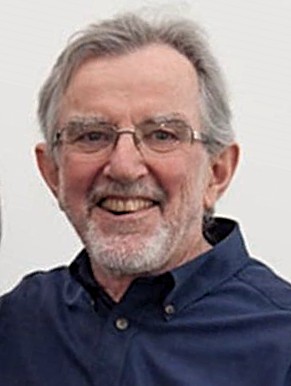
Kingdom Living Part 2: Participatory w Walter Kim

Kingdom Living (Part 2): Participatory w/ Walter Kim

Welcome to Episode 2 of our 2026 GC Podcast mini-series on Kingdom Living. We continue our rich conversation with Dr. Walter Kim, President of the National Association of Evangelicals and keynote speaker for the upcoming Denominational Celebration.

In this episode, Dr. Kim joins our host, Cara Garrity, to explore the participatory nature of Kingdom Living. What does it mean to join Jesus in what he is already doing? How do we step into active discipleship with awareness, courage, and faith? Together, they discuss how recognizing Christ’s ongoing work invites us into meaningful participation.

If you have ever wondered how to move from observing God’s work to actively joining it, this conversation will encourage and equip you.

“Get training, read books, go to seminars. But in the end, training will never replace passion, never replace experience, never replace the connection that you would get with someone as you’re trying to share your faith or trying to serve. And you’re going to realize, gosh, I need some help in this. And then you go get the help. You’re going to be so much more motivated. … One of the best ways to convince a person that they need training is to bring them with you and expose them to a situation that is so faith-stretching that they begin to realize, … I’m not really equipped for this.” — Rev. Dr. Walter Kim

Main Points:

  • What does it mean to join Jesus in what he is doing? What ongoing work are we invited to participate in? 01:19
  • What difference does participatory discipleship make – as disciples, as the church, for our neighborhoods? 07:35
  • What are practices that help us cultivate our participation in Kingdom Living? 13:40


Resources:

The GCI Buzz issues below offer practical and theological reflections on discipleship, church health, and Spirit-led formation. They provide helpful guidance for congregations seeking to grow in transformational Kingdom Living and become more Christlike together.


Follow us on Spotify and Apple Podcast. 

Program Transcript


Kingdom Living (Part 2): Participatory w/ Walter Kim

Cara: In 2026, the GC podcast is shifting to a new format with two miniseries released throughout the year rather than monthly episodes. This change is going to allow us to go deeper into meaningful conversations that support our shared journey of Kingdom Living. In the first half of the year, we’re excited to launch the series with Reverend Dr. Walter Kim, president of the National Association of Evangelicals, and the keynote speaker for the 2026 denominational celebration. In this series, Dr. Kim joins me to explore what it means to live as citizens of God’s kingdom in today’s world, faithful to Christ, formed in community, and engaged in mission. So, stay tuned for this rich and timely series.

Hello folks, and welcome to GC Podcast. I’m your host, Cara Garrity, and this podcast is dedicated to best ministry practices in the context of GCI churches. This is the second episode of our miniseries on Kingdom Living, and joining us once again is Reverend Dr. Walter Kim. Walter, thank you so much for joining us for the second part of this miniseries.

[00:01:17] Walter: Glad to be here.

[00:01:19] Cara: And I am very eager to jump into this next episode. We’re going to be exploring the element of kingdom living that is, that we could describe as participatory, of joining Jesus in what he’s doing and stepping into active discipleship by recognizing and joining in his ongoing work. And so, I just want to start us off with this conversation with what does it even mean to join Jesus and what he’s doing, and what ongoing work are we invited to participate in?

[00:01:55] Walter: Yeah. I think one of the incredibly important lessons that we need to be keeping in mind is that it’s not my ministry for Jesus. It’s Jesus’ ministry that I join.

[00:02:08] Cara: Yes.

[00:02:09] Walter: And that God’s purposes extend beyond that, beyond us, and even beyond the church. I think God has and is and continues to be at work. And I think the opening prayer in Colossians that all things hold together in him, in Jesus. And peppered throughout, we get these throughout the Scripture, we get these insights that God’s constantly at work. I think of Melchizedek, that strange figure in Genesis, right? He shows up out of nowhere. He blesses Abraham. And then the book of Hebrews picks up on that story and says that Melchizedek was a better, higher priesthood than even Aaron’s, that Jesus is a high priest in the order of Melchizedek. Who is this Melchizedek? I’m like, where did he come from? Where did he go after he departs the scene? Like we don’t know this story, but the lesson for me out of this is that while we have a lot told to us about Abraham, about the work of God’s people, about the church, we get these snapshots that God is actually at work all over the place beyond our field of vision.

And Melchizedek comes in just for a moment into our field of vision representing God’s work in this world, and then he goes out doing who knows what, but whatever it is that he did was so important that God later in Hebrews would guide the author of Hebrews to say Jesus was a high priest of the order of Melchizedek. It was like that important. To me the huge lesson about that is God is on the move doing things all over — not just the world, the cosmos — holding every atom and molecule together, and we get to join him in what he is doing in the cosmos. And that’s extraordinary. These snapshots that we get, I think are a humbling reminder.

Yeah. But also an inspiring reminder. Humbling in the sense that who am I that I get to participate in this cosmic ministry, that even right now in the heavenly realms that we don’t see there is a spiritual battle. Who am I to be a part of something so big? It’s humbling.

But it’s also inspiring that no matter how menial it feels, how mundane it feels that what you are doing in ministry, writing that email, filling out that form, calling back that person, visiting your neighbor with the casserole, preparing for your small, no matter how mundane it feels, you are actually involved in a cosmic ministry and you get a chance to find yourself in that big picture. It is both humbling and inspiring to recognize that we participate in what God is doing.

[00:05:37] Cara: Yes. Thank you. And, yeah, I agree. Humbling and inspiring. And I’d never thought about having that, I guess learning from Melchizedek. And I really like that idea of like outside of our window of vision that God’s doing things. I think that is a really cool way to think about that because God’s not limited by what we see.

And I think sometimes when we think about participating in his ministry, first off what you first mentioned is sometimes we think it’s our ministry, and so that’s quite limiting, right? But then even beyond that, I think we often limit what we think God’s doing or his ongoing work to what we can see, what we’re able to discern. But he’s doing all kinds of things all over the place, a cosmic ministry. I really love that. And that it’s just incredible to think about that.

And one of the things I personally love is that means sometimes we see him in places and doing things that we wouldn’t expect. And I think that, yeah, it is just incredible to think about how vast his ongoing work is, and what it means, and how humbling and inspiring it is that we get to be invited into a small piece of that. And that it’s not our piece. It’s not something that our objectives or what we want to see happen, but that it’s we’re being invited into what he’s doing. So, yes. Thank you for that.

[00:07:34] Walter: Yeah.

[00:07:35] Cara: Appreciate that. And I’m wondering, because you touched on the idea that it’s not our ministry and that it’s a humbling and inspiring experience even when things feel mundane, when we look at ministry as participation.

And so, I’m wondering a little bit more, what difference does participatory discipleship make for us as disciples, as the church for our neighbors. What difference does it make when we look at discipleship as participation instead of maybe other kind of ways to approach it or think about it?

[00:08:17] Walter: Yeah. This language or participation, I love it because it does several things. One, it reminds us that ministry is active. The word participate requires activity. You are doing something together. And again, as in our last episode, we referred to Jesus sending out folks and pairs and looking for our Timothys, looking for encouragers.

This notion of participatory ministry is this notion that we are called to do things together as the party of Christ and we need the entire body of Christ to represent the body of Christ, right? If we’re missing a part, a hand or a foot or some aspect, then the world is missing a chance to see something about who Jesus is that requires a full participation.

So, we have a particular calling. We might be keenly interested in justice or evangelism or service or teaching or a hospitality or care for children or care for elder, and we might do all of that really well. But that’s only a part of who Jesus is.

If we want people to have a full view of who Jesus is, then we need to have a participatory ministry that says I want to be as faithful and as excellent to what aspect of Jesus that, and kingdom life that, I am called to portray to you. But if you are left with the impression that’s the only thing God cares about, or that’s the only thing that God’s doing in this world, then you’re going to actually have a very impoverished view of who God is.

So that’s the second thing. Not only is participatory ministry action oriented. Participatory ministry is comprehensive. It is more comprehensive because it’s a constant reminder that if our goal is not just to give people a great view of what we do for Jesus, but a great view at what Jesus is seeking to do in the world, then by definition we need to be a part of something that points to other types of work and ministry. Otherwise, they are not going to get a full picture of the good news of Jesus, much less a full picture of Jesus himself.

The last thing about participatory ministry is it’s super humbling when you have to negotiate how you will accomplish something. And that’s deeply, oftentimes challenging, because you’re going to have to compromise. You’re going to have to work with someone else’s plan. You’re going have to have the curiosity, humility to learn from others, maybe even have your own ideas nixed. And so, it’s character forming. There’s in participatory ministry, there’s something deeply character forming as well.

So, I love this language that you’re using here in terms of kingdom ministry, kingdom life calling as participatory because it reminds us, it’s action oriented. It invites us to have people look at a bigger picture. And it’s also character forming because we have to humbly work with someone else.

[00:12:03] Cara: Yes. Thank you. And I think for me, one of the things that really jumps out is this idea that it requires us to look at the more comprehensive kind of picture of how we’re all participating in different ways and how that reflects that more robust image of what God’s doing and who he is.

And it’s not just a look at this one way of participation, but look at all these body parts that are participating together in this one work of Christ. I really appreciate that aspect of what you shared as well, because it can be easy, right, to get into our little niche and be like this is ministry. This is the most important aspect.

But if we’re talking about participation, it’s what are all of the ways that God’s calling us to participate in the ongoing work that he’s doing that might be outside of our window of vision. And when you are focused on a certain aspect of ministry that God has called you into that doesn’t mean that he’s not working in other spaces and places. Just because we have tunnel vision doesn’t mean that’s the only place that he is. So yeah, I think there’s a lot of wisdom in that. I really appreciate that.

And that aspect of it being active, I’m wondering what are some of the practices that can help us cultivate that active participation in kingdom living?

[00:13:50] Walter: I think we sometimes overestimate what our training can do and underestimate what people’s learning process can be if they just are sent out to try something.

I think about evangelism. I remember just early on, after I became a Christian, I had this kind of pretty radical transformation in high school. I became a Christian and then went away to this retreat and really had this outpouring of God’s Spirit upon my life. It was transformative — went into this retreat one way left, completely transformed. But I had no category for what just happened to me, and I didn’t really have any training.

But I remember coming back from this retreat, I was so overwhelmed by the joy of discovering Jesus that I was playing tennis with my tennis partner before the school year was starting. And just in the middle of our practice session, I stopped. I put down my racket and went to the other side of court and just listen, I need to tell you something about what just happened to my life.

And I realized looking back now, like I’m sure the gospel presentation that I made no sense and probably had a good bit of heresy thrown in because I had no training. I had a lot of passion. And what I got from that is, I’m so glad that I just had just did it rather than just say I can’t do this unless I read a certain number of books or get a certain number of training or …. No, hear me clearly training, reading, like all that’s good. We should have training programs on how to share our faith just as an example in this.

But sometimes we overestimate that if we just train people they’ll go do that and underestimate the passion of just experience. And what I experienced there actually led me to a journey of saying maybe I actually should read something to help me explain this better.

But I think it was important that it often happened in that way. And again, Jesus does that. He like calls people to himself and sends them out and does all sorts of stuff, and then he debriefs them and then says, okay, let me explain what this really is about and it’s this dance of experience and explanation that is often really important about participation.

Again. Yes. Get training, read books, go to seminars. But in the end, training will never replace passion, never replace experience, never replace the connection that you would get with someone as you’re trying to share your faith or trying to serve. And you’re going to realize, gosh, I need some help in this.

And then you go get the help. You’re, like, going to be so much more motivated. And this is where I, again, this idea of go do stuff together that we talked about last time.

Here’s a great opportunity. You, as a leader might be more trained than the person you’re bringing. One of the best ways to convince a person that they need training is to bring them with you and expose them to a situation that is so faith stretching that they begin to realize, the person begins to realize, I’m not really equipped for this.

But they wouldn’t know this unless they experienced something. And so, it’s a wonderful occasion for us to say, can we put ourselves in faith stretching moments to make us realize that we actually need more instruction rather than instruct people and hope that they will get inspired by that instruction to go do the thing.

Sometimes it’s better. Maybe most times it’s better because frankly, this is how children grow up. They experience something and then the parents help explain what just happened. I think discipleship often is like that. We go experience something and then we make sense of it through instruction.

[00:18:33] Cara: Yeah, it’s like participation can be our learning ground as disciples. And I think that that feels really profound because I think often we can be in context that are very like cognitive, that we have to wait until we understand things the right way or that we have to wait till we have all the right answers before we can do something that’s that overestimating of training I think that you speak about, and I think that at least in some of my experience, that part of that is this fear of oh, I will mess up. I have to wait until I know everything.

But maybe it’s okay to learn along the way. Maybe that’s part of the human experience. Maybe that is what we see in biblical accounts, and maybe there is something humbling about that as well, because if we rely only on our own understanding and expertise, maybe then it becomes about what we know and what we can understand, not about what we’re learning from one another and from God in the midst of this participation. So yeah, I think participation as that learning grounds is, that’s profound.

[00:20:07] Walter: When kids learn to walk — when my kids were learning to walk — I have two kids — when they were learning to walk, I didn’t look at them and as they were wobbling across the room, taking really fitful steps, falling down, I didn’t look at them and say, oh my goodness, I’m so embarrassed of you. Like, why can’t you get this better?

I celebrated it. And I think we need to recover something of this. You’re always going to be an amateur. You’re always going to be a toddler in the kingdom of God. In ministry, there’s nothing more humbling than the recognition that you’re never going to become the perfect expert, flawless in your performance the moment you get there. Oh my. May the Lord may humble you by putting you in a new faith stretching environment.

So much of this is the recognition that we need the grace of God. We are toddlers all learning to walk. We’re going to fall and that’s okay. We’re going to stumble. We’re not going have all the answers. And this is where we need to recognize this imagery that we are children of God. We are children of God. He calls us his children.

I think there’s something really important about accepting that. Again, I’m not encouraging us to have immature character and immature relationships, but I am encouraging us to say let’s put ourselves in situations where it’s okay to stumble because how else are you going learn how to walk?

I’m so glad my kids did not wait to learn how to walk until they went through a 10-week training program on walking. They just tried to walk. And in ministry again, yes, let’s train. But there’s no replacement for actually just trying stuff and then cheering one another on with the grace of being able to say, it’s okay to fail. Let’s, learn together.

[00:22:23] Cara: Yeah, absolutely. Another thing that comes to mind when I think about this, like, participatory element of kingdom living is this, maybe, I don’t know what word I want to use for it, but this way of maybe experiencing or approaching church community of faith expression, whatever you want to, word do you want to put to it that’s maybe a little bit more passive? Or sometimes we hear the word like consumption, right? Maybe very individualistic where you just show up to a very well put together church service and then you just you show up for that hour and a half and then you go home and then you do it again the next week. And that’s kind of it. That’s what your participation in discipleship looks like.

And so, I think about that in contrast to this kind of dynamic participation, skinning your knees as you’re learning and you’re growing with one another and with God that we’ve been talking about.

So, I’m, curious what thoughts you might have for us as we maybe encounter in our communities or even sometimes battle within ourselves this maybe temptation to have this like consumptive kind of faith where we just want to come take stuff and then go home and let it be about just like, all right, I’m going to consume this, and then that’s it, and then come back and consume some more, and then that’s it.

[00:24:04] Walter: Yeah. We have become a culture in which consumption is a default way of living. And convenience, I would add that, right? It’s not just consumption. It’s consumption combined with convenience that leads to a sense of passivity, right? Now we can consume, but we can consume at a click of the mouse and we can purchase things.

We don’t even have to go into our car and go to that thing called the mall and walk up and down different shops to find the sale that we are looking for. We don’t need to cut coupons. So even in our consumption, we have reduced it to clickable things, and even in the consumption of religious material, we don’t have to go to church, we can just go online. We don’t physically have to join. We could just be a part of a Facebook group. Again, I want to say there are ways in which these things can be used, so I’m not …

[00:25:10] Cara: Yes.

[00:25:10] Walter: … denigrating the fact that we can use technology really well. But I am saying that if we already live in a consumeristic culture, that’s our default setting that has now been coupled with a convenience culture. So, I have to consume, but I want that consumption now, the most convenient means possible, that for it to be the default setting of our discipleship is to be expected. If this is the bulk of our life, then why should we be surprised that we import this into how we think about our spiritual life, our life in the church?

And so, it’s an uphill battle. It’s a discipleship issue to get out of this consumerist mentality, this passive mentality. But once again there is this interesting moment that we’re in culturally, that even this consumerist notion is being challenged. Like it’s enough. Younger generations now have this interesting backlash to social media and a desire to perhaps be embodied. I was reading an article recently of how some students are responding to the banning of cell phones in their schools. And yeah. Okay. For the first several weeks it was like, oh, I can’t believe they’re banning these. But then students saying, thank you, and now I actually have to talk to people in the lunchroom. Now I am engaging with others around me. It’s like helping me see the world in a whole new way. Yes.

Cara: Yeah.

Walter: Yes. And there are ways that, in which I think within our churches, people might want this more than you realize. If they were invited to participate in something and actually experience something, not be preached at and told, oh, you should get out there, but just invited into experiencing something, I think that could be transformational.

There was a moment, I’ll give you a very tangible example as a younger Christian. I was invited — and I learned hospitality in a way that reading no book could ever do — to a dinner event hosted by someone at which there was, let’s say, someone from the other side of the tracks that was invited to that dinner, a person that struggled with homelessness. And I thought, wow, what am I experiencing here? I’m experiencing a vision of a of discipleship that is just a way of life in which this host is expressing hospitality to me personally, but actually making me engage in ways that I would not have in any other context in a conversation that humanized this person.

[00:28:24] Cara: Yeah.

[00:28:25] Walter: I could not look at someone who was homeless in the same way. That is participatory. That was an invitation. I wasn’t given a manual ahead of time. I wasn’t trained. I just was exposed. That exposure led to an experience. That experience led to a desire for equipping.

And, that’s where I would really encourage us to think about ways in which we can be inviting people to these types of experiences in our transformation. And, to think about not just lamenting consumerism, preaching against it, providing statistics, but providing an experience that makes non-consumerism so compelling. Why would I wish to live any other way than a way that’s disengaged?

[00:29:20] Cara: Yes. Thank you. I appreciate that. I appreciate all the insights that you’ve shared with us on our episode focusing on the participatory aspect of Kingdom Living. And as we prepare to close out our episode I want to invite you to pray for our church leaders and members and community members, neighbors as we seek to be transformed into more of a participatory people.

[00:29:51] Walter: Yes.

Lord Jesus, you said, go, and heavenly Father, you sent and Spirit you move people even now throughout the world to serve you in sacrificial ways, and you invite us not merely as individual followers of Jesus to service, but as communities, as churches, as small groups, as friends in Christ. And Lord, we want to heed your call to go, to make, and to be present in this world in the name of Jesus. Amen.

[00:30:42] Cara: Amen.

Thank you, folks, and until next time, keep on living and sharing the gospel. Thanks for listening. We would love to hear from you. Email us@infoatgci.org. We hope to see you at the 2026 denominational celebration in Texas from July 23rd to July 26th, 2026. Visit us at gci.org/dc26 for more information and to register.

Holy Week Resources

We are pleased to provide the following liturgies for Maundy Thursday, Good Friday, and Holy Saturday. We hope they will give congregations and small groups ideas and guidance for communal, participatory gatherings on these high days.

Maundy Thursday Liturgy

Good Friday Liturgy 

Holy Saturday Liturgy


For individual study and connect groups:

Maundy Thursday Study

Good Friday Study

Holy Saturday Study


Sermon for April 5, 2026 — Resurrection Sunday

Program Transcript


Resurrection of the Lord

Every once in a while, we witness a moment so full of life that it takes our breath away —
a baby’s first cry, a long-awaited reunion, a sunrise breaking through after a storm. These moments remind us that joy can arrive suddenly, surprising us with hope we didn’t know we were waiting for.

Easter begins with this kind of joy.
A joy that bursts into the world like new life after winter, like light flooding a darkened room. It is joy born not from circumstance, but from the One who stepped out of the tomb and made all things new.
The resurrection is God’s declaration that life has the final word, that love cannot be buried, and that joy is stronger than sorrow.

Psalm 118 proclaims, “This is the day the Lord has made; let us rejoice and be glad in it.”
On Easter, this is more than a call to worship. It is an invitation into a whole new reality.
The “day” God has made is resurrection itself.
A new creation. A fresh start for the whole world.

Think of that first resurrection morning. A grieving follower comes to the tomb expecting loss and silence, only to find that what seemed final is undone. The stone is rolled away. Emptiness is transformed into promise. Sorrow turns into wonder as the truth slowly settles in. The crucified one is alive, and nothing will ever be the same.

The resurrection is not God undoing death by force. It is God transforming death itself, filling it with divine life until it can hold us no longer.

This is why we rejoice today.
Because Christ is alive.
Because new life is here.
Because joy has risen with him.

Easter joy is not flimsy.
It does not depend on everything in our lives being perfect or easy.
It is the joy of knowing the risen Christ walks with us, calling us into hope wherever we go.

As we celebrate the resurrection today, let’s reflect together:

Reflect on the empty tomb for a moment. What aspect of Jesus’ character becomes clearer to you? Is it his faithfulness, his power, his compassion, or something else?

As we hold this hope of new life and joy, we return to the story where it all began to unfold in human hearts. On that first Easter morning, grief met grace, and sorrow met the risen one. As we listen now, pay attention to how gently Jesus makes himself known, and how personally he comes to those who seek him.

11 But Mary stood weeping outside the tomb. As she wept, she bent over to look into the tomb; 12 and she saw two angels in white, sitting where the body of Jesus had been lying, one at the head and the other at the feet. 13 They said to her, “Woman, why are you weeping?” She said to them, “They have taken away my Lord, and I do not know where they have laid him.” 14 When she had said this, she turned round and saw Jesus standing there, but she did not know that it was Jesus. 15 Jesus said to her, “Woman, why are you weeping? For whom are you looking?” Supposing him to be the gardener, she said to him, “Sir, if you have carried him away, tell me where you have laid him, and I will take him away.” 16 Jesus said to her, “Mary!” She turned and said to him in Hebrew] ”Rabbouni!” (which means Teacher). 17 Jesus said to her, “Do not hold on to me, because I have not yet ascended to the Father. But go to my brothers and say to them, ‘I am ascending to my Father and your Father, to my God and your God.’” 18 Mary Magdalene went and announced to the disciples, “I have seen the Lord”; and she told them that he had said these things to her.
John 20:11–18 NRSV

As we rejoice in the risen Lord, may the life of Christ rise within us.
The One who stepped out of the tomb now walks with us, calling us into joy, into hope, into new creation.
May his resurrection fill our hearts and guide our steps as we live in the light of this glorious day.

Psalm 118:1–2, 14–24 • Jeremiah 31:1–6 • Colossians 3:1-4 • John 20:1–18

Today’s theme is Jesus speaks our name. Our call to worship psalm is read anew in the light of the resurrection where a new day of rejoicing is made. The Old Testament reading from Jeremiah presents the everlasting love and faithfulness of God calling Israel to himself to be his people. Our reading from Colossians records the words Paul writes of the new life we have hidden in the risen Christ. In the Gospel reading from John, we have the retelling of the story of the first Easter morning and report on the visits to the tomb.

Reminder: This introductory paragraph is intended to sum up the four RCL selections for the week to assist the preacher prepare the sermon. It is not intended to be included in the sermon.

Jesus Speaks Our Name

John 20:1–18 NRSVUE

He is risen! Praise God, he is risen. Happy Easter! “This is the day that the Lord has made; let us rejoice and be glad in it.”

Easter is the high day of rejoicing for Christians. It is the center of the Christian calendar; Christmas, Epiphany, and Lent lead up to it. And Ascension Sunday, Pentecost, and Trinity Sunday flow out from Easter.

But to be clear, we are not here to worship a day. We are here to rejoice in the One this day points to: Jesus the Christ. For what we seek and find on Easter morning is the living Lord who is among us. Let us respond with rejoicing as we are reminded of the good news of Jesus’ resurrection.

Today, that reminder comes to us in the Easter story found in John 20.

Early on the first day of the week, while it was still dark, Mary Magdalene came to the tomb and saw that the stone had been removed from the tomb. So she ran and went to Simon Peter and the other disciple, the one whom Jesus loved, and said to them, “They have taken the Lord out of the tomb, and we do not know where they have laid him.” Then Peter and the other disciple set out and went toward the tomb. The two were running together, but the other disciple outran Peter and reached the tomb first. He bent down to look in and saw the linen wrappings lying there, but he did not go in. Then Simon Peter came, following him, and went into the tomb. He saw the linen wrappings lying there, and the cloth that had been on Jesus’ head, not lying with the linen wrappings but rolled up in a place by itself. Then the other disciple, who reached the tomb first, also went in, and he saw and believed; for as yet they did not understand the scripture, that he must rise from the dead. Then the disciples returned to their homes. But Mary stood weeping outside the tomb. As she wept, she bent over to look into the tomb; and she saw two angels in white, sitting where the body of Jesus had been lying, one at the head and the other at the feet. They said to her, “Woman, why are you weeping?” She said to them, “They have taken away my Lord, and I do not know where they have laid him.” When she had said this, she turned around and saw Jesus standing there, but she did not know that it was Jesus. Jesus said to her, “Woman, why are you weeping? Whom are you looking for?” Supposing him to be the gardener, she said to him, “Sir, if you have carried him away, tell me where you have laid him, and I will take him away.” Jesus said to her, “Mary!” She turned and said to him in Hebrew, “Rabbouni!” (which means Teacher). Jesus said to her, “Do not hold on to me, because I have not yet ascended to the Father. But go to my brothers and say to them, ‘I am ascending to my Father and your Father, to my God and your God.'” Mary Magdalene went and announced to the disciples, “I have seen the Lord”; and she told them that he had said these things to her. John 20:1–18 NRSVUE

The story begins after Jesus was crucified. Jesus has been living among his followers for three years. They have traveled around teaching about God’s kingdom and the shift in values of his kingdom: right relationship with God and with one another, peace, and joy. (Romans 14:17) We call his followers disciples. And they are Jesus’ friends and students who have grown to love him. Mary was a follower.

And now her friend and teacher has been arrested, sentenced to death, and killed on a cross. She is going to his tomb. “Early on the first day of the week, while it was still dark …”

We know it’s Easter morning, but Mary does not. We are going to talk about what happens when Jesus speaks her name. But at this point in the story, it is still dark for Mary; she believes Jesus is still dead.

Today, we celebrate the risen Jesus on Easter, but we do so “while it is still dark.”

Maybe like Mary, it feels like dark times for you. Maybe you’re grieving over the darkness and evil in the world. Celebrating Easter does not mean we pretend that everything is fine in the world or our lives. We are called to believe even “while it is still dark.” There are days where we can barely make out any light at all. Days when our journey feels more like walking to the tomb.

God does not expect us to deny our struggles. Instead, Jesus joins us in our suffering. He suffers with us. And the good news of the Incarnation is that God became flesh in Jesus, who did what we could not do for ourselves. Jesus does not only suffer with us; he suffered for us.

For now, we experience God’s kingdom as already, but not yet. We do not yet experience the fullness of God’s peace and joy. But the darkness of evil and broken relationships is not the end of the story. Jesus has already broken the power of sin and death on the cross. It is finished. And the Light of the world has risen.

Back to verse one. Although “it was still dark,” we find that Mary Magdalene was able to see that something is different. At that time, a tomb was usually a small cave cut into rock, with a heavy stone rolled across the entrance. The stone closed or sealed the tomb. But Mary sees that “…the stone had been removed from the tomb.”

She sees the first sign that something has changed. Here is Mary, stumbling upon a change that we know now to be an incredibly good thing. The stone has been rolled away. But for Mary, she does not at first see it as good. Why do we resist change with all our being?

Her response is to run back to Simon Peter and another disciple to report her alarming discovery. “They have taken the Lord out of the tomb, and we do not know where they have laid him.”

Mary’s weeping. For her, Jesus was everything. He was the one who restored her and the one who literally raised her brother, Lazarus, back from the dead. How can she go on without Jesus? Maybe, like Mary, you have lost someone precious to you.

At least she has his tomb to visit. At least she can come here to lean on the stone which keeps Jesus by her side. Maybe you can relate. Many people feel comforted by visiting the grave of a loved one.

If the stone remains, at least nothing more can be taken from Mary. Maybe we think if we can somehow barricade all that we hold dear behind some immovable stone, we can maintain control.

But Mary does “not know where they have laid him.” Jesus is no longer where she expected to find him. If you’ve been following Jesus for a while, maybe you can relate. God will surprise you! We may prefer the predictability of Jesus staying put, staying in the tomb. But he is risen and active, moving in the world and in our lives. You cannot put him in a box. Certainly not a box made for death.

Our predictions of God’s actions are limited by our human experience and knowledge.

And here’s the good news: we do not need a predictable God. We need a trustworthy God. And God is absolutely worthy of our trust. Even when everything feels out of control, we can trust where Jesus is leading us.

After Mary tells Peter and the other disciple, they “set out and went toward the tomb.” Who is this unnamed disciple? Imagine it’s you. Today in this story Mary is running to you with the claim that the stone has been rolled away. This story invites you to look into the tomb with Peter. What will you see?

Can you imagine yourself as part of this story? Because you are! The story that God has been telling from the beginning of time includes you.

The disciples saw a startling sight. Peter saw “the linen wrappings lying there, and the cloth that had been on Jesus’ head, not lying with the linen wrappings but rolled up in a place by itself.” Then the other disciple also went in, and “he saw and believed; for as yet they did not understand the scripture, that [Jesus] must rise from the dead.”

Are you not glad John tells the story like this? Even the disciples who lived with Jesus and learned from him did not fully understand Scripture. The Bible is not just for pastors and scholars. The Bible is for everyone! The Bible is for you.

And reading the Bible does not earn us anything. We read Scripture to recognize and grow into the love God has already given us in Jesus. God has acted first. Learning about God through Scripture helps us understand and live within that reality.

Jesus speaks our name. And the fruit of that is we want to read the Bible.

The disciples return to their homes; but Mary remains. She stands weeping outside the tomb.

“ … she bent over to look into the tomb; and she saw two angels in white, sitting where the body of Jesus had been lying, one at the head and the other at the feet. They said to her, “Woman, why are you weeping?” She said to them, “They have taken away my Lord, and I do not know where they have laid him.”

She turns and finds herself face to face with Jesus, but she does not know it’s him. Thankfully, Jesus knows how to open her eyes. He speaks to her. He starts with the same question the angels ask and adds one of his own. “Woman, why are you weeping? Whom are you looking for?” These two questions go together. It connects Mary’s tears to her longing for Jesus.

Our tears tell us there is more, leading us to look further. Grief can pull us toward what is missing. You feel sad when you are ignored because you were created to belong. You feel bad when you are lonely because you were created for community. You feel despair that life seems pointless because you actually long for purpose. But God has called you his own and given you purpose. Jesus speaks your name.

Now Mary is standing face to face with Jesus, speaking to him and still does not recognize him. If you could jump into the story, you might want to say, “Mary, don’t you get it?” You may want to remind her that the stone’s been moved and the tomb is empty. Would you try to convince her that this is proof that Jesus is alive? Surely if we use our words convincingly with irrefutable logic, we can get Mary to see the truth of the resurrection. There are many books filled with arguments aimed at convincing others that Jesus has indeed risen.

But maybe we should simply hold back and let Jesus speak. After all, he is the Word of God. This very Word has the power to speak the entire universe into existence. And here in this story we hear the words he chooses to say to Mary to open her eyes. He uses only one. “Mary.”

Jesus speaks the only word that you cannot deny is spoken personally to you. Your name. That’s what we see in the story. Jesus restores all that Mary has lost by speaking her name.

What if we could keep that in mind as we live as people sent by God to share his good news with the world? If you are a follower of Jesus, did you begin to trust Jesus because someone made a convincing argument that proved God is real?

No, you encountered Jesus. And you experienced Jesus through his Body, his Church. Jesus spoke your name.

That’s why we follow Jesus’ example, and say to our neighbors, “Come and see.” Just come. Spend time with us and experience belonging. Come experience the kingdom, encounter God’s love.

We do not have to start with arguments. We do not have to wait for others to “recognize” God before we include them in our community of believers. We can enfold them into our love for God and for one another.

We can show them who God is by living kingdom values. We can care for them, patiently, while

Jesus speaks their name,
and the Holy Spirit convicts,
and the Father draws them to his heart.

Afterall, Mary is recognized by Jesus before she recognizes him. Jesus makes the first move. Just as in rescuing and saving humanity, God has made the first move.

And everything changes because Jesus speaks Mary’s name. Jesus restores their relationship. But he’s not finished.

Jesus gives her a deeper name. He gives her a new identity. Just as he gives us a new identity. He says to her,

“Do not hold on to me, because I have not yet ascended to the Father. But go to my brothers and say to them, ‘I am ascending to my Father and your Father, to my God and your God.’”

Do you see what Jesus has done? He has brought her into his own relationship with his Father. He will not settle for anything less. Jesus has moved Mary’s relationship with him beyond how she related to him before. She is now to relate to him as her brother. Jesus’ Father is her Father. She is a child of God.

Jesus does not only take what we could not bear ourselves: our death, our suffering, our sin. He also gives us his life. This changes everything! Jesus shares with us his life with the Father and the Holy Spirit.

And that life flows outward. Verse 18.

Mary Magdalene went and announced to the disciples, “I have seen the Lord”; and she told them that he had said these things to her.

Jesus commissions her to go and tell. Because the good news is not simply good news for Mary. We cannot keep it to ourselves.

Jesus speaks our name. Like Mary, when we “have seen the Lord,” he transforms us. And the overflow is that we want others to “see the Lord.”

We have this story to read on Easter morning to teach us how faithful God is. He will never leave us or forsake us. In fact, when he ascended to his Father, he took us with him. He refuses to leave us.

Let’s read this good news from Ephesians.

… but God, who is rich in mercy, out of the great love with which he loved us even when we were dead through our trespasses, made us alive together with Christ—by grace you have been saved—and raised us up with him and seated us with him in the heavenly places in Christ Jesus, so that in the ages to come he might show the immeasurable riches of his grace in kindness toward us in Christ Jesus. Ephesians 2:4–7 NRSVUE

May we rejoice that Jesus has lifted us up in his relationship with his Father. May we rejoice that our Savior has rescued us from sin and death.

Jesus speaks your name and he is risen!


Catherine Toon—Year A Easter 1

Sunday, April 5, 2026 — Resurrection of the Lord
John 20:1-18 NRSVUE

This week’s Gospel Reverb is coming soon. We apologize for the delay.

Check back Friday, March 6. Or listen to this week on the full podcast here, beginning at 12:13.


If you get a chance to rate and review the show, that helps a lot. And invite your fellow preachers and Bible lovers to join us!

Follow us on Spotify and Apple Podcast.

Program Transcript


Catherine Toon—Year A Easter 1

Anthony: So, let’s be liberated by God through the Scriptures. That’s why we’re here. So, let’s turn our attention to the first pericope of the month. It’s John 20:1–18. I’ll be reading from the New Revised Standard Version, the updated edition. It is a Revised Common Lectionary passage for the Resurrection of Our Lord, Easter Sunday, April 5, and it reads:

Early on the first day of the week, while it was still dark, Mary Magdalene came to the tomb and saw that the stone had been removed from the tomb. 2 So she ran and went to Simon Peter and the other disciple, the one whom Jesus loved, and said to them, “They have taken the Lord out of the tomb, and we do not know where they have laid him.” 3 Then Peter and the other disciple set out and went toward the tomb. 4 The two were running together, but the other disciple outran Peter and reached the tomb first. 5 He bent down to look in and saw the linen wrappings lying there, but he did not go in. 6 Then Simon Peter came, following him, and went into the tomb. He saw the linen wrappings lying there, 7 and the cloth that had been on Jesus’s head, not lying with the linen wrappings but rolled up in a place by itself. 8 Then the other disciple, who reached the tomb first, also went in, and he saw and believed, 9 for as yet they did not understand the scripture, that he must rise from the dead. 10 Then the disciples returned to their homes. 11 But Mary stood weeping outside the tomb. As she wept, she bent over to look into the tomb, 12 and she saw two angels in white sitting where the body of Jesus had been lying, one at the head and the other at the feet. 13 They said to her, “Woman, why are you weeping?” She said to them, “They have taken away my Lord, and I do not know where they have laid him.” 14 When she had said this, she turned around and saw Jesus standing there, but she did not know that it was Jesus. 15 Jesus said to her, “Woman, why are you weeping? Whom are you looking for?” Supposing him to be the gardener, she said to him, “Sir, if you have carried him away, tell me where you have laid him, and I will take him away.” 16 Jesus said to her, “Mary!” She turned and said to him in Hebrew, “Rabbouni!” (which means Teacher). 17 Jesus said to her, “Do not touch me, because I have not yet ascended to the Father. But go to my brothers and say to them, ‘I am ascending to my Father and your Father, to my God and your God.’” 18 Mary Magdalene went and announced to the disciples, “I have seen the Lord,” and she told them that he had said these things to her.

So, Catherine, if you were sitting having coffee or tea or whatever you enjoy drinking with a dear friend who’s unsure about God’s love for them, and you had this text open, what would you say from the text? And it’s just an opportunity to herald some good news.

Catherine: Yeah. Thank you. There are multiple things in here that are going on. When you look at the “characters” in the story and marrying the story and the other disciples, they are traumatized.

And it’s interesting because Jesus had mentioned his resurrection coming multiple. I need to, I will die, I will be resurrected. We can only receive to a certain point. So, he had prepared and they were yet not fully prepared. And so, this is what they come to and she sees this tomb.

And when you think of it, you think of the places that have represented death in our own lives, right? Loss in our own lives. And I love the way there is such a tender ministry that’s going on that starts with the angel, starts with the angelic, and they have the perspective of Jesus, the Christ as he is resurrected.

And so, meeting us in our humanity, we’re weeping because all we see is loss. Everything I put my hopes, my life, everything that was good died in that tomb. And died on the cross rather, and was put in that tomb. And then to have the humiliation of that body being taken away, all of that. She is traumatized.

And so, the angelic meets her with this question, why are you weeping? And it seems so obvious, right? I’ve lost; we’ve lost Jesus. They’ve taken away my … we don’t even have his body. It’s been desecrated. And then very personally, Jesus meets her in her trauma and there’s no condemnation.

But there’s that question, why are you weeping? He’s asking her like, duh, okay. In our place of weeping, there is a limited perspective. And then he adds what the angels didn’t. Whom are you looking for? And so, she’s looking for her Lord that she thinks is dead. She’s looking for the body.

And he’s veiled to her. And in so many places, God is veiled to us in our weeping, right? He’s with us in our weeping, he weeps when we weep, right? It’s very tender. But he’s also bringing us in the place of something bigger going on that will dry all those tears.

And the thing that prompted the veil off her eyes to be lifted, is when this beautiful God who is meeting her right where she’s at, with no condemnation, says her name. And there’s something about our God saying our name to us, we are known. And that’s when she was able to recognize the one she loved, right? That was when she was able to see the teacher.

But the one that she had followed and based her whole life off of. And he reveals something so tender to her in this, do not touch me because I’ve not yet ascended to the Father. This is revelation. Wow, you’re going back to the Father. And I love this. I’m ascending to my Father and your Father.

Anthony: Amen.

Catherine: That he accepts you are not an orphan. I may physically be leaving, but you’re one, you’re accepted and it’s personal to my God and your God. You know the humility of that with Jesus saying Father is my God and he’s your God. We are included in the fullness of his relationship with his Father in the Holy Spirit.

And so, this did something to her soul, that she was able to be the apostle to the apostles and proclaim the risen Christ. And because her heart was, she could see it now and she didn’t need to weep. And what does that mean to us personally? Number one, he knows our name. And says our name tenderly and draws us up out of our limited perspective to see that we had everything in him as the risen Christ and that we are one with our Father, one with him, one in the Holy Spirit. We have all things and everything that maybe was destroyed, a loved one dying, or whatever was lost, is all bound up in him. He loses nothing. Every fragment of our souls that feel shattered, he’s got them and he knows how to bring it together. Because if he can be the resurrected Christ coming from where he came from, he can resurrect things in our lives that seem hopelessly broken and lost.

Anthony: That’ll preach on Easter Sunday for sure. Thank you.

It strikes me that this had to be a day of extreme highs and deep lows for Mary. So, let’s spiritually imagine for a moment what this Jesus meant to her. You’ve alluded to it but tell us more.

Catherine: Yeah. Her very world hinged on him. This is why it was so traumatic, because her whole world hinged on this one that she knew as Messiah, and it is mind blowing to imagine him being taken away, but much less with crucifixion and everything that she actually witnessed.

And so, everything in her world hinged on this one, and it made no sense. She was with him to witness all of these things. And so, if Jesus is your everything and there’s a revelation of him that she didn’t know, and honestly, we don’t know. We’re all growing in wisdom and revelation that our whole being, the whole cosmos, everything that matters is connected to, is upheld by this one.

And so, you go from this complete desolation, you go from — it’s amazing the amount of trauma that these disciples did — and the ones that particularly could handle it and stayed faithful with him in this process and witnessed the whole thing, but not understanding the other side.

But this is — their everything was in context of Jesus. And so, for him to be resurrected means that everything, all things are possible. Truly all things are possible. What is impossible? That God is faithful being himself but not violating anything in his own ministry. Because he said, “I give you a new commandment, that you love as I love.”

And so, his being willing to bow down to human rage and bow down to death and bow down to all these things so that he could consume it in himself, on our behalf and be resurrected and resurrecting us with him. Of course, she didn’t have that revelation yet, but this was everything. She had a revelation of something that is so huge, that yes, this is the one, this is the one we’ve set all our hopes in. We put all our eggs in the Jesus basket, right in the issue with the basket. And he did not fail us.

Anthony: No ma’am. Grace was lavished on us, and he took us with him. Oh, it’s such a …. For me, Easter Sunday, it’s like this wonderful time to proclaim the good news, but it’s also can be a, like, how do you say it all? Like, how do you encapsulate what has transpired here? It’s so awesome. But it’s my prayer that as we come together as brothers and sisters in Christ and hear this word proclaimed, we will be once again filled with awe and wonder of this amazing God revealed in Jesus. Amen and amen.

Catherine: Amen.


Small Group Discussion Questions

  • The sermon drew attention to the fact that “it was still dark” on Easter morning. How does this detail in the story help you in your celebration of Easter when so much darkness exists in our world? Discuss.
  • Mary Magdalene struggled to adjust to the changes she encountered at the empty tomb. Can you identify with Mary’s struggle to adjust to change, even when the changes are good ones?
  • How might the resurrection of Jesus challenge our desire to be in control? In what ways do we try to “hold on to Jesus” instead of trusting his work in us?
  • How might we go and tell people that we “have seen the Lord,” while also trusting the Holy Spirit’s work in their life?

Sermon for April 12, 2026 — Second Sunday of Easter

Speaking Of Life 5021 │ Stop Doubting and Believe

Welcome to this week’s episode, a special rerun from our Speaking of Life archive. We hope you find its timeless message as meaningful today as it was when it was first shared.

Michelle tells the story of Doubting Thomas, who needed physical proof to believe in Jesus’ resurrection. When Thomas finally met Jesus, he believed and acknowledged Him as Lord. Learn how we can relate to Thomas’s doubts and ask Jesus for help, and discover how doubt can be overcome with the Holy Spirit’s aid.

Program Transcript


Speaking Of Life 5021 Stop Doubting and Believe
Michelle Fleming
 
Have you ever heard someone being referred to as a “Doubting Thomas”? If you have, then you were probably aware that this was not meant as a compliment. It is typically used to describe someone who is a skeptic. Someone that is known to utter, “I’ll believe it when I see it!” 

Shortly after Jesus’ crucifixion, the disciples locked themselves away in fear that the Jewish officials might come for them next. But Jesus appeared to them in their locked room. To prove that he was real, he showed them his nail-scarred hands and feet.

One of the disciples was missing, however, and here is where Doubting Thomas comes in. John shares the story:

Now Thomas (also known as Didymus), one of the twelve, was not with the disciples when Jesus came. So, the other disciples told him, “We have seen the Lord!” But he said to them, “Unless I see the nail marks in his hands and put my finger where the nails were, and put my hand into his side, I will not believe.”  

A week later his disciples were in the house again, and Thomas was with them. Though the doors were locked, Jesus came and stood among them and said, “Peace be with you!” Then he said to Thomas, “Put your finger here; see my hands. Reach out your hand and put it into my side. Stop doubting and believe.” Thomas said to him, “My Lord and my God!” Then Jesus told him, “Because you have seen me, you have believed; blessed are those who have not seen and yet have believed.” 

John 20:24-29

We can relate with Thomas, can’t we? As excited as the other disciples were that they had seen Jesus, Thomas was skeptical. For whatever reason, he was not present when Jesus showed up and he got quite specific about what it would take for him to believe. 

A week later Jesus reappears, and this time Thomas is there. Jesus tells Thomas to go ahead and touch him. Then he tells Thomas to stop doubting and believe. With the exclamation, “My Lord and My God!”, Thomas becomes the first to acknowledge who Jesus really was and is. 

Like Thomas, we all have those moments of doubt. Moments where we wonder if God can hear us, or if he sees what we are going through. Does he really care about me? We want to believe, but doubt enters in. 

In another place in Scripture, a distraught father of an afflicted child blurts out, “Lord, I believe; help my unbelief!” (Mark 9:24). This is beautiful because it describes us so well. We believe, and we ask Jesus to help us where we doubt. He can be trusted to answer that prayer. Because he is the one who has perfect belief, and believes on our behalf.

Thomas didn’t stay a doubter. Tradition says that Thomas was the first missionary to India. In 52 A.D. he sailed from Palestine and arrived on the Kerala coast. He was martyred twenty years later, but not before founding seven flourishing churches. In India today, there are nearly 70 million believers.  

Doubt did not have the last word in Thomas’ life, and with the help of the Holy Spirit, it will not have the last word with us either.  

I’m Michelle Fleming, Speaking of Life.

Psalm 16:1–11 • Acts 2:14a, 22–32 • 1 Peter 1:3–9 • John 20:19–31

This week’s theme is Peace comes to us. In our psalm, the psalmist displays confident trust in God’s promise of life after death. In Acts, Peter confirms and declares that Jesus was not abandoned to the grave but was raised to new life. In 1 Peter, we read Peter again affirming that we have been given new life because of Christ’s resurrection. And in our pericope in John, Jesus appears to the disciples after his resurrection, which leads to John’s promise that whoever believes in Christ will possess new life.

Reminder: This introductory paragraph is intended to sum up the four RCL selections for the week to assist the preacher prepare the sermon. It is not intended to be included in the sermon.

Peace Comes to Us

John 20:19–31 NIV

[Read or ask someone to read the passage.]

19 On the evening of that first day of the week, when the disciples were together, with the doors locked for fear of the Jewish leaders, Jesus came and stood among them and said, “Peace be with you!” 20 After he said this, he showed them his hands and side. The disciples were overjoyed when they saw the Lord.

21 Again Jesus said, “Peace be with you! As the Father has sent me, I am sending you.” 22 And with that he breathed on them and said, “Receive the Holy Spirit. 23 If you forgive anyone’s sins, their sins are forgiven; if you do not forgive them, they are not forgiven.”

24 Now Thomas (also known as Didymus), one of the Twelve, was not with the disciples when Jesus came. 25 So the other disciples told him, “We have seen the Lord!”

But he said to them, “Unless I see the nail marks in his hands and put my finger where the nails were, and put my hand into his side, I will not believe.”

26 A week later his disciples were in the house again, and Thomas was with them. Though the doors were locked, Jesus came and stood among them and said, “Peace be with you!” 27 Then he said to Thomas, “Put your finger here; see my hands. Reach out your hand and put it into my side. Stop doubting and believe.”

28 Thomas said to him, “My Lord and my God!”

29 Then Jesus told him, “Because you have seen me, you have believed; blessed are those who have not seen and yet have believed.”

30 Jesus performed many other signs in the presence of his disciples, which are not recorded in this book. 31 But these are written that you may believe that Jesus is the Messiah, the Son of God, and that by believing you may have life in his name. John 20:19–31 NIV

Picture this: You are home, and the doors are locked. It’s late at night after the biggest disappointment of your life. Maybe you’ve just lost your job, received difficult news, or let someone down. You’ve locked the world out; you’re hiding. The shades are drawn. Your fear, shame, and uncertainty fill the room with a heaviness you can feel in the air. You replay every “what if,” every regret, and every anxious thought.

This is where we find Jesus’ disciples — locked away, feeling defeated and uncertain about what comes next.

And here is the good news right at the start: it’s precisely behind these closed doors that the risen Jesus shows up. He does not wait for us to clean up our mess before entering. He steps through every barrier — physical, emotional, and spiritual — to meet us right in the despair of our fear and confusion.

So, let’s imagine we’re all in that room together with the disciples, and see what happens when the Prince of Peace walks in.

And as we do, I want you to hold onto this one point. If you forget everything else, remember this: Peace comes to us.

We will start by looking at verses 19 and 20.

On the evening of that first day of the week, when the disciples were together, with the doors locked for fear of the Jewish leaders, Jesus came and stood among them and said, “Peace be with you!” After he said this, he showed them his hands and side. The disciples were overjoyed when they saw the Lord.

On the evening of that first Easter, with the doors locked “for fear,” Jesus comes and stands among his disciples. The first words out of his mouth are “Peace be with you.”

Imagine how the disciples might have braced themselves. Almost all of them had abandoned Jesus; they fled when he was arrested. John is identified as the only male disciple present at the cross. Perhaps they expected Jesus to express disapproval or to list what must be done to repair their relationship.

Instead, Jesus offers a blessing: “Peace be with you.” He simply comes into their midst and declares peace. And they were overjoyed.

Jesus does not start with their performance. He starts with his presence.

This matters because it tells us something about how Jesus meets us. It is not our moral perfection or self-sufficiency that brings Christ near. The disciples were hiding, grieving, and probably deeply ashamed, feeling they had failed their Lord. Then Jesus enters in their great need.

He shows them his hands and side — wounds that speak of suffering and victory all at once — and he repeats the greeting: “Peace be with you!”

Again, Jesus does not start with what they had done. He starts with who he is and what he has done.

And when he shows them his scars, he’s not just proving it’s really him. He’s preaching without words.

Those wounds say:
“I carried the nails.”
“I carried the spear.”
“I carried the curse.”
“I carried the full weight of sin and death.”

And here’s the part we need to say plainly: Jesus has done for us, in us, what we cannot do for ourselves. That’s what we mean when we say Jesus’ work is vicarious — that Jesus acted in our place, on our behalf, as our representative. He took what we deserve. He gave what we could never earn.

The disciples did not go searching and find peace. They did not achieve peace. Peace came to them. Jesus is our peace; Jesus is God with us.

Sometimes the peace we imagine is just “nothing bad is happening.” But Jesus’ peace is not denial. It’s not pretending while our heart is breaking.

The peace that Jesus gives is not something that denies our pain, but peace by his presence in that pain. His peace is also not the absence of trouble, but the promise that he will never leave us nor forsake us. It is the peace of not being alone.

Jesus brings peace that comes through real suffering. And because Jesus is human and endured the cross, he understands suffering. His is a peace that has journeyed through crucifixion and has broken the power of death. A peace anchored in love and power that cannot be shaken.

The word for peace in John 20 means peace as in wholeness, harmony, safety, and prosperity. It refers to the restoration of a right relationship with God. Peace like a relationship that was broken and is being repaired. Like a life that was scattered and is being gathered back together.

Jesus does not say, “Peace be with you” like a polite greeting. He is our peace and he gives himself for us.

Peace comes to us.

Jesus meets us in the very places where we feel least worthy to welcome him. And yet, the doors we try to lock to keep out our fears cannot keep out Christ. No emotional wall, no mountain of guilt, no fortress of regret is too strong for the one who walks through locked doors.

If your heart is weary, your soul anxious, your mind plagued by questions, remember: Peace comes to you.

So, let’s see what Jesus does next in verses 21–23.

Sending Witnesses, Not Experts

Again, Jesus said, “Peace be with you! As the Father has sent me, I am sending you.” And with that he breathed on them and said, “Receive the Holy Spirit…”

After greeting his disciples with peace, Jesus immediately says, “As the Father has sent me, I am sending you.” The mission is not cancelled by their doubt or hiding; it’s reborn in his grace.

And notice the order again. Peace first. Sending second.

Jesus does not say, “Get yourselves together and then I’ll send you.” He does not say, “Prove you’re loyal and then you’ll have a role.” He shares his peace with us, and then he gives us purpose.

And he roots it in God himself: “As the Father has sent me…”

That is not a small detail. It tells us mission is not the Church’s idea. It is God’s heart.

Here we witness the triune pattern clearly:

The Father is the Sender — he sends in love.
The Son is the Sent One — he comes near in flesh, suffers for us, rises for us.
The Holy Spirit is God in us — giving life, courage, and power we do not have on our own.

This is not three separate gods. This is the one God who is Father, Son, and Spirit — one God acting for our salvation. The Father sends the Son to bring us home. The Son does not come only to show us a path; he becomes our peace by his finished work on the cross. And the Spirit does not merely give us a boost; he gives us the very life of Christ so we can live as people of peace in a fearful world.

Then Jesus breathes on them. That image matters. The line “Receive the Holy Spirit” is not a side note. It is the fuel of the whole mission. It’s as if in that breath, Jesus is saying: “I do not send you in your own strength. I am giving you my Spirit.”

And here is where we need to make Christ’s finished work unmistakable: the disciples are being sent as people who have been rescued.

Jesus sends people out who know what it’s like to be scared, to need forgiveness, to be forgiven. He commissions people who know that they need grace. Jesus sends us as witnesses.

And when Jesus talks about forgiveness here, we need to hear it as good news. The Church has been handed a message: Jesus is the source of forgiveness. He is not only announcing forgiveness — he purchased forgiveness with his blood.

And we are sent to announce what is true because of his finished work: that peace and reconciliation are offered to all.

Mission is sharing what we receive by joining with God in what he is already doing in the world — restoring, redeeming, healing, reconciling — through everyday lives in everyday places.

At work, when you refuse to crush someone and instead offer patience.
At home, when you choose forgiveness instead of cold distance.
In your neighborhood, when you notice pain and step toward it with kindness.

That’s God’s peace spilling out into the world.

Peace comes to us.

But what about doubts — especially the kind that feel like locked doors inside our own minds?

We read in verses 24–29 that Thomas was not there during that first encounter. So, when the other disciples tell him about seeing Jesus, he responds: “Unless I see the nail marks… I will not believe.”

And this is where we get the expression “a doubting Thomas.” But the truth is, most of us would have reacted the same way. Thomas does not ask for anything more than the others received; he just says it out loud.

Maybe that’s you. You’re not trying to be difficult. You’re being honest. “I want to believe. But I cannot make myself believe.”

And what does Jesus do with that?

A week later, the disciples are together again — behind closed doors — and Thomas is included. Jesus comes again, offering the same words: “Peace be with you.”

He meets Thomas’ skepticism with invitation — not scolding but kindness: “Put your finger here; see my hands … Reach out your hand and put it into my side. Stop doubting and believe.”

Here is a Savior who is not threatened by our questions, who makes room for honest inquiry, and who offers himself as the answer. He says, “Thomas, look at me.” Because the wounds tell the story. The scars are the sermon.

Thomas’ response — “My Lord and my God!” — is not just some intellectual “aha” moment; it is the soul’s cry of someone for whom God has just become real. This is not just an idea. This is a Person. The risen Jesus is standing here, alive, and his wounds mean something for me.

That is vicarious grace: Jesus died for us and instead of us. He carried what we cannot carry. He paid what we cannot pay. He took our sin into his own body and buried it in his grave. And in rising, he brings us into his life with the Father, by the Spirit.

Jesus then says, “Because you have seen me, you have believed; blessed are those who have not seen and yet have believed.”

This is important for future generations — for you and me. Faith is trusting Jesus’ presence and promise, even when we cannot see his wounds with our eyes.

It’s not your grip on God that saves you. It’s God’s grip on you. You are still included when you have doubts. Often, doubt is faith reaching for something to hold. “I want to believe; help me understand.”

The Father is not disgusted by your weakness.

The Son does not withdraw from you in your questions but comes close with scars.

The Spirit does not abandon you but draws you to the Father’s heart when belief feels hard.

Peace comes to us.

________________________________________

Closed Doors to Open Lives (John 20:30–31)

The Gospel of John tells us this story so that “you may believe that Jesus is the Messiah, the Son of God, and that by believing you may have life in his name.” Jesus is inviting each of us into something real and personal.

“Believing” is not a one-time event, but a lifelong journey marked by encounters with Christ who meets us again and again, even in locked rooms.

And John’s conclusion reminds us: the resurrection is not just a happy ending to an ancient story. It’s the beginning of God’s new world, reaching through time right into our lives.

The “locked doors” are not just details of the disciples’ circumstances; they become a picture of every place in life where fear, shame, and disappointment keep people shut in.

Think of how often we carry burdens — regrets from the past, anxieties about the future, wounds that make it hard to trust or hope again.

The resurrection of Jesus means that none of these closed doors are ultimate. Through the power of his Spirit, Christ is forever entering those places, offering not only his presence but his very life.

This resurrected life that we receive is Christ’s very life given to us in the Person of the Holy Spirit. In Christ’s life we can see his peace overtake our fear. In his life we experience forgiveness for ourselves and the ability to extend it to others.

The resurrected life is about what Christ has already done and now shares with us.

In this story of the locked room, we see a movement:
from hiding to openness, from fear to courage, from isolation to community and purpose.

This life is shaped by Jesus’ peace — a peace the world cannot give and which all the world’s locked doors cannot keep out.

The disciples’ locked room becomes a sanctuary, not by escaping danger, but by the presence of the risen Lord at its center.

And let’s not miss this: those first believers, once paralyzed by fear, become bold ambassadors of Christ’s peace. But why?

Not because they became impressive.
But because Jesus breathed on them.
Because Jesus gave them his Spirit.
Because Jesus made peace through his cross.
Because Jesus rose and stood among them alive.

The closed doors that once imprisoned them now swing open as they’re sent in the Spirit’s power to proclaim forgiveness in Christ. They are living witnesses to the truth that no obstacle is greater than the love of God revealed in Jesus.

That’s mission: carrying God’s peace into the places that still feel locked. Telling others that Peace comes to us.

________________________________________

Today, you may feel like you’re hiding — locked away from hope or joy, weighed down by anxiety or regret. Maybe your faith feels frail, like Thomas’s did.

Hear this: Jesus walks right into those spaces and shares his peace with you.

He meets you with the scars that overcame death and the grave. He meets you with breath — his Spirit — guiding and empowering you. He meets you with words that commission you to be his messenger of grace.

The Father sends the Son.
The Son gives himself for you in his finished work on the cross.
The Spirit gives you Christ’s life and peace from the inside out.

Your doubts do not keep him away. Your failures are no match for resurrection power. The doors you close cannot keep out his love.

So, when Jesus says, “Peace be with you,” he is not giving you a slogan. He is giving you himself.

Peace comes to us!


Catherine Toon—Year A Easter 2

Sunday, April 12, 2026 — Second Sunday of Easter
John 20:19-31 NRSVUE

This week’s Gospel Reverb is coming soon. We apologize for the delay.

Check back Friday, March 6. Or listen to this week on the full podcast here, beginning at 25:44.


If you get a chance to rate and review the show, that helps a lot. And invite your fellow preachers and Bible lovers to join us!

Follow us on Spotify and Apple Podcast.

Program Transcript


Catherine Toon—Year A Easter 2

Anthony: This transition to our next Bible passage of the month, it’s John 20:19–31. It is the Revised Common Lectionary passage for the second Sunday of Easter, April 12. Catherine, would you read it for us, please?

Catherine: I would be so delighted to do that.

When it was evening on that day, the first day of the week, and the doors were locked where the disciples were, for fear of the Jews, Jesus came and stood among them and said, “Peace be with you.” 20 After he said this, he showed them his hands and his side. Then the disciples rejoiced when they saw the Lord. 21 Jesus said to them again, “Peace be with you. As the Father has sent me, so I send you.” 22 When he had said this, he breathed on them and said to them, “Receive the Holy Spirit. 23 If you forgive the sins of any, they are forgiven them; if you retain the sins of any, they are retained.”24 But Thomas (who was called the Twin), one of the twelve, was not with them when Jesus came. 25 So the other disciples told him, “We have seen the Lord.” But he said to them, “Unless I see the mark of the nails in his hands and put my finger in the mark of the nails and my hand in his side, I will not believe.” 26 A week later his disciples were again in the house, and Thomas was with them. Although the doors were shut, Jesus came and stood among them and said, “Peace be with you.” 27 Then he said to Thomas, “Put your finger here and see my hands. Reach out your hand and put it in my side. Do not doubt but believe.” 28 Thomas answered him, “My Lord and my God!” 29 Jesus said to him, “Have you believed because you have seen me? Blessed are those who have not seen and yet have come to believe.” 30 Now Jesus did many other signs in the presence of his disciples that are not written in this book. 31 But these are written so that you may continue to believe that Jesus is the Messiah, the Son of God, and that through believing you may have life in his name.

Anthony: Hallelujah. I like the way you intentionally said peace be with you.

Catherine: Yeah.

Anthony: What a glorious declaration from the risen Lord Jesus to his friends. And like humanity sometimes paralyzed with fear. How might that be good news today?

Catherine: Yeah. We as human beings, we suffer with so much fear and we couch it with a lot of different verbiage: anxiety, trauma. Sometimes we couch it as like concern or anxiety, but at the end of the day, it is fear. And fear says it’s not going to be okay. I’m not going to be okay. There will be loss. Ultimately, Hebrews says, it’s fear of death and Jesus overcame death. And as the risen Christ, he can speak unto us, “Peace be with you.”

And there is an empowerment. This is not something that we have to jockey up our faith to apprehend peace. It’s what we get out of our communion with the One who is the Prince of Peace. He causes us to transcend the issues, the torments, the anxieties, the pain, the confusion, the uncertainty, the feeling that we’re not in control.

And honestly, control is an illusion anyway.

Anthony: Amen.

Catherine: Right? And so how can we be peaceful when we don’t have control? Because it was never up to us. It is from our place of our oneness and our union with this God who transcended death, who transcended sin, who transcended everything in order to grab hold of humanity and pull us out of darkness and meet us in the places where subjectively we’re experiencing all of that, we have the objective truth of what was accomplished on the cross, a death, burial, and resurrection.

And then we have the subjective truth of where we meet him, where he meets us in our felt life. And so, the beautiful thing is that there’s always a place to go. And when I’m struggling with something, I have this thing that I’ll walk around and I’ll think of something like that would create anxiety and I literally say out my mouth, this is funny, but it works for me. Nobody panic. Okay, there’s no one there but me, my Father, Son, and Spirit, right? We’re all one. They’re not panicking. So clearly, it’s me, but it helps me apprehend my haywire mind and what’s going on in my emotions so that I can go inside and connect with the one who is my peace. Because one way or the other it is going to be okay.

If somehow Jesus wasn’t this masterful Savior, if somehow, he wasn’t able to redeem all things and hold all things in himself then we might have a justifiable reason to be anxious, to be fearful. And life happens. There are things that will squash you. It is a thing. But in that, he causes us to transcend as he transcended, because we are one with this One who carries peace.

And so, this is peace beyond our comprehension, beyond our ability to understand. Because I don’t know how it’s all going to work out. But one way or the other, it’s going to be okay. One way or the other, it’s going to be good because we’re journeying in this with this God who says, “My peace I give to you.” “Peace be with you.” And we can commune in this place of peace so that somehow, we’re able to navigate whatever comes before us, and then we’re able to give out of that place.

So, when people are freaking out and there is a lot of freak out, yeah, we’re able to minister that which is inside us because we’re carriers of Christ who is our peace. And that also allows us to come up with creative solutions to the problems that comes up because our mind’s not so haywire. Yeah.

Anthony: Yeah, for sure. It’s when he says peace be with you. He can do that with integrity because peace is embodied. Peace has a name. His name is Jesus. And I’m with you. And I love that. I often call this upper room the panic room, and he enters as the unanxious presence in the room. And sometimes I think we think we want God to be just as fired up or as, just as …. No, I want God to be the One who holds the beginning from the end and is unanxious. And as I keep my eyes fixed on him, my anxiety begins to dissipate because he’s, as you said, he’s not freaking out. He’s the Lord. And he actually, even though I wouldn’t say God is in control, because we just have such a fallen understanding of control. He does have everything in his hand.

Catherine: Yeah.

Anthony: And he’s okay. And that’s such good news in an age of outrage. You mentioned Catherine, that there is an objective and subjective perspective. And I think that’s really helpful when reading Scripture, and maybe that will help frame this next question. What does it mean as it says in verse 22 to receive the Holy Spirit?

Catherine: I love that question and you totally set me up, so this is great.

Anthony: Good. Go for it.

Catherine: What a generous host. So objectively, right? We’re all in Christ. Christ is in us. God is omnipresent. So that means where is God not present? Where is his Spirit not present? “If I make my bed in the midst of Sheol, you are there.” And we make a lot of beds in Sheol. Just a thing in our mind and just in our experience, not “our fault,” but just a fallen world.

And so where is this Spirit? And so, if the Spirit is in Sheol and in him, we live and move and have our being, okay? To be, is to be in Christ in the Spirit. So, it’s not like Jesus, the Spirit wasn’t there, and then suddenly, Poof! Spirit’s there. Holy Spirit is that called the modesty of God, does not point to himself, but points to Christ.

Anthony: Yes.

Catherine: But he moves and he’s in us. I remember growing up, I was not raised in a Christian home. I didn’t say those sinner’s prayer until 27. Okay? But I had massive encounters with the Lord that literally saved my sanity in areas that were very … I knew God. Now there was a lot to that story and I don’t want to go haywire with it, but I knew God and he knew me. I knew he loved me. And I loved him. And that was pretty much my theology, which is actually dang good theology right there. And that’s what I needed to survive a traumatic childhood, right?

Anthony: Yeah.

Catherine: And in order this thought that somehow, like I say, the magic prayer and the Spirit just pops inside now. And I didn’t know? Of course, I knew him before, but this is an awakening. Like Mary, when she couldn’t see the embodied Christ before, the incarnate Christ before her until the veil was lifted. We don’t always recognize the Spirit that dwells in us, that inhabits us, that in him, we live and move and have our being until that’s unveiled.

So, we’re talking about an objective reality and objective truth that Holy Spirit is everywhere. And in us. I remember when I was … I got through a period of God I was so angry with God because everything in my life fell apart. And I was just like, “I don’t want to hear from you.” “I don’t want to see you.”

And he was like, “Okay, Catherine, I understand,” but he wouldn’t leave me. And so even when it was giving him the flying fingers. “That’s okay, babe. When you’re ready, you’ll come around.” He’s so patient.

I have a chapter in my book called Annoying Relentless Love, because he would not leave me alone. Okay. This is the God that you can’t shake even if you want to, because we are one with him. But this is our issue as human beings, that we are veiled. We don’t experience. We experience things over time. Things are unveiled to us. And this, any sense of separation is in our minds. We’re alienated in our minds.

And this is God, healing our minds, healing our ability to see what already is, because the breath of God, the ruach of God was with us in the very beginning. When you talk about Genesis and Adam and Eve walked with him in the cool of the day. Adam walked with him in the cool of, he walked in …  the ruach is “cool of the day.”

We were walking in the Spirit. You can’t shake him, but we need to wake up to him. In Galatians 1, it talks about, Paul was talking about how he had been set apart from his mother’s womb and called by his grace, “was pleased to reveal his Son in me.”

Did the Holy Spirit suddenly hop in there? No. It was a revelation, a revealing and unveiling of the Spirit already present. And in this thing — so it wasn’t that Jesus was going to give them this theological thing — “so let me just, guys, let me just help you here. Holy Spirit’s already here.” He didn’t do that. He did something practical. I love God for so many reasons, but I love the way he moves practically.

We need sacrament, we need laying on of hands. We need Jesus to breathe on us. We need something so that we can apprehend what is already true and live in it.

Anthony: No, that’s so good. The sacraments, that which physically makes manifest the unseen reality of what is true and that. That the lights would come on in our minds, and it would reach our hearts. This is, oh, we could spend days talking about this, that God has objectively made it so. May we receive what is already ours. In essence, receive what is already ours in Christ. Amen and amen.


Small Group Discussion Questions

  • What are some ways that you can speak “peace” over someone’s life?
  • Is it comforting to know we’re simply called to share what we’ve received, not called to be experts?
  • What do you do if you have doubts about your faith?
  • Have you seen Christ move through the walls of your life/heart? If so, how?

Sermon for April 19, 2026 — Third Sunday of Easter

Speaking of Life 5022 | Born Again

Welcome to this week’s episode, a special rerun from our Speaking of Life archive. We hope you find its timeless message as meaningful today as it was when it was first shared.

Do you ever feel like an outcast in this world? You are not alone. Peter used the metaphor of being “born again” to encourage Christ’s followers who were being treated as outcasts because of their faith. We have a new life in Christ that is full of hope and belongs to God. So, we can be brave and hopeful because being “born again” in Christ means living in hope.

Program Transcript


Speaking of Life 5022 | Born Again
Greg Williams

As a Christian, you are probably familiar with the metaphor of being “born again.” Jesus used it when talking to Nicodemus to try to explain the radical difference that one must undergo to enter the kingdom of God. Peter later used the same image to encourage a church that was being treated as exiles because of their faith in Christ.

The image of being born again works on both fronts. Certainly, entering the kingdom of God is like being born again as one becomes a new creation filled with life. But have you ever considered that this metaphor also speaks to the experience of believers being exiled from their old way of life?

Peter did. When he began his letter to a church that was being ostracized because of their faith, he chose to use the “born again” image to encourage them not to conform to their former ways of living.

Let’s read how he uses this image in these verses.

“Blessed be the God and Father of our Lord Jesus Christ! According to his great mercy, he has caused us to be born again to a living hope through the resurrection of Jesus Christ from the dead, to an inheritance that is imperishable, undefiled, and unfading, kept in heaven for you, who by God’s power are being guarded through faith for a salvation ready to be revealed in the last time.”

1 Peter 1:3-5 (ESV)

Did you catch the picture? Being “born again” involves being born into something – “a living hope.” It also includes being born out of something – “from the dead.” Like a newborn baby, the new life it has after birth will be completely different than the life it had in the womb. Can you imagine a baby trying to live as if it is still in the womb? That would be nonsensical.

But, as Christians, we live with the constant temptation to return to a life that conforms to our old ways of moving and breathing. Especially since we are surrounded by a culture that resists and even persecutes those that live in such a way that challenges and calls into question the status quo. Being a Christian in this world is to live in exile. We are no longer at home in the womb of this world.

But that does not mean we do not belong. We belong to our heavenly Father, and we belong to a new family of brothers and sisters who live together in his love. Our new life of freedom lived in the light is beyond compare to the dark and restrictive life we once had.

So, if you sometimes feel like an exile in this world. Take courage and live in hope. It comes with the territory of being born again.

I’m Greg Williams, Speaking of Life.

Psalm 116:1–4,12–19 • Acts 2:14a, 36–41 • 1 Peter 1:17–23 • Luke 24: 13–35

This week’s theme is Jesus opens our eyes. In our call to worship psalm, the psalmist cries out in trouble. Then being delivered from death, he responds with gratitude and public praise. In Acts, God’s resurrection power moves people from confusion and guilt to repentance and renewal — forming a new community of believers. In 1 Peter, believers, redeemed through Christ’s resurrection, are urged to trust God, live in hope, and love one another deeply. And in our sermon pericope in Luke, the downcast disciples encounter the risen Jesus, who opens their eyes. Then they hurry to share the good news.

Reminder: This introductory paragraph is intended to sum up the four RCL selections for the week to assist the preacher prepare the sermon. It is not intended to be included in the sermon.

Jesus Opens Our Eyes

Luke 24:13–35 NIV

[Read or ask someone to read the passage now or during the “scripture reading” portion of your service.]

Now that same day two of them were going to a village called Emmaus, about seven miles from Jerusalem. They were talking with each other about everything that had happened. As they talked and discussed these things with each other, Jesus himself came up and walked along with them; but they were kept from recognizing him.

He asked them, “What are you discussing together as you walk along? “They stood still, their faces downcast. One of them, named Cleopas, asked him, “Are you the only one visiting Jerusalem who does not know the things that have happened there in these days?” “What things?” he asked. “About Jesus of Nazareth,” they replied. “He was a prophet, powerful in word and deed before God and all the people.

The chief priests and our rulers handed him over to be sentenced to death, and they crucified him; but we had hoped that he was the one who was going to redeem Israel. And what is more, it is the third day since all this took place. In addition, some of our women amazed us. They went to the tomb early this morning but did not find his body. They came and told us that they had seen a vision of angels, who said he was alive. Then some of our companions went to the tomb and found it just as the women had said, but they did not see Jesus.”

He said to them, “How foolish you are, and how slow to believe all that the prophets have spoken! Did not the Messiah have to suffer these things and then enter his glory?” And beginning with Moses and all the Prophets, he explained to them what was said in all the Scriptures concerning himself.

As they approached the village to which they were going, Jesus continued on as if he were going farther. But they urged him strongly, “Stay with us, for it is nearly evening; the day is almost over.” So he went in to stay with them. When he was at the table with them, he took bread, gave thanks, broke it and began to give it to them. Then their eyes were opened and they recognized him, and he disappeared from their sight.

They asked each other, “Were not our hearts burning within us while he talked with us on the road and opened the Scriptures to us?” They got up and returned at once to Jerusalem. There they found the Eleven and those with them, assembled together and saying, “It is true! The Lord has risen and has appeared to Simon.” Then the two told what had happened on the way, and how Jesus was recognized by them when he broke the bread.

Have you ever taken a walk that felt heavier with every step? Maybe it was after a great disappointment, the death of someone you loved, or a hope that kept slipping out of reach. With each step, you have more questions, and the answers seem far away. [Perhaps share a time in your own life like this.]

Most of us, at one point or another, have found ourselves walking in the “in between” — somewhere between grief and hope, confusion, and clarity.

Perhaps this morning you’ve brought your own burdens with you to church. You’ve packed disappointment and doubt as your silent companions. You may wonder:
“Where is God in these unwanted detours of sorrow and confusion?”
“I do not feel Jesus.”
“Is Jesus with us, even when I do not recognize his presence?”
“Who even is God?”

Today’s scripture in Luke places us on a dusty road with two people identified as disciples. A disciple is a dedicated student and follower of Jesus. These two disciples also know what it is like to feel grief and confusion. They have all but given up hope.

But this is much more than merely a story about two people whose grief and hopelessness we might relate to. This story helps us know who God is.

God is one God who exists as three Persons, the Trinity — Father, Son, and Holy Spirit. In this story along the Emmaus road, we see the actions of all three Persons of the Trinity. The Father’s promises are being fulfilled. The Son is with them, walking beside them. And the Spirit is already stirring up hope in their hearts — even before they understand why.

Let’s listen closely because their story might just be our story too. Let’s begin by looking at verses 13–16.

These two are walking the road to Emmaus. They are leaving Jerusalem where Jesus has just been crucified. He’s their teacher, their rabbi, their friend. Perhaps they are going to escape the heartbreak and confusion they feel over Jesus’ crucifixion.

Cleopas and the other trudge along, leaving behind every hope that they had about Jesus being the Messiah. They had hoped that Jesus was the Messiah, God’s promised rescuer (verse 21a). But if Jesus is dead, killed on a cross, then surely, he is not the Messiah. He could not save them now.

For most of us, life has not always gone as planned. Maybe we do not have to try too hard to imagine what these two disciples felt. Maybe you know what it feels like to have your plans fail and your dreams crushed. You know. You’ve watched your hopes fall through.

But you are not alone, just as the two walking to Emmaus were not alone!

With their eyes and hearts cast down, suddenly they are joined by a stranger. It’s Jesus! But they do not recognize that it’s Jesus.

Why do they not recognize him? The simple answer is we cannot be sure. Isaiah prophesied that Jesus would not be extraordinary looking; his appearance would not make him stand out (Isaiah 53:1–3). Some historians tell us that a traveler in that area might not necessarily be recognizable anyway. He would have worn his cloak over his head to prevent heat stroke. Or God could have divinely kept them from knowing it was Jesus.

The Bible does not spell everything out plainly. We do not actually have to know for certain to be inspired and encounter Jesus in this story. You may have gotten the message that only experts can understand the Bible. No one understands the Bible perfectly. The Bible is for everyone! The Bible is for you. Why not start reading it today? Better yet, try reading it with others.

Without knowing everything, we hear God speak to us through the Bible. So, what can we learn from this story? First, the disciples believe they are alone — but they are not! It’s what they feel, but it is not true. God is with them. Because God is always with us!

Second, we learn that it is God who reveals himself. Jesus opens our eyes.

Now what happens when Jesus joins Cleopas and the other disciple? He simply comes near. He walks with them. We see the patient love of Jesus. He does not demand that they see clearly before he joins them.

It is the same for us. Jesus comes near. He walks with us. Jesus opens our eyes.

Then Jesus joins the conversation with a question: “What are you discussing together as you walk along?” How humble are his questions! We see from what was recorded about Jesus in the Gospels, that he asked a lot of questions.

Now the two disciples respond to Jesus’ question and unload the pieces of their battered hope.

They tell Jesus, “We had hoped that he was the one who was going to redeem, to rescue and bring back Israel …” Those are incredibly sad words, indeed. “We had hoped.”

Their companions went to Jesus’ tomb and found it empty, but they did not find Jesus. The two say, “They did not see Jesus.” Those are also sad words. Words of disappointment. Words of grief. Words you may have prayed in your own way:
“Where are you, God?”
“I had hoped it would turn out differently.”
“I do not see you, Jesus.”

The disciples’ lament — “we had hoped” — teaches us that authentic faith does not require pretending. The Scriptures themselves are filled with honest cries like “How long, O Lord?” and “Why have you forsaken me?” God invites this kind of truthfulness.

And Jesus understands it from the inside. On the night before his death, in the garden of Gethsemane, he prayed, Let this cup pass from me. He knows what it is to feel sorrow and anguish.

This is the beauty of the Incarnation: God does not stay distant from our pain. In Jesus, God became human and took our sorrow into himself. He did not just listen to our grief — he carried it. On the cross, Jesus bore what we could not bear. He paid what we could not pay. He took our broken hopes, our sin, and our death into his own body and finished the work we could never complete.

The One who listens to our sorrow is the same one who has already carried it all the way to the cross.

Jesus sympathizes with their pain, but he does not leave them in their hopelessness. Verse 26, Jesus says to them, “Did not the Messiah have to suffer these things and then enter his glory?”

Then he explains to them what all the Scriptures are saying about him (verse 27). Jesus is not giving them a history lesson; he is telling them God’s story. It’s like Jesus takes all the scattered pieces and lays them out in front of the disciples. He shows them how every piece of the story fits together, and Jesus is the center.

The entire, long story has always been leading to Jesus. The cross was not a surprise or a mistake.

It is the rescue.

What they thought was the end of hope was actually God keeping his promise to save them. The Messiah suffered death and went all the way through death to give us life.

God has always been for us, and Jesus is how we know.

May Jesus open our eyes to see this — over and over again.

Now the journey reaches its climax by arriving in Emmaus, not in a classroom or pulpit, but at a simple table. The travelers urge their new companion, “Stay with us.” Jesus who was their guest becomes the host.

Jesus, ever the gracious host, takes bread, gives thanks, breaks it, and begins to give it to them.

“Then their eyes were opened, and they recognized him, and he disappeared from their sight.” (verse 31)

Jesus opens their eyes as he breaks and gives the bread. When Jesus breaks the bread, he’s doing more than feeding them — Jesus is making himself known.

Why is this important? This is the same Jesus who was broken on the cross for them. The same Jesus who gave himself when they could not save themselves.

Bread reminds us that Jesus gave his life for us. Broken bread reminds us of Jesus’ broken body on the cross. Broken for us but given freely.

This points us to the sacrament of communion. Jesus reveals himself through communion. The elements are ordinary bread and wine but represent his broken body and shed blood. And every time we take communion we remember. Jesus opens our eyes to who he is … again and again and again.

Verse 32. After Jesus had disappeared, they asked each other,

“Were not our hearts burning within us while he talked with us on the road and opened the Scriptures to us?”

The disciples’ hearts “burned within them” as Jesus taught — a phrase that alludes to the awakening of hope and the rekindling of faith. Have you ever come to church, expecting routine, only to have the Spirit kindle new life within you? Have you ever spent time in nature and felt the presence of something larger than yourself, something divine that stirred your heart? What might happen if the next time your “heart burns,” you slow down and turn towards God?

The Spirit is who opens our eyes and sets our hearts burning with hope.

Verse 33. The road to Emmaus does not end in isolation, but in community and announcing the good news. Disciples who walked away discouraged now run back, full of hope. The resurrection story always creates witnesses. We move from the slow steps of sorrow to the eager haste of joy.

“They got up and returned at once to Jerusalem. They found the Eleven and those with them… saying, ‘It is true! The Lord has risen …” Then the two told what had happened on the way, and how Jesus was recognized by them when he broke the bread. (Verse 33–34)

What happens when you encounter the risen Jesus? You cannot keep it to yourself. Transformed by their encounter, the two disciples cannot stay silent. These once-discouraged disciples rush back to Jerusalem. It is no time to rest; they have a story to tell, hope to share, and joy to proclaim.

And notice who is at work here.
The Father has raised the Son from the dead.
The Son has made himself known in mercy and self-giving love.
And the Holy Spirit now sends these disciples back into the world, not as experts, but as living witnesses.

The road to Emmaus is the road we all travel. We have heartbreak; we want honest conversation. We discover Jesus in Scripture and encounter him at the table. And Jesus sends us as witnesses.

Don’t wait until you “feel” like an expert or more prepared. Jesus has opened your eyes, and you are a living witness. It’s enough.

God invites us to share his mission, and he sends us to share the hope we’ve found. For us, this usually looks ordinary — honest conversations, quiet acts of love, small moments where hope is shared. It is something that overflows from resurrection life we’ve been given

During the Easter season, we remember that Christ is indeed risen and meets us on every road.

Jesus come to us, meets us where we are.
Jesus listens.
Jesus tells us the good news.
Jesus explains that God has always been for us.
Jesus opens our eyes.


Catherine Toon—Year A Easter 3

Sunday, April 19, 2026 — Third Sunday of Easter
Luke 24:13-35 NRSVUE

This week’s Gospel Reverb is coming soon. We apologize for the delay.

Check back Friday, March 6. Or listen to this week on the full podcast here, beginning at 47:07.


If you get a chance to rate and review the show, that helps a lot. And invite your fellow preachers and Bible lovers to join us!

Follow us on Spotify and Apple Podcast.

Program Transcript


Catherine Toon—Year A Easter 3

Anthony: All right, our next text is Luke 24:13–35. It is a Revised Common Lectionary passage for the third Sunday of Easter, April 19. And it reads:

Now on that same day two of them were going to a village called Emmaus, about seven miles from Jerusalem, 14 and talking with each other about all these things that had happened. 15 While they were talking and discussing, Jesus himself came near and went with them, 16 but their eyes were kept from recognizing him. 17 And he said to them, “What are you discussing with each other while you walk along?” They stood still, looking sad. 18 Then one of them, whose name was Cleopas, answered him, “Are you the only stranger in Jerusalem who does not know the things that have taken place there in these days?” 19 He asked them, “What things?” They replied, “The things about Jesus of Nazareth, who was a prophet mighty in deed and word before God and all the people, 20 and how our chief priests and leaders handed him over to be condemned to death and crucified him. 21 But we had hoped that he was the one to redeem Israel. Yes, and besides all this, it is now the third day since these things took place. 22 Moreover, some women of our group astounded us. They were at the tomb early this morning, 23 and when they did not find his body there they came back and told us that they had indeed seen a vision of angels who said that he was alive. 24 Some of those who were with us went to the tomb and found it just as the women had said, but they did not see him.” 25 Then he said to them, “Oh, how foolish you are and how slow of heart to believe all that the prophets have declared! 26 Was it not necessary that the Messiah should suffer these things and then enter into his glory?” 27 Then beginning with Moses and all the prophets, he interpreted to them the things about himself in all the scriptures. 28 As they came near the village to which they were going, he walked ahead as if he were going on. 29 But they urged him strongly, saying, “Stay with us, because it is almost evening and the day is now nearly over.” So he went in to stay with them. 30 When he was at the table with them, he took bread, blessed and broke it, and gave it to them. 31 Then their eyes were opened, and they recognized him, and he vanished from their sight. 32 They said to each other, “Were not our hearts burning within us while he was talking to us on the road, while he was opening the scriptures to us?” 33 That same hour they got up and returned to Jerusalem, and they found the eleven and their companions gathered together. 34 They were saying, “The Lord has risen indeed, and he has appeared to Simon!” 35 Then they told what had happened on the road and how he had been made known to them in the breaking of the bread.

Catherine, what would you want our audience to know about this road to Emmaus experience?

Catherine: I think that we all are on our own roads to Emmaus they’re things …

Anthony: Come on.

Catherine: … that as we’re journeying with the Christ, that we are not seeing him, that once again, our eyes are shut. I think there’s a little bit of a theme going on. And I love his … I just think it’s so adorable that he chastises in this sweet way. “Oh, how foolish you are and slow of heart to believe all the prophets have declared ….” Who cannot find themselves in this verse?

Anthony: Sure.

Catherine: And in that place, though, he’s still delighted in us. He still adores us, but he’s diagnosing as the great physician. Yeah, we’re foolish. “The fool in his heart says there is no God.” There are these places in us that aren’t getting it yet, and sometimes our hearts are just slow. We’re dumber than rocks, and but …

Anthony: Speak for yourself.

Catherine: Yes, I’m speaking for myself, but we’re adored. I remember one time I was so frustrated because I was trying to understand, I think it was this rest thing. And I was so frustrated and I was like. “God, I just can’t get this. I’m just so clueless.”

And I heard the Lord as clear as day. He goes, “Catherine, you’re so adorable when you’re clueless.” And I really feel his compassion to meet us where we’re clueless, where we’re foolish and enlighten us, right? Walk with us on this road and start to unveil things to us.

And I love the fact that in this very relational passage, because God is always relational, he acted as if he was going on and then they had to ask, “Stay with us.” And in this place where it’s not like God goes anywhere, but there are times when we need to turn our affection to us and pull him in.

And that is what causes our hearts to be more receptive. And so, as he continued to commune with them in very practical things — they were eating a meal. And ding to ding. Wow! It was when he broke the bread and blessed it and gave it to them, that their eyes were opened. And this is me. I am the bread. I am the one, the night before in the upper room, I broke the bread with you. I drank the wine of the new covenant. This is you and me, and I’m revealing myself in this sacrament once again. And this is why he tells us, do this in remembrance, that we need to remember. We need to piece it together in our beings.

And then what I love about this, it says, were not our hearts burning as we’re engaging with God and walking with him on our Emmaus roads. He brings things in our hearts that start to burn. And as we commune with him, he opens our eyes to see more of who he is, more of who Father God, Holy Spirit are, more of who we are in him and what that means for us as we’re walking out our daily lives.

Anthony: You’ve already alluded to this, but I’d love for you to say more about this affection of inviting God to stay with us. That’s what the brothers asked for. Tell us more about this.

Catherine: It’s interesting. We are, as human beings — I’ll speak for myself again — easily distracted.

Anthony: What?

Catherine: Easily squirrelled. Easily pulled away. Our affections drawn to the next shiny thing, or distracted by our pain, distracted by the fear we have, distracted by the lack or something that’s in front of us, distracted by just human suffering. And in that place, we can shut off really easily and just switch into this mode where we’re trying to figure out the problems, work out our plan, come up with solutions, figure it out, what do we need to do?

And this place of communion is where we receive all things. As you remain in me and I in you. Apart from me, you can do no dang thing. That’s a capital advice, standard vision, right?

Anthony: Yes.

Catherine: There’s nothing we can do. So, why are we distracted way out here trying to find a solution as if it’s out there. When the one that we’re one with holds all things. He is our wisdom. He is our healing, deliverance, sanctification, protection, wisdom, guidance, provision, pick a card and healing, right? Pick a card.

And so, this place of pulling on him, we don’t need to convince him to be good. Good is just who he is. We’re stuck with good.

Anthony: Yes.

Catherine: But in the “stay with us,” it’s a pull on him to reveal himself in a fresh way, which requires us to turn away from all of these ways of being that are so distracted and so fragmented and maybe closed off. And in a way we’re inviting him in deeper communion.

We have to understand that God is relational and he longs for communion with us. There are times when I’ll be ministering to people all day. I’ll be connecting with God really well, and I’ll put my little head on the table, and it has just been straight up flat running all day. And I’ll say, “Jesus, I just didn’t spend 15 minutes with you personally for me. I’m so sorry.” And you know what he said to me? He goes, “Catherine, I’m just so glad that you’re doing it now.” No condemnation. No, “You didn’t. Can you not spend an hour with me?” I woke up and sprung out of bed, but this is the longing of his heart, and he’s so gracious. And when we make that turning of our affection, he reveals himself more and more.

And so, part of this is the disciplines of lingering with God, quieting ourselves down. And as you said, the sacraments help us do that, right? And so, this is where he reveals himself to us in the ways that we need it.

Anthony: A previous surgeon general of the US said that one of the greatest health issues that we have in these United States is loneliness. And the solution is community, which is communion. And I just, when I think of stay with us and abiding and remaining, yes, there’s this very personal, never private, but very personal relationship that we have with the Lord. But one of the great ways that we experience that relationship is with others, and even lingering with others, reveals something about the goodness of God.

We need one another. And thanks be to God that he refuses to be God without us. He goes with us. He stays with us. Amen. And amen.


Small Group Discussion Questions

  • When have you experienced “walking the road” of disappointment or doubt? How did you sense (or struggle to sense) God’s presence with you during that time?
  • How has Scripture or a word from Jesus helped to reframe your perspective or give you new hope in a challenging season?
  • What are some ways you have recognized Jesus’ presence in everyday life — in ordinary moments, relationships, or community?
  • How might you share your story of encountering Christ with someone else this week? What would you want them to know about your journey?

Sermon for April 26, 2026 — Fourth Sunday of Easter

Speaking of Life 5023 | Empty Tomb and Open Gate

Welcome to this week’s episode, a special rerun from our Speaking of Life archive. We hope you find its timeless message as meaningful today as it was when it was first shared.

The Empty Tomb on Easter Sunday is a reminder that Jesus is alive, and his sacrifice opened the door for us to have a new life in him. Jesus described himself as the gate for the sheep, leading to an abundant life in him, and we should focus on living in the reality of his resurrection and experiencing the fullness of life he offers.

Program Transcript


Speaking of Life 5023 | Empty Tomb and Open Gate
Jeff Broadnax

A few weeks ago, we celebrated Easter Sunday, one of the most significant days in the Christian calendar. Many of us likely spent a lot of time hearing about and meditating on the Empty Tomb. This is good because the Christian faith is based on the fact that Jesus is not dead — his tomb is, indeed, empty. Jesus is alive and we are reconciled to God and each other because of it.

The Empty Tomb means that our sins have been forgiven and that humanity has been made new in Christ. As Christians, we should give a lot of our attention to the empty tomb. The empty tomb helps us understand Jesus referring to himself as the open gate.

In the tenth chapter of John, Jesus describes himself as the gate by which the sheep can find pasture. In the parable, those who follow Christ are his beloved sheep. The passage says:

Therefore Jesus said again, “Very truly I tell you, I am the gate for the sheep. All who have come before me are thieves and robbers, but the sheep have not listened to them. I am the gate; whoever enters through me will be saved. They will come in and go out, and find pasture. The thief comes only to steal and kill and destroy; I have come that they may have life, and have it to the full.
John 10:7-10

In this season of Easter, let’s focus on what it means to live in the reality of Christ’s resurrection. In other words, we have an opportunity to give our attention to why we were saved, and how we are being invited to respond to God’s gift of grace. According to this passage, part of the reason that Jesus rescued and redeemed us is so we can experience a full, abundant life in him.

Jesus is depicted as the gate that leads to life and because of his sacrifice, the gate is wide open to all. No matter our current circumstances, abundant life is available to us in Jesus. This does not mean that our lives will be perfect once we start following him, however, it does mean that in every situation, Jesus will be with us and our relationship with him is the richest of blessings.

It also means that one day believers will experience eternal life — an existence where there will be no more pain or suffering and there will be rejoicing without end. We have been saved by Jesus to live an abundant, full life in Christ — a life where Jesus fills all our moments with his life-giving presence. The gate to this life has been opened wide by Christ when he left that tomb, so what are we waiting for? Let us not hesitate to run away from things trying to steal our joy and into Christ’s wide-open arms. There he is offering us an abundance of forgiveness and love.

I’m Jeff Broadnax, Speaking of Life.

Psalm 23:1–6 • Acts 2:42–47 • 1 Peter 2:19–25 • John 10:1–10

The theme for today is The Good Shepherd is known by the life he gives. In our call to worship, we rehearse one of the most memorized passages in Scripture, the Shepherd’s Psalm. In Acts we see the brethren functioning beautifully together, almost like a well shepherded flock. In 1 Peter we are called to return to the shepherd that guards and restores our souls. And in our gospel reading today Jesus will picture himself as both the gate to the sheepfold, and the shepherd leading the flock.

Reminder: This introductory paragraph is intended to sum up the four RCL selections for the week to assist the preacher prepare the sermon. It is not intended to be included in the sermon.

The Good Shepherd Is Known
by the Life He Gives.

John 10:1–10 ESV

[Read or ask someone to read the passage now or during the “scripture reading” portion of your service.]

1“Truly, truly, I say to you, he who does not enter the sheepfold by the door but climbs in by another way, that man is a thief and a robber. But he who enters by the door is the shepherd of the sheep. To him the gatekeeper opens. The sheep hear his voice, and he calls his own sheep by name and leads them out. When he has brought out all his own, he goes before them, and the sheep follow him, for they know his voice. A stranger they will not follow, but they will flee from him, for they do not know the voice of strangers.” This figure of speech Jesus used with them, but they did not understand what he was saying to them.

So Jesus again said to them, “Truly, truly, I say to you, I am the door of the sheep. All who came before me are thieves and robbers, but the sheep did not listen to them. I am the door. If anyone enters by me, he will be saved and will go in and out and find pasture. 10 The thief comes only to steal and kill and destroy. I came that they may have life and have it abundantly.

Anyone who has grown up around sheep or has been brave enough to raise the woolly beasties, knows that sheep are not the brightest creatures. If one runs, even without knowing why, the rest of the flock will begin running. The slightest loud sound can startle them to the point of heart failure and death.

Sheep may not be guided by maps or expert plans. But sheep will follow a voice they trust. They move toward what sounds familiar, safe, and life-giving.

That is the image Jesus gives us in John 10. But this passage is not primarily about how good sheep behave. It is about who the Good Shepherd is — and what kind of world he brings with him.

The sheep are not the main characters; Jesus is. A good way to read the Bible is to ask, “What is God doing here?” because God is always the main character.

Jesus begins with an image his listeners would recognize immediately. Sometimes the Bible seems confusing because we do not understand life at the time it was written. This might be one example because most modern readers have not spent time around flocks of sheep. But let’s say you live in a big city; you might try to get your point across by making comparisons to riding the metro train. You would use an example your listeners would easily understand and relate with.

So, Jesus is making a point by using an example of everyday life. But it goes deeper than shepherds and sheep, we also learn about God’s kingdom. We recognize the Good Shepherd not only by his voice, but by the life of his kingdom.

Jesus announced at the very beginning of his ministry that the kingdom of God is here or near. So, “change your heart and mind.”

That word kingdom does not mean a place in the clouds. It means rule, reign, way of life.

Today, when we hear the word kingdom, we probably get a different idea than Jesus’ listeners did. You might think of kingdoms that have colonized other countries, oppressed people, and extracted their resources. And when you hear the word “rule,” you might only picture negative actions, like control or dominate.

But from the creation story in Genesis 1, we get the idea that rule is to exercise power and authority. God’s kingdom, his reign or rule, is where God’s power and authority are exercised. And if God is good then his kingdom is good. God’s rule is good! God’s kingdom is marked by love, healing, peace, and restoration.

Another way of asking, “Do you hear the Good Shepherd’s voice?” is “Do you recognize his kingdom?”

The Good Shepherd is known by the life he gives.

So, let’s talk about the Jesus, the Good Shepherd, who comes with a kingdom.

Jesus begins:

“Truly, truly, I say to you, he who does not enter the sheepfold by the door but climbs in by another way, that man is a thief and a robber. But he who enters by the door is the shepherd of the sheep. John 10:1–2 ESV

Jesus talks about a sheepfold, a protected enclosure where sheep are kept safe. Someone who tries to climb in without using the door clearly does not belong there. That person comes with bad intentions — to steal, to harm, to take what is not theirs. By contrast, the one who enters through the door is the real shepherd. He belongs with the sheep. His presence is legitimate, open, and trustworthy.

Jesus is speaking into a world full of competing voices — religious voices, political voices, violent voices, anxious voices. Voices promising safety, control, success, or purity. Voices that rule by fear or force.

That part is the same as our world today.

Jesus is not speaking in the abstract. This comes right after a confrontation with religious leaders who had expelled a man Jesus healed. They believed they were the shepherds of God’s people. Jesus says, gently but firmly, you are not.

Thief and robber. The use of these words reminds us that not every voice that sounds spiritual or claim to speak for God has our good in mind. Have you been hurt by religious leaders or organizations? Have you followed a voice that produced distrust and fear?

You will know the true shepherd not just by what he says, but by what his rule produces.

A thief or a robber sneaks and hides. They use deception to harm. They enter unrightfully. They are imposters.

But who can use the door, enter the gate? The rightful owner. The one with authority to enter. The true Shepherd comes through the gate — openly and honestly.

This is the Incarnation. God became flesh in Jesus. God — the only One with authority and power to do so — entered our world, our humanity. Not to steal, but to give himself.

The Father sends the Son into the world not to dominate it, but to save it.
The Son comes among us, not as a tyrant, but as a shepherd.
And the Spirit opens our hearts to recognize this kind of rule.

Recognizing the Good Shepherd’s Voice — and His Kingdom

Jesus says:

To him the gatekeeper opens. The sheep hear his voice, and he calls his own sheep by name and leads them out. When he has brought out all his own, he goes before them, and the sheep follow him, for they know his voice. John 10:3–4 ESV

We often hear this as a very personal image. And it is. Jesus knows us by name.

But there is more here. The sheep follow him.

During World War I, some soldiers tried to steal a flock of sheep from a hillside near Jerusalem. The sleeping shepherd awoke to find his flock being driven off. He could not recapture them by force, so he called out to his flock with his distinctive call. The sheep listened and returned to their rightful owner. The soldiers could not stop the sheep from returning to their shepherd’s voice.

We do not only recognize a voice by sound. We can recognize it by where it leads.

A shepherd’s voice always leads somewhere:

    • toward water or toward cliffs
    • toward safety or toward danger
    • toward life or toward death

So, when Jesus says, “My sheep know my voice,” he is also saying, “My sheep recognize that I will lead them to life.”

The Good Shepherd is known by the life he gives.

The Kingdom the Good Shepherd Brings

So where does the Good Shepherd’s voice lead? We learn a lot about his kingdom in Jesus’ Sermon on the Mount. You can read it in Matthew chapters 5–7. Why not meditate on it this week? Consider how Jesus’ teachings here are more than a moral checklist. He describes a way of living that only make sense because God’s kingdom has come near.

The Good Shepherd’s voice leads to fruit like the Beatitudes, found in the Sermon on the Mount.

Blessed are the poor in spirit.
Blessed are the meek.
Blessed are the merciful.
Blessed are the peacemakers.

In other words, the Good Shepherd’s kingdom looks like:

    • Life, not death
    • Love, not hate
    • Healing, not harm
    • Restoration, not violence
    • Generosity, not greed
    • Truth, not deception

These are not ideals we strive to achieve on our own. They are signs that the Good Shepherd is present and at work. The Good Shepherd is known by the life he gives.

Where you see these things active and this fruit growing, you are near the Good Shepherd’s voice. You are experiencing God’s kingdom.
Where you see their opposites — fear, exclusion, cruelty, destruction — you are hearing another voice. You are seeing another worldly system.

The Good Shepherd Who Is Also the Gate

Jesus goes on:

So Jesus again said to them, “Truly, truly, I say to you, I am the door of the sheep. All who came before me are thieves and robbers, but the sheep did not listen to them. I am the door. If anyone enters by me, he will be saved and will go in and out and find pasture. John 10:7–9 ESV

This can sound exclusive or abstract if we’re not careful. But Jesus is not talking about keeping people out. He is talking about keeping life in.

In Jesus’ time, a shepherd would lie down across the entrance of the sheepfold at night. He became the gate. Predators could not reach the sheep without going through him first.

That image tells us something profound about God.

The Father does not protect us by distance.
The Son protects us by self-giving love.
Jesus places himself between the sheep and the danger.

This is where John 10 points us toward the cross. The Good Shepherd does not simply guide us. He lays down his life.

I am the good shepherd. The good shepherd lays down his life for the sheep. (verse 11)

Jesus takes into himself the violence, the sin, the death of the world — and stops it with his own body. He took it for us in our place. This is vicarious grace. Jesus does for us what we cannot do for ourselves.

He absorbs what would destroy us.
He carries what we cannot carry.
He goes through death — and comes out alive.

And because his work is finished, the life he now lives is shared with us.

“I Came That They May Have Life”

Jesus says it plainly:

“The thief comes only to steal and kill and destroy. I came that they may have life, and have it abundantly.” John 10:10 ESV

This abundance is not about more possessions. It is about fullness of life.

Life where fear does not rule.
Life where relationships are healed.
Life where peace is stronger than violence.
Life where scarcity is replaced with more than enough — enough that we joyfully share.

The Good Shepherd is known by the life he gives.

The life that the Good Shepherd gives goes deeper than being alive physically. And deeper than experiencing, during our lifetime, all the good things we just mentioned. He shares with us the very life he shares with his Father and the Spirit.

Joining the Good Shepherd’s Mission

So how do we recognize and join God’s mission in the world?

We can ask, “Where is the Good Shepherd already at work?” We find it:

      • Where life is being protected instead of discarded
      • Where enemies are being reconciled instead of crushed
      • Where the wounded are being healed instead of blamed
      • Where the poor are being lifted instead of ignored
      • Where the different are included instead of scapegoated

That is where the Good Shepherd’s voice is sounding. The Good Shepherd is known by the life he gives.

The Spirit is the one who opens our ears to hear it.
The Spirit trains us to recognize the Good Shepherd’s kingdom by its fruit.

God has established his kingdom.
We recognize it and join it.

One Flock, One Shepherd

Later in this chapter, Jesus says:

And I have other sheep that are not of this fold. I must bring them also, and they will listen to my voice. So there will be one flock, one shepherd. John 10:16 ESV

The Good Shepherd’s kingdom is always larger than we expect.
It breaks down walls.
It crosses boundaries.
It gathers people we do not think belong together.

This is the mission of the Good Shepherd — to seek all. And he invites us to echo that call. The same voice that comforts us also sends us, so that others might come to know his care and abundant life.

The Father gathers.
The Son gives his life.
The Spirit sends us out to live as signposts and citizens of this kingdom.

Conclusion: Learning the Shape of the Good Shepherd’s Rule

We recognize the Good Shepherd not only by his voice, but by the life of his kingdom — life marked by love, healing, peace, and restoration.

So how do we know if we are sharing life with a flock of sheep who are following the Good Shepherd?

Because their communal life takes on the shape of his kingdom:
Where there was hatred, love grows.
Where there was harm, healing begins.
Where there was greed, generosity appears.
Where there was death, life breaks in.

This is not our achievement. It is the result of being led by the Shepherd who gave his life for us.

The Good Shepherd’s rule does not kill; it gives life.
The Good Shepherd’s rule does not steal; it provides redemption.
The Good Shepherd’s rule does not destroy; it restores and recreates.
And wherever that restoration is happening, the kingdom of God has come near.

Thanks be to the Father who sends the Son,
to the Son who lays down his life,
and to the Spirit who leads us into life.

The Good Shepherd is known by the life he gives.
Amen.


Catherine Toon—Year A Easter 4

Sunday, April 26, 2026 — Fourth Sunday of Easter
John 10:1-10 NRSVUE

This week’s Gospel Reverb is coming soon. We apologize for the delay.

Check back Friday, March 6. Or listen to this week on the full podcast here, beginning at 51:34.


If you get a chance to rate and review the show, that helps a lot. And invite your fellow preachers and Bible lovers to join us!

Follow us on Spotify and Apple Podcast.

Program Transcript


Catherine Toon—Year A Easter 4

Anthony: We’re into the home stretch. We’ll pivot to our final pericope of the month. It’s John 10:1–10. It is Revised Common Lectionary passage for the fourth Sunday of Easter, April 26. Catherine, do the honors for us please.

Catherine: I would love to.

“Very truly, I tell you, anyone who does not enter the sheepfold by the gate but climbs in by another way is a thief and a bandit. 2 The one who enters by the gate is the shepherd of the sheep. 3 The gatekeeper opens the gate for him, and the sheep hear his voice. He calls his own sheep by name and leads them out. 4 When he has brought out all his own, he goes ahead of them, and the sheep follow him because they know his voice. 5 They will not follow a stranger, but they will run from him because they do not know the voice of strangers.” 6 Jesus used this figure of speech with them, but they did not understand what he was saying to them. 7 So again Jesus said to them, “Very truly, I tell you, I am the gate for the sheep. 8 All who came before me are thieves and bandits, but the sheep did not listen to them. 9 I am the gate. Whoever enters by me will be saved and will come in and go out and find pasture. 10 The thief comes only to steal and kill and destroy. I came that they may have life and have it abundantly.

Anthony: Whew. That’s some good news.

Catherine: Yes.

Anthony: He calls his own sheep by name and leads them out. And I’m thinking back to our previous passage of Jesus saying, “Mary.” And leading her out of her distress and grief. Hallelujah.

Catherine: Yeah.

Anthony: So, I’m going to invite you to contrast the shepherd and the thief.

Catherine: Yeah.

Anthony: The contrast is distinctive and it’s real. But I’m curious, in what ways might we, I don’t know, unwittingly walk in step with a thief instead of the good shepherd.

Catherine: Yeah. And I think this is part of our malady, right? When we operate from a place of separation — the Word says that we’re alienated in our minds — and there are places in our minds that are truly broken, right? Our minds, our wills, our emotions, and in those places, we can want what is destructive and reject what is life-giving.

And so, God has this ministry that he does in us in healing this, healing our will, so we want what is good. We don’t want the thief. A thief steals, right? A thief kills. A thief destroys. A thief is after what they can get at the expense of the sheep, …

Anthony: Come on.

Catherine: … at the expense of us. And the Good Shepherd is there for our wellbeing. He’s the one who loves us in our denseness. He loves us in our brilliance. He loves us on our good hair days, our bad hair days, our good behavior days, our crappy behavior days. He is wild about us and he’s not leaving us. He’s the gate through which we experience everything that is already ours in him.

So, we have intrinsic ownership to everything restored to us in Christ. And so, we’re not having to convince God to be good, to be gracious, to meet our needs and the desires of our hearts. God is personal and God is universal. He calls us by name and attunes us to his voice. And so, this is the voice from the inside out that our hearts start to resonate with as the fog starts to lift.

As we start to be able to recognize that thing that I thought would bring me life is an idol, is a thief that will sap life from me, and I can start to listen to the voice of the one who loved me and gave him himself up for me and follow that voice personally as he leads me out in wholeness, right?

The religious voices, which were the thieves. This, the context of this is the voices of religion. The people that came, the people that were false, that were posers, that were liars, condemners, and thieves. Christ is the entry point for an objective and subjective relationship with Trinity, where all life, light, truth, and love dwell, right? Where peace dwells.

Religion is like plastic fruit at best, right? It promises something. It may look good, but it destroys. There’s death in it. It steals. It’s deadly at worst. And so, this is why God hates that spirit of religion, because it harms his sheep, right? So, as we partake of Christ in all things, we partake of everything according to life and godliness and the divine nature, which is ours by partaking of him. And we can do that in abundance because we’re following the shepherd that we can trust with everything that we are.

Anthony: And I think that’s one of the reasons John the Apostle in his gospel account repeatedly talks about belief, which is translated trust. Just trust me. I am good. I am for you. I am the good shepherd.

And guess what? I came, to give you life. Matter of fact, I am your life. And in me you have abundance. So, as we close our time together, Catherine, I want to give you an opportunity to simply riff on this gospel declaration. Let’s hear some good news. Preach, preacher.

Catherine: Yay. Jesus said that I have come, I came. This is past tense, that you may have life and have it abundantly. So, God is life. You are one with the Person who is life. He. Is your life. And a little dab doesn’t do. He’s abundant in all his goodness and what he brings to us. And the more we partake of him, the more we partake of his gracious nature, the happier he is.

He wanted us to eat the entire lamb. He wanted, wants us to feed off of him. He is our source. He is the vine. We’re the branches. This is where we get to suck his goodness, partake of his goodness and fullness so that everything comes to life. What looks like it was dead is deceitful. Okay. Because the God of life is there in abundance and he also, he not only promises that, but he empowers what he promises, our ability to connect with that in a subjective thing that we just, if you’re not seeing it, just go deeper. Just go deeper. Just go deeper, because that’s where this God of life is unstoppable.

He is redeeming all things. He’s a God of abundance. He said all that he has is ours. All that he has is ours as Christ in this world. Co-heirs — that means equal heirs. This is mind-blowing stuff, but this is what the God who loved us and gave himself up for us supplies in abundance so that we get to partake and grow in life. And it is an eternal thing that cannot be taken away from us.

Anthony: The thief speaks scarcity. The good shepherd speaks life and life abundantly. Hallelujah. Praise God.

I want to, as we close up our episode, want to refer back to our good friend and uncle Karl Barth, who said this, “Christ accomplishes the reality of our reconciliation with God, not its possibility.”

So, in the reality of that objective truth, let’s live a reconciled life with our neighbors, our family, our friends, the church itself. It’s such a good life that God has given us. Catherine, I am so grateful that you joined us. You are a beloved daughter of the living God, precious in his sight. I know you know this, but may those words wash over you again.

Thank you for being with us, and I want to thank our team that makes this podcast possible. Michelle Hartman, Elizabeth Mullins, Reuel Enerio. What a wonderful team to work with, and this is our tradition here at Gospel Reverb, we like to close with the word of prayer. So, Catherine, would you pray for us and with us?

Catherine: Yes, absolutely. Father, Jesus, Holy Spirit, I thank you that you are God, that you are Trinity that adores us as your children, and we can receive your adoration in response and respond to that and adore you back, that we can live this life of fullness, this life of abundance, this life that has life multiplied over and over. Enlighten the eyes of our understanding so that we do know the hope of your calling in you, the glories of the riches of the inheritance in us and us as your inheritance and your mighty endless power towards us, that you are the God that doesn’t just promise, but fulfills promise, and allows us to partake of all things in you. And I thank you for blessing the eyes, blessing the ears, blessing the hearts of all of those that are listening to this podcast, that we can receive you in a fresh way. We can receive your goodness and the delight you have over us, and the fullness of what was accomplished and the hope and the peace you bring, and the vibrancy of life, so that our lives are literally being transformed and we are being transfigured from glory to glory in your image. And we thank you for that and we praise you for that. In Jesus’ name, amen.

Anthony: Amen.


Small Group Discussion Questions

  • Was there an image, phrase, or idea about Jesus as the Good Shepherd that stayed with you? Discuss.
  • When you hear the phrase “the kingdom of God,” what words or pictures come to mind now?
  • The sermon said we recognize the Shepherd not just by his voice, but by the life his kingdom brings. What does that mean to you personally?
  • Is there one place this week where you might notice — or join — what God is already doing to bring life?

Liturgy for April 2, 2026 — Maundy Thursday

Program Transcript


Maundy Thursday

There are moments when love is revealed in ways so simple, so humble, that they take our breath away. On the night before his death, Jesus gathered his closest friends for a meal that would change everything. What began as the familiar Passover supper became the doorway into a deeper mystery. The doorway to a love that pours itself out, a Savior who kneels instead of conquers, a King who serves instead of demanding to be served.

In this quiet upper room, Jesus took the posture of a servant, washing the dust from the disciples’ feet, including the feet of the one who would betray him. And then, with bread in his hands and redemption in his heart, he revealed himself as our Passover Lamb. Jesus is the one whose self-giving love delivers us from sin and death.

Maundy Thursday invites us into the heart of a story rooted in ancient memory. For generations, God’s people gathered at Passover to remember the lamb that was slain. They remembered the blood that marked their deliverance. And they remembered the God who rescues and redeems. The psalms sung that night echoed through the temple courts as the paschal lambs were offered. Then the psalm echoed again around tables where families ate the lamb in full, remembering God’s faithfulness. As God’s ancient people acted out a future deliverance, the lamb was consumed completely — nothing left behind.

And now, in the upper room, Jesus reveals that he is the fulfillment of that promise.
He takes the bread and says, “This is my body.”
He takes the cup and says, “This is my blood of the covenant.”
He becomes the Lamb we receive, the Lamb who sustains, the Lamb who frees.

Then he kneels.
He washes their feet.
He shows that the love of God is not distant or demanding. It is humble, kneeling, cleansing, and self-giving.

Peter resists at first, unable to imagine a Messiah who stoops so low. But Jesus insists. Jesus gives himself to us fully, enabling us to follow him.

As we enter this holy night, let’s reflect together:

  1. Where is Jesus inviting you to receive his self-giving love instead of relying on your own strength?
  2. How might his example of humility reshape the way you serve others this week?


Jesus, knowing that the Father had given all things into his hands, and that he had come from God and was going to God, got up from the table, took off his outer robe, and tied a towel around himself. Then he poured water into a basin and began to wash the disciples’ feet and to wipe them with the towel that was tied around him. He came to Simon Peter, who said to him, “Lord, are you going to wash my feet?” Jesus answered, “You do not know now what I am doing, but later you will understand.” Peter said to him, “You will never wash my feet.” Jesus answered, “Unless I wash you, you have no share with me.” Simon Peter said to him, “Lord, not my feet only but also my hands and my head!” 10 Jesus said to him, “One who has bathed does not need to wash, except for the feet, but is entirely clean. And you are clean, though not all of you.” 11 For he knew who was to betray him; for this reason he said, “Not all of you are clean.”

12 After he had washed their feet, had put on his robe, and had returned to the table, he said to them, “Do you know what I have done to you? 13 You call me Teacher and Lord—and you are right, for that is what I am. 14 So if I, your Lord and Teacher, have washed your feet, you also ought to wash one another’s feet. 15 For I have set you an example, that you also should do as I have done to you.”

John 13:3–15 NRSVA

As we remember Jesus’ final night with his disciples, may we receive his love with open hands and humble hearts.
The one who kneels to serve is the one who saves, the Passover Lamb who delivers us into life.
May his humility shape our worship, and may his self-giving love lead us all the way to the cross and the joy beyond it.

Why We Gather at the Table


Maundy Thursday draws us into the final evening Jesus spent with his disciples before the cross. According to John’s Gospel, everything that happens on this night takes place with full awareness. Jesus knows the hour has come. He knows betrayal is already in motion. He knows suffering and death are near. And knowing all of this, he chooses to gather his friends around a table.

John tells us, “Having loved his own who were in the world, he loved them to the end.” This love is not reactive or sentimental. It is steady, deliberate, and costly. It is love that kneels. Love that serves. Love that gives itself before anyone understands what is happening or why.

A shared meal is meaningful on this night because it is the setting where Jesus shows us who God is. In the middle of an ordinary human practice, eating together, Jesus reveals extraordinary grace. He takes bread and wine. He takes a towel and a basin. He does not explain suffering or offer a strategy for what comes next. Instead, he gives himself.

Maundy Thursday is rooted in the Passover story, a meal that remembered God’s deliverance and faithfulness. Jesus receives this tradition and fulfills it in himself. He becomes the true Passover Lamb, not by asking his disciples to act, but by acting on their behalf. At the table, Jesus shows that salvation is something we receive before it is something we respond to.

The meal also reveals how difficult receiving can be. Peter resists having his feet washed, not because he doubts Jesus, but because being served exposes his need. Jesus does not argue Peter into agreement. He stays with him. He insists on giving. This moment points forward to the cross, where Jesus will wash humanity clean in a way we could never manage for ourselves.

Gathering around a table on Maundy Thursday allows the church to slow down and enter this story with their whole bodies. A table reminds us that faith is not only spoken but also shared. Bread is taken. Cups are lifted. Hands are opened. We are reminded that Jesus has already done for us what we could not do for ourselves, in us, and on our behalf.

This night is not meant to rush toward Easter. It invites us to linger with Jesus in the tension of love given freely in the shadow of the cross. A meal allows space for that lingering. It creates room for silence, for gratitude, and for the quiet work of the Spirit who forms us through receiving before sending us out to love others in the same way.

As pastors and leaders, hosting a meal on Maundy Thursday is a way of trusting the gospel to do its work. We set the table. Jesus does the serving. We receive.

Below is a table liturgy that can be used to host a Maundy Thursday gathering as a shared meal.


Preface for Hosts

Preparing the Table for Maundy Thursday

Thank you for opening your table and your heart to this Maundy Thursday gathering. Hosting tonight is not about getting everything right. It is about making space for Jesus to be present among us in a quiet and meaningful way.

This liturgy is designed to move slowly. It is not meant to feel like a lesson or a discussion group. Think of yourself less as a teacher and more as a gentle guide who helps keep the table grounded and attentive. Read the words as they are written. Trust the pauses. Silence is not a problem to fix. It is part of the gift of this night.

As you prepare, keep the setting simple and welcoming. A shared table, soft lighting, and minimal distractions help people settle. If possible, arrange seating so that everyone can see one another easily. Have the Communion elements ready and take a moment beforehand to remind yourself that this meal is about receiving.

During the gathering, some people may want to speak. Others may prefer to remain quiet. Both responses are faithful. When a reflection or invitation is offered, allow a few people to share briefly, and then move on. You do not need to draw everyone out or fill every quiet moment. Let the Spirit do that work.

This night holds both gratitude and grief. Jesus knows what is coming, and he chooses love anyway. As a host, your role is simply to help the table stay close to that truth. If you feel uncertain at any point, return to the words of the liturgy and keep going. Jesus is the one leading this evening, not you.

Thank you for your care, your hospitality, and your willingness to serve. What you are offering goes a long way, often more than you will ever see.


A Table Liturgy: He Loved Them to the End

SECTION 1: GATHERING AT THE TABLE

Leader:
Tonight we gather around tables, as Jesus once gathered with his friends.
This is the night he shared a meal, washed their feet, and loved them to the end.
He did this knowing betrayal and suffering were already near.
We come not to explain this night, but to receive what Jesus gives.

Silence.


SECTION 2: SCRIPTURE READING

READ: John 13:1–5 NRSVA

1 Now before the festival of the Passover, Jesus knew that his hour had come to depart from this world and go to the Father. Having loved his own who were in the world, he loved them to the end. The devil had already put it into the heart of Judas son of Simon Iscariot to betray him. And during supper Jesus, knowing that the Father had given all things into his hands, and that he had come from God and was going to God, got up from the table, took off his outer robe, and tied a towel around himself. Then he poured water into a basin and began to wash the disciples’ feet and to wipe them with the towel that was tied around him

Leader (spoken reflection):
John tells us that Jesus knows what is coming. He knows suffering is near. He knows betrayal is already unfolding. And knowing all of this, he chooses love. Not love that stays standing. Love that kneels. Love that moves closer, not farther away.

Pause.

Leader:
Human love often depends on return. Jesus loves beyond transaction or repayment.

Silence.


SECTION 3: TABLE PRACTICE

A Moment of Receiving

Leader:
Before Jesus asks anyone to follow him, he serves them.
Before Jesus gives a command, he gives himself.
Before anyone understands, he kneels.

Take a moment at your table. Rest your hands open on the table or in your lap. Let this be a posture of receiving.

Silence.


SECTION 4: SCRIPTURE READING

READ: John 13:6–11 NRSVA

He came to Simon Peter, who said to him, ‘Lord, are you going to wash my feet?’ Jesus answered, ‘You do not know now what I am doing, but later you will understand.’ Peter said to him, ‘You will never wash my feet.’ Jesus answered, ‘Unless I wash you, you have no share with me.’ Simon Peter said to him, ‘Lord, not my feet only but also my hands and my head!’ 10 Jesus said to him, ‘One who has bathed does not need to wash, except for the feet, but is entirely clean. And you are clean, though not all of you.’ 11 For he knew who was to betray him; for this reason he said, ‘Not all of you are clean.’

Leader:
Peter resists being washed. Not because he doubts Jesus, but because receiving love can feel vulnerable. It can feel easier to give help than to admit we need it.

Jesus does not step away from Peter’s resistance. He stays. He keeps giving. He loves Peter all the way through his discomfort.

Silence.

Leader:
If there is something in you tonight that resists being cared for, you do not need to fix it. Jesus is patient. He does not rush past you.


SECTION 5: CALL AND RESPONSE

Invite participants to respond with, “You love us to the end,” after each of your readings.

Receiving Christ’s Love

Leader:
Jesus, on this night, you kneel before your friends.

People:
You love us to the end.

Leader:
You wash what we would rather hide.

People:
You love us to the end.

Leader:
You serve even those who will leave you.

People:
You love us to the end.

Leader:
You give yourself before we understand.

People:
You love us to the end.

Silence.


SECTION 6: SCRIPTURE READING

READ: 1 Corinthians 11:23–26 NRSVA

23 For I received from the Lord what I also handed on to you, that the Lord Jesus on the night when he was betrayed took a loaf of bread, 24 and when he had given thanks, he broke it and said, ‘This is my body that is for[a] you. Do this in remembrance of me.’ 25 In the same way he took the cup also, after supper, saying, ‘This cup is the new covenant in my blood. Do this, as often as you drink it, in remembrance of me.’ 26 For as often as you eat this bread and drink the cup, you proclaim the Lord’s death until he comes.

Leader:
This meal tells us the same story as the towel and the basin. Jesus gives himself fully. Not because we are ready. Not because we are faithful. But because love does not wait for permission.

This table is not about what we bring. It is about what Jesus gives.


SECTION 7: COMMUNION

Receiving the Gift

Leader:

On this night, Jesus gives us more than a memory.
He gives us himself.

The bread and the cup come from the table, but they point beyond this room.
They point to the cross that waits for him tomorrow.

Jesus knows what is coming.
He knows his body will be broken.
He knows his blood will be poured out.
And still, he gives himself freely.

This meal tells us that the cross is not an accident.
It is love choosing to go all the way.

At the cross, Jesus will do for us what we cannot do for ourselves.
He will carry our sin, our shame, and our fear.
He will wash us clean, not with water, but with his own life.

When we take this bread, we receive his body, given for us.
Not because we are worthy.
Not because we understand.
But because Jesus loves us to the end.

When we take this cup, we receive his blood, poured out for us.
A sign that forgiveness is not something we earn.
It is something we are given.

This table invites us to trust the One who goes to the cross for us.

So come.
With open hands.
With honest hearts.
Receive what Jesus gives.

Leader:
This is the body of Christ, given for you.
(The bread is shared.)

Leader:
This is the blood of Christ, poured out for you.
(The cup is shared.)

Silence is kept as people receive.


SECTION 8: CLOSING WITHOUT RESOLUTION

Leader:
Stay close to Jesus tonight.

No benediction.
The gathering ends in silence.


Liturgy for April 3, 2026 — Good Friday

Program Transcript


Good Friday

Some stories break our hearts. Some stories hold our hearts. But there are a few stories, like this one, that change our hearts forever.

On Good Friday, we gather at the foot of the cross, where the depth of human suffering meets the depth of divine love. Jesus, the innocent one, stands in the place of the guilty. The Son of God enters into the darkest places of human pain, not to condemn, but to redeem. This is not suffering without purpose. This is suffering that leads to exaltation. This is suffering that leads to Jesus being lifted up on the cross, then lifted up to sit at the right hand of his Father in heaven.

In the mystery of God’s kingdom, exaltation is not a reward for strength but the fruit of self-giving love. Jesus is lifted up not in spite of his suffering, but through it. It reveals a truth the world cannot comprehend. At the cross, humiliation becomes the doorway to glory. Surrender becomes the path to victory. In allowing himself to be handed over, Jesus hands over the powers of darkness to defeat. In embracing weakness, he reveals the strength of the Father’s redeeming love. God does not triumph by force, but by transforming suffering into salvation and death into the beginning of new life. Christ’s exaltation shows us that.

On Good Friday, we see a savior who does not turn away from suffering but steps into it to be with us. On the cross, Jesus enters the deepest places of human pain, carrying abandonment, grief, and injustice in his own body. Yet this suffering is not the end of the story. What looks like defeat becomes the place where God’s faithfulness shines most brightly.

The one who is wounded brings healing.
The one who is rejected opens the way of redemption.
The one who is humiliated is the one whom God exalts.

Through the cross, Jesus opens a new and living way for us by revealing the depth of God’s self-giving love. In sharing our suffering all the way to death, he gathers up our pain, our fear, and our failure into his own life. He brings it into the healing presence of the Father. Our salvation does not rest on a punishment being paid, but on the faithful love of Father, Son, and Spirit, who refuse to let brokenness have the final word. Even in the darkest moment, there is already a quiet hint of victory. Good Friday is not the end. It is the turning point where suffering begins to give way to glory. Death begins to give way to life. And the cross becomes the doorway into resurrection hope.


As we stand before the cross today, let’s reflect together:

Where do you need to trust that God is saving you, working redemption even in the painful places of your story?

[Scripture Reading: Isaiah 52:13–15; 53:4-5 NRSV]
13 See, my servant shall prosper;
    he shall be exalted and lifted up,
    and shall be very high.
14 Just as there were many who were astonished at him[a]
    —so marred was his appearance, beyond human semblance,
    and his form beyond that of mortals—
15 so he shall startle many nations;
    kings shall shut their mouths because of him;
for that which had not been told them they shall see,
    and that which they had not heard they shall contemplate.

Surely he has borne our infirmities
    and carried our diseases;
yet we accounted him stricken,
    struck down by God, and afflicted.
But he was wounded for our transgressions,
    crushed for our iniquities;
upon him was the punishment that made us whole,
    and by his bruises we are healed.


As we remember the cross, may our hearts be drawn into the mystery. It’s a mystery of a love so deep that Jesus chose to walk with us even into death.
The one who suffers with us is the one who leads us into life.
The one who is humbled is the one in whom God’s glory is revealed.
May this shared journey of suffering and love hold us in the sorrow of Good Friday.
May the Spirit gently open our eyes to the dawn of resurrection hope.


The Seven Statements from the Cross

Gathering and Call to Worship

(The gathering begins in silence.)

Leader:

Last night, we remembered how Jesus and disciples gathered around a table.
We watched Jesus kneel. We received bread and cup as gifts. Tonight, we follow him from the table to the cross.

Read:

John 18:114 NRSVA After Jesus had spoken these words, he went out with his disciples across the Kidron valley to a place where there was a garden, which he and his disciples entered. Now Judas, who betrayed him, also knew the place, because Jesus often met there with his disciples. So Judas brought a detachment of soldiers together with police from the chief priests and the Pharisees, and they came there with lanterns and torches and weapons. Then Jesus, knowing all that was to happen to him, came forward and asked them, ‘For whom are you looking?’ They answered, ‘Jesus of Nazareth.’ Jesus replied, ‘I am he.’ Judas, who betrayed him, was standing with them. When Jesus said to them, ‘I am he’, they stepped back and fell to the ground. Again he asked them, ‘For whom are you looking?’ And they said, ‘Jesus of Nazareth.’ Jesus answered, ‘I told you that I am he. So if you are looking for me, let these men go.’ This was to fulfil the word that he had spoken, ‘I did not lose a single one of those whom you gave me.’ 10 Then Simon Peter, who had a sword, drew it, struck the high priest’s slave, and cut off his right ear. The slave’s name was Malchus. 11 Jesus said to Peter, ‘Put your sword back into its sheath. Am I not to drink the cup that the Father has given me?’

12 So the soldiers, their officer, and the Jewish police arrested Jesus and bound him. 13 First they took him to Annas, who was the father-in-law of Caiaphas, the high priest that year. 14 Caiaphas was the one who had advised the Jews that it was better to have one person die for the people.

Leader:

Tonight, we gather in the shadow of the cross.
We remember the day Jesus was betrayed, condemned, and crucified.
This is a day of deep sorrow, and yet profound goodness.

This is not the story of an angry Father punishing a Son.
It is the story of the triune God acting together.
Father, Son, and Spirit determined from before time
to restore relationship and bring humanity home.

We come to stand before the cross and let our hearts rest in the mystery of God’s love.


Call and Response

Leader:
Jesus, faithful Friend, you laid down your life for us.

People:
We stand in awe of your self-giving love.

Leader:
You endured the cross for the joy set before you.

People:
We receive your mercy with gratitude.

Leader:
Love stronger than death meets us here.

People:
Here we are, Lord.


THE SEVEN STATEMENTS FROM THE CROSS

(Seven readers come forward one at a time to a table with seven candles lit. After each reading, the leader offers a brief reflection, followed by silence. A candle may be extinguished after each statement.)

First Statement

Reader 1:
“Father, forgive them, for they do not know what they are doing.” Luke 23:34 NRSVA

Leader:

Even as he is nailed to the cross, Jesus is not reacting in anger or despair.
He is acting in love.
This forgiveness is not forced from him.
It flows freely from the heart of God.

The cross is not God turning against humanity.
It is God refusing to turn away.

Extinguish Candle. Silence.


Second Statement

Reader 2:
“Truly I tell you, today you will be with me in paradise.” Luke 23:43 NRSVA

Leader:

Jesus does not wait for the moment to pass.
Even in suffering, he speaks of future life.
Grace is not delayed.
Hope is spoken right in the middle of death.

This is the King welcoming another into his kingdom.

Extinguish Candle. Silence.


Third Statement

Reader 3:
“Woman, here is your son.”
“And to the disciple, ‘Here is your mother.’” John 19:25–27 NIV

Leader:

Even from the cross, Jesus is creating community.
He is not isolated in suffering.
He is drawing people together.

The love revealed at the cross does not abandon.
It makes room.

Extinguish Candle. Silence.


Fourth Statement

Reader 4:
“My God, my God, why have you forsaken me?” Matthew 27:46 NIV

Leader:

Jesus enters the deepest human cry.
He speaks the words many of us carry but do not know how to say.

From the cross, Jesus steps fully into our fear of being alone,
into the ache of feeling abandoned,
into the darkness where God feels distant.

He carries this cry in his own body,
holding all the places where we have wondered
if anyone was listening.

Because Jesus carries this cry,
no place of pain is beyond God’s reach.

Extinguish Candle. Silence.

Fifth Statement

Reader 5:
“I am thirsty.” John 19:28 NIV

Leader:

The One through whom all things were made
knows human need from the inside.

Jesus does not pretend suffering is less than it is.
He names it.
God meets us in our weakness, not beyond it.

Extinguish Candle. Silence.


Sixth Statement

Reader 6:
“It is finished.” John 19:30 NIV

Leader:

From beginning to end, he has been faithful to the mission given by the Father.
Nothing has gone wrong.
Nothing has slipped out of God’s hands.

Here, Jesus completes the work he willingly embraced,
offering himself freely and joyfully,
trusting the Father every step of the way.

In this moment, the triune God’s purpose is fulfilled.
Evil is confronted.
Death is undone from the inside out.
Life is secured.

Extinguish Candle. Silence.


Seventh Statement

Reader 7:
“Father, into your hands I commit my spirit.” Luke 23:46 NIV

Leader:

Jesus entrusts himself fully to the Father.
He places his life into hands he has always known.

The Son rests in the love that has always held him.
Nothing about this moment is uncertain.

Even in death, the faithfulness of God remains unbroken.

Extinguish Candle. Silence.


FINAL WORD AND DEPARTURE

Leader (one sentence only):

We leave tonight trusting the love that held Jesus to the end.

No benediction.


Liturgy for April 4, 2026 — Holy Saturday

A Service of Waiting Between the Times

Preface for Pastors and Leaders

Holy Saturday places us in an uneasy but honest space. After observing Good Friday and revisiting Jesus’ crucifixion and death, we naturally begin to anticipate Easter and the celebration of resurrection. Yet Holy Saturday interrupts that movement. It asks us to pause between what has ended and what has not yet begun.

This day rests between two journeys. The journey that led Jesus to the cross has reached its end. The new journey of resurrection life for all creation has not yet been revealed. Holy Saturday becomes a space of reflection that bleeds into expectation, a pause where conflicting emotions are allowed to surface. Grief and hope sit side by side. Silence speaks louder than certainty.


In many ways, Holy Saturday names the space Christians live in every day. We live between the times, between a broken world and the fullness of the kingdom that will be revealed when Jesus returns. Like the disciples, we are tempted to return to business as usual, to distract ourselves rather than wait. Holy Saturday gently resists that impulse. It invites us to rest, to remember who Jesus is and what he has done, and to trust that even in the quiet, God is still at work.

This gathering is intentionally brief and restrained. It does not resolve the tension of the day. Instead, it gives space to wait with God, to hear God’s word again, and to hold hope without rushing it. Holy Saturday teaches us how to rest between the times.


The Gathering

Gathering in Silence

People enter quietly.
The space is dim.
A single unlit candle is visible.

No music.

Opening Words

Leader:

After the cross, there is a pause.

The journey that led Jesus to death has come to its end.
The new journey of resurrection life has not yet begun.

Today we gather in that space between the times.

This is a day of waiting.
A day of reflection.
A day when grief and hope exist side by side.

We do not rush toward morning.
We rest here, trusting that God is still holding all things.

Silence.


Psalm Reading

Psalm 31:1–4, 15–16 NIV

Reader:

In you, Lord, I have taken refuge;
let me never be put to shame;
deliver me in your righteousness.
Turn your ear to me,
come quickly to my rescue;
be my rock of refuge,
a strong fortress to save me.
Since you are my rock and my fortress,
for the sake of your name lead and guide me.
Keep me free from the trap that is set for me,
for you are my refuge.

15 My times are in your hands;
deliver me from the hands of my enemies,
from those who pursue me.
16 Let your face shine on your servant;
save me in your unfailing love.

Silence.


Call and Response

Leader:
We wait in the space between loss and hope.

People:
Our times are in your hands.

Leader:
We do not yet see what comes next.

People:
Our times are in your hands.

Leader:
We rest in trust, even in the silence.

People:
Our times are in your hands.

Silence.


Reflection

Leader:

Holy Saturday is the day when Jesus rests in the tomb.
Nothing seems to be happening.
The stone is sealed.
The future is unclear.

The disciples wait without knowing what this story will become.
They carry grief, confusion, and questions.
They are caught between what they have lost
and what they do not yet understand.

This is a familiar place for us.
We often live between the times,
between God’s promises and their fullness,
between suffering and restoration.

Holy Saturday teaches us that waiting is not empty.
Even here, God is present.
Even here, the Spirit is at work.
Even here, Jesus remains Lord of life.

So today, we rest.
We trust that our times are in God’s hands.
And we wait for morning.

Silence.


Moment of Reflection

Leader:

Before we light the candle,
take a moment to reflect quietly.

Consider where you find yourself living between the times.
Where you are waiting.
Where answers are not yet clear.

Notice what it feels like to remain here without rushing ahead.
To rest in the pause.
To trust that God is still at work, even in silence.

Hold that place gently before God.
You do not need to resolve it.
You are not alone in it.

Silence.

Lighting of the Candle

Leader:

We light this candle to bear witness to this truth:
God’s presence has not gone out, even when everything feels still.

The candle reminds us that while Jesus rests in the tomb,
the love of God has not been extinguished.
The faithfulness of Father, Son, and Spirit continues, quietly and steadfastly.

Lighting a single candle is a way of holding hope without rushing it.
It acknowledges that we are still between the times.
Darkness has not yet lifted, but it has not won.


The leader slowly lights the single candle.

No words are spoken.

Silence is kept.


Offering and Communion Starters | April

Last year, we introduced a new resource to help you prepare for the time of giving and taking communion in your Hope Avenue. These are meaningful formational practices that we can plan with care and intentionality.

The Communion and Offering Starters are posted a month ahead, like the sermon resources. Below are the April starters. In case you missed it: March Starters are here.


How to Use This Resource

An outline is provided for you to use as a guide, followed by a sample script. Both the offering moment and communion can be presented as a short reflection before the congregation participates. Here’s how to use it effectively:

  • Scripture Reflection: Include the relevant Scripture to root the offering and communion in biblical teaching.
  • Key Point and Invitation: Briefly highlight the theme’s key point and offer an invitation that connects the theme to the practice.
  • Prayer: Include a short prayer that aligns with the theme. Invite God to bless the gifts and the givers. Ask God to bless the bread and the wine and the partakers.
  • Logistics: Explain the process; this helps everyone know how they can participate. For giving, indicate whether baskets will be passed, if there are designated offering boxes, or if digital options like text-to-give or web giving are available. Clearly explain how the communion elements will be shared and that participation is voluntary.
  • Encouragement: For the giving moment, invite congregants to reflect on their role in supporting the church’s mission, reminding them that their gifts impact both local and global ministry. For communion, encourage congregants to express gratitude for Jesus’ love poured out for us and the unity present in the body of Christ.

For more information, see Church Hack: Offering and Church Hack: Communion


Offering

April Theme: Offering a Sacrifice of Praise

Scripture Focus: Hebrews 13:15–16 NIV

Key Point: God is looking for offerings with the right response of a heart pointed to him, resulting in a sacrifice of prayer and doing good to others.

Invitation: Our giving is our heart response of praise for all Jesus has done for us and for the invitation he’s given us to participate with him in sharing our blessings and doing good to others.


Sample Script (time: 2 minutes, not including giving instructions)

Our offerings are part of our worship. We do not give because we must, or because we believe we are seeking God’s approval; we give because we are in awe of all Father, Son and Spirit has done, is doing, and will do for us.

Through Jesus, therefore, let us continually offer to God a sacrifice of praise — the fruit of lips that openly profess his name. And do not forget to do good and to share with others, for with such sacrifices God is pleased. Hebrews 13:15–16 NIV

His love for us has changed the way we think about him. It’s changed the way we think about ourselves, and it’s changed the way we think about others. We no longer see God as a stern judge who is looking for fault, but as a loving Abba, Father who unconditionally loves us, and proved it by coming to us and becoming one of us. We no longer see ourselves as lost sinners, rather we see ourselves as his beloved who still struggle with the pulls of the flesh. And when we succumb, we do not beat ourselves up and run, we turn to him for his mercy and grace, which he pours out in abundance. We see others differently. It’s not us and them; it’s just us created in his image. All are offered grace, all are invited to participate in the communion shared by Father, Son, and Spirit. This compels us to do good and share our story about how our relationship with God has changed us. This is why we give; it’s an act of worship. It’s our sacrifice of praise.

Prayer


Communion

April Theme: Obtaining Eternal Redemption

Scripture Focus: Hebrews 9:11–15 NIV

Key Point: As the perfect High Priest, Jesus gave his life for all, and the blood of our Lord gives us the promise of our eternal inheritance.

Invitation: May we receive the bread remembering that Jesus’ body is given for us; to cleanse us so we can serve God without shame and guilt. May we receive the cup remembering that his sacrifice frees us from sin and offers us an eternal inheritance.


Sample Script (time: 2 minutes, not including giving instructions)

But when Christ came as high priest of the good things that are now already here, he went through the greater and more perfect tabernacle that is not made with human hands, that is to say, is not a part of this creation. He did not enter by means of the blood of goats and calves; but he entered the Most Holy Place once for all by his own blood, thus obtaining eternal redemption. The blood of goats and bulls and the ashes of a heifer sprinkled on those who are ceremonially unclean sanctify them so that they are outwardly clean. How much more, then, will the blood of Christ, who through the eternal Spirit offered himself unblemished to God, cleanse our consciences from acts that lead to death, so that we may serve the living God! For this reason Christ is the mediator of a new covenant, that those who are called may receive the promised eternal inheritance—now that he has died as a ransom to set them free from the sins committed under the first covenant. Hebrews 9:11–15 NIV

We learn in Hebrews that Jesus was not only the ultimate High Priest, but he himself is the tabernacle — a tabernacle not made of hands, but one from above. Thus, his sacrifice is different than any offering from the law.

The Israelite high priests could only enter the Holy of Holies once a year after a series of blood offerings. Jesus entered as the ultimate sacrifice, shedding his own blood, giving his own life. His entering the Holy of Holies was not to give a once-a-year sacrifice but was to fulfill one sacrifice for all, for all eternity “… thus obtaining eternal redemption.

His shed blood did not offer just a temporary redemption, but an eternal one, cleansing us from all sins — past, present, and future. He gave us new life, so we stand forgiven in Jesus before Father.

We take the bread remembering that Jesus gave his body to us so that we could not only be joined to him but be part of his Body, the Church. Communion is a beautiful reminder: Jesus includes us in the communion he shares with the Father and the Spirit. When we take cup, we remember that Jesus not only gave us a temporary feeling of being right with God, but he also made us right with the Father for all eternity.

Prayer