GCI Equipper

Christ Who Comes

Christ Who Comes | November 2026

In this series, we delve into our 2026 theme, Kingdom Living, with GCI Superintendents from around the globe.

Each message will explore how God transforms us into kingdom disciples. Join Takalani Musekwa, GCI Superintendent for Africa, as he reminds us that Advent is more than a season. It is a way of life. Through the Holy Spirit, Christ shapes us to live with hope and remain steadfast as we await his return.

Program Transcript


Christ Who Comes | November 2026
Takalani Musekwa

As the disciples stood gazing into the sky where Jesus had disappeared, Two angels spoke words that capture the heart of Advent: “This same Jesus … will come back in the same way you have seen him go into heaven” (Acts 1:11 NIV).

This same Jesus will come again. The one born in Bethlehem, who walked the streets of Galilee, the one who bore the scars of the cross, who rose from the dead and ascended to heaven — he is the one who will come again. He was born as King, crucified as King, and he will return as King of kings.

This truth shapes how we live in the time between his ascension and his coming again. The kingdom that Jesus proclaimed transcends culture and language. As Paul reminds us, we are to set our minds on things above, and not on earthly things. We are to put to death what is of the flesh and put on compassion, humility, kindness, gentleness, and patience. (Colossians 3).

We are ambassadors of this kingdom. The risen Christ helps us to continue to proclaim his kingdom today. Advent, therefore, is not just a season — it is a way of life. We pray, “Your kingdom come,” and people experience God’s kingdom through us, the Church. “In this world we are like Jesus” (1 John 4:17 NIV) John tells us.

However, even as we await the return of Jesus, we know how easily our focus can shift. When things are good, his coming can fade into insignificance. But when things are difficult, we cry for Christ to come back quickly. We are called to intentional waiting — patient, hopeful and steadfast. Jesus draws us into his own waiting for the renewal of all things.

Scripture encourages us not just to wait, but to stand firm as we wait. Jesus stands us firm as we wait for his return.

Let us be people of advent. Let us resist being despaired when things are tough, or being distracted from waiting when things are good. Let us rediscover the heart of Advent. This [same] Jesus will come again.

Transformational Kingdom Living

Christ transforms us within
a mission God has already secured.

Kingdom citizens live with hopeful expectancy that they are being transformed into the image of Christ by the Spirit. Below are some key ideas for your leadership to discuss. They are summarized from Dr. Walter Kim’s interview, Part 4. Listen to the full GC Podcast here.


  1. The Spirit is conforming us to Christ in character and mission.
    • The church is a Spirit-filled people through whom the life of Jesus becomes visible. That means transformation cannot be measured only by what happens inside individual Christians.
    • Christlikeness therefore includes personal character, but it is bigger than private spiritual improvement.
    • We reflect Christ both in who we are becoming and in the mission in which we participate. Christ’s character and Christ’s mission belong together.
  1. A Spirit-filled church has a creative, redemptive presence.
    • For example, the Sunday school movement did not begin merely as an internal church program for Christian children. Christians saw children working in factories without access to education. They responded by teaching them reading, math, and about Jesus.
    • This is a picture of the Church asking what is happening in our community, and how might the Spirit empower us to respond?
    • Kingdom transformation can therefore generate new ministries and practices that might not fit traditional ideas of “church work.”

Church Hack—Fillable Worship Calendar

Worship planning creates opportunities for the congregation to participate in the story of Jesus. This Church Hack helps Hope Avenue teams connect Scripture, worship, and ministry throughout each season. Explore it with your team as you prepare for the season ahead.

See the full Church Hack here.

Sample Community Christmas Service

The Christmas season is a wonderful time to invite neighbors to church. We can hold a genuinely worshipful Christmas Eve or Day service without assuming that everyone present already knows how Christian worship works. The goal is not to make the service less Christian for neighbors; it is to make the meaning of what we are doing unusually clear, hospitable, beautiful, and participatory. We don’t remove Christian elements; we briefly explain them.

The emphasis should fall on God coming to us before we come to God. God is the one who is already “acting, sending, and arriving” before people have even noticed. That also helps Christmas connect naturally to the whole gospel rather than ending at Bethlehem.

Worship is participating in Jesus’ continuing work by the Spirit, reminding one another who God is and bearing witness to others. A Christmas service can bear witness to our neighbors. See this Church Hack for ideas for extending the invitation and an invitation template you can customize.

Sample Christmas Eve / Day Service

Keep the service brief, simple, and centered on the Christmas story. The goal is to create a worship experience that feels recognizably Christian but has easy entry points for neighbors and guests.

    • Welcome — brief, warm, and low-pressure.
    • Sing familiar Christmas carols — choose songs many guests may already know, such as O Come, All Ye Faithful, Hark! The Herald Angels Sing, Joy to the World, or Silent Night.
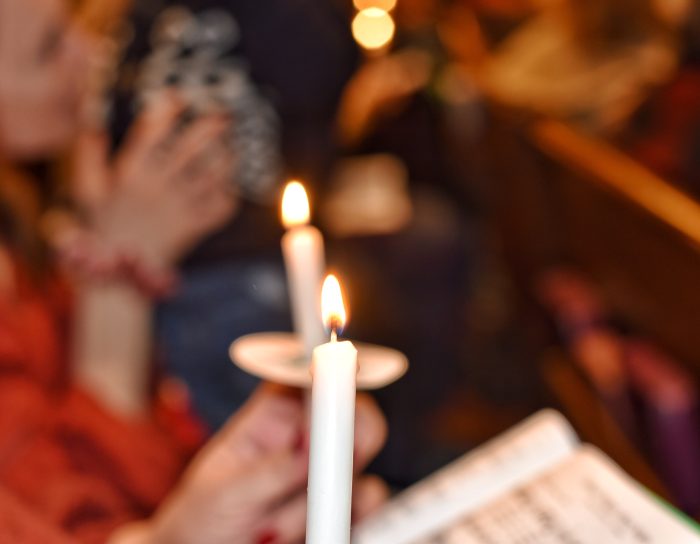
    • Light the Christ candle of the Advent wreath — briefly explain that the candle represents Jesus, the Light who has come into the world.
    • Read the Christmas story — rather than a sermon, simply read a clear portion of Scripture, such as Luke 2:1–20. You might divide the reading among several readers and intersperse it with carols. A host might say, “Now we’ll hear the Christmas story from Luke’s Gospel. Christians have been telling this story for centuries because we believe that in Jesus, God came to share our humanity.”
    • Play the Christmas sermon bumper video between songs.
    • Offer a short prayer — thanking the Father for sending the Son and asking the Spirit to help us receive and share Christ’s peace and joy.
    • Optional candlelight closing — if the space and safety requirements allow, distribute candles and sing Silent Night together. Battery-operated candles are a good alternative, especially with children or larger crowds.
    • Simple blessing and sending — close with a brief blessing and thank neighbors for joining the congregation. Tell them they are always welcome.

Key: Make participation easy and never embarrassing. Print or project every congregational response. Don’t unexpectedly ask visitors to introduce themselves. Don’t ask first-time guests to stand. Don’t require people to sing, pray aloud, or come forward. Say instead, “You’re welcome to sing with us, or simply listen.” Hospitality includes giving people permission to participate at their own level of comfort.

A service like this could easily be 30–45 minutes. Resist adding too much. The simplicity itself can be welcoming — carols, candlelight, Scripture, prayer, and the good news that God has come to us in Jesus.

For the Faith Avenue: Here is a connect group resource/Bible study that includes an Old Testament survey leading up to Jesus’ birth.

Celebrate an Intergenerational Advent and Christmas

How can every generation participate together
in the good news that God is with us?

The story of Advent and Christmas is a story of God moving toward us. The Father sends the Son. The Son enters fully into our humanity. The Spirit opens our eyes to Christ, gathers us into his life, and sends us to share his love in the world.

Intergenerational ministry reflects that movement. The goal is not to do more; the goal is to create meaningful participation.


Team Up for the Advent Candles

Invite intergenerational pairs to light the Advent candles each week.

Rather than only giving participants a prepared script, invite them to offer one short reflection related to the week’s theme. Try asking:

For hope: “Where have you seen a sign of hope?”
For peace: “Where do you long to see God’s peace?”
For joy: “What has brought you joy recently?”
For love: “Where have you seen love expressed?”

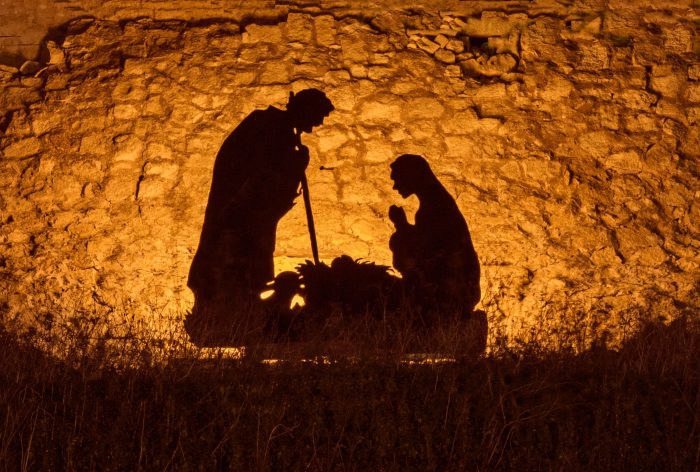
Build the Nativity Throughout Advent

Instead of displaying the full Nativity scene at the beginning of Advent, allow the scene to grow week by week. Begin with an empty stable or simple space. Each Sunday, children or teens bring forward another part of the story.

Suggestions: Mary and Joseph may appear first. Shepherds and animals can follow. The manger remains empty until Christmas. The gradual movement helps the congregation experience Advent as a story still unfolding.

Age adaptations

    • Young children: Carry the figures.
    • Older children: Help explain who each figure represents.
    • Teens: Write or narrate the short reflection accompanying each addition.

Small church option: Use paper figures, children’s drawings, or printed images rather than a traditional Nativity set.

Greg Little—Year B Advent 2–Christmas 1

Greg Little—Year B Advent 2–Christmas 1

This month’s Gospel Reverb is coming soon. We apologize for the delay.

Check back Friday, December 6.

Sharing Power for Mission w Dr. Eun Strawser

You Were Never Meant to Lead Alone (Part 3): Sharing Power for Mission w/ Eun Strawser

Kingdom Living is missional, and our approach to leadership shapes how we participate in Jesus’ mission together. In this final episode of the series, host Cara Garrity concludes her conversation with Rev. Dr. Eun Strawser by exploring what it means to share not only leadership, but power.

Together, they consider how churches can create leadership pathways that make room for others and how shared leadership connects with discipleship and mission. When leadership is shared, ministry becomes less about the work of a few and more about equipping the whole body to participate with Christ. This episode reminds us that we were never meant to lead, disciple, or participate in Jesus’ mission alone.

“How would you know that a leader is gifted at equipping people so that they will be learners from God and from one another? How would you know if they are equipped to equip others in the congregation to be a gathered group of people who are more hospitable because they really believe in the indwelling presence of God in their lives? I bet you can’t just know that from a Sunday morning worship service. Who are the people who really love that a facilitation of learning is happening together in the room, that everybody has access to God’s word, and everybody can teach one another, that everybody gets to partner, koinonia, with the living God in participating in the healing of themselves and others in the community around them? How would you know if you don’t already intentionally provide active spaces where people can practice this out?” — Rev. Dr. Eun K. Strawser

Main Points:

  • Sharing leadership is likened to sharing power. Let’s dig further into this concept of sharing power WITH. [00:02:23]
  • What advice would you give to a church that is committed to unbiasing their leadership pipeline in order to foster a culture and practice of shared leadership? [00:09:35]
  • Direct connection drawn between shared leadership, centered discipleship, and mission. How does shared leadership impact our approaches to discipleship and mission? [00:21:19] [Refer to centering discipleship episodes.]

Resources:

  • ‘iwa collaborative: Eun Strawser’s books on church leadership.
  • Team Based — Pastor Led: GCI’s framework for healthy shared ministry.
  • Centering Discipleship: Book club resources that challenge us to reimagine discipleship by shifting the focus from programs and strategies to authentic, relational ministry rooted in the life and mission of Jesus.
  • Leadership Discernment – Leadership discernment is vital for recognizing and responding to God’s guidance in both everyday and significant moments of our lives. This Church Hack offers practices for developing a posture of discernment.

Program Transcript


Cara: In 2026, the GC Podcast is shifting to a new format with two miniseries released throughout the year rather than monthly episodes. This change is going to allow us to go deeper into meaningful conversations that support our shared journey of Kingdom Living.

Hello, friends, and welcome to today’s episode of GC Podcast. This podcast is devoted to exploring best ministry practices in the context of Grace Communion International churches.


I’m your host, Cara Garrity, and today we are honored to host Reverend Dr. Eun Strawser for our final episode of our miniseries, exploring her book, You Were Never Meant to Lead Alone: The Power of Sharing Leadership.

In this series, we are exploring the role of shared leadership in developing local congregations that are participatory, relational, missional, and transformational, all as part of our 2026 theme of Kingdom Living. Because Jesus said, “As the Father has sent me, I am sending you.” And so, as citizens of the kingdom and co-laborers with Christ, we’re sent into the world to reflect his light.

Eun, we are so thankful to have you for our final episode. Welcome, welcome.

[00:01:25] Eun: Thanks so much for having me again, Cara.

[00:01:27] Cara: It is an absolute pleasure. We’re going to dive into this final part of your book that I think — really the whole book is so rich, so, I was going to say — gives a lot of really rich pieces for us to chew on, but the whole book is rich, so I don’t even know that would be a true statement because the whole thing is. So, why don’t we just go ahead and dive right in?

You, throughout the book, talk about sharing leadership and leadership as having to do with power and power dynamics. And so, sharing leadership is connected with sharing power. And so, one of the, I guess, concepts that you introduce is this idea of sharing power with.

Can you share with us a little bit more of what you mean by that and how you envision this impacting the way that we lead in our local congregations?

[00:02:29] Eun: Yeah. And thanks for making some space to highlight this. I do think that if readers and listeners are going to walk away with anything from any of the series on my book is really just this thing.

Leadership is contending with power. And if we don’t, as leaders, as senior pastors or leaders in our church context, if we don’t reckon how do we personally contend with power and power dynamics, then we would be missing a huge point of the of something that I think Jesus is inviting and to transform us in.

I think the whole Christian life, the imitation of Jesus, has everything to do with how do we contend with power given to us, power taken away from us, and everything in between. To kind of highlight that sharing power and power with part probably borrowing from a better book than my book is Iris Marion Young’s book.

She’s a sociologist who wrote a landmine book called Justice and the Politics of Difference. And she does highlight these kinds of different power dynamics that a lot of sociologists over the years have been looking at. And I do think the congregation leadership — the church leadership — it would do well for us to think through this.

So, she lists out that there are four different kinds of powers. Things that we in church scope are familiar with is “power over,” or domineering power, very authoritative power.

Or “power through” is like the next wave in the climbing of these big, huge megachurches. These “power through” or influential charismatic leaders came to be.

So, those are probably the two most familiar kinds of powers. But she also lists out two additional ones. So, there is “power within.” So, this is all the power dynamics that are just already in existence in a closed set in society. So, another way to think about it is systemic power. So, anybody who does any sort of like advocacy work or all my folks who do Christian community development, they’re much more familiar with this kind of power.

And then “power to” is, another word for that is, a replacement of power. A lot of the history of different minority groups, let’s say, in the US or in the UK are probably familiar with these kinds of replacement models of power. But I think the biggest thing that when we think about power in these kinds of scopes is that it’s as if power is some sort of commodity that we give to or we can take away from people.

And that’s usually how I think non-Christian world dynamics think about how power dynamics are in play. But “power with” — a better word for that is “partnership.” And if you are a reader of the New Testament, and you can just see this word being flown around in all, every single one of the Apostle Paul’s epistles to all the first century churches, he uses this word “partnership” over and over again, and our Western churches misinterpreted and say that he’s talking about good old eating together Christian fellowship, the word koinonia.

And we think, oh, the church life and the way that we’re going to practice being imitators of Jesus is that we are going to practice fellowship and have fellowship with my brothers and sisters, but that’s not how the word is meant to be translated. It’s a deep partnership, and if you are a first century Christian and you hear that word “partnership,” you cannot help but go back to Genesis 1:2, that God has created humanity to be image bearers, both man and woman, human beings together, so that we are partnering with God for the good of this world. So, “power with,” again, if you’re trying to put some stakes on the ground around how does biblical power contracts work, that we need to think about partnership, and partnership definitely is a shared leadership language.

[00:07:03] Cara: Yes. Yes. And I thank you for sharing that link back as well to, to Genesis. I think that is, I don’t know, just really beautiful to think about — what’s the history of how God has been inviting us into partnership, and so what does that mean about how that reflects in our leadership and how we are as his people and as his church?

[00:07:33] Eun: We would actually be ― if people think about, if church leaders especially, think about “power with,” that sharing power, that partnership, it actually makes it so that leaders would think so much more highly of their congregations, leaders would think so much more highly about the community members who are future congregants, right?

That’s how we would be seeing everybody, right? If we have a vision for shared leadership, which means sharing power, partnership with, then it means that we have to have a higher viewpoint of our congregants and the community that our church resides in.

[00:08:12] Cara: Yes. Yes. Yes, I love that. I’m going to chew on that for a while. Yes. You’re absolutely right. Wow. Wow. I’m going to let that just marinate there.

One of the things that you talk about is the structures and of sharing power. And I think about when we think about leadership development in GCI and in our congregations, and what are those, I think in a lot of churches there’s that buzzword leadership pipeline, right?

And so, one of the things that I really appreciated is you talking about the fact that sometimes even our leadership pipeline, starting from there, it kind of influences, right, the extent to which we are going to be living into shared leadership or not, right? And so, again, I think in our journey of living into a more team-based, pastor-led or shared leadership culture and practice in GCI, I’m curious what advice would you give to a church that is committed to unbiasing their leadership pipeline so that they could foster more of this culture and practice of shared leadership?

[00:09:41] Eun: I like the way you phrased it. It’s such a caring way to say … to unbias our leadership pipelines. So, it’s so caring. It’s so pastoral. Yeah, I think that in order to unbias it means that we should also already know what our biases are.

Cara: Yeah.

Eun: And the way to do it … and again, this is something I really do believe in. I love the work of the Holy Spirit and all the ways that it’s organic and mysterious, and all these. But I also don’t think that God works haphazardly. I think that God also loves structure.

Cara: Yeah.

Eun: And intentionality. And I think if you’re in a leadership position, you have so much more a say over how structures and systems work within the life of your church, these rhythms and such, right?

And one way to think through it is to make an assessment of how are our structures and rhythms already biased towards one kind of leadership pipeline. Probably the most common leadership pipeline, whether we admit it or not … and this takes, again, a lot of humility to do this kind of assessment work, right? It feels exposing. But a lot of times the leadership pipeline draws in either people who have skillsets that we like — so, usually, it’s like people who are good communicators that can be on stage and can speak, people — or if the worship pastor route, people who can sing or are musical, right? Those are probably the two biggest avenues for church leadership down the road.

Other things that people may be thinking about are people who the main leader or leaders like to work with. So, it might be a personality based, right? When we talk about, oh, is there a fit, right? For things.

That fit probably is really covering over the fact that we want to work with people there who are easy for us to work with, and usually it is personality based, right? Any organizational psychologist would tell you that is true. So, how do we make it so that it’s unbiased?

We probably should be thinking about what is a biblical bias for a leadership pipeline, right? And that, and again, this is where that shared leadership and how sharing of power with and partnership works out better. So, if we can identify what are our biased structures, rhythms, strategy preferences for types of leaders that we already like to have, how do we make it so that there are biblical biases to this leadership pipeline?

Again, this is when that the last time we talked about a different tool. So, in GCI, you folks use the Five Voices. Something I’m offering is from Ephesians 4, the APEST, apostle, prophet, evangelist, shepherd, teacher. But there should be a fullness of how the people of God are going to be equipped to do the works of service for the benefit of the congregation and the community around it.

If that’s the question to answer, then I would be looking for, okay, are all of those kinds of values and those ways that the congregation needs to be equipped in, are those being met? Are there places of where people know how to teach one another and learn from one another, how to care and heal one another, not just be healed, where they are equipped in welcoming and hospitality in their personal lives and in gathered spaces? Are there places where people are equipped in participating in the liberating of themselves, their community members, and the neighborhood around them?

And are there ways that people are equipped to be sent out to be the image bearers of ascending God, right? If those kinds of things … I would be looking for those kinds of things where they are biblical biases. We’re not just looking for a church a leadership pipeline for people who are good at caring for a nice social club so people feel valued when they come.

No. It’s not just that. It’s that people, when they come, they experience the healing of Jesus, and they know and are equipped to help heal and participate and partner with Jesus in healing one another, right? So, I think if you use the clarity of whatever shared leadership equipping tool the church is using, that helps to clarify, I think, unbiasing or making a biblical bias in their leadership pipeline.

[00:14:22] Cara: Yeah. And what I really like about that is it helps us to zoom out to the larger community, right? And helps us to think beyond. Because one of the things that we do emphasize a lot and practice a lot in GCI is mentoring and pastoral mentoring and leadership mentoring. And I think that’s often where maybe we can get stuck in the weeds of that one-on-one, right?

Which there’s … If that’s important, then there’s that place for that, right? When we don’t, I think, zoom out to that larger context of what’s happening in the community or all these different learning spaces, environments being cultivated and these different ways of equipping being given, then maybe it’s easy to get just stuck with what we’re familiar with. Because when I think about unbiasing this leadership pipeline, I think about challenging ourselves not to just make a bunch of mini-me’s, right? And I think that’s a lot of times like what you said “Oh, fit,” and, “Is this someone that’s easy for us to work with?”

We like to make and we like to work with people, I think, often that remind us of ourselves or that can do the things that we do or would do things the way that we would want it to be done and carry on things the ways that we’ve always done it. And so, I think often in leadership development and leadership development pipelines, we set things structurally up to just make a bunch of little us’s, right?

And so, I really like this way of kind of zooming out and saying, “It’s not just about what me as one leader is producing or what a leadership pipeline is producing out of one program or something like that, but like, what are we seeing out of the, the church community, and how is that impacting us in the context of our community or our neighborhood?” I think that zoom out puts us into a more meaningful context.

[00:16:26] Eun: Yeah. I think and again if we go out outside of salaried or paid professional ministers and you think of what is the rhythm and reasons for how a congregation chooses their lay leaders, let’s say.

Usually we pick people who are, seem professional or are the most devout among us, right? And but those are such generic, non-biblical, ways to measure leadership. It’s so easy.

Cara: Yeah.

Eun: Identify. Again, you go back to part one of the book. You go and figure out very clearly, are these people disciples? Do they actively imitate Jesus in their personal lives, right? And then you start noticing within the context of the congregation, are these people who are marked with those, those four H’s: humble, honoring of others, hospitable, and they’re hopeful. And then see which whichever tool you’re using, which kind of equipping environments do these people facilitate.

And the only way that you can see these things is if you as a leader, main leader, trying to unbias your leadership pipeline, as Cara so lovingly stated, is do we provide active spaces where we can actually see this happening?

Cara: Yeah.

Eun: How in the world would you know that a leader is good at and gifted at equipping people so that they will be learners from God and from one another? How would you know if they are equipped to equip others in the congregation to be people and a gathered group of people who are more hospitable because they really believe in the indwelling presence of God in their lives. Like, how do you know that? I bet you can’t just know that from a Sunday morning worship service.

You’re really good at knowing who can speak well on stage and who can sing well on stage, but you would not know who are the people who really love that when a facilitation of learning is happening together in the room, that everybody has access to God’s word, and everybody can teach one another around that, right, that everybody gets to partner, koinonia, partner with the living God in participating in the healing of themselves and others in the community around them, right? How would you know if you don’t already intentionally provide active spaces where people can practice this out?

[00:18:49] Cara: Yes. Yes. No, that’s a good word. That’s a good word.

And just as, I think, for our listeners, a note maybe to maybe reference and follow up on is, I think we have this, I guess, structure where, with the faith, hope, and love avenues is one way that we help to bring clarity around, are we having fullness, like, holistic opportunities for ministry participation, or are we getting kind of singular-minded and just focusing on the one thing that we’re comfortable with or that we’re good at or whatever.

Or are we creating these spaces for people to participate in the fullness of God’s ministries and to be equipped in them and to show that maybe they do have this gifting to be able to equip others in this.

And listeners, when you’re chewing on this and marinating further, I think, thinking about how does this apply to the context of the faith, hope, and love avenues and those teams there and with the avenue champions and what does that look like — there would be a suggestion that I would make for how that practically translates into our local church structures.

And so, the final question that I have for you, Eun, is you draw a connection between shared leadership, centered discipleship, and mission. And I do want to mention, if folks haven’t given it a listen or seen in Equipper our small group study guides for centering discipleship, to go ahead and check that out.

We have another mini-series with you on your book, Centering Discipleship, and some guides there to go through that with your local congregation and leadership and to dig deeper into that. So, if you haven’t done that, I would highly recommend, because there is a lot of richness there, and I think that we see they’re connected, right?

And we see, I think, a lot in this chapter where those connections happen and how these are processes that are going to come together. And so, you draw this connection between the shared leadership, the centering of discipleship, and mission. So how does shared leadership impact our approaches to discipleship and mission?

[00:21:21] Eun: Yeah, I think that probably if a leader is or a pastor is just kind of starting out, my biggest recommendation is probably to center discipleship first …

Cara: Yes.

Eun: … before sharing leadership. Make that be, like, the most foundational piece of the life of your church. Because if you, kind of, if you were to, if everybody was to kind of break down and boil down what is it that people expect from the church or participating in the life of a church, most people think that it’s the church service, that worship service, that it’s the main event of the church, right? The main event is the church service, and that’s going to help meet my needs to attain intimacy with God, experience personal wholeness, have a deep connection, communal connection with others, and I will participate in the renewal of the city or neighborhood around, around me, right?

They think usually it’s a worship service, a church service that hits all of those things. And every senior pastor knows that’s just not true. We just won’t say it out loud because we hope that maybe it would. Maybe it would. Maybe we could give a good enough sermon or sing a meaningful enough worship song that people can participate, compel them to participate in the renewal of the community around them, have them have a deep connection with the congregants, experience personal wholeness and intimacy with God.

But we also know that’s not true because it’s misplaced. There’s a different reason why a church service, this public worship service exists. And so, where’s a better place where intimacy with God, personal wholeness, a deep connection with others, and participation in the renewal of the city around them lies in.

And then the next misplaced place are leaders. People think that it’s in the leaders. It’s the leadership, a leader’s job to make sure that I have an intimacy with God. I experience personal wholeness, a deep connection with others, and participation in renewal, and that’s just not true.

The, I think, the best thing that the leader can do in the anticipation that leadership will be shared is disciple the people God has given you. It’s discipleship. It’s imitation of Jesus, an active imitation of Jesus. Not just having works done for you, but you do that working out of your faith with the Holy Spirit, imitating Jesus that helps produce in you a deeper intimacy with God, an experience of personal wholeness, have a deep connection with others and a participation in the renewal of the community around you, right?

Discipleship is a thing that helps you to connect that deep spiritual confidence and tether that to a social competence so you know how to live like Jesus in the world around you and not just know and be known by Christ, right? So, I think, discipleship is actually that centered peace around it.

And if you’re having discipleship be that centered peace in the life of the church because your hope is in the people of God doing the works of service. Then there, you answered that question. You need shared leadership so that the people of God can be equipped so that it benefits the community, that mission the community around them.

[00:24:39] Cara: Yeah, and it’s almost like when you have that discipleship centered, the shared leadership almost becomes — what’s the word that I’m looking for — it becomes necessary, right, to move forward in this way where discipleship is truly centered in the life of the congregation, because you’re not going to be able to center discipleship in these while using some of these other approaches and structures of leadership that we might be used to of maybe there’s like the senior pastor does everything or maybe two or three people do everything, but they all have the same skill set or giftings or big personalities or whatever that is. But if we’re really centering discipleship, then we’re not going to be able to do that without shared leadership is what I’m hearing.

[00:25:31] Eun: Yeah. And I think it also, another word that you had used earlier is, it produces — I think it produces in the church a posture towards the community around them, right? We know effective mission is not when a self-highlighting group of Jesus people come into a neighborhood and be like, “We are the saviors of the world.” “You are welcome.”

None of that has ever worked in the history of the church, ever, right? But what does work? When discipleship is the thing, that imitation of Jesus is the thing that is the compelling heart behind why the church moves alongside the community around them, and they’re actively being equipped by all these different types of leader gifts to this congregation, then mission actually gets reshaped so that we are, have postures where we want to be with our neighbors and not just over our neighbors or influence our neighbors or all these weird power dynamics, right?

I think the biggest thing to note, again, that shared leadership and leadership has everything to do with our interaction with power is that the power with, that sharing power, shared leadership that partnership viewpoint of power — that needs to replace all of these other kinds of power. That’s the work of Jesus on the cross — that he squashed out every other kind of power in the world, right? And for what? Not so that there’s just weakness that exists. It’s this new kind of power, and this new kind of power is what the Apostle Paul is talking about in koinonia, this partnership kind of power.

And the partnership kind of power is effective. It’s empowering. It’s valuing. It’s dignifying. Wouldn’t a neighborhood that is paying attention to an empowering, partnering kind of Jesus community, wouldn’t they want to be a part of that? I would. If this thing, this gathered group of people where they experience an indwelling presence of the living God and they’re a body of a resistance that is for me and with me alongside my journey in this neighborhood, why wouldn’t I want to be a part of that?

[00:27:55] Cara: Yeah. That’s compelling.

All right. That gives us a lot, I think, to sit with and to be hopeful about and to be excited about in our local congregations — about what it can look like and what it ought to look like for us to be the church. So, I’m really excited.

Listeners, please, if you haven’t read already, please go ahead — and in the show notes there’ll be information for you how to access a copy of You Were Never Meant to Lead Alone: The Power of Sharing Leadership. And as I just mentioned, and as we just discussed, centering discipleship is really right the center of it all. And it seems to me, like, these … Are they meant to be like partner, like, they’re sister books?

[00:29:00] Eun: Oh, absolutely. Yes. Yes.

[00:29:03] Cara: Okay. So, I didn’t want to speak on your behalf for that, but to me that’s what they seem like. They come together. And so, please also, if you haven’t checked out those resources, please do that because, as we were just discussing, it’s really the centering of discipleship that’s going to bring us to this point of saying, “Oh we need this shared leadership.”

And it’s the shared leadership is to serve this centering of discipleship and this kind of, like, different way of being and structuring the life of our local congregations in our communities. So, please, we’ll also have all of the links to that in our show notes. Go ahead and check that out. I would very much so encourage you to do so.

And thank you so much for joining us again. Your two sister books are incredible. They give us so much to think about. They give us so much to pray about, to be hopeful for. And I think really are just a compelling vision of how we can be the church differently, how we ought to and are called to be the church differently than I think that we have maybe the kind of cheap commercialized image we’ve been sold, right?

And so, I am just so deeply appreciative for you for all the hard work that you have put into these works, and all of your life experiences and your own faithfulness and your own journey as a disciple that you’ve been willing to share with others so that we can be drawn into, I think, a vision and an existence of God’s church that is, I think, more real and more reflective of who he really is, that’s more beautiful, that is more of a piece of his kingdom here on Earth. And that is just more of who we really are being shaped and formed to be as people. So, thank you so much for your work and for joining us for these three episodes.

[00:31:14] Eun: Thanks for having me.

[00:31:15] Cara: And as is our tradition, would you be happy to close us out with a word of prayer?

[00:31:23] Eun: Yes, I’d love to.

Jesus, I’m so thankful that you told us, “As the Father has sent me, I am sending you.” That’s such a trust and a gift to us. You think so highly of your people, and would that be a model for us to think so highly of the people you have given us to lead and love. Would you continue to make GCI community be growing as local congregations that are participatory, relational, missional, and transformational in a biblically biased way, in the way that you long and hope for us. Thank you so much that you desire for everyone to be living in your kingdom. Would you give us clarity? Would you give us courage? Would you give us compassion to be able to live in this way and lead in this way? Jesus, we thank you that you not only instill in us hope, but you say that we, your people, your imitators, are the hope of glory is Christ in us, that you live in us, you are with us, and you’re among us. It’s in your good name we pray. Amen.

[00:32:42] Cara: Amen. Amen. Folks, until next time, keep on living and sharing the gospel.


Thank you for listening to this episode of GC Podcast. We hope you found this time valuable. We would love to hear from you. Email us at info@gci.org with your suggestions or feedback. And remember, healthy churches start with healthy leaders, so invest in yourself and in your leaders.


Offering and Communion Starters | December

Last year, we introduced a new resource to help you prepare for the time of giving and taking communion in your Hope Avenue. These are meaningful formational practices that we can plan with care and intentionality.

The Communion and Offering Starters are posted a month ahead, like the sermon resources. Below are the December starters. In case you missed it: November Starters are here.

How to Use This Resource

An outline is provided for you to use as a guide, followed by a sample script. Both the offering moment and communion can be presented as a short reflection before the congregation participates. Here’s how to use it effectively:

  • Scripture Reflection: Include the relevant Scripture to root the offering and communion in biblical teaching.
  • Key Point and Invitation: Briefly highlight the theme’s key point and offer an invitation that connects the theme to the practice.
  • Prayer: Include a short prayer that aligns with the theme. Invite God to bless the gifts and the givers. Ask God to bless the bread and the wine and the partakers.
  • Logistics: Explain the process; this helps everyone know how they can participate. For giving, indicate whether baskets will be passed, if there are designated offering boxes, or if digital options like text-to-give or web giving are available. Clearly explain how the communion elements will be shared and that participation is voluntary.
  • Encouragement: For the giving moment, invite congregants to reflect on their role in supporting the church’s mission, reminding them that their gifts impact both local and global ministry. For communion, encourage congregants to express gratitude for Jesus’ love poured out for us and the unity present in the body of Christ.

For more information, see Church Hack: Offering and Church Hack: Communion

Offering Theme: Participating in the Greatest Story

Scripture Focus: Luke 2:10, 16, 20 NRSVA

Key Point: Mary, Joseph, Elizabeth, Zechariah, the shepherds, the disciples and you and I have all been invited to participate in the greatest story,

Invitation: May the support of our missions and ministry show our desire to continue to participate in the great announcement to the greatest story of all time.


Sample Script

Oh, to have been a shepherd in the fields the night Jesus was born. Aside from the fear and anxiety at the sight of the angel, imagine the excitement of the announcement!

“Do not be afraid; for see—I am bringing you good news of great joy for all the people.” Luke 2:10 NRSVA

They must have thought, “Why us?” Similar to the question we sometimes ask, “Why have you chosen us to participate with you, Lord? What do we have to offer?”

So they went with haste and found Mary and Joseph and the child lying in the manger. Luke 2:16 NRSVA

They went with haste — they were enthusiastic. “Let’s see what this is all about.”

The shepherds returned, glorifying and praising God for all they had heard and seen. Luke 2:20 NRSVA

What a great response. Can you believe what we just witnessed? Can you believe we’re invited to see this? How amazing it is to be among the first to witness this great news, to see this child! I can hardly wait to tell everyone what I saw. God is amazing!

Like the shepherds, we’ve been invited to participate in the triune God’s missions and ministries as part of his body. May we do so with haste, with enthusiasm and excitement. May the support of our missions and ministry show our desire to continue to participate in the great announcement to the greatest story of all time. And may we share his love and life by sharing our individual and collective stories on how God has reached through our hardened hearts and turned them into hearts that glorify and praise him for everything we hear and see.

Prayer


Communion Theme: He Comes and He Gathers

Scripture Focus: Luke 2:30–31

Key Point: We participate in communion remembering we have seen the Lord’s salvation, which he has prepared for all.

Invitation: May we participate in the sharing of the body of Christ, knowing the broken bread symbolizes not only his broken body, but why it was broken: so that all could be made whole. May we participate in the sharing of the cup, knowing his shed blood cleansed not only us, but all. And we experience that cleansing when we realize that through it, we have received the salvation he has prepared for all.


Sample Script

The Holy Spirit told Simeon he would see the Messiah before he died. This same Spirit led him to the temple the day Jesus was to be blessed. Simeon thanked God for fulfilling the promise to see Jesus, and said,

“for my eyes have seen your salvation, which you have prepared in the presence of all peoples, a light for revelation to the Gentiles, and for glory to your people Israel.” Luke 2:30–32 NRSVA

How long have we prayed, “Lord Jesus, come!” It’s easy to forget that he has already come, and he lives in you through the Holy Spirit. Yes, he will come again, but you get to taste and see salvation every day.

Every time we take the bread, we remember that Jesus’ body was broken so that ours could be made whole. By taking the bread — Jesus — we are acknowledging that he is the bread of life we all need and he is in us. It’s just one way we see the salvation God has prepared for us, and for all people.

Whenever we take the cup, we remember that Jesus’ blood is what cleansed us from all our sin and reconciled us to the Father. When we participate in the Lord’s table, we realize that his salvation will heal all our hurt, stop all our pain, end all our suffering, and we can live in his peace — a peace that surpasses understanding.

Communion reminds us that Jesus’ sacrifice was a light for revelation to all people, male and female, slave and free, Jew and Gentile. Come see the salvation of the Lord.

Prayer


Sermon for December 6, 2026 — Second Sunday of Advent

Advent 2: The God Who Comes to Comfort

On the second Sunday of Advent, we remember that true peace comes from God’s presence. Through Jesus, God draws near to comfort us, restore what is broken, and lead us toward the peace only he can give.

Program Transcript


Advent 2: The God Who Comes to Comfort
Scripture: Mark 1:1–8 NIV

Sometimes comfort begins before any words are spoken.

It begins when someone draws near.

When we are weary, uncertain, or hurting, we do not always need an explanation. We need to know that we have not been forgotten and that we will not face what lies ahead alone.

This is the comfort Advent announces:

God comes near.

On the Second Sunday of Advent, we light the Candle of Peace. Its flame reminds us that true peace is more than the absence of trouble. It is the presence of God who meets us in our unrest and begins making all things whole.

The God who comforts us is the God who brings peace.

Mark begins the story of Jesus not in a palace or beside a manger, but in the wilderness. John the Baptist appears in a place that feels empty and unsettled, announcing that someone greater is coming.

For generations, God’s people had waited for him to fulfill his promises and restore what had been broken. Now John calls them to prepare the way.

Prepare the way for the Lord.

John’s message is an invitation to turn toward the One who is coming. Repentance is not about making ourselves worthy of God’s presence. It is opening our lives to receive the grace already moving toward us.

John baptizes with water, but he promises that Jesus will baptize with the Holy Spirit. God has not come merely to offer encouragement from a distance. He comes to forgive, restore, and transform us from within.

In Jesus, God enters the wilderness of human life. He meets us in our waiting and leads us toward his peace.

Hear now  this good news:

The beginning of the good news about Jesus the Messiah, the Son of God, 2 as it is written in Isaiah the prophet:

“I will send my messenger ahead of you,
    who will prepare your way”—
3 “a voice of one calling in the wilderness,
‘Prepare the way for the Lord,
    make straight paths for him.’”

4 And so John the Baptist appeared in the wilderness, preaching a baptism of repentance for the forgiveness of sins. 5 The whole Judean countryside and all the people of Jerusalem went out to him. Confessing their sins, they were baptized by him in the Jordan River. 6 John wore clothing made of camel’s hair, with a leather belt around his waist, and he ate locusts and wild honey. 7 And this was his message: “After me comes the one more powerful than I, the straps of whose sandals I am not worthy to stoop down and untie. 8 I baptize you with water, but he will baptize you with the Holy Spirit.”

Mark 1:1-8 NIV

May we prepare the way with open hearts, trusting the One who comes to comfort his people and make all things whole.


We recommend you begin your worship service and sermon with a focus on Advent. The theme of the Second Sunday of Advent is Peace. You might include focusing on the theme, reading Scripture, lighting the second Advent candle, and offering a prayer of gratitude for the comfort we receive from Jesus’ peace. See our Advent Church Hack here.

Psalm 85:1–2, 8–13 • Isaiah 40:1–11 • 2 Peter 3:8–15a • Mark 1:1–8

This week’s theme is the God who comes to comfort. In our call to worship psalm, the psalmist recalls God’s past forgiveness and restoration and looks ahead to the day when righteousness and peace embrace as God draws near to his people. In Isaiah, God commands that comfort be spoken over weary exiles, promising that the Lord himself will come — arriving with power, yet gathering his lambs gently in his arms like a shepherd. In 2 Peter, the apparent delay of the Lord’s coming is revealed to be his patience, for God does not want any to perish but all to come to repentance. And in Mark’s gospel, the promised coming arrives in person, as John prepares the way for Jesus Christ, the Son of God, in whom all of God’s comfort has finally come to us.

Reminder: This introductory paragraph is intended to show how the four RCL selections for this week are connected and to assist the preacher prepare the sermon. It is not intended to be included in the sermon.

How to use this sermon resource.


God Comes to Comfort Us in Jesus

Mark 1:1–8 NIV

On this second Sunday of Advent, our journey continues from hope to peace. Advent reminds us that the peace we long for does not begin with our ability to make everything right. God comes into our restless and wounded world to meet us himself. And as Mark announces the beginning of the good news, we discover that God comes to comfort us in Jesus.

Advent is also a season of waiting. Everyone knows what it’s like to wait for a word that does not come.

The phone that stays quiet as you wait on the test results. The child who grew up, moved away, and slowly stopped calling. The prayer you have prayed so many times that you hardly want to pray it anymore. Advent season is a season of waiting and anticipating. Waiting is one of the most human things we ever do, and it is one of the hardest, because waiting always carries a question hidden inside it: Have I been forgotten?

Israel knew that question well. By the time our story opens, God’s people had not heard from a prophet in over four hundred years. Four hundred years! Whole generations were born, lived, and died without one fresh word from heaven. They still had the old promises, scrolls full of them, but the silence had grown so long that many wondered whether the promises still held. Whether God still remembered. Whether he was still coming at all.

Maybe you know that silence. Maybe you are living in it right now.

If so, this sermon is for you, because Mark wrote his Gospel for people in the silence. His very first sentence is an announcement spoken after four hundred years of quiet: the waiting is over. The God who comes to comfort has arrived.

Into that long silence, Mark writes his opening line. Listen to how the good news begins.

The beginning of the good news about Jesus Christ, the Son of God, as it is written in Isaiah the prophet: “I will send my messenger ahead of you, who will prepare your way” — “a voice of one calling in the wilderness, ‘Prepare the way for the Lord, make straight paths for him.'” And so John the Baptist appeared in the wilderness, preaching a baptism of repentance for the forgiveness of sins. The whole Judean countryside and all the people of Jerusalem went out to him. Confessing their sins, they were baptized by him in the Jordan River. John wore clothing made of camel’s hair, with a leather belt around his waist, and he ate locusts and wild honey. And this was his message: “After me comes the one more powerful than I, the straps of whose sandals I am not worthy to stoop down and untie. I baptize you with water, but he will baptize you with the Holy Spirit.” Mark 1:1–8 NIV

The Good News Begins with God, Not with Us

Notice how Mark begins. Not with a command. Not with a list of things we must do to get ready for God. He begins with an announcement:

 “The beginning of the good news about Jesus Christ, the Son of God.” Mark 1:1 NIV

Before anyone in this story repents, believes, prays, or prepares a single thing, God has already set everything in motion. The first move belongs to him. It always has.

The phrase “good news” was not originally a Church word. In Mark’s world it was the word for a public announcement, the kind a runner would carry from a battlefield or a palace: a victory has been won; a new king has taken the throne.1 The people who heard it had done nothing to make the news true. It was simply true, and now it was theirs to receive and to celebrate.

That is exactly how Mark wants us to hear everything that follows. The gospel is not advice about how we might climb our way up to God. It is the news that God has come down to us. Before we lifted a finger, before we cleaned ourselves up, before we even knew we were waiting for him, God decided to come. Good news begins with God, not with us.

And that means the weary person in the pew, the one who feels they have nothing left to offer, is in exactly the right position to hear this story. You do not need to bring anything to an announcement. You only need ears to hear it. Mark calls verse one “the beginning” of the good news, and in a real sense the good news that began there has never stopped. It is still being announced. It is being announced to you right now.

The Coming Was Promised by a God Who Never Forgot

Mark’s second move is to quote Isaiah:

“I will send my messenger ahead of you, who will prepare your way — a voice of one calling in the wilderness, ‘Prepare the way for the Lord, make straight paths for him.'” Mark 1:2–3 NIV

Those words come from Isaiah 40, and it helps to remember who first heard them. They were spoken to Israel in exile, a people dragged off to Babylon, far from home, convinced that God had washed his hands of them. And the very first words of that chapter are these:

“Comfort, comfort my people, says your God.” Isaiah 40:1 NIV

Not “shape up, my people.” Not “explain yourselves, my people.” Comfort. God looked at his weary, guilty, far-off people and the first thing on his heart was their comfort. Then came the promise: a voice would one day cry out in the wilderness, because the Lord himself was coming to bring his people home.

Centuries passed. The exiles returned, but the promise in its fullness still hung in the air. Then came the four hundred years of silence. And here is what Mark wants us to see: the silence was never absence. All that time, God was not ignoring his people. He was keeping his promise, moving history toward the day when the voice would finally sound in the wilderness.

Peter says it plainly in his letter:

“The Lord is not slow in keeping his promise, as some understand slowness. Instead he is patient with you, not wanting anyone to perish, but everyone to come to repentance.” 2 Peter 3:9 NIV

What looks to us like delay is, from God’s side, patience. He waits because he is unwilling to leave anyone outside. The God who comes to comfort had never stopped coming. He was on his way the whole time.

And notice how the whole family of God is at work in this promise. The Father is the One who spoke it through Isaiah and never once forgot it. The Son is the One now on his way to keep it in person. And the Spirit of God is the One who kept hope alive in waiting hearts through the long silence, keeping the old words alive until the day they came true.

If you have been waiting on God, this is your verse of the sermon: his silence is not his absence. God in keeping his promise to Israel has shown us his faithfulness once and for all in Jesus. Even when we cannot see what he is doing, we can trust the God who has come to us and will not let us go.

 God Picks Up the Story Right Where It Left Off

Then it happens. After four hundred years, a man appears:

“And so John the Baptist appeared in the wilderness, preaching a baptism of repentance for the forgiveness of sins.” Mark 1:4 NIV

Mark gives us two details about John that are easy to read past, and both of them are deliberate. They tell us that God is picking up the story exactly where it left off.

The first detail is the place:

The whole Judean countryside and all the people of Jerusalem went out to him. Confessing their sins, they were baptized by him in the Jordan River. Mark 1:5 NIV

John baptizes in the Jordan River. Of all the rivers and pools in Israel, why the Jordan? Because the Jordan is where the story of God’s people reached its turning point long ago. After forty years of wandering in the wilderness, Israel passed through the waters of the Jordan and stepped, at last, into the promised land (Joshua 3). The Jordan was the doorway between wandering and home.

So, when John calls the people back out into the wilderness and down into that same river, he invites them to step back into their own story. To go back to the doorway. To confess that they have wandered, that they need to begin again, and to pass through the waters one more time, trusting God to bring them home again. Only this time, what waits on the other side of the water is not a piece of land. It is a Person. The true promised land was about to walk up out of Galilee, and his name was Jesus.

And then there is John’s strange wardrobe: camel’s hair and a leather belt. Mark’s first listeners would have recognized it. That was how the Old Testament prophet Elijah was described. And the last book of the Old Testament, Malachi, had promised that Elijah would come before the day of the Lord.

So, picture it. Four hundred years of silence, and suddenly a man dressed like Elijah stands in the wilderness and announces that the Lord is near. Everything about John was God saying: I have not forgotten a single word I spoke. God kept his promise right down to the wardrobe.2

And here is the part we must not miss. John preached repentance, and the people confessed their sins, but their repentance did not make the Lord come. He was already on his way. The King was coming whether or not the road was ready.

Repentance does not cause God’s arrival; it makes room to receive him. It is not anxious performance, as though we could earn a visit from heaven by feeling sorry enough. It is joyful return, turning around because someone wonderful is coming up the road, and we do not want to miss him.

He Comes with Power — and Gathers the Lambs

So, what will he be like, this One who comes? John tells us:

“After me comes the one more powerful than I, the straps of whose sandals I am not worthy to stoop down and untie.” Mark 1:7–8

More powerful. Untying sandals was the job of the lowest servant in the house3, and John, the greatest prophet of his age, and the one Jesus said was the greatest born of woman, says he is not worthy even of that. Isaiah had said the same thing about this day: the Lord comes with power, and his arm rules for him.

Power like that could be terrifying. If the Almighty is finally coming, should we run and hide? But listen to what Isaiah says this powerful One does when he arrives: “He tends his flock like a shepherd: He gathers the lambs in his arms and carries them close to his heart” (Isaiah 40:11). All that power, and what does he do with it? He stoops down. He gathers up the weak ones. He carries them against his own chest.

This is the God who comes to comfort. His strength is not aimed at us; it is spent for us. The hands strong enough to shake the heavens are the hands that picked up lambs. When Jesus steps into Mark’s Gospel a few verses later, this is exactly what we see: power used for healing, for feeding, for forgiving, for raising the dead, and finally for carrying a cross. On that cross, Jesus carries more than wood. He carries our sin, our estrangement, and everything that separates humanity from God. And in his resurrection, he brings our humanity home to the Father.

His might and his gentleness are not two sides of God. They are one thing. He is mighty in the way he is gentle, and gentle in the way he is mighty.

And he does not come empty-handed. John told the crowd that he would baptize them with water, but Jesus will baptize them with the Holy Spirit.

John could get people wet. Jesus gives people God. This is the gift beyond all gifts: God not only coming to us but coming to live in us. See again how our Triune God is at work: the Father sends his Son into the world; the Son arrives and gathers the lambs in his arms; and the Son’s own gift to us is the Spirit, God making his home inside his people.

This means the comfort of God is not a mood or a moment. It is God himself, given to us, dwelling in us, closer to us than our own breath. And people who carry that kind of comfort inside them were never meant to keep it to themselves.

Conclusion — Included in His Coming

So, we end where Mark began — with Jesus.

The God who spoke into four hundred years of silence has spoken his final and best word, and that word is his Son. The promise was kept down to the smallest detail, down to the river and the camel’s hair. The waters have been crossed; the promised land has come to us in a Person. The Shepherd has come, and he has gathered his lambs. The God who comes to comfort has come.

And here is the wonder of it all: when Jesus baptizes us with the Holy Spirit, he does not simply visit us and move on. He draws us into his own life. His Father becomes our Father. His Spirit becomes our breath. His mission becomes our joy. The comfort of God is not something we admire from a distance; we live inside it now, the way a lamb lives inside the shepherd’s arms. And that means his work of comforting the world now runs through us. Like John, we get to be voices in the wilderness. We don’t cause the Lord to come to us; we announce that he already has.

So here is the invitation this week, which rises straight out of this story. Somewhere in your life there is a person living in their own four hundred years of silence, waiting, weary, wondering if God has forgotten them. A neighbor sitting alone with a diagnosis. A coworker going through a divorce. A family member who quietly stopped hoping a long time ago. What would it mean for us to become a congregation known as a place of God’s comfort? What if weary people discovered among us that they did not have to hide their grief, pretend they had answers, or clean themselves up before they belonged?

This week, be the voice that breaks the silence for one of them. Visit them. Call them. Sit with them and listen. Speak a word of kindness that says, out loud or without words at all: you are not forgotten. You are not alone. Not to bring God to them, for he is already nearer to them than they know, but to announce the good news that he has come, and that he is gentle.

Comfort, comfort, his people. The God who comes to comfort has come. He has gathered us into his arms and carried us close to his heart, and his comfort will never end.

Going back to the Jordan imagery: Israel crossed the Jordan but wandered again. Jesus enters Israel’s story and faithfully completes humanity’s journey home.

Jesus does not merely come to tell us how to return to God. He comes as one of us and makes that journey for us. He takes our lost and wandering humanity all the way into his own faithful life, through the cross and death, and into resurrection. In Jesus, God does for us from within our humanity, what we could never accomplish for ourselves.

God comes to comfort us in Jesus.


  1. Did Mark borrow the beginning of the gospel of Jesus Christ from the beginning of the gospel of Augustus Caesar? – Biblical Criticism & History Forum – earlywritings.com
  2. Commentary on Mark 1:1-20 – Working Preacher from Luther Seminary
  3. John 1 Commentary: The Word and the Witness, Verse by Verse

This week’s Gospel Reverb is coming soon. We apologize for the delay.

Check back Friday, December 6.


Small Group Discussion Questions

  • What does it mean to you that the gospel is news to receive rather than advice to follow?
  • Where in your life have you mistaken God’s patience for God’s absence?
  • Where might Jesus be inviting you to receive the comfort that he has already brought?
  • What does it mean to you that God’s power shows up as tenderness rather than force?

Sermon for December 13, 2026 — Third Sunday of Advent

Advent 3: The God Who Moves First

On the third Sunday of Advent, we rejoice in the God who moves toward us first. Through Jesus, his grace is already at work, bringing hope, healing, and the promise of new life.

Program Transcript


Advent 3: The God Who Moves First

Before we awaken, the sun is already rising.

Before we notice the light, it has already begun to reach us.

Advent reveals a God who does not wait for humanity to find its way to him. God moves first. His grace is already at work before we recognize it, preparing the way for restoration, healing, and new life.

God is already here.

On the third Sunday of Advent, we light the Candle of Joy. Its brighter color interrupts the darker tones of the season, reminding us that even while we wait, we can rejoice.

Our joy is rooted in what God has already done and in the promise that he will faithfully complete what he has begun.

The One who calls us is faithful.

When religious leaders come questioning John the Baptist, they are searching for answers about who he is. But John turns their attention away from himself. Someone greater is already standing among them.

Before they understand, Jesus is present.

Before they seek him, he has come near.

Before the world recognizes the Light, the Light is already shining.

Grace moves first.

John’s voice in the wilderness calls us to prepare the way, not so that we can persuade God to come, but because God is already coming toward us in Jesus Christ.

Hear now John’s testimony to the One already among us:

19 Now this was John’s testimony when the Jewish leaders in Jerusalem sent priests and Levites to ask him who he was. 20 He did not fail to confess, but confessed freely, “I am not the Messiah.”

21 They asked him, “Then who are you? Are you Elijah?”

He said, “I am not.”

“Are you the Prophet?”

He answered, “No.”

22 Finally they said, “Who are you? Give us an answer to take back to those who sent us. What do you say about yourself?”

23 John replied in the words of Isaiah the prophet, “I am the voice of one calling in the wilderness, ‘Make straight the way for the Lord.’”

24 Now the Pharisees who had been sent 25 questioned him, “Why then do you baptize if you are not the Messiah, nor Elijah, nor the Prophet?”

26 “I baptize with water,” John replied, “but among you stands one you do not know. 27 He is the one who comes after me, the straps of whose sandals I am not worthy to untie.”

28 This all happened at Bethany on the other side of the Jordan, where John was baptizing.

John 1: 19-28 NIV

May the joy of Advent open our eyes to the grace already surrounding us and to Christ, who comes to meet us before we ever begin looking for him.


We recommend you begin your worship service and sermon with a focus on Advent. The theme of the Third Sunday of Advent is Joy. You might include focusing on the theme, reading Scripture, lighting the second Advent candle, and offering a prayer of gratitude for the Spirit’s fruit of joy. See our Advent Church Hack here.

Psalm 126:1–6 • Isaiah 61:1–4, 8–11 • I Thessalonians 5:16–24 • John 1:6–8, 19–28

This week’s theme is God moves first. In our call to worship psalm, the people remember the great things the Lord has already done for them and ask him to continue what he has already begun. In Isaiah, the anointed one declares that the Lord has already sent him, anointed before he speaks a single word, to bind up the brokenhearted and clothe them in righteousness. In 1 Thessalonians, Paul assures believers that the One who calls them is already faithful, and he will finish what he has started in them. And in our pericope in John, John the Baptist testifies that the Light the world has been waiting for is already standing among them, unrecognized, before anyone has gone looking for him.

Reminder: This introductory paragraph is intended to show how the four RCL selections for this week are connected and to assist the preacher prepare the sermon. It is not intended to be included in the sermon.

How to use this sermon resource.


God Moves First

John 1:6–8, 19–28 NIV

Today, on the third Sunday of Advent, the Church celebrates joy. Our hope and peace are joined by joy because Advent tells the story of a God who does not wait for humanity to find its way to him. God comes toward us. God speaks, sends, reveals, and saves. Before we ever respond, God moves first.

Today is the Third Sunday of Advent, and our theme is joy. Advent is the first season on the worship calendar. Our reading for today is John 1:6-8, 19-28 NIV:

There was a man sent from God whose name was John. He came as a witness to testify concerning that light, so that through him all might believe. He himself was not the light; he came only as a witness to the light.

Now this was John’s testimony when the Jewish leaders in Jerusalem sent priests and Levites to ask him who he was. He did not fail to confess, but confessed freely, “I am not the Messiah.” They asked him, “Then who are you? Are you Elijah?” He said, “I am not.” “Are you the Prophet?” He answered, “No.” Finally, they said, “Who are you? Give us an answer to take back to those who sent us. What do you say about yourself?” John replied in the words of Isaiah the prophet, “I am the voice of one calling in the wilderness, ‘Make straight the way for the Lord.'” Now the Pharisees who had been sent questioned him, “Why then do you baptize if you are not the Messiah, nor Elijah, nor the Prophet?” “I baptize with water,” John replied, “but among you stands one you do not know. He is the one who comes after me, the straps of whose sandals I am not worthy to untie.” This all happened at Bethany on the other side of the Jordan, where John was baptizing. John 1:6–8, 19–28 NIV

Introduction

Weeks, sometimes months, before a president ever steps off an airplane, a small team of people has already been at work. They walk the routes he will travel. They survey every building he might enter. They coordinate with local police, measure distances, test radio signals, and plan, down to the footstep, exactly how the visit will unfold. By the time the president actually arrives, an enormous amount of work has already been done by people the crowd will never even think about.

When the president finally does arrive, and the crowds gather, and the cameras turn, the advance team doesn’t step forward to take a bow. They recede into the crowd. Some of them are standing right there, in the very group of people cheering, having done everything necessary to make that moment possible, and almost nobody around them has any idea who they are or how they prepared the way for the president to speak.1

That helps illuminate a theme we also see in our passage this morning. Long before Jesus ever appears in public, someone has already been sent ahead of him, doing the work of preparation, and pointing entirely away from himself toward the One who is coming. And by the time we reach the end of our passage, we discover that the One being prepared for isn’t merely on his way. He is already there, standing in the crowd, and the people asking John all their questions don’t even realize it.

This is the God we meet throughout the season of Advent, a season that asks us to wait for someone who is coming. But what our passage this morning shows us is something even more remarkable than a promise still on its way. It shows us the God who moves first, acting, sending, and arriving, often before we’ve even noticed.

Sent Before He Spoke

There was a man sent from God whose name was John. John 1:6 NIV

Notice how John’s Gospel introduces this man. Not by telling us what John believed, or what his credentials were, or how he felt called to ministry. It simply says he was sent. Before John preaches a single sermon, before he baptizes a single person in the Jordan River, before he says one word recorded in Scripture, the decision has already been made and it wasn’t his. God sent him.

He came as a witness to testify concerning that light, so that through him all might believe. He himself was not the light; he came only as a witness to the light. John 1:7–8 NIV

And notice too what his purpose is described as, not to draw attention to himself, but to testify, to point toward a light that was not his own.

This pattern runs throughout Israel’s story. Moses was tending sheep in the wilderness, with no plan of confronting Pharaoh, when God met him in a burning bush and sent him. Isaiah, who described himself as a man of unclean lips, was worshiping in the temple when he was swept into a vision and commissioned. Jeremiah protested that he was too young, and God answered that he had known him and appointed him before he was even formed in the womb. None of these people auditioned for the role. In every case, the call came first, and the response came after. John simply stands in that same long line, a man sent before he ever had the chance to volunteer.

All of this tells us something about how God works before it tells us anything about what we’re supposed to do. This is the God who moves first. Long before John’s own ministry gets underway, God has already set things in motion, already commissioned a witness, already begun preparing the world for what’s coming. John doesn’t create his own significance. He simply steps into a role that was already prepared for him.

This is where we see the Father’s own heart at work in this passage, quietly, in the background, sending a witness ahead of His Son. Before the world was ready, before anyone asked the right questions, the Father was already moving, already sending, already at work preparing the way for what he was about to do in Christ.

The Titles He Refused

Now this was John’s testimony when the Jewish leaders in Jerusalem sent priests and Levites to ask him who he was. John 1:19 NIV

The religious leaders in Jerusalem send priests and Levites (full-time religious servants) to interrogate John, and they come armed with categories that carry enormous weight in that world. The prophet Malachi had promised that Elijah would return before the great and terrible day of the Lord. Moses himself had promised in Deuteronomy that God would raise up a prophet like him, someone Israel was still watching for centuries later. And Messiah, of course, was the hope carrying the weight of everything Israel had waited for since her exile. Each of these titles would have given John instant religious authority, instant credibility, instant significance in the eyes of everyone watching.

He did not fail to confess, but confessed freely, “I am not the Messiah.” They asked him, “Then who are you? Are you Elijah?” He said, “I am not.” “Are you the Prophet?” He answered, “No” (John 1:20–21 NIV).

And John refuses every single one.

This is not false modesty. This is a man who understands exactly who he is and, just as importantly, who he is not. He will not accept a title that was never actually his to wear, no matter how flattering it might have been to simply nod along. There must have been real pressure in that moment to take at least one of those titles and run with it. Instead, John answers with a plain and repeated no.

Most likely we will never be offered a title as significant as messiah or prophet, but we know this pressure in smaller, everyday forms. A family has already decided who you’re supposed to become, and living any other way feels like disappointing them. A workplace hands you a title that doesn’t actually reflect what you’re called to do, and you find yourself performing it anyway. A child who calls you “Mom” or “Dad” and you wonder how you can properly fulfill that responsibility. Even something as ordinary as a social media profile can become a curated identity that we feel pressured to keep living up to, whether or not it’s actually true of us. John shows us a different way. Real identity doesn’t need to borrow someone else’s title to feel important. It rests in whatever God has actually called us to, nothing more and nothing less, and it’s entirely acceptable, even healthy, to say no to significance that was never ours to carry.

A Voice, Not a Title

Finally they said, “Who are you? Give us an answer to take back to those who sent us. What do you say about yourself?” John 1:22 NIV

Finally, the priests and Levites stop offering John titles and simply ask him to describe himself.

John replied in the words of Isaiah the prophet, “I am the voice of one calling in the wilderness, ‘Make straight the way for the Lord.'” John 1:23 NIV

And notice John’s answer. He doesn’t claim a role. He doesn’t claim status. He describes a function. I am a voice. Nothing more elaborate than that. A voice, calling out in the wilderness, making the way ready for someone else.

There’s a striking image that has helped numerous Christians understand exactly what John is doing here. In the sixteenth century, a German artist named Matthias Grünewald painted a large altarpiece depicting the crucifixion. Though not actually present at the historical event, he painted John the Baptist standing near the cross, pointing with a long, exaggerated finger directly at Jesus. The theologian Karl Barth kept a print of that painting above his desk for years, because he wanted his own life’s work to point to Jesus. Barth once wrote, “Witnessing means pointing in a specific direction beyond the self and on to another.” 3

John the Baptist is quoted in the Gospel of John:

“No one can receive anything except what has been given from heaven. You yourselves are my witnesses that I said, ‘I am not the Messiah, but I have been sent ahead of him.’” John 3:27–28

John refuses every title offered to him because his entire identity is wrapped up in pointing at someone else. And this isn’t only a task for individuals like John. It’s a picture of what the Church itself is called to be in every generation, a Body of people whose collective life exists to point beyond itself. A congregation isn’t meant to draw attention to its own programs, its own reputation, or its own size. Like John, the Church’s purpose is to be a voice, making the way visible for people to see Christ clearly. This is what it looks like to live in response to the God who moves first, not chasing significance for ourselves, but gladly pointing toward the one who has already begun moving toward us.

Already Among You

Now the Pharisees who had been sent questioned him, “Why then do you baptize if you are not the Messiah, nor Elijah, nor the Prophet?” “I baptize with water,” John replied, “but among you stands one you do not know. He is the one who comes after me, the straps of whose sandals I am not worthy to untie.” John 1:24–27 NIV

Here is the turn the whole passage has been building toward. The priests and Levites press John further. If he isn’t the Messiah, Elijah, or the Prophet, why is he baptizing people at all? And John’s answer reaches past their question into something far larger. He tells them the one they’ve been waiting for is not simply coming soon. He is already there. Standing among them. Unknown, unrecognized, but present. He even confesses that he isn’t worthy to perform the lowest task of a household servant for the one who is coming, untying his sandals.

This all happened at Bethany on the other side of the Jordan, where John was baptizing. John 1:28 NIV

John tells us this all took place at Bethany on the other side of the Jordan, a detail easy to skip past, but worth mentioning. This wasn’t the Bethany near Jerusalem where Lazarus lived. It was a different location entirely, out past the river, on the far side of the very water that once marked Israel’s entry into the promised land generations earlier.4 Even the geography carries a quiet echo of arrival, a people once again standing at the edge of something new, without yet realizing how near it actually was.

This is the Son entering our passage, not with any outward sign that would have caused the crowd to turn and stare, but simply present, already among the very people who are questioning John so intently. It’s worth noting that just a few verses earlier, John’s Gospel had already told us that “the Word became flesh and made his dwelling among us” (John 1:14). This is the ancient promise of Immanuel, God with us, not a title describing something still on the horizon, but a name describing something already true. Christian faith begins not with human beings finding their way to God, but with God coming all the way to us in Jesus.

John will go on, just past our passage, to tell us that the Spirit himself descended on Jesus like a dove and remained on him, the very sign the Father had promised would mark the one to come. Father, Son, and Spirit, gathered quietly at the edge of an ordinary river, already at work before anyone watching had the eyes to see it.

What we’re seeing acted out here, in a crowd on the banks of the Jordan, is that same reality. God has already moved, already come, already taken up residence among his people, whether or not anyone standing there that day had recognized it yet.

This is something worth meditating on this week. What if the God Christians confess is already nearer than we think? What if God’s presence isn’t confined to religious places? The priests and Levites came looking for someone with the right title and nearly missed him standing right in front of them. We run the same risk every day, walking past the very places Christ has already chosen to be present.

Christ is present among us. And not merely present, Christ has acted for us. Jesus did not come merely to show us how to find our way back to God. He came to do for us, in our humanity, what we could never do for ourselves.

Closing — An Invitation

So here is where our passage leaves us. Long before anyone asked, God had already sent a witness. Long before anyone recognized him, Christ was already standing among his people. This is the same God we’ve traced through all of this week’s readings, the God who had already done great things for his people in the psalm, who had already anointed and sent his Servant in Isaiah, who Paul reminds us has already proven himself faithful to finish what he started in us. Every one of these texts tells the same story from a different angle. This is who God has always been, the one who moves first, acting before we ever notice, present before we ever ask him to be.

And this Advent season invites you into something amazingly simple. Not a demand to work harder at finding God, but an invitation to open your eyes to a God who has already drawn near. And what might this mean for us together? What if we became a congregation known less for drawing attention to ourselves and more for noticing where Christ is already at work — in our neighborhoods, schools, workplaces, and community — and joining him there? The Church does not have a mission that we ask God to bless. God has a mission, and by grace he gives the Church a place in it. Where is God already at work, and how is the Spirit inviting us to participate?

We do not carry Christ into a Christless world. The risen Christ is already ahead of us. The Spirit is already at work. Our calling is to discover with joy where God has gone before us and join what he is doing.

Because this is who he has always been, and this is who he still is today. Not a God who waits to be summoned, but the God who has already come, and who is already among us, closer than we ever imagined.

The Father sends the Son because God refuses to leave his creation alone. The Son comes among us in our own humanity and gives himself for us. And the Spirit opens our eyes to recognize Christ, draws us into his life, and sends us to participate in what God is already doing in the world. This is the movement of the triune God: from the Father, through the Son, in the Spirit — and always toward us before we ever move toward him.

God moves first!


  1. https://nap.nationalacademies.org/read/22371/chapter/8
  2. https://barth.ptsem.edu/research/karl-barth-society-of-germany
  3. https://lutherandi.wordpress.com/2016/02/12/isenheim-altarpiece/
  4. https://www.bibleref.com/John/1/John-1-28.html

This week’s Gospel Reverb is coming soon. We apologize for the delay.

Check back Friday, December 6.


Small Group Discussion Questions

  • Where have you seen God moving in your life before you even asked him to?
  • What identity or title have you felt pressured to accept that isn’t really who you are?
  • What might it look like for you to point others toward Christ this week?
  • Who is someone in your life you might be walking past, where Christ could already be present?

Sermon for December 20, 2026 — Fourth Sunday of Advent

Advent 4: God Builds His Kingdom in Jesus

Advent reminds us that God is the one who builds his kingdom. In Jesus, the promised King comes to dwell among us, revealing God’s love and inviting us to take part in his unfolding work.

Program Transcript


Advent 4: God Builds His Kingdom in Jesus

Every building begins with a plan.

We imagine what could be, gather what is needed, and begin placing one piece upon another. But the kingdom of God is not something humanity can construct through our own strength or ambition.

God builds his kingdom.

On the Fourth Sunday of Advent, we light the Candle of Love. Its flame reminds us that God’s kingdom comes near through his self-giving love.

Long before Jesus’ birth, God promised King David that his kingdom would endure forever. Generations waited to see how that promise would be fulfilled. Then, in an ordinary place and through an unexpected person, God’s plan began to unfold.

The angel Gabriel comes to Mary with an announcement she could never have anticipated. She will give birth to Jesus, the Son of God. He will receive David’s throne, and his kingdom will never end.

The promised King is coming.

This kingdom will not be built with cedar, stone, or human power. It begins with God taking on our humanity. Through Jesus, God comes to dwell among us, revealing a reign of grace, reconciliation, and love.

And Mary is invited to participate.

She does not understand everything that lies ahead. Yet she entrusts herself to the God for whom nothing is impossible.

Her faithful response makes room for God’s work to take shape within her and through her.

Let it be according to your word.

Hear now the announcement of the King whose kingdom will never end:

30 And the angel said to her, “Do not be afraid, Mary, for you have found favor with God. 31 And behold, you will conceive in your womb and bear a son, and you shall call his name Jesus. 32 He will be great and will be called the Son of the Most High. And the Lord God will give to him the throne of his father David, 33 and he will reign over the house of Jacob forever, and of his kingdom there will be no end.”

34 And Mary said to the angel, “How will this be, since I am a virgin?”

35 And the angel answered her, “The Holy Spirit will come upon you, and the power of the Most High will overshadow you; therefore the child to be born will be called holy—the Son of God. 36 And behold, your relative Elizabeth in her old age has also conceived a son, and this is the sixth month with her who was called barren. 37 For nothing will be impossible with God.”   38 And Mary said, “Behold, I am the servant of the Lord; let it be to me according to your word.” And the angel departed from her.

Luke 1:30–38

May the love of God open our lives to Jesus and draw us into faithful participation in the kingdom he is building.


We recommend you open your worship and sermon with a focus on Advent. The theme of the Fourth Sunday of Advent is Love. You might include focusing on the theme, reading Scripture, lighting the fourth Advent candle, and offering a prayer of gratitude that God is love and his kingdom is loving. See our Advent Church Hack here.

Psalm 89:1–4, 19–26 • 2 Samuel 7:1–11, 16 • Romans 16:25–27 • Luke 1:26–38

The theme for this Sunday is God builds his kingdom in Jesus. In 2 Samuel 7, King David wants to build a house of cedar in which to place the ark of the covenant, which represents God’s presence among his people. The Lord sends Nathan the prophet to tell David that he never asked Israel’s leaders to build him a house. Rather, God says he will build David a house and that he will make his name great. This kingdom will endure forever. In Psalm 89, the psalmist celebrates God’s covenant with King David. The Lord promises to establish his seed forever, and to build up his throne for generations to come. This king will call God his Father. In the Gospel of Luke, the angel Gabriel is sent from God to speak to Mary. He tells her she has found favor with God and will give birth to a son by the power of the Holy Spirit. She will name her son Jesus, for he will be great. He will be called the Son of God, and he will be given King David’s throne. In response, Mary yields herself to the Lord’s will. The apostle Paul in Romans 16 closes his letter with a doxology describing the mystery of the gospel of Jesus Christ, which leads to the obedience of faith.

Reminder: This introductory paragraph is intended to show how the four RCL selections for this week are connected and to assist the preacher prepare the sermon. It is not intended to be included in the sermon.

How to use this sermon resource.


God Builds His Kingdom in Jesus

Luke 1:26–38 ESV

The theme for today, the Fourth Sunday of Advent, is Love. Pointing toward Christ’s promised return, Advent invites us to slow down. During Advent, we reflect on God’s faithfulness and welcome light into the darkness. May God prepare our hearts for the coming of Jesus.

In 2 Samuel 7, King David, who ruled over ancient Israel, decided he wanted to build God a house made of cedar — a temple. But God said the king would not be the one who would build God a temple. In fact, God had never asked anyone to build him a house. God didn’t need a house to live in.

Instead, God essentially said, “David, you aren’t going to build a house for me. I’m going to build a house for you.” God wasn’t talking about a building. He was talking about a family and a kingdom. God promised David that one day a king would come from his family whose kingdom would never end.

And then centuries passed. Kings came and went. Israel was divided. Jerusalem fell. God’s people were carried away into exile. Eventually they returned home, only to find themselves living under the power of the Hellenistic Empires, then the Roman Empire. Generation after generation passed. And God’s promise to David must have seemed like a forgotten promise.

This is one of the themes Advent invites us to reflect on each year. God’s people waited centuries for the fulfillment of his promise to David. There must have been times when it seemed as though God was silent. Yet Advent reminds us that God’s silence is not God’s absence. He remains faithful to his promises, even when their fulfillment takes longer than we expect.

And God had not forgotten. God’s story wasn’t over. Because when God makes a promise, God is faithful to it. And that brings us to a young woman named Mary living in an ordinary town called Nazareth.

Listen to what Luke tells us:

26 In the sixth month the angel Gabriel was sent from God to a city of Galilee named Nazareth, 27 to a virgin betrothed to a man whose name was Joseph, of the house of David. And the virgin’s name was Mary. 28 And he came to her and said, “Greetings, O favored one, the Lord is with you!” 29 But she was greatly troubled at the saying, and tried to discern what sort of greeting this might be. 30 And the angel said to her, “Do not be afraid, Mary, for you have found favor with God. 31 And behold, you will conceive in your womb and bear a son, and you shall call his name Jesus. 32 He will be great and will be called the Son of the Most High. And the Lord God will give to him the throne of his father David, 33 and he will reign over the house of Jacob forever, and of his kingdom there will be no end.”

34 And Mary said to the angel, “How will this be, since I am a virgin?”

35 And the angel answered her, “The Holy Spirit will come upon you, and the power of the Most High will overshadow you; therefore the child to be born will be called holy—the Son of God. 36 And behold, your relative Elizabeth in her old age has also conceived a son, and this is the sixth month with her who was called barren. 37 For nothing will be impossible with God.” 38 And Mary said, “Behold, I am the servant of the Lord; let it be to me according to your word.” And the angel departed from her. Luke 1:26–38 ESV

Mary’s story must be understood within the context of when she lived. It is much different than what might happen today. Mary was engaged to a man named Joseph. Mary probably did not interact much with Joseph without chaperones being present. In her day, to be engaged was in fact, to be married by covenant to a man even though you did not live with him yet. An engagement could take up to a year before the groom married his bride and took her home.

But one day, Mary’s engagement was interrupted by a messenger from God:

26 In the sixth month the angel Gabriel was sent from God to a city of Galilee named Nazareth, 27 to a virgin betrothed to a man whose name was Joseph, of the house of David. And the virgin’s name was Mary. 28 And he came to her and said, “Greetings, O favored one, the Lord is with you! Luke 1:26–28 ESV

Needless to say, this must have been a shocking experience for Mary — to have a conversation with an angel. She must have been startled and amazed. The angel offers encouragement: “the Lord is with you!”

29 But she was greatly troubled at the saying, and tried to discern what sort of greeting this might be. 30 And the angel said to her, “Do not be afraid, Mary, for you have found favor with God. Luke 1:29–30 ESV

Notice that the angel emphasizes that Mary has received God’s favor. Gabriel calls her, “O favored one.” What God is giving Mary is not deserved, has not been earned, and she can do nothing to gain it. Rather, it is a gracious gift to her — a favor.

Gabriel continues his message:

31 And behold, you will conceive in your womb and bear a son, and you shall call his name Jesus. 32 He will be great and will be called the Son of the Most High. And the Lord God will give to him the throne of his father David, 33 and he will reign over the house of Jacob forever, and of his kingdom there will be no end.” Luke 1:31–33 ESV

All of a sudden, we are back in God’s story. There it is. The promise isn’t dead. God hasn’t forgotten David. God hasn’t abandoned Israel. God hasn’t changed his mind. God is keeping his promise.

And Mary is being invited to participate in God’s mission. He is establishing his eternal kingdom — the one he established through King David. Both Matthew and Luke trace Joseph’s and Mary’s ancestry to David: Joseph to David through Solomon and Mary through Nathan — a legal right to the throne through Joseph and a biological line through Mary.

Now God was going to do a new thing, and include a participant, Mary, in what he was going to do. But he is doing it in a way no one could have imagined. The everlasting kingdom isn’t going to arrive through a magnificent palace, a powerful army, or a wealthy king. It begins with a baby. It begins in Mary’s womb. It begins with God himself entering our human life. God builds his kingdom in Jesus.

Going on, Mary asks an important question:

34 And Mary said to the angel, “How will this be, since I am a virgin? Luke 1:34 ESV

Right away, she wants to know how God is going to do this, and what her role is going to be. What does she have to do? But God builds his kingdom in Jesus, and he doesn’t need Mary to build it for him. He just wants her participation:

35 And the angel answered her, “The Holy Spirit will come upon you, and the power of the Most High will overshadow you; therefore the child to be born will be called holy—the Son of God. 36 And behold, your relative Elizabeth in her old age has also conceived a son, and this is the sixth month with her who was called barren. 37 For nothing will be impossible with God.” Luke 1:35–37 ESV

Notice again who acts. Mary doesn’t make the miracle happen. Mary doesn’t build God’s kingdom for him. Mary receives what God is doing.

The Father sends the Son. The Son takes our humanity as his own. The Holy Spirit brings about this new beginning within Mary’s womb.

Father, Son, and Holy Spirit are acting together for us. Christians use the word Trinity to describe this mystery: there is one God who is eternally Father, Son, and Holy Spirit. And here in Mary’s womb, the triune God is acting to save and restore his creation.

The Father sends in love. The Son comes to be one of us. The Spirit brings about the Son’s human life within Mary. Salvation is God’s work from beginning to end.

And what God does here is even greater than giving Mary a miracle. God gives himself to us. The eternal Son of God becomes truly human. The one through whom the universe was made becomes a child within his own creation. He takes our flesh. He shares our life. He enters our world.

This is the Incarnation. It simply means that the Son of God truly became human without ceasing to be God. God doesn’t save humanity from a safe distance. God comes all the way into our humanity. That is how God builds his kingdom.

What impossible situation do you find yourself in today? Where do you feel the limits of your own strength today? God may not remove every difficulty in the way we expect or on the timeline we hope for, but he is present and active even in places that seem impossible to us. Perhaps he is inviting you to trust him, to notice where he is already at work, or to receive a different kind of hope than the one you first imagined. Our human limitations are not a problem for our triune God. Paul prayed the Ephesians might be strengthened knowing God is able to do more than we can ever ask or imagine (Ephesians 3:20).

Now let’s read Mary’s response:

38 And Mary said, “Behold, I am the servant of the Lord; let it be to me according to your word.” And the angel departed from her. Luke 1:38 ESV

Her response is beautiful. But notice the order. God acts first. God chooses. God promises. God gives. The Spirit acts. And Mary receives.

Mary isn’t the hero of a story about how much we can accomplish for God if we’re willing enough. Mary is a witness to the grace of a God who graciously includes human beings in what he is doing.

She gets to participate in God’s mission. She will carry Jesus. She will give birth to him. She will hold him and feed him. She will watch the eternal Son of God grow within the human life he has truly made his own. She will experience the joy of being his mother and eventually the terrible grief of watching him die.

But God’s kingdom does not depend upon Mary’s ability to build it. God builds his kingdom in Jesus. And that changes the way we understand our own participation in God’s work.

God builds his kingdom in Jesus and invites us to participate in the process. In this case, Mary carries the baby Jesus in her womb and gives birth to him in Bethlehem. She raises him and enables him to grow up into a mature adult who loves the Lord and serves him faithfully. This was her participation in what God is doing to redeem his people and to build his kingdom.

This brings us back to where we began, with David wanting to build God a grand house — a temple worthy of God’s presence. But God’s answer to David showed that his kingdom would not be built around temples and castles, or around what human beings could construct for him.

What God is building in Jesus is a kingdom of people, his Body. God is forming a new humanity in Christ — a people whose shared life bears witness to God’s coming kingdom. In Jesus, God is calling all people to worship him in spirit and in truth (John 4:24). This is a kingdom of hearts and minds devoted to the triune God — Father, Son, and Holy Spirit. Through Jesus, all people are brought into the divine fellowship between our heavenly Father and his Son Jesus Christ by the Holy Spirit.

This child that Mary will carry in her womb is the One who is the Son of God in human flesh. Named Jesus at his birth, he will live a truly human life. He will not sin. And he will allow the humans he came to save to kill him. Dying on a cross, Jesus will carry away all sin, evil, and death, bringing them to an end in his own death. And he will lay in a tomb, just as each human is buried or cremated at death.

But the miracle that continues is that Jesus rose from the dead. The kingdom that Jesus started during his earthly ministry did not end. It continued in a new way. In Jesus, every human being was lifted up in the resurrection. Humans were given the gift of eternal life in him. And humans were carried with Jesus into the intimate fellowship of the Son of God with his Father in the Spirit.

The Spirit proceeded from the Father through Jesus . And God has invited us to participate now by the Spirit in what he is doing in this world. He is inviting us to participate in what he has given his Son Jesus to do — to build his kingdom here on earth as it is in heaven.

God has sent his Spirit to us so that we can share by faith in Jesus’ own face-to-face relationship with his Father in the Spirit. And we can participate by faith in Jesus’ own mission here on earth.

God builds his kingdom in Jesus. And he invites us to participate with him in his mission. But don’t misunderstand! We do not advance God’s kingdom through social improvement.

Through his life, death, resurrection, and ascension, Jesus has already won the decisive victory over sin, evil, and death. By the Holy Spirit, God continues to make known and manifest what Christ has accomplished. He is at work bringing healing where there is brokenness, hope where there is despair, and renewal where sin and death have left their mark. He invites us to join him in bearing witness to his kingdom and serving others in ways that reflect his love and grace.

God continues by the Spirit to make known and manifest what Christ has accomplished, drawing people into the life, freedom, and fellowship that are theirs in him. Christ’s saving work is complete; God’s redemptive activity in the world is ongoing.

God will finish what he started. God does not abandon his promises. God does not leave his work unfinished.

The Father has given us his Son. The Son has taken our humanity as his own. The Spirit has joined us to the life of Jesus. And the God who began this work will finish it.

Advent not only teaches us to look back to Christ’s first coming. It also teaches us to look forward with hope to his return. The same Jesus who came to Mary in humility will come again in glory. As we wait, we live in confidence that God will finish what he has begun.

Because one day Jesus will return. All that sin, evil, injustice, suffering, and death have damaged will finally be made new. Death will be gone. Tears will be wiped away. Creation will be healed. And humanity will share fully in the life God intended for us from the beginning.

Until then, we don’t live anxiously wondering whether we can accomplish enough for God. We live with hope. We live with open hands. We live together as people who have been caught up in something much bigger than ourselves.

We look for what the Father is already doing. We trust the Son who has already done for us what we could never do for ourselves. And we follow the Spirit who draws us into Jesus’ life and mission.

Mary’s words can become our grateful response — not a burden placed upon us, but the response grace creates within us: “Let it be to me according to your word.”

Because the future of God’s kingdom does not finally rest on Mary. It doesn’t rest on David. And it doesn’t rest on us. It rests on the faithfulness of the Father, the finished work of the Son, and the living power of the Holy Spirit.

God builds his kingdom in Jesus.

He has not abandoned his world. He has not forgotten his promises. He has not left humanity to save itself.

God has come to us. God is with us. God is making all things new. And God will finish what he has begun.

On this Fourth Sunday of Advent, when we reflect on God’s love, we see that love most clearly here. The Father sends the Son, not because humanity has earned his favor, but because God loves the world and desires to draw us into his own life and fellowship.

Thanks be to God.


Go Deeper Here are some more passages about how God does the impossible and how nothing is impossible for him: Matt. 19:16–26; Gen. 18:11–14; 21:1–3; Acts 2:22–24.


This week’s Gospel Reverb is coming soon. We apologize for the delay.

Check back Friday, December 6.


Small Group Discussion Questions

  • David wanted to build a house for God, but God promised to build an everlasting kingdom through David’s family. What does this teach us about the difference between what we want to do for God and what God is doing for us?
  • Mary asked, “How will this be?” before responding, “Let it be to me according to your word.” What can we learn from the way Mary brought both her questions and her trust to God?
  • The sermon emphasizes that God builds his kingdom in Jesus and invites us to participate. What are some ways we can join Jesus in his work of healing, hope, and renewal in our families, workplaces, neighborhoods, or church?
  • Advent points us both to Christ’s first coming and to his future return. How does the promise that God will finish what he has begun shape the way we face uncertainty, suffering, or discouragement today?

Sermon Bumper for Christmas Eve or Day

Christmas: The Promise Fulfilled

On that first Christmas night, God’s promise of salvation became a person — Jesus Christ. Born in humility, he brings the light of God’s love into the world and opens the way for all creation to be made new.

Program Transcript


Christmas: The Promise Fulfilled

For generations, God’s people waited.

They carried promises of rescue, redemption, and a kingdom shaped by righteousness and peace. They trusted that God would come to save them, even when the fulfillment seemed far away.

Then, in the quiet of an ordinary night, the waiting ended.

The promise became a person.

At Christmas, we light the Christ Candle and celebrate the Light who has come into the world.

God’s rescue does not arrive through human power or grandeur. It comes as a child, born in humility and laid in a manger. In Jesus, the kindness and love of God appear among us.

The eternal Son enters our humanity to bring us into his life and make all things new.

The Savior has come.

The news is first entrusted to shepherds keeping watch through the night. Heaven breaks into their ordinary lives with a message of great joy for all people.

The child born in Bethlehem is the promised Savior, Christ the Lord. In him, God has drawn near to rescue, restore, and reconcile his creation.

Glory to God. Peace on earth.

Hear now heaven’s announcement that God’s promised rescue has come:

8 And in the same region there were shepherds out in the field, keeping watch over their flock by night. 9 And an angel of the Lord appeared to them, and the glory of the Lord shone around them, and they were filled with great fear. 10 And the angel said to them, “Fear not, for behold, I bring you good news of great joy that will be for all the people. 11 For unto you is born this day in the city of David a Savior, who is Christ the Lord. 12 And this will be a sign for you: you will find a baby wrapped in swaddling cloths and lying in a manger.” 13 And suddenly there was with the angel a multitude of the heavenly host praising God and saying,

14 “Glory to God in the highest,
    and on earth peace among those with whom he is pleased

Luke 2:8–14 ESV

Jesus Christ is born. Our Savior has come. Like the shepherds who first received this news, may we carry the joy and peace of Jesus into the world.

This year, rather than provide a sample Christmas sermon, we encourage you to create your own missional Christmas service that will work well for your context. You can create a worship experience that feels recognizably Christian but has easy entry points for unchurched neighbors and guests.

See this article for ideas.


Sermon for December 27, 2026 — First Sunday after Christmas Day

Speaking of Life 3005 | The Twist Ending

This week we’re sharing a Speaking of Life message from our archive as a supplemental resource. We encourage you to use this for reflection and preparation, or small group discussion. For your worship gathering, consider how a call to worship from a local voice or contextualized introduction to the theme might serve your congregation well.

Do we recognize Jesus as the twist ending in the story of our lives? He completes not only your story, and mine, but the grand narrative of all of humanity. Jesus picks up our broken pieces and puts them all together and makes us whole again!

Program Transcript


Speaking of Life 3005 | The Twist Ending
Greg Williams

There are almost 7000 movies on Netflix. And that’s only one of the dozen or so streaming services available. Right now, we are awash in stories, narratives, and characters. As human beings, we’ve always loved stories, and technology transforms our living rooms into home theaters.  

Personally, I enjoy movies that make me think, and allow me to be the ride along detective. The twist ending is a favorite device these days. That last act/scene where the bad guy turns out to be the good guy or the poor character turns out to be royalty. The move included an avalanche of scenes that gave clues you simply didn’t see.

The whole story, through all it’s twists and turns, comes together in a new light suddenly. You may not have seen it coming, but when the twist comes it makes sense of everything else.

Much of Paul’s writing explains the twist ending of the gospel—which is Jesus. Paul connects the story of Jesus with the story of Israel and the rest of the world, showing how the gospel ties everything else together.

Look at Galatians 4:

But when the fullness of time had come, God sent his Son, born of a woman, born under the law, in order to redeem those who were under the law, so that we might receive adoption as children.
Galatians 4:4-5 (NRSV)

The fullness of time. The long story of Israel — God setting one nation apart, then one family line, then one family, then one person who represents all of humanity.

Jesus didn’t come because the law failed. He didn’t scrap all that had gone before to start a new story, he completed the story begun in Adam and Eve. In fact, the real beginning isn’t Genesis, it’s John 1, where we see that Jesus, the Father and Spirit have always existed in perfect relationship. John tells us that Jesus became flesh to enter the story at the appointed time. He is the twist ending that makes history—his story—make sense.

Do we recognize Jesus as the twist ending for us? Is that part of the story that was missing in your life and mine that makes everything come together? Think of those places where Jesus is described as the capstone or cornerstone—not the stone that everything stands on, but the piece that makes all the others come together, makes everything neatly fit into place.

He completes not only your story, and mine, but the grand narrative of all of humanity—all the wars and dynasties and joy and pain in all of history. Jesus is not the ghost in the machine who comes from nowhere, but the twist ending the story was building to all along. And it is good news.

I am Greg Williams, Speaking of the good news of Life.


Psalm 148:1–14 • Isaiah 61:10–62:3 • Galatians 4:4–7 • Luke 2:22–40

This Sunday’s theme is Jesus is Our Redeemer. In Psalm 148, all creation is called to praise the God who made all things and who holds all things in place. Only God’s name is to be exalted, for his glory is above all. He shares his praise with his people, whom he loves. The prophet Isaiah declares that the Lord God will bring forth praise and righteousness. The Lord will give his people a new name and clothe them with “garments of salvation” and a “robe of righteousness.” In God’s hand, his people will be a “crown of beauty” and a “royal diadem” (Is. 61:10; 62:1–3 NASB). In Luke’s Gospel, we read about a man named Simeon, who had waited with longing for the Christ child. When he sees Jesus, he holds him and blesses him. He prophetically tells the crowd that one day the child will bring salvation to all and be a “light for revelation to the Gentiles” (Lk. 2:32, 34 ESV). The apostle Paul tells the Galatians how God, when it was the right time, sent his Son to redeem us. Jesus made us his Father’s adopted children. Because we are his children and heirs, God sends his Spirit into our hearts. In this way, he enables us to hear Jesus’ “Abba! Father!” in our own hearts.

Reminder: This introductory paragraph is intended to show how the four RCL selections for this week are connected and to assist the preacher prepare the sermon. It is not intended to be included in the sermon.

How to use this sermon resource.


Jesus is Our Redeemer

Luke 2:22–40 ESV

Merry Christmas! Yes, we can still say that. Christmas Day may have passed, the presents may have been opened, and some of us may already be thinking about taking down the decorations. But in the Christian worship calendar, Christmas is not just one day; it’s a season.

For centuries, Christians have celebrated twelve days of Christmas, beginning on December 25 and continuing through January 5, before the celebration of Epiphany on January 6. That is where the familiar phrase “the twelve days of Christmas” comes from. Long before it became associated with a song about partridges, golden rings, and drummers drumming, the Church took time to dwell in the good news of the Incarnation — the astonishing truth that the eternal Son of God became truly human and made his home among us.

And perhaps twelve days still are not enough. Christmas announces something too wonderful to hurry past: God has come to us. The Son of God has entered our humanity. He has become one of us, taking our human life as his own in order to heal, restore, and redeem it.

That is why, on this first Sunday after Christmas, we are still with the Christ child. Luke takes us from Bethlehem to the temple in Jerusalem, where Mary and Joseph carry the infant Jesus into a crowd of ordinary worshipers. Most people there probably see only another young family carrying another baby. But Jesus is not just another baby!

Christmas is not only the announcement that Jesus has been born. It is the announcement of who this child is and what he has come to do.

Jesus is our Redeemer.

On this first Sunday after Christmas, we read a little more about the Christ child from Luke’s Gospel:

22 And when the time came for their purification according to the Law of Moses, they brought him up to Jerusalem to present him to the Lord 23 (as it is written in the Law of the Lord, “Every male who first opens the womb shall be called holy to the Lord”) 24 and to offer a sacrifice according to what is said in the Law of the Lord, “a pair of turtledoves, or two young pigeons.” 25 Now there was a man in Jerusalem, whose name was Simeon, and this man was righteous and devout, waiting for the consolation of Israel, and the Holy Spirit was upon him. 26 And it had been revealed to him by the Holy Spirit that he would not see death before he had seen the Lord’s Christ. 27 And he came in the Spirit into the temple, and when the parents brought in the child Jesus, to do for him according to the custom of the Law, 28 he took him up in his arms and blessed God and said,

29 “Lord, now you are letting your servant depart in peace,

according to your word;

30 for my eyes have seen your salvation

31 that you have prepared in the presence of all peoples,

32 a light for revelation to the Gentiles,

and for glory to your people Israel.”

33 And his father and his mother marveled at what was said about him. 34 And Simeon blessed them and said to Mary his mother, “Behold, this child is appointed for the fall and rising of many in Israel, and for a sign that is opposed 35 (and a sword will pierce through your own soul also), so that thoughts from many hearts may be revealed.”

36 And there was a prophetess, Anna, the daughter of Phanuel, of the tribe of Asher. She was advanced in years, having lived with her husband seven years from when she was a virgin, 37 and then as a widow until she was eighty-four. She did not depart from the temple, worshiping with fasting and prayer night and day. 38 And coming up at that very hour she began to give thanks to God and to speak of him to all who were waiting for the redemption of Jerusalem.

39 And when they had performed everything according to the Law of the Lord, they returned into Galilee, to their own town of Nazareth. 40 And the child grew and became strong, filled with wisdom. And the favor of God was upon him. Luke 2:22–40 ESV

Mary and Joseph have come to the temple with an offering. But before this story is finished, we discover that God has given the greater offering — THE greatest offering! The Father has given us his Son. And this is what we celebrate at Christmas: Jesus has come into the world.

Jesus came, born a newborn infant, as a child under the Law of Moses. His parents were from the ancient tribe of Judah, known then as Jews. And his parents do what they believe they need to do in order to properly obey God. Mary and Joseph bring Jesus to the temple because they are part of Israel, God’s ancient people, and this is what God’s law called families to do. But look more closely at the child they are carrying.

The striking thing isn’t simply that Mary and Joseph obeyed these ancient requirements. The striking thing is who they are carrying into the temple.

The One who gave the Law placed himself under the Law. Mary and Joseph bring Jesus to participate in Israel’s life under the Law, but this child is the eternal Son of the Father who has entered our humanity to redeem it. He does not stand outside our human condition and tell us how to make ourselves right with God. He enters it. He takes our life as his own. He fulfills for us what we cannot fulfill for ourselves.

Jesus has entered fully into our human story.

This is how deeply God has entered our life: Jesus does not redeem humanity from a safe distance. The eternal Son of the Father becomes one of us. He takes our humanity as his own — from infancy and childhood all the way to suffering and death. He lives faithfully within our broken human story, and through his death and resurrection he carries that story into new life.

Jesus is our Redeemer.

Jesus is the firstborn son of Mary. The child Mary carried is the eternal Son who has always shared the Father’s life and love. The Father, Son, and Spirit are one God in three Persons. God has always lived as three equal, unique Persons in one Being, perfect in love and unity.

The Father sends Jesus to redeem humanity. This is something only Jesus can do, as God’s one unique Son (John 3:16–17). The Father sent his eternally begotten Son, and he was born of the virgin Mary. Jesus, as God in human flesh, is God’s firstborn Son.

Jesus is our Redeemer, and this is who Mary carried into the temple.

Verse 25–30:

Now there was a man in Jerusalem, whose name was Simeon, and … he took [Jesus] up in his arms and blessed God and said, … for my eyes have seen your salvation

What did this old man see when he looked at an ordinary baby that caused him to say, “I have seen God’s salvation”?

God’s salvation has arrived, and Simeon is holding him in his arms. This is why Simeon can hold this little child and say, “My eyes have seen your salvation.” Salvation is not something Simeon must accomplish. Salvation is a Person. Salvation is Jesus.

Now the Spirit inspires Simeon to say several things about Jesus: Jesus is God’s salvation; God has prepared Jesus in view of all nations; Jesus is to be a “light for revelation to the Gentiles” (non-Jews) and for ancient Israel’s glory. Simeon is pointing to Jesus as being the Messiah or Savior of his people.

Luke continues:

 33 And his father and his mother marveled at what was said about him. 34 And Simeon blessed them and said to Mary his mother, “Behold, this child is appointed for the fall and rising of many in Israel, and for a sign that is opposed 35 (and a sword will pierce through your own soul also), so that thoughts from many hearts may be revealed.” Luke 2:33–35 ESV

Simeon’s words must have sounded strange to Jesus’ parents. But we have the advantage of interpreting them through the Gospel records.

    • “appointed for the fall and rising of many in Israel” — Jesus overturns expectations. Some who seem secure and powerful will be brought low, while others who seem forgotten or without hope will be lifted up. Jesus’ coming brings a great reversal.
    • “a sign that is opposed” — Jesus will reveal God to the world, but not everyone will welcome him. He will be rejected and opposed, ultimately leading to the cross.
    • “a sword will pierce through your own soul also” — Simeon turns directly to Mary. Loving this child will eventually bring her profound grief. She will see her son rejected, suffer, and die.

And through it all, Jesus will reveal what is hidden in human hearts. People will have to reckon with who he is and with the God he reveals. Even here, while Jesus is still an infant, Luke is pointing us toward the cross. The Redeemer has entered our world, and he will go all the way into our rejection, suffering, and death in order to bring us into his life.

Jesus is our Redeemer.

36 And there was a prophetess, Anna, the daughter of Phanuel, of the tribe of Asher. She was advanced in years, having lived with her husband seven years from when she was a virgin, 37 and then as a widow until she was eighty-four. She did not depart from the temple, worshiping with fasting and prayer night and day. 38 And coming up at that very hour she began to give thanks to God and to speak of him to all who were waiting for the redemption of Jerusalem. Luke 2:36–38 ESV

When the prophetess Anna sees Jesus, she begins thanking God. And she begins telling all those around her about Jesus. By the Spirit, she sees that this little child will redeem his people. Jesus is our Redeemer and they need to give thanks with her for God’s gift of redemption.

God’s salvation was never meant to stay inside the temple. In Jesus, God’s light is already moving outward toward the nations. The Father is restoring his creation through the Son, and the Spirit is still opening eyes to see Jesus and drawing people into his life. The Church gets to participate in a mission God has already begun.

After Mary and Joseph have heard Simeon and Anna speak these wonderful words over Jesus, they return home. Jesus grows up like any young boy, developing into a healthy, and wise young man. We read:

39 And when they had performed everything according to the Law of the Lord, they returned into Galilee, to their own town of Nazareth. 40 And the child grew and became strong, filled with wisdom. And the favor of God was upon him. Luke 2:22–40 ESV

When Jesus was a child, his parents did what they could to keep the Law of Moses. This meant making a trip to the temple, giving an appropriate sacrifice, and doing what they believed God wanted them to do according to the Law. It was their best effort to serve God.

Jesus takes our best efforts to serve God and redeems them. Jesus doesn’t merely forgive our failed response to God; Jesus gives humanity the faithful human response to God that we could never perfectly give ourselves.

Jesus redeems the difficulties, challenges, failures, and sorrows of our lives. He takes what is ours that has fallen into ruin and redeems it, exchanging it through his death and resurrection, for new life. In Jesus, humanity is not only redeemed by God; humanity is faithfully offered to God.

Jesus is our Redeemer.

The incarnation means the Son of God hasn’t redeemed humanity from a distance. He entered human life. Infancy. Family. Growth. Relationships. Vulnerability. Sorrow. Death. There is no part of human existence Jesus has regarded as beneath him. God doesn’t rescue humanity by shouting instructions from heaven. The Son becomes one of us.

Maybe there is something about your family or your childhood that has never been healed or restored. Maybe you missed out on experiences other children enjoyed. Maybe your childhood was stolen from you through abuse or suffering. Jesus takes our broken human stories into himself and creates a redeemed people who learn to share one another’s burdens, hope, grief, and healing.

Jesus is our Redeemer. Jesus has taken even our deepest wounds into the human life he came to redeem. Our pain is not beyond Jesus’ healing, our failures are not beyond his grace, and our stories are not beyond his renewing love.

Nothing is beyond Jesus’ ability to transform, heal, and renew. Jesus is our Redeemer. He is our elder brother, the firstborn of God’s family, and he is ever working to redeem, restore, and renew. Redemption is not merely available; it is accomplished. Christ redemption. He redeemed us — past tense, finished. And the ongoing part is the Spirit bringing the fruit of that accomplished redemption into our lives and ultimately all creation.

We can find great comfort and encouragement in this good news, trusting in his love and grace as he makes all things new. The Father has sent the Son into our humanity. The Son has taken our life as his own in order to redeem it. And the Spirit opens our eyes to recognize in Jesus the salvation the Father has given.

So, what does Luke 2 show us about the kind of Redeemer Jesus is?

This is the astonishing good news: the eternal Son has entered our ordinary human life, taken our humanity as his own, fulfilled for us what we could not fulfill ourselves, and through his death and resurrection redeemed us. The Father sent him for the world, and the Spirit opens our eyes and draws us into his redeemed life.

Merry Christmas! God’s salvation has arrived, and Simeon is holding him in his arms and Anna praises God. Jesus is our Redeemer.


Go Deeper: In Leviticus 12:1–8, we learn a little more about what Joseph and Mary were doing in the temple. We learn that Moses’ Law says a woman was to make an offering after she gave birth. She was considered ceremonially unclean for a certain number of days after giving birth depending on whether she gave birth to a boy or a girl. This meant she could not participate in worship services and could not be around other people. When the time of separation was over, she was to give a lamb as an offering. Or if she couldn’t afford a lamb, she was to offer two turtledoves or two pigeons. Then she would be considered clean.

In Exodus 13:2, 12, we learn that God had asked the ancient Israelites to set all the firstborn males aside for service to God. Each firstborn son was to be redeemed with five shekels for the sanctuary. This money went to the high priest to be used in the service of the sanctuary, which at that time was the tabernacle.


This week’s Gospel Reverb is coming soon. We apologize for the delay.

Check back Friday, December 6.


Small Group Discussion Questions

  • What stands out to you about Jesus being brought to the temple as an ordinary child, yet being revealed as God’s salvation?
  • Simeon says, “My eyes have seen your salvation.” How does it shape our faith to remember that salvation is not just something Jesus gives, but who Jesus is?
  • The sermon says Jesus does not redeem humanity from a distance but enters fully into our human life. What part of that truth feels especially comforting or meaningful to you?
  • Luke 2 shows Jesus redeeming ordinary human life — family, growth, weakness, obedience, sorrow, and hope. Where do you most need to trust Jesus as Redeemer right now?