

Speaking of Life 3005 | The Twist Ending
This week we’re sharing a Speaking of Life message from our archive as a supplemental resource. We encourage you to use this for reflection and preparation, or small group discussion. For your worship gathering, consider how a call to worship from a local voice or contextualized introduction to the theme might serve your congregation well.


Watch video on YouTube: https://www.youtube.com/watch?v=hxI3y-89YWQ
Program Transcript
Speaking of Life 3005 | The Twist Ending
Greg Williams
There are almost 7000 movies on Netflix. And that’s only one of the dozen or so streaming services available. Right now, we are awash in stories, narratives, and characters. As human beings, we’ve always loved stories, and technology transforms our living rooms into home theaters.
Personally, I enjoy movies that make me think, and allow me to be the ride along detective. The twist ending is a favorite device these days. That last act/scene where the bad guy turns out to be the good guy or the poor character turns out to be royalty. The move included an avalanche of scenes that gave clues you simply didn’t see.
The whole story, through all it’s twists and turns, comes together in a new light suddenly. You may not have seen it coming, but when the twist comes it makes sense of everything else.
Much of Paul’s writing explains the twist ending of the gospel—which is Jesus. Paul connects the story of Jesus with the story of Israel and the rest of the world, showing how the gospel ties everything else together.
Look at Galatians 4:
But when the fullness of time had come, God sent his Son, born of a woman, born under the law, in order to redeem those who were under the law, so that we might receive adoption as children.
Galatians 4:4-5 (NRSV)
The fullness of time. The long story of Israel — God setting one nation apart, then one family line, then one family, then one person who represents all of humanity.
Jesus didn’t come because the law failed. He didn’t scrap all that had gone before to start a new story, he completed the story begun in Adam and Eve. In fact, the real beginning isn’t Genesis, it’s John 1, where we see that Jesus, the Father and Spirit have always existed in perfect relationship. John tells us that Jesus became flesh to enter the story at the appointed time. He is the twist ending that makes history—his story—make sense.
Do we recognize Jesus as the twist ending for us? Is that part of the story that was missing in your life and mine that makes everything come together? Think of those places where Jesus is described as the capstone or cornerstone—not the stone that everything stands on, but the piece that makes all the others come together, makes everything neatly fit into place.
He completes not only your story, and mine, but the grand narrative of all of humanity—all the wars and dynasties and joy and pain in all of history. Jesus is not the ghost in the machine who comes from nowhere, but the twist ending the story was building to all along. And it is good news.
I am Greg Williams, Speaking of the good news of Life.
Psalm 148:1–14 • Isaiah 61:10–62:3 • Galatians 4:4–7 • Luke 2:22–40
This Sunday’s theme is Jesus is Our Redeemer. In Psalm 148, all creation is called to praise the God who made all things and who holds all things in place. Only God’s name is to be exalted, for his glory is above all. He shares his praise with his people, whom he loves. The prophet Isaiah declares that the Lord God will bring forth praise and righteousness. The Lord will give his people a new name and clothe them with “garments of salvation” and a “robe of righteousness.” In God’s hand, his people will be a “crown of beauty” and a “royal diadem” (Is. 61:10; 62:1–3 NASB). In Luke’s Gospel, we read about a man named Simeon, who had waited with longing for the Christ child. When he sees Jesus, he holds him and blesses him. He prophetically tells the crowd that one day the child will bring salvation to all and be a “light for revelation to the Gentiles” (Lk. 2:32, 34 ESV). The apostle Paul tells the Galatians how God, when it was the right time, sent his Son to redeem us. Jesus made us his Father’s adopted children. Because we are his children and heirs, God sends his Spirit into our hearts. In this way, he enables us to hear Jesus’ “Abba! Father!” in our own hearts.
Reminder: This introductory paragraph is intended to show how the four RCL selections for this week are connected and to assist the preacher prepare the sermon. It is not intended to be included in the sermon.
How to use this sermon resource.
Jesus is Our Redeemer
Luke 2:22–40 ESV
Merry Christmas! Yes, we can still say that. Christmas Day may have passed, the presents may have been opened, and some of us may already be thinking about taking down the decorations. But in the Christian worship calendar, Christmas is not just one day; it’s a season.
For centuries, Christians have celebrated twelve days of Christmas, beginning on December 25 and continuing through January 5, before the celebration of Epiphany on January 6. That is where the familiar phrase “the twelve days of Christmas” comes from. Long before it became associated with a song about partridges, golden rings, and drummers drumming, the Church took time to dwell in the good news of the Incarnation — the astonishing truth that the eternal Son of God became truly human and made his home among us.
And perhaps twelve days still are not enough. Christmas announces something too wonderful to hurry past: God has come to us. The Son of God has entered our humanity. He has become one of us, taking our human life as his own in order to heal, restore, and redeem it.
That is why, on this first Sunday after Christmas, we are still with the Christ child. Luke takes us from Bethlehem to the temple in Jerusalem, where Mary and Joseph carry the infant Jesus into a crowd of ordinary worshipers. Most people there probably see only another young family carrying another baby. But Jesus is not just another baby!
Christmas is not only the announcement that Jesus has been born. It is the announcement of who this child is and what he has come to do.
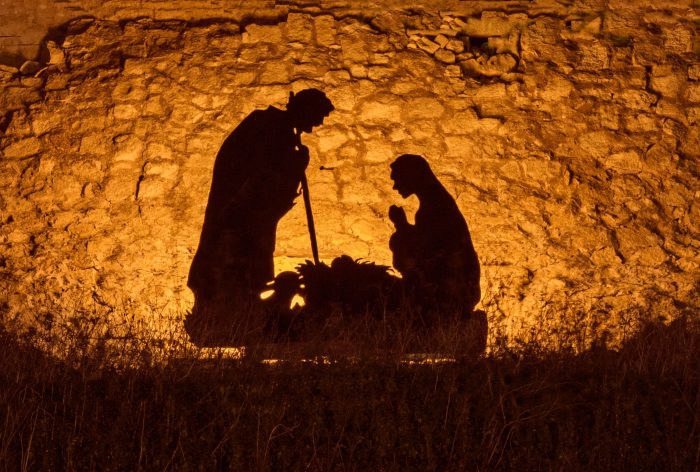
Jesus is our Redeemer.
On this first Sunday after Christmas, we read a little more about the Christ child from Luke’s Gospel:
22 And when the time came for their purification according to the Law of Moses, they brought him up to Jerusalem to present him to the Lord 23 (as it is written in the Law of the Lord, “Every male who first opens the womb shall be called holy to the Lord”) 24 and to offer a sacrifice according to what is said in the Law of the Lord, “a pair of turtledoves, or two young pigeons.” 25 Now there was a man in Jerusalem, whose name was Simeon, and this man was righteous and devout, waiting for the consolation of Israel, and the Holy Spirit was upon him. 26 And it had been revealed to him by the Holy Spirit that he would not see death before he had seen the Lord’s Christ. 27 And he came in the Spirit into the temple, and when the parents brought in the child Jesus, to do for him according to the custom of the Law, 28 he took him up in his arms and blessed God and said,
29 “Lord, now you are letting your servant depart in peace,
according to your word;
30 for my eyes have seen your salvation
31 that you have prepared in the presence of all peoples,
32 a light for revelation to the Gentiles,
and for glory to your people Israel.”
33 And his father and his mother marveled at what was said about him. 34 And Simeon blessed them and said to Mary his mother, “Behold, this child is appointed for the fall and rising of many in Israel, and for a sign that is opposed 35 (and a sword will pierce through your own soul also), so that thoughts from many hearts may be revealed.”
36 And there was a prophetess, Anna, the daughter of Phanuel, of the tribe of Asher. She was advanced in years, having lived with her husband seven years from when she was a virgin, 37 and then as a widow until she was eighty-four. She did not depart from the temple, worshiping with fasting and prayer night and day. 38 And coming up at that very hour she began to give thanks to God and to speak of him to all who were waiting for the redemption of Jerusalem.
39 And when they had performed everything according to the Law of the Lord, they returned into Galilee, to their own town of Nazareth. 40 And the child grew and became strong, filled with wisdom. And the favor of God was upon him. Luke 2:22–40 ESV
Mary and Joseph have come to the temple with an offering. But before this story is finished, we discover that God has given the greater offering — THE greatest offering! The Father has given us his Son. And this is what we celebrate at Christmas: Jesus has come into the world.
Jesus came, born a newborn infant, as a child under the Law of Moses. His parents were from the ancient tribe of Judah, known then as Jews. And his parents do what they believe they need to do in order to properly obey God. Mary and Joseph bring Jesus to the temple because they are part of Israel, God’s ancient people, and this is what God’s law called families to do. But look more closely at the child they are carrying.
The striking thing isn’t simply that Mary and Joseph obeyed these ancient requirements. The striking thing is who they are carrying into the temple.
The One who gave the Law placed himself under the Law. Mary and Joseph bring Jesus to participate in Israel’s life under the Law, but this child is the eternal Son of the Father who has entered our humanity to redeem it. He does not stand outside our human condition and tell us how to make ourselves right with God. He enters it. He takes our life as his own. He fulfills for us what we cannot fulfill for ourselves.
Jesus has entered fully into our human story.
This is how deeply God has entered our life: Jesus does not redeem humanity from a safe distance. The eternal Son of the Father becomes one of us. He takes our humanity as his own — from infancy and childhood all the way to suffering and death. He lives faithfully within our broken human story, and through his death and resurrection he carries that story into new life.
Jesus is our Redeemer.
Jesus is the firstborn son of Mary. The child Mary carried is the eternal Son who has always shared the Father’s life and love. The Father, Son, and Spirit are one God in three Persons. God has always lived as three equal, unique Persons in one Being, perfect in love and unity.
The Father sends Jesus to redeem humanity. This is something only Jesus can do, as God’s one unique Son (John 3:16–17). The Father sent his eternally begotten Son, and he was born of the virgin Mary. Jesus, as God in human flesh, is God’s firstborn Son.
Jesus is our Redeemer, and this is who Mary carried into the temple.
Verse 25–30:
Now there was a man in Jerusalem, whose name was Simeon, and … he took [Jesus] up in his arms and blessed God and said, … for my eyes have seen your salvation
What did this old man see when he looked at an ordinary baby that caused him to say, “I have seen God’s salvation”?
God’s salvation has arrived, and Simeon is holding him in his arms. This is why Simeon can hold this little child and say, “My eyes have seen your salvation.” Salvation is not something Simeon must accomplish. Salvation is a Person. Salvation is Jesus.
Now the Spirit inspires Simeon to say several things about Jesus: Jesus is God’s salvation; God has prepared Jesus in view of all nations; Jesus is to be a “light for revelation to the Gentiles” (non-Jews) and for ancient Israel’s glory. Simeon is pointing to Jesus as being the Messiah or Savior of his people.
Luke continues:
33 And his father and his mother marveled at what was said about him. 34 And Simeon blessed them and said to Mary his mother, “Behold, this child is appointed for the fall and rising of many in Israel, and for a sign that is opposed 35 (and a sword will pierce through your own soul also), so that thoughts from many hearts may be revealed.” Luke 2:33–35 ESV
Simeon’s words must have sounded strange to Jesus’ parents. But we have the advantage of interpreting them through the Gospel records.
-
- “appointed for the fall and rising of many in Israel” — Jesus overturns expectations. Some who seem secure and powerful will be brought low, while others who seem forgotten or without hope will be lifted up. Jesus’ coming brings a great reversal.
- “a sign that is opposed” — Jesus will reveal God to the world, but not everyone will welcome him. He will be rejected and opposed, ultimately leading to the cross.
- “a sword will pierce through your own soul also” — Simeon turns directly to Mary. Loving this child will eventually bring her profound grief. She will see her son rejected, suffer, and die.
And through it all, Jesus will reveal what is hidden in human hearts. People will have to reckon with who he is and with the God he reveals. Even here, while Jesus is still an infant, Luke is pointing us toward the cross. The Redeemer has entered our world, and he will go all the way into our rejection, suffering, and death in order to bring us into his life.
Jesus is our Redeemer.
36 And there was a prophetess, Anna, the daughter of Phanuel, of the tribe of Asher. She was advanced in years, having lived with her husband seven years from when she was a virgin, 37 and then as a widow until she was eighty-four. She did not depart from the temple, worshiping with fasting and prayer night and day. 38 And coming up at that very hour she began to give thanks to God and to speak of him to all who were waiting for the redemption of Jerusalem. Luke 2:36–38 ESV
When the prophetess Anna sees Jesus, she begins thanking God. And she begins telling all those around her about Jesus. By the Spirit, she sees that this little child will redeem his people. Jesus is our Redeemer and they need to give thanks with her for God’s gift of redemption.
God’s salvation was never meant to stay inside the temple. In Jesus, God’s light is already moving outward toward the nations. The Father is restoring his creation through the Son, and the Spirit is still opening eyes to see Jesus and drawing people into his life. The Church gets to participate in a mission God has already begun.
After Mary and Joseph have heard Simeon and Anna speak these wonderful words over Jesus, they return home. Jesus grows up like any young boy, developing into a healthy, and wise young man. We read:
39 And when they had performed everything according to the Law of the Lord, they returned into Galilee, to their own town of Nazareth. 40 And the child grew and became strong, filled with wisdom. And the favor of God was upon him. Luke 2:22–40 ESV
When Jesus was a child, his parents did what they could to keep the Law of Moses. This meant making a trip to the temple, giving an appropriate sacrifice, and doing what they believed God wanted them to do according to the Law. It was their best effort to serve God.
Jesus takes our best efforts to serve God and redeems them. Jesus doesn’t merely forgive our failed response to God; Jesus gives humanity the faithful human response to God that we could never perfectly give ourselves.
Jesus redeems the difficulties, challenges, failures, and sorrows of our lives. He takes what is ours that has fallen into ruin and redeems it, exchanging it through his death and resurrection, for new life. In Jesus, humanity is not only redeemed by God; humanity is faithfully offered to God.
Jesus is our Redeemer.
The incarnation means the Son of God hasn’t redeemed humanity from a distance. He entered human life. Infancy. Family. Growth. Relationships. Vulnerability. Sorrow. Death. There is no part of human existence Jesus has regarded as beneath him. God doesn’t rescue humanity by shouting instructions from heaven. The Son becomes one of us.
Maybe there is something about your family or your childhood that has never been healed or restored. Maybe you missed out on experiences other children enjoyed. Maybe your childhood was stolen from you through abuse or suffering. Jesus takes our broken human stories into himself and creates a redeemed people who learn to share one another’s burdens, hope, grief, and healing.
Jesus is our Redeemer. Jesus has taken even our deepest wounds into the human life he came to redeem. Our pain is not beyond Jesus’ healing, our failures are not beyond his grace, and our stories are not beyond his renewing love.
Nothing is beyond Jesus’ ability to transform, heal, and renew. Jesus is our Redeemer. He is our elder brother, the firstborn of God’s family, and he is ever working to redeem, restore, and renew. Redemption is not merely available; it is accomplished. Christ redemption. He redeemed us — past tense, finished. And the ongoing part is the Spirit bringing the fruit of that accomplished redemption into our lives and ultimately all creation.
We can find great comfort and encouragement in this good news, trusting in his love and grace as he makes all things new. The Father has sent the Son into our humanity. The Son has taken our life as his own in order to redeem it. And the Spirit opens our eyes to recognize in Jesus the salvation the Father has given.
So, what does Luke 2 show us about the kind of Redeemer Jesus is?
This is the astonishing good news: the eternal Son has entered our ordinary human life, taken our humanity as his own, fulfilled for us what we could not fulfill ourselves, and through his death and resurrection redeemed us. The Father sent him for the world, and the Spirit opens our eyes and draws us into his redeemed life.
Merry Christmas! God’s salvation has arrived, and Simeon is holding him in his arms and Anna praises God. Jesus is our Redeemer.
Go Deeper: In Leviticus 12:1–8, we learn a little more about what Joseph and Mary were doing in the temple. We learn that Moses’ Law says a woman was to make an offering after she gave birth. She was considered ceremonially unclean for a certain number of days after giving birth depending on whether she gave birth to a boy or a girl. This meant she could not participate in worship services and could not be around other people. When the time of separation was over, she was to give a lamb as an offering. Or if she couldn’t afford a lamb, she was to offer two turtledoves or two pigeons. Then she would be considered clean.
In Exodus 13:2, 12, we learn that God had asked the ancient Israelites to set all the firstborn males aside for service to God. Each firstborn son was to be redeemed with five shekels for the sanctuary. This money went to the high priest to be used in the service of the sanctuary, which at that time was the tabernacle.
Greg Little—Year B Christmas 1


Program Transcript
Anthony: So, we’re down to our last text of the month. We’re entering into the Christmas season. Our text is going to be Luke 2:22–40. It is a Revised Common Lectionary passage for the First Sunday after Christmas, December 27. Greg, we’d be grateful if you read it for us, please.
Greg:
When the time came for their purification according to the law of Moses, they brought him up to Jerusalem to present him to the Lord 23 (as it is written in the law of the Lord, “Every firstborn male shall be designated as holy to the Lord”), 24 and they offered a sacrifice according to what is stated in the law of the Lord, “a pair of turtledoves or two young pigeons.” 25 Now there was a man in Jerusalem whose name was Simeon; this man was righteous and devout, looking forward to the consolation of Israel, and the Holy Spirit rested on him. 26 It had been revealed to him by the Holy Spirit that he would not see death before he had seen the Lord’s Messiah. 27 Guided by the Spirit, Simeon came into the temple, and when the parents brought in the child Jesus to do for him what was customary under the law, 28 Simeon took him in his arms and praised God, saying, 29 “Master, now you are dismissing your servant in peace, according to your word, 30 for my eyes have seen your salvation, 31 which you have prepared in the presence of all peoples, 32 a light for revelation to the gentiles and for glory to your people Israel.” 33 And the child’s father and mother were amazed at what was being said about him. 34 Then Simeon blessed them and said to his mother Mary, “This child is destined for the falling and the rising of many in Israel and to be a sign that will be opposed 35 so that the inner thoughts of many will be revealed—and a sword will pierce your own soul, too.” 36 There was also a prophet, Anna the daughter of Phanuel, of the tribe of Asher. She was of a great age, having lived with her husband seven years after her marriage, 37 then as a widow to the age of eighty-four. She never left the temple but worshiped there with fasting and prayer night and day. 38 At that moment she came and began to praise God and to speak about the child to all who were looking for the redemption of Jerusalem. 39 When they had finished everything required by the law of the Lord, they returned to Galilee, to their own town of Nazareth. 40 The child grew and became strong, filled with wisdom, and the favor of God was upon him.
Anthony: Simeon and Anna, among other things, they were advanced in age. They were older. Some might say they were beyond their best use by date, and yet God included them in the story of Jesus.
You said earlier in the podcast that much of your time is in a community where people may, in other settings, not feel included, marginalized, pushed aside, whatever the case may be. And sometimes we do that with the aged among us. What, if anything, can we learn from this, both theologically and very practically?
Greg: There’s this beautiful book called Vineyard of the Text by Ivan Illich, in which he talks about this shift from a more monastic way of knowing and reading to a more scholastic way in the 12th century. It’s very interesting on many levels. But connected to this, he talked about, there was this point in history where knowledge suddenly became almost like a commodity or bits of information, data that you can accrue in your mind, and then use it however you want, whenever you want.
Whereas before, a more monastic way of knowing was, like, an embodied, communal, slower, over time formation that was vulnerable to being changed. To know something was to live a life that expressed that thing. And I think, especially in our culture now, that’s such an important thing for us to remember and to in the age of technology and the way that we learn and know things now, the pacing and the efficiency, we can just we can put this in our head, but our life doesn’t need to change, and this is how we know it.
How do we cultivate living spaces where we can more deeply know the words of Scripture? And I think Simeon and Anna are models of this. I actually think practically, I was just imagining what was, what were the decades of life, what did they look like day to day for Simeon and Anna to position themselves, their bodies in a place to live the Scriptures to truly know and be transformed by the Scriptures. So, for Simeon was waiting on the Messiah, the way that Anna talks about looking for the redemption of Jerusalem. We can so often think that’s just this mental exercise, but they were there.
They were living a life that was transformed by what they heard in Scripture, and therefore they were positioned to see, receive, and bless the Son of God. It’s just really inspiring to me, is that first of all, and it’s, I think the wisdom, the appearance of wisdom, the mediation of God’s presence in hidden and unexpected places and people is certainly a piece of this text that inspires me.
Abraham Heschel talks about a prophet is not just a messenger of God announcing, but also one who hears the sighs and sufferings of the people that are imperceptible to others, which I just think that to think of the prophetic as also this kind of apostleship of the ear is really inspiring to me that listening to the sighs and sufferings that are imperceptible to others is a way of engaging in the prophetic.
And in that way, I feel not only do we have a model in Simeon and Anna but ourselves to live into that tradition is to open our ears to be attentive to the cries and the aches and the sufferings of those who are made periphery, and that in some mysterious way, Christ is calling us in those voices.
And the last thing, I think there’s traditions over the centuries of the church that pray morning and evening, like the daily office, and some pray seven times a day, and one of those prayers is Compline, which is the last prayer of the day. And this text, these words from Simeon have become, over the centuries, a text that is prayed every single night at Compline. It’s the last prayer of the night before there’s this remembrance of baptism. The going to bed in the tradition is a mini death, and so there’s this remembrance of baptism and remembrance that we are buried with Christ and risen in Him. And so, the connection somehow of this text and Simeon’s response, a light to enlighten the nations with our remembrance of baptism, I think is really beautiful and connects to what we’ve been saying previously in this as well.
Anthony: Yeah. Here we are, the home stretch. Last question of the podcast, and this text is going to fall within the season of Christmas. Sometimes in society we just think of Christmas as a day, but with the liturgical calendar, we think of it as a 12-day season of celebrating the Christ child, the Messiah, the Anointed One coming to live among us, to pitch his tent with us. What else would you want our audience to know about Jesus as they ponder, reflect, and contemplate the reality that he is Emmanuel, God with us?
Greg: Thanks for that invitation and for this time of reflecting. It’s a real gift. Our Reality community has been engaging with the four themes of Advent this whole year, so we’ve had some stories of Jesus’ life around hope, around peace, around joy, and love. And this kind of Advent all-year theme has been really like a … There’s a, gosh, there’s a great Karl Barth quote about what is it? “What other season does the church have or ever will have other than Advent?”
Anthony: That’s right. Yes.
Greg: And in part, that’s like, how do we … I don’t know. The invitation for me is how do I posture myself to receive the extraordinarily good news that God is with us? The news of Christmas, as we’ve talked about is unlike any other news and it is the transformative power of that news. Like, how can we prepare and be watchful and open ourselves to that revelation?
And so, this year it’s been really wonderful as a community to do that, and it makes me think of kind of three — I think it’s St. Bernard that talks about three advents. So, there’s Jesus coming as a baby in the Incarnation. So, this is what we celebrate in Christmas, and the invitation there is to reflect on God’s faithful presence in the past, like Jesus was born as a baby a couple thousand years ago in God’s faithful presence that has come.
Then there’s the Jesus making all things right, and the invitation of Jesus coming, the second coming is one of anticipating God’s faithful presence in the future. And then there’s the kind of middle advent in which we all live, which is like the daily visitations of Jesus in our midst all the time.
And I love that is part of how we prepare for Christmas, too, is that there’s this God’s faithful presence was and is to come. And so, I think that for me, as I think, as I imagine what it might be to cultivate a longing for Jesus’ coming, a lot of it has to do with an attentiveness to the ways in which he’s present to me right now
Anthony: I love that you’ve used the word attentiveness a couple of times, both the inner work and as we navigate and move through this world.
And I find, Greg, that this is a big part of the life with Christ. It’s just growing in our awareness.
Greg: Yeah.
Anthony: That he is here, that he is at work, and the great question is, “What are you up to, Lord, and how can I join you in that work?”
Greg: Yeah.
Anthony: That’s our desire, especially during this Christmas season. Brother, I appreciate you. I don’t know you well, though I’ve been in some of the same spaces with you a few times, and what I hear is the sound of the genuine. So, thank you for being you, and sharing this good news with us. And I just want to remind all of us as we move through this season that loving others as Christ has loved us is the very best theology.
It is the way that we sacramentally, if you will, show what is really true, which is sometimes hidden. But the way that we love each other is the greatest apologetic that we have, that Jesus is real, that he is for us, and he is so relentless in his pursuit of us in a relationship. Hallelujah and praise God.
I want to thank our team at Grace Communion International who works behind the scenes to make this podcast possible. You know who you are. I’m so grateful for you. And as is our tradition here at Gospel Reverb, we like to close with a word of prayer. And Greg, we’d be grateful if you’d do that for us.
Greg: Yes. I actually have a short prayer from someone who’s inspired me a lot related to everything we’ve been talking about. Her name is Sister Thea Bowman, and this is her invitation and prayer that I’ll close with.
“Children, mothers, fathers, sisters, brothers, go. There is a song that will never be sung unless you sing it. There is a story that will never be told unless you tell it. There is a joy that will never be shared unless you bear it. Go tell the world. Go preach the gospel. Go teach the good news. God is. God is love. God is with us. God is in our lives.” Amen.
Anthony: Amen.
Small Group Discussion Questions
- What stands out to you about Jesus being brought to the temple as an ordinary child, yet being revealed as God’s salvation?
- Simeon says, “My eyes have seen your salvation.” How does it shape our faith to remember that salvation is not just something Jesus gives, but who Jesus is?
- The sermon says Jesus does not redeem humanity from a distance but enters fully into our human life. What part of that truth feels especially comforting or meaningful to you?
- Luke 2 shows Jesus redeeming ordinary human life — family, growth, weakness, obedience, sorrow, and hope. Where do you most need to trust Jesus as Redeemer right now?


Please note that comments are moderated. Your comment will not appear until it is reviewed.