GCI Equipper

Christ Who Encounters Us

Our encounter with Christ does not turn us inward;
it sends us outward.

One of the passages that has always inspired me is the story of Jesus encountering the Samaritan woman in John 4:1–42. I am deeply moved by the way Jesus transformed her. What is actually remarkable about the Samaritan woman is not her marital history (and we aren’t told what caused it). It is the progression of her understanding of Jesus.

She initially identifies him as a Jew (4:9). She addresses him as “sir” (4:11). After he reveals knowledge of her life, she says, “I see that you are a prophet” (4:19). Then she engages him in a serious theological question concerning Gerizim and Jerusalem (4:20). She speaks of her expectation that the Messiah is coming (4:25). And after Jesus’ self-disclosure (I am the Christ), she goes to her town wondering, “Could this be the Messiah?” (4:29).

We see a genuine movement of recognition. And importantly, she also becomes a witness.

…(she) said to the people, “Come, see a man who told me everything I ever did. Could this be the Messiah?” They came out of the town and made their way toward him.” John 4:28–30 NIV

Then, in verse 39, we read, “Many of the Samaritans from that town believed in him because of the woman’s testimony” (NIV). They came to meet Jesus for themselves. And in verse 42, they told the woman: “We no longer believe just because of what you said; now we have heard for ourselves, and we know that this man really is the Savior of the world” (NIV).


Note from the Media Team: We’re pleased to announce a new, easy way for you to give feedback. Give us a thumbs up or down. If you hit thumbs down, a comment box appears. If you choose, you can tell us more.

We appreciate the encouragement of our GCI fellowship, and we welcome your honest feedback. Are these tools supporting your ministry? If something isn’t helpful or doesn’t fit your needs, please tell us. You don’t need to soften your feedback to be gracious. Your perspective helps us understand where changes are needed so we can better support you and your congregation.

Missional Kingdom Living

Gospel proclamation belongs within the larger mission.

Mission encompasses everything God is doing in creation. God is sustaining the world, caring for humanity, restoring relationships, blessing communities, and ultimately renewing all things. Mission becomes less intimidating when it is understood as the natural overflow of Christian life: loving neighbors, bearing the fruit of the Spirit, working faithfully, and participating in God’s restorative purposes.

Below are some key ideas for your leadership to discuss. They are summarized from Dr. Walter Kim’s interview, Part 2. Listen to the full GC Podcast here.


  1. The Gospel Is the Good News of God Making All Things New
    • Isaiah shows that biblical “good news” is much broader than individual forgiveness alone. Isaiah’s vision includes peace, salvation, restored cities, renewed communities, justice, and the nations seeing God’s saving work.
    • If the gospel is presented only as the solution to an individual problem — “my sins need to be forgiven” — people can easily approach Christianity as consumers.
    • Forgiveness is essential. But forgiveness brings us into new life, not merely out of guilt. The gospel is far richer: it includes personal wholeness, relational wholeness, communal restoration, and ultimately cosmic renewal.
  1. Word and Deed Belong Together
    • For the early church, the message of a crucified Messiah was culturally strange and even offensive, yet the witness of Christians caring for widows, orphans, and the poor made their proclamation credible.
    • Acts of mercy and justice are not merely techniques to get people to listen to an evangelistic message; they themselves are expressions of the good news.
    • The gospel should be both spoken and demonstrated. At its best, the church holds together proclamation and embodiment because Jesus himself holds all of life together.
  1. Salvation Brings Us into a New Family, Vocation, and Purpose
    • A fuller gospel gives disciples from the beginning an expectation of growth, participation, relationship, vocation, and mission.
    • These gifts bring joy, but they also carry responsibility. This helps make sense of Jesus’ language about counting the cost and taking up our cross.
    • Discipleship is not an added requirement after salvation; participation in Christ’s life and mission is part of the life into which we have been saved.
  1. The Church Must Be Unleashed into the Neighborhood
    • Christians can serve not only through church ministries, but in schools, civic groups, neighborhood organizations, volunteer networks, and ordinary community life. Rather than approaching people from the outside, Christians share life with them.
    • Mission happens when Christians show up as neighbors. Evangelism becomes more relational and natural when relationships already exist through common work and common concerns.
    • The question shifts from “How do we get our neighbors into church?” to “How do we become faithful neighbors where God has already placed us?”
  1. Serve With People, Not Only For Them
    • Mission can be profoundly evangelistic when people are invited not merely to observe Christians, but to experience Christian community from within.
    • The non-Christian participants can become partners in serving. Working shoulder-to-shoulder gives them an inside view of Christian prayer, community, vulnerability, and service.
    • Shared mission creates opportunities for questions about Jesus to emerge naturally. Mission can become less forced when it grows from genuine neighborliness.

Reflection Questions

    1. When we use the word “mission,” do we primarily mean evangelism, or do we have a fuller vision of God restoring people, relationships, communities, and creation?
    2. Do our words and deeds reinforce one another? Where might our congregation be proclaiming the gospel without embodying it — or serving without clearly connecting that service to Jesus?
    3. Are we unintentionally forming consumers by presenting the gospel mainly as something God does for the individual, rather than inviting people into new life, family, vocation, and purpose?
    4. Where are our members already participating in the life of the neighborhood — schools, workplaces, civic groups, sports, service organizations? How could we recognize those places as genuine mission fields?

Church Hack—Creating a Welcome Path for Neighborhood Partners

Meaningful partnerships begin by sharing life with our neighbors. This Church Hack explores how partnering around shared values can strengthen missional presence and Love Avenue ministry. Prayerfully consider who your church could partner with.

Read the full Church Hack.

Formation—Advent

How will your congregation observe
the season of Advent this year?

Advent begins next month on Sunday, November 29. Start planning now to help your faith community enter this season with anticipation, reflection, and a deeper focus on Christ.

Read the full guide for congregational ideas for spiritual formation.

Restoring Hearts

Young people can invite their friends
into participation, not only attendance.

By Carmen Acosta de Montenegro, Pastor and Faith Avenue Champion
Barranquilla, Colombia

One place we have seen ministries create easy on-ramps for young people to invite other youth is through events that youth already want to talk about and share. At CGI Barranquilla, Colombia, we try to make the invitation feel simple: “Come watch us perform.” These are natural invitations young people can offer without feeling pressured to explain everything about church first.

A specific example is our annual “Family for Jesus” event, held under the motto “Restoring Hearts.” Children and youth from Rivera International School, led by Director Pastor Sonia Orozco, prepare music, theater, dance, and artistic sports presentations. Because youth are already practicing, performing, and participating with their peers, they have a natural reason to invite classmates, friends, cousins, and neighbors to come see what they have prepared.

This on-ramp works because the first invitation is not simply, “Come to church.” Instead, it may be, “Come see our dance,” “Come hear the music,” “Come watch the play,” or “Come support our team.” These invitations are concrete, relational, and easy for young people to extend. The ministry helps by creating spaces where youth participation itself becomes the bridge for youth invitation.

In 2025, 330 people attended “Family for Jesus,” including parents, guardians, students, and family members. Many came because a child or young person had a simple reason to invite them. This shows how congregations can help youth invite others by connecting the invitation to something visible, joyful, and shared. Youth can invite through school relationships, family networks, friendships, and community connections.

Another way we make invitations easier is by allowing youth to invite others into participation, not only attendance. Some youth help prepare songs, dances, dramatic presentations, or sports demonstrations. Others invite friends to come with their families and experience the event together. When young people are given a role, they are more confident inviting others because they are sharing something personal and meaningful.

Biblical teaching through theater is also an easy on-ramp. When children portray stories such as the Good Shepherd, friends and relatives come to support them, and young guests hear the gospel in a setting that feels welcoming and familiar. The invitation begins with relationship and support, and then opens the door for families and youth to encounter Jesus:

Jesus said to him, “I am the way, and the truth, and the life.” John 14:6 NRSVA

These examples have taught us that congregations can help young people invite other young people by removing barriers and giving them clear, joyful reasons to extend an invitation. Creative presentations, school connections, family celebrations, peer participation, and youth-led moments all become on-ramps. Through them, young people can say, “Come with me,” and others can experience the love of God revealed in Jesus Christ.

Ted Johnston—Propers 26–28, Reign of Christ

Ted Johnston—Year A Proper 26–28, Reign of Christ

Matthew 23:1–12 ♦ Matthew 25:1–13 ♦ Matthew 25:14–30 ♦ Ephesians 1:15–23

The host of Gospel Reverb, Anthony Mullins, welcomes Ted Johnston to unpack the August 2025 RCL pericopes. Ted is a faculty member at Grace Communion Seminary, where he teaches practice of ministry and Christian counseling. He’s the editor of The Surprising God, a blog focused on Trinitarian theology and its application. Ted served 32 years vocational ministry for Grace Communion International as a church pastor, district superintendent, denominational leader of youth programs, regional pastor, and publications editor, before retiring. He earned master’s degrees from Regis University and Trinity Evangelical Divinity School.

Sunday, November 1, 2026 — Proper 26
Matthew 23:1–12 NRSVUE

Sunday, November 8, 2026 — Proper 27
Matthew 25:1–13 NRSVUE 

Sunday, November 15, 2026 — Proper 28
Matthew 25:14–30 NRSVUE 

Sunday, November 22, 2026 — Reign of Christ
Ephesians 1:15–23 NRSVUE


If you get a chance to rate and review the show, that helps a lot. And invite your fellow preachers and Bible lovers to join us!

Follow us on Spotify and Apple Podcast.

Program Transcript


Transcript is coming soon!

Equipping the People of God w/ Eun Strawser

You Were Never Meant to Lead Alone (Part 2): Equipping the People of God w/ Eun Strawser

Equipping the People of God
Dr. Eun Strawser

Kingdom Living is participatory, making room for the gifts and calling of the whole body of Christ. In this episode of GC Podcast, host Cara Garrity continues her conversation with Rev. Dr. Eun Strawser about the practices that help shared leadership take root in the local church.

Drawing from the biblical picture of the church as one body with many gifts, they explore how shared language and leadership tools can help us recognize and develop the gifts of others. At its heart, church leadership is about equipping the people of God for works of service. This episode invites us to consider how our leadership practices can create space for more people to actively participate in the life and mission of the church.

“Christ himself gave the apostles, the prophets, the evangelists, the shepherds, and teachers ― this is Ephesians 4:11-13 ― to equip his people for works of service, not do the works of service for his people. That is usually how it is misinterpreted. So that, why? So that the Church will grow? So that the pews will come in and our budgets will grow higher? No. So that the Body of Christ may be built up. There’s that temple language again, that indwelling presence of God language again. Until we all reach unity in the faith and in the knowledge of the Son of God and become mature. Oh, that’s all discipleship, attaining to the whole measure of the fullness of Christ.” — Rev. Dr. Eun K. Strawser


Main Points:

  • Ephesians 4, Romans 12, 1 Corinthians 12 are foundational passages for leadership development in GCI. How do you see these passages providing a compelling vision for a leadership that’s shared? [01:02]
  • APEST can be a tool that supports shared leadership. What is helpful about having a tool/common language supporting practices of shared leadership?  [10:31]
  • The purpose of church leadership is to equip the people of God for works of service. How does shared leadership more effectively equip?  [25:17]


Resources:

  • 5 Voices : An Equipper article that explains and outlines the benefits of using the 5 Voices as a tool.
  • ‘iwa collaborative: Eun Strawser’s books on church leadership.

Program Transcript


Cara: In 2026, the GC Podcast is shifting to a new format with two miniseries released throughout the year rather than monthly episodes. This change is going to allow us to go deeper into meaningful conversations that support our shared journey of Kingdom Living.

Hello folks, and welcome to this episode of GC Podcast. I’m your host, Cara Garrity, and today I am so excited to dive into episode two of our miniseries with Reverend Dr. Eun Strawser. We are exploring the role of shared leadership in developing local congregations that are participatory, relational, missional, and transformational by diving into Eun’s book, You Were Never Meant to Lead Alone: The Power of Sharing Leadership.

And welcome, welcome, welcome, Eun. I am so excited for this next set of conversations.

[00:01:00] Eun: Thanks for having me again, Cara.

[00:01:02] Cara: Awesome. So, Eun, in the beginning of this second part of your book, you start with exploring parts of Ephesians 4, Romans 12, and 1 Corinthians 12. And this, for me, was really exciting because in GCI leadership development, these are foundational passages that kind of guide our ethos, our vision, like, how we do what we do, why we do what we do, what it looks like to do what we do.

And can you just talk to us a little bit more about how you see these passages providing a compelling vision for a leadership that’s shared?

[00:01:45] Eun: Absolutely. For some people who pick up this book, they pick it up because they love that … I know for GCI, you folks use the Five Voices tool. Other people may be more familiar with APEST ― apostle, prophet, evangelist, shepherd, teacher, or the fivefold gift set, however way you’re familiar with it

If you’re familiar with it, people love to grab these kinds of books because I think that the detriment to the church has been, if there’s anything like a personality test, everybody who loves the Enneagram, if you know what it is, and you like it. Any, and whatever shapes has come in, a StrengthFinders, whatever that kind of personality test people, and leaders especially, grab onto, I think, again, this is borrowed from the business models. We love to gravitate toward it because we love to just consume it, and we love to just eat it, and we’re just — we just become this me, me monster.

So, the reason why I started the second part, because the second part is around those Five Voices or APEST. The second part, I needed to make sure that it’s anchored to why is it even important about clarifying these unique voices, these unique five voices in shared leadership. It has to be anchored to the reason why this kind of leadership or shared leadership ought to exist.

So, Ephesians 4, Romans 12, 1 Corinthians 12 ― I go a little bit into John 17 as well. All of these passages actually are linked to what is the reason why the church exists? And if we can’t figure that out, then we will just make it up. Because sometimes we think that the church just exists so that it can be a social club for people who traditionally know that church is a part of my culture, right?

Or other people think that churches only exist so that they can do charitable giving, and that’s why they exist, right? Or churches exist so that they can produce funds so that it can be sent overseas for far away ministries, right? You can put in lots of different reasons why people could make up why churches exist.

But if you take a biblical perspective on the church … And I focus on these epistles from the Apostle Paul on purpose because all of these passages actually came before any of the gospels were written. So, any Jesus story or the Jesus Christ that was being told and circulated in the first century, they were written after these letters to all of these house churches in these regions were already read and have already been circulating.

And a lot of biblical scholars also say that, and historians say that, they were also interchangeable. So, the letter to Ephesians could have also been read amongst the house churches in Corinth as well, and vice versa. So, if this was a culminating picture and vision of what the church ought to be, it’s something we should pay attention to, and we should use that as a reason to why is it in the wisdom of God that Jesus would appoint and give to the church shared leadership and not just a hierarchical church model.

So, when you kind of look at these passages you first … Everybody loves the Romans 12 and 1 Corinthians 12 passages because these are the first go to places of how we think about different spiritual gifts, let’s say, and how different people are maybe are more hospitable or generous or have the teaching gift or whatnot.

But if you were to actually think through what is the whole point of the Apostle Paul to these house churches, to these first churches, it’s that if you do not keep to the unity of the church, because the uniqueness of this new family of Jesus is that, It’s the first time that intergenerational, intercultural, inter-economic, right, intergender spaces, all of these kinds of combination of mixed groups that did ― that were separate before, now are coming together at a shared table, and they are working together to go and serve their neighbors in their local neighborhood. That is the uniqueness of the Christian Church. Those kinds of communities and families and different kinds of ways of doing faith communities have never been done before.

So, if the unity of the church is the biggest emphasis, we also know that shared leadership’s goal is also for the unity of the church. So, that’s one part. But if you kind of go down a little bit more, like Romans 12 and 1 Corinthians 12 there are usually these body analogies.

I’m also co-vocational, I’m a physician. So, the first time that I read about any sort of body, the body parts of the family of God, I’m just, like, “Wow, what a fantastic metaphor to use,” because I’m going to think ― be thinking about the human body. Of course, a hand is not an eye. Of course, a foot is not a mouth, right? We can already kind of see that.

But that’s not the reason why the Apostle Paul uses that word body. If you are a first-century Christian and you’re in a Roman context, if you hear the word body, it’s referencing the way that the Roman Empire has come in and probably oppressed and colonized your people group.

And when they talk about body, that’s referencing the body politic of Rome. So usually when Rome will go to a different area of that world, of this huge growing empire, the kingdom of Rome, they would call ― go and announce the good news that Rome has come to save them and that we’re only going to take the best of your people and assimilate them into the body Rome. You can’t speak your own language. This is a whole a colonized perspective of conquering, right?

It’s in that context that the Apostle Paul is using the word body. He’s saying if you’re a Jesus community, if you’re a faith community centered around imitating Jesus together, right? The uniqueness of this group is the fact that you are committing that actually Rome is not king ― Jesus is. And how does Jesus’ body politic operate? In Jesus’ kingdom, nobody is actually dispensable. Everyone is included. Everyone is meaningful. Everyone is valuable. You can never say that one part is better than another. That is revolutionary in a context where these people have been taken over, right? We have concern for one another because we treat one another with a dignity as image-bearers and they’re brothers and sisters of Jesus. That is revolutionary.

The second part that the Apostle Paul emphasizes in both of these passages is any time that there is construction words built up, those kinds of words, if you are a first-century Christian most likely in this context in Rome there’s both Jewish and Gentile Jesus followers. If you listen and hear about these building of construction words, then it is a direct shortcut so that you’re going to start thinking about temple language. And what does a temple represent in the Hebrew Bible? It’s the place where God’s indwelling presence is. So, the whole point about the church’s existence is that it is also a body of resistance to a conquering or oppressive culture at hand.

But it also is the very place ― this community, these people gathering together ― is the very place that God chooses to put his indwelling presence on. Those are the two links to why a faith community who imitates Jesus will be in unity. He’s already defining it for the church. So, if we don’t have this clarity that we are, we exist as a community, as a church, so that we get to reflect God’s indwelling presence, and we are actually a people of resistance to empire at hand in our current culture, and that’s what produces a unity for us, then we wouldn’t even know why shared leadership or leadership in general would be necessary for the church.

[00:10:31] Cara: Yes, and I really appreciated those because I think that these are often when we talk about leadership and giftings and coming together within the church to share our giftings and our things that we care about and to bring leadership and develop leadership, these are pretty common passages that are often brought to the table.

And the way that you just explained them and the way that you explored them in your book are not common ways of understanding, right? And so, I was actually just …. it just makes it so much richer and so much more I don’t know, just beautiful and compelling to understand these passages and what they would mean to the original readers and hearers and what they meant when Paul first wrote them, like, in the original context, right?

Because, yeah, they do have their own kind of, for you even as a physician, right? The body and they all belong together, and I think that right in our context has it’s meaningful, but I think, like, when put into its historical context I was just … it’s incredible, right? And when you think even about our theme this year in GCI about kingdom living, what more to say? We live according to the kingdom of Jesus, not whatever empire is at hand right now, where nobody is dispensable, where everyone is brought together, where this unity is important, and in this kingdom with this body of people brought together, that’s where God has chosen to dwell among his people. That’s just, yeah, incredible.

So, I really appreciate you bringing that to us as just like foundational for our understanding of, like, why we even need to think about unity and everyone, like, needing to have a space, right, at the table, I guess, maybe to say, like, in the body of Christ, because it’s a different kind of body than the ones maybe we’re used to outside of his kingdom.

And you did mention as well, maybe, the parallel from APEST to Five Voices, and they’re both tools that we use in GCI. The Five Voices is probably more common language and of a tool that we use. But we do use APEST as well. And so, for our listeners, I just want to make that connection for you, that there are those similarities, and we do have some resources that you can draw upon from our website that kind of help to point to some of those connections of some of the values and priorities, and even relation to time and whether we’re more oriented towards the future or the present and those kind of things.

We have some resources that help to bridge that connection between APEST and the Five Voices. And so, if you’re interested in that, if the Five Voices are more familiar, more comfortable to you as a tool or a common language in your congregation, go ahead and refer to those resources as well.

And in your book specifically, and you discuss APEST, that can be a tool that supports living into shared leadership. And so, I’m wondering what’s helpful about having a tool or a common language to support practices of shared leadership versus just saying we’re going to share leadership, so let’s do it.

[00:14:59] Eun: Yeah. When we do it that way, it just never happens. Our personalities will get in the way. And our practices, traditional practices will get in the way. And I do love … I do think that having a common tool and language is helpful because it helps us to solidify and do what we’re saying we’re committing to doing.

And if we have clarity about these things, it’s such a gift to leaders. My biggest thing about APEST or even using Five Voices, these tools that help to clarify that there are different kind of leaders or different contributions that leaders bring as a gift to the congregation and to the community around them ― when we have clarity around it, we also know have a clarity that not one kind of leader is better than another or lesser than another, and I think that’s really important to state.

I think the other thing is that I think it clarifies that it’s not really talking about different personalities. We shouldn’t be giving away leadership just because we want a well, more well-rounded personality traits, right, amongst a set of people. Because again, the gift of … And I’ll use APEST as the example just because I’m much more familiar with it. But the gift of APEST as a tool to living out shared leadership within a church context is so that we can move away from just personality or skill-based things.

But you want to know what is the gift of contribution? What is the thing that this kind of leader is trying to impact the community? The biggest, I think, misunderstanding of the Ephesians 4 chapter is that we misread it. So, Christ himself gave the apostles, the prophets, the evangelists, the shepherds, and teachers ― this is Ephesians 4:11-13 ― to equip his people for works of service, not do the works of service for his people. That is usually how it is misinterpreted. So that, why? So that the church will grow? So that the pews will come in and our budgets will grow higher?

No. So that the body of Christ may be built up. There’s that temple language again, that indwelling presence of God language again. Until we all reach unity in the faith and in the knowledge of the Son of God and become mature. Oh, that’s all discipleship attaining to the whole measure of the fullness of Christ, right? He’s already defining it. What is the reason why shared leadership and leadership in general exists within the framework of the church?

So that the people of God, the congregation, will be equipped, so that they’re doing the works of service of God. So, that’s the way in which they’re going to be built up and experience and reflect the indwelling presence of God, and live into their unity, and live into a body that is resistant and is for the care of their neighbors, right?

If that’s the reason why, then having a common tool and language and having clarity around why shared leadership exists helps us to know who do we go to be equipped in X, Y, and Z things. That’s the question you’re trying to answer with having these common language and supporting practices.

[00:18:30] Cara: Yes. And so, even as you say that, like, who do we go to ― it’s a really … it’s practical, right? It’s like a functional way that we can …

Eun: Listen, Cara, I think …

Cara: … commit to live out what we’re saying we’re going to do.

Eun: I am pretty sure the biblical stories that we are given in the full, whole Bible is not because they’re all supposed to be theoretical.

Cara: Yes.

[00:18:56] Eun: I am pretty sure it’s meant so that we can actively live into them and understand the wisdom, God’s wisdom around why is it better to live into a faith community in this way? Why is it better to have clarity around shared leadership? Why is it better to know and clearly be equipped in the works of service for the betterment of not just our church, but the community that our church resides in? Why is that better?

[00:19:23] Cara: Yeah. Yeah. Yes. That not just theoretical. Yes. And I think one thing that you mention in this section of your book that is related to, that really spoke to me was, I think, that when we have this common tool or language, not only it is it that question of ― it brings clarity, right? I think that one key word that jumps out to me is clarity. So, we can answer those kind of questions of who do we go to be equipped with X, Y, Z?

And then it also gives us clarity of, how do we shape our structures and processes, right? And so, even down to the little functional minute details of like, how do we run meetings in a way that supports shared leadership? When we have a common tool that everyone in the congregation and community is going to become familiar with, then it’s easier to create structures that facilitate those goals of shared leadership versus we just have this intention that we’re going to share leadership, and that’s going to happen in our meetings.

But, like, how do you make sure that happens, right? And so, I think that, yeah, I just I find it very practical to, and like you mentioned earlier, to be able to commit to what we’re saying we want.

[00:20:59] Eun: Yes. I think a very clear example, and again, my apologies to your listeners because I’m not that familiar with the Five Voices, but if we use APEST as just as an example of a tool, it’s not just having clarity around practices and, in common vocabulary, but it also helps to clarify what is the value or the reflection of Jesus that leader, that type of leader needs to share, needs to boldly share in order to equip the church.

So, if we’re using APEST like the … And I change up purposefully the language around it because I do think most of the time most of the writing around these fivefold or APEST or writings around Ephesians 4:11-13 is written by white male authors. And so, a lot of times it’s really excluded in the history of church women and people of color from these conversations. So, I intentionally change up some wordings around it so that it could be fresh, people can come in and be able to better hear it without a lot of baggage. And I talk more about what is the kind of equipping environment that these different APEST leaders provide for the church.

So, the teacher provides a learning environment, the shepherd provides a healing environment, the evangelist provides a welcoming or hospitable environment, the prophet actually provides a liberating environment, and the apostle provides a sending environment. If the church isn’t doing all and living into all five of these things, the church is actually really limited.

If a church is just practicing healing without any work in liberating, it’s not the full church. If a church is only participating in learning but never sending people out, the church is not a complete church. If the church is so good at welcoming but not healing anything or anybody, it’s not a complete church.

So, if you don’t have a mechanism or practicalities or practices of a shared leadership where these kinds of communal equipping environments are being provided as a norm, then I think that it’s an incomplete church.

[00:23:21] Cara: Yes. Yes. And that this helps us to hold ourselves to that beautiful vision of a complete church and a full church, and not just a one-dimensional kind of like aspects that we might settle for.

[00:23:39] Eun: Yes. Yes, and usually it’s something that we probably feel more comfortable with.

Cara: Yes

Eun: Or it’s what our congregation feels comfortable with, and it goes back to our initial conversation from last time that, oh, it is kind of nice to attend a church where our congregation members feel safe and special, but I promise it would never really live out the mission of Jesus.

[00:24:08] Cara: Yes. Yes. No, I really appreciate your exploration of APEST and I think how it can bring, again, that key word for me is clarity, and how are we being clear as a church community of how we are living as a whole church and not this, you know, shadow or one-dimensional piece, but are we having all of these learning environments present and cultivated?

And that piece of like equipping the people of God for works of service, that is huge in GCI development. And that’s really the purpose of church leadership, is to equip the people of God for works of service. GCI development is all about emphasizing that we equip the people of God for works of service.

And you touched on this already a little bit, but how does shared leadership specifically, compared to maybe other approaches or models of leadership more effectively equip others specifically for works of service?

[00:25:19] Eun: Yes. I think that lots of times people think that shared leadership just means, “Oh, great. There are more leaders to do more things on our behalf.”

Cara: Yes.

Eun: And that’s what they think. Not delegated leadership. Exactly. It’s exactly, yes. Shared leadership is very different from delegated tasks of leadership, right? And so, if shared leadership, if we’re saying that leadership’s role from Ephesians 4:11-13 is that God, Jesus appointed the shared gifts of leadership to the churches, to every church so that the people of God can be equipped, I think the question then you have to answer is what kind of equipping spaces and equipping environments are being held within the life of the church?

Are people being equipped so that not only are they just learning from, let’s say, teacher-oriented leaders, but are they as a congregation learning also to teach one another about the good news of Jesus, right? It’s not just that there’s an environment of healing so that the congregation comes and is healed, but are they actually being equipped so that they are people through whom Jesus is healing one another and healing the community around them, right?

It’s not just the leader who is really great at being hospitable, and it’s a leader who is going in and welcoming everybody into a gathered space. But are the people of God being equipped to know how to be hospitable to the community around them? Are they bridge makers? Do they know how to be equipped in that, right?

And I think that you know people who are the church being equipped so that they practice what it means to be participating in the liberation of other people and communities, right?

If these kinds of things aren’t working, I would be remiss to say that the church is probably only, at, at best limited to experiencing it just for themselves and not the community around them. A different, I think, another test of shared leadership equipping is actually being enacted in the life of the church is that you don’t just stay within the community, the church community. You look at the community, the neighborhood, or the city that the church is residing in, and how are they being impacted by the works of a service that the people of God are participating in?

[00:27:52] Cara: Yes. Yeah, I think that’s a really helpful … I don’t know the right word I want to use … not like litmus test or measure, but yeah, maybe reflection or whatever. Because are we seeing that equipping happen or are these things that we’re just seeing consumed by the church community. And I think coming back to our earlier conversations, I think maybe that’s part of the shift is even with how we understand APEST giftings is, it’s not just these are the giftings that you bring to give to everyone, but this is what you bring to equip people with.

[00:28:53] Eun: Yes. Because again, it’s the revolutionary thing about the first century church was not just that all these different cultural lines and economic lines and gender lines, all those kinds of things were brought together. It wasn’t just that.

It’s that there was this faith community of these Jesus followers who were so compelled by a self-giving love that they wouldn’t just do it for one another. They would do it in a way that benefited the flourishing of the neighborhood around them. So, I know for folks who work in church development work and such, a common question is, if your church community or faith community fell into a sinkhole would the neighborhood around the church actually even notice?

But I think actually a better question is if the neighborhood in which the church resided in fell into a sinkhole, would the church even notice that it happened?

[00:29:35] Cara: Yeah, that’s powerful. I think with that powerful question of reflection let’s go ahead and wrap up this conversation of the second episode. I thank you so much for everything that you’ve given to us and shared in this, and I want to invite you to say a prayer over our listeners and leaders and members and community members, neighbors, and just everyone who God will prayerfully touch and impact through the hearing of this episode and the reading of your book.

[00:30:17] Eun: I will be gladly.

Jesus, thank you so much. I just pray for every single listener, every leader, every pastor. I pray that you would put in all of our hearts this indelible Spirit that you have already deposited in us, that we would be the body of Christ, a body of resistance to those who are suffering, a body that is for people and with people. And you would also make us to be a people and a gathered people who reflect and live into your indwelling presence among us. May we be people through all the ways that shared leadership will equip our churches, that we are people where, whom we are, belong to one another, we have concern for one another because we want to imitate you. Thank you for all the ways that you already love us. You love our churches. You love our leaders. You love all the cities and towns and neighborhoods that we reside in. It’s in your good name we pray, amen.

[00:31:30] Cara: Amen. Amen. And until next time, folks, keep on living and sharing the gospel.

Thank you for listening to this episode of GC Podcast. We hope you found this time valuable. We would love to hear from you. Email us at info@gci.org with your suggestions or feedback. And remember, healthy churches start with healthy leaders, so invest in yourself and in your leaders.


Preparing for Year B: RCL and Worship Resources

Begin now to plan the new season with your team.

Michelle Hartman, Communications Director

Steele Creek, North Carolina, US

Dear Pastors, Hope Avenue Champions, and Worship Leaders,

The new worship year begins with Advent on November 29, 2026. As you prepare for the 2026–2027 liturgical year, we invite you to use the Revised Common Lectionary and the GCI resources below to help your teams plan Christ-centered worship gatherings throughout Year B.

You can find the new Year B 2026–2027 Pericope Summary here.

The pericope summary provides the selected passage for each week and identifies the dates when sermon bumper videos will be available. We encourage pastors and Hope Avenue teams to review the calendar together and plan beyond one week at a time whenever possible.

Sermon Preparation Resources

Each month, Equipper provides sermon outlines, commentary, and questions for the upcoming RCL passages. These resources are intended to support your preparation rather than serve as finished manuscripts. As you prepare, consider how the passage speaks into the life of your congregation and neighborhood. Your local stories, voice, and context help the message connect meaningfully with those gathered.

You can find the current RCL resources here or through the “RCL Resources” section of each monthly Equipper issue.

The RCL Sermon Archive also allows you to explore GCI sermon resources from previous lectionary cycles. Because the RCL repeats every three years, the archive can offer additional perspectives on the same passages.

The Gospel Reverb podcast features conversations with pastors, theologians, and ministry practitioners about the upcoming RCL passages. Each episode explores the biblical text and offers insights that can enrich sermon preparation. Excerpts from the corresponding episode are also included in the weekly sermon posts on Equipper.

Sermon Bumpers

Sermon bumpers will be provided for the dates marked in the Year B pericope summary. These short videos help introduce the theme of the passage and connect it with the worship season.

When a bumper is available, it will appear near the top of the corresponding sermon resource page. The video can be downloaded for use in your worship gathering.

Offering and Communion Starters

Each month, Equipper provides offering and Communion themes with sample scripts connected to the worship season and selected passages. These starters can be adapted to reflect the voice and context of your congregation.

Whenever possible, invite local leaders and members to share these messages. Hearing from different voices helps build congregational participation and reminds us that worship belongs to the whole body.

Worship Calendar Planning Resource

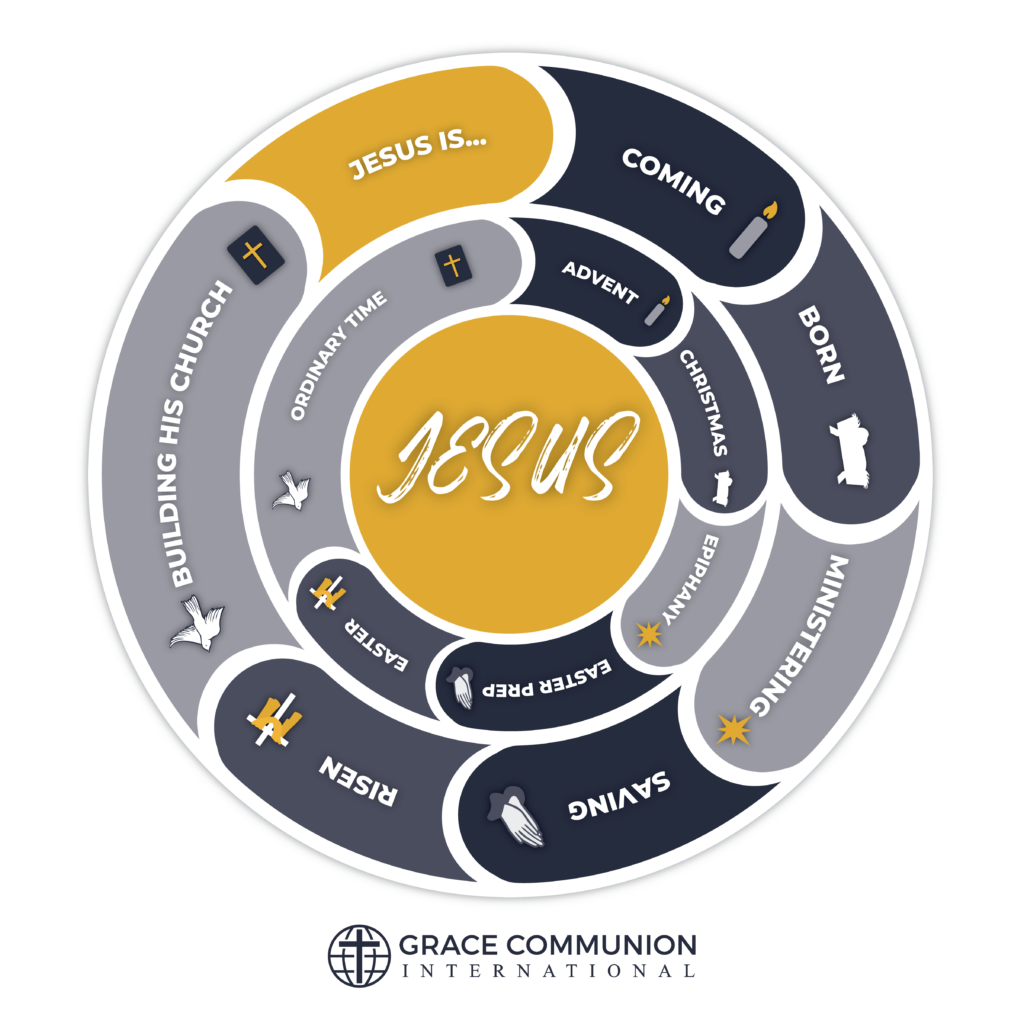
The worship calendar helps our congregations rehearse the story of Jesus throughout the year. It also gives pastors and ministry teams a shared rhythm for planning worship, discipleship, and neighborhood engagement.

The GCI Worship Calendar Church Hack offers practical guidance for planning seasonally, collaborating as a team, and connecting the worship calendar across the Avenues.

Prepare Together for Advent

Before Advent begins, gather your pastor and Hope Avenue team to review the Year B pericope summary and begin planning the season together. Consider the message of the season, the needs of your congregation, and how local voices can help your worship gathering point people to Jesus.

We hope these resources help your team plan worship gatherings that are rooted in Scripture, shaped by the story of Jesus, and responsive to the Spirit’s work in your congregation and neighborhood.


Offering and Communion Starters | November

Last year, we introduced a new resource to help you prepare for the time of giving and taking communion in your Hope Avenue. These are meaningful formational practices that we can plan with care and intentionality.

The Communion and Offering Starters are posted a month ahead, like the sermon resources. Below are the November starters. In case you missed it: October Starters are here.

How to Use This Resource

An outline is provided for you to use as a guide, followed by a sample script. Both the offering moment and communion can be presented as a short reflection before the congregation participates. Here’s how to use it effectively:

  • Scripture Reflection: Include the relevant Scripture to root the offering and communion in biblical teaching.
  • Key Point and Invitation: Briefly highlight the theme’s key point and offer an invitation that connects the theme to the practice.
  • Prayer: Include a short prayer that aligns with the theme. Invite God to bless the gifts and the givers. Ask God to bless the bread and the wine and the partakers.
  • Logistics: Explain the process; this helps everyone know how they can participate. For giving, indicate whether baskets will be passed, if there are designated offering boxes, or if digital options like text-to-give or web giving are available. Clearly explain how the communion elements will be shared and that participation is voluntary.
  • Encouragement: For the giving moment, invite congregants to reflect on their role in supporting the church’s mission, reminding them that their gifts impact both local and global ministry. For communion, encourage congregants to express gratitude for Jesus’ love poured out for us and the unity present in the body of Christ.

For more information, see Church Hack: Offering and Church Hack: Communion


Offering

November Theme: Providing a Place of Refuge

Scripture Focus: Psalm 107:4–7 NRSVA

Key Point: Many are crying out to the Lord, seeking light in the midst of darkness, hope in the midst of despair, refuge in the midst of wandering. God invites them to take refuge in his Body, the Church.

Invitation: May our congregation be a place of refuge for those seeking delivery, light, and spiritual sustenance. May we be the place God leads them to.

Sample Script

The psalmist seemed to be talking about our era and our neighborhood when he wrote the following:

Some wandered in desert wastes, finding no way to an inhabited town; hungry and thirsty, their soul fainted within them. Then they cried to the Lord in their trouble, and he delivered them from their distress; he led them by a straight way, until they reached an inhabited town. Psalm 107:4–7 NRSVA

This certainly describes society today. There is so much confusion, so much darkness, leading to so many questions. It may seem as though the psalmist is describing your life. You may find yourself in darkness, longing for light. You may be spiritually hungry and thirsty, searching for answers. You cry out to God for deliverance, and where does he lead you? To himself, to his body, to this congregation. In his body, we see his light and discover that we can walk out of darkness with him. In his body, we partake of his Word and find our spiritual hunger satisfied. In his body, we experience deliverance.

Friends, this is what we pray our giving provides for others. May our missions and our ministries be part of our kingdom living as we share his love and life with others. May the Lord lead them by a straight way right to this home, where they can find answers to their questions, where they can see light in the midst of darkness, and where they can meet others who willingly join them on a journey to living in and for him.

Prayer


Communion

November Theme: Taste and See the Goodness of God

Scripture Focus: Psalm 34:6–8 NRSVA

Key Point: Through eating the bread and drinking the fruit of the vine, we use taste to be reminded of the goodness of God.

Invitation: Taste the bread and be reminded that Christ is in you. Taste the fruit of the vine and be reminded of your forgiveness and redemption. Each time we participate in communion we are reliving the words of Psalm 34:8: “Oh taste and see that the Lord is good; happy are those who take refuge in him.”

Sample Script

All through the scriptures, we see that God understands what life is like. He knows we face good and bad times. He knows we have good and bad memories. He knows we’ve gone through trials and experienced blessings. He knows our sorrow and joy, pain and peace. The psalmist wrote of the many emotions we face. And the consistent message through the Psalms is to turn to God.

Jesus himself experienced all the emotions we face. He had sorrow and joy, pain and peace, weakness and strength. He laughed and he cried. And he continually looked to the Father for whatever he needed.

In Psalm 34, the psalmist is sharing a time when God delivered him from trouble.

This poor soul cried and was heard by the Lord and was saved from every trouble. The angel of the Lord encamps around those who fear him and delivers them. O taste and see that the Lord is good; happy are those who take refuge in him. Psalm 34:6–8 NRSVA

When we taste the bread of communion, we are using one of our senses to remember that God is good. He is the bread of life who gives his life for us so that we can live in him.

When we taste the fruit of the vine, we are using the same sense to remember that God is merciful. He has forgiven us, redeemed us, and adopted us as his own.

Come to the table and taste and see that the Lord is good.

Prayer


Sermon for November 1, 2026 — Proper 26

Speaking of Life 5050 | Expect the Unexpected

This week we’re sharing a Speaking of Life message from our archive as a supplemental resource. We encourage you to use this for reflection and preparation, or small group discussion. For your worship gathering, consider how a call to worship from a local voice or contextualized introduction to the theme might serve your congregation well.

Life is full of surprises, some good and some bad, but the psalmist shows us that God’s surprises are always filled with blessings. As Advent approaches, may we find hope in the unexpected ways God moves in our lives, just like how no one expected Jesus to come into our world the way he did.

Program Transcript


Speaking of Life 5050 | Expect the Unexpected
Greg Williams

We typically don’t like the unexpected. We don’t like it when our car unexpectedly refuses to turn over, or our computer unexpectedly crashes. Worse, an unexpected loss of employment creates great turmoil and loss of personal confidence. And we certainly don’t like unexpected health difficulties. But these are the realities we face, and we quickly learn to expect the unexpected along with all the frustration and heartache it can bring.

However, not all things unexpected are bad. An unexpected gift or raise can turn a sour day around in a hurry. I’m sure we can all remember with joy some unexpected blessing that came our way, large or small.

So, here’s a question. What should we expect from the Lord? Is he full of unexpected surprises?

The biblical witness seems to present… well, an unexpected answer to that question. We are presented with a God who is unchanging, yet, at the same time, full of unexpected surprises.

Listen to Psalm 107 the paradox of God’s unchanging nature described by images of unexpected natural events.

“Let them thank the Lord for his steadfast love, for his wondrous works to the children of man! Let them extol him in the congregation of the people, and praise him in the assembly of the elders.

He turns rivers into a desert, springs of water into thirsty ground, a fruitful land into a salty waste, because of the evil of its inhabitants. He turns a desert into pools of water, a parched land into springs of water. And there he lets the hungry dwell, and they establish a city to live in; they sow fields and plant vineyards and get a fruitful yield.”

Psalm 107:31-37 (ESV)

It’s interesting how the psalmist refers to the Lord’s steadfast love but then equates that steadfastness with images of great reversals. It appears that the Lord is steadfast in bringing the unexpected. But did you notice the direction of the unexpected? It was always for blessing. We can expect the rivers of evil to run dry, while also expecting the deserts of his children to become fruitful.

With God, there is always good news ahead. Rivers run dry, but he refills them. Deserts become springs of water. Sinners become believers and followers of Christ. It’s easy to look around and get discouraged at the state of the world, so Jesus tells us to lift our eyes and gaze upon him. He is the restorer of all things. He is the one who works his blessings in unexpected ways.

As we wind down the season of Ordinary Time and enter the season of Advent, let’s continually look to him and learn to expect the unexpected. Ordinary Time ends with Christ the King Sunday – and no one expected the King of kings to enter our world as he did. God loves to surprise with the unexpected – it’s part of the mystery of who he is. 

I’m Greg Williams, Speaking of Life.

Psalm 107:1–7, 33–37 • Joshua 3:7–17 • 1 Thessalonians 2:9–13 • Matthew 23:1–12

Our theme is God is our true teacher, Father, and instructor. In Joshua, priests lead the nation of ancient Israel into the Jordan River at flood time. As their feet touch the edge of the river, the water backs up, making a clear path for the people to walk across and into the promised land. The presence of God is with them, and he will clear the way before them. The psalmist proclaims in Psalm 107 the redemption of the Lord. The psalmist declares how God changes rivers into desert and a wilderness into a pool of water. The Lord will lead his people into a safe habitation and provide for them there. The apostle Paul tells the believers in Thessalonica how they worked diligently night and day to share the good news. They encouraged the believers to walk in a way that was worthy of God, since God’s word, which they received, accomplishes its perfect work in their lives. In the Gospel passage, Jesus speaks to the crowd and his disciples, we see the limitations of human leaders. Praise God there is One perfect, faithful leader we can trust. The theme for this Sunday is only one God is teacher, Father, and instructor.

Reminder: This introductory paragraph is intended to show how the four RCL selections for this week are connected and to assist the preacher prepare the sermon. It is not intended to be included in the sermon.

How to use this sermon resource.


God is our true Teacher, Father, and Instructor

Matthew 23:1–12 ESV

People of various nations value and use honorific titles in their everyday language. These titles address a person respectfully according to their social standing. For example, the nation of Japan has a system of speech, keishō. It has suffixes and prefixes which are used to show respect and special treatment. How such words are used define relationships and point to a person’s social standing.

In many cultures, a person’s social standing is often considered very important. It determines whether the person receives honor, special treatment, or authority over others. Someone who is of high standing is often given special attention and high value. Those of low standing are often neglected, abused, or treated with indifference.

This common thread was evident in the culture of Jesus’ day too. Specifically, it permeated the religious culture of the ancient Jewish people. The religious elite studied and taught their Scriptures (the Old Testament). They also enforced the Mosaic law (the law of Moses). They held positions of power and authority in their community.

These leaders may have had sincere devotion to God. But many of them pridefully enjoyed the status, authority, wealth, and power which came along with their position. Instead of pointing the people to God, they drew attention to themselves. In our passage for this Sunday, Jesus turns their attention back to who God is and what this means for us.

1 Then Jesus said to the crowds and to his disciples, 2 “The scribes and the Pharisees sit on Moses’ seat, 3 so do and observe whatever they tell you, but not the works they do. For they preach, but do not practice. 4 They tie up heavy burdens, hard to bear, and lay them on people’s shoulders, but they themselves are not willing to move them with their finger. 5 They do all their deeds to be seen by others. For they make their phylacteries broad and their fringes long, 6 and they love the place of honor at feasts and the best seats in the synagogues 7 and greetings in the marketplaces and being called rabbi by others. 8 But you are not to be called rabbi, for you have one teacher, and you are all brothers. 9 And call no man your father on earth, for you have one Father, who is in heaven. 10 Neither be called instructors, for you have one instructor, the Christ. 11 The greatest among you shall be your servant. 12 Whoever exalts himself will be humbled, and whoever humbles himself will be exalted. Matthew 23:1–12 ESV

We can learn a lot about God in this passage. But before we look at Jesus’ words, let’s get some background. The scribes were the lawyers who studied and interpreted the Old Testament scriptures. The Pharisees were part of the religious elite who held positions of power in the community.

These religious leaders took the Law of Moses very seriously. The Mosaic Law is the body of laws and commandments that God gave to Israel through Moses in the Old Testament. (We talked about this last month when our sermons focused on the book of Exodus.) But over time, many additional teachings, called the oral tradition, were passed down alongside that written law.

Imagine a family recipe that was never written down. Each generation teaches the next how to make it. The recipe becomes a tradition even though it isn’t in a cookbook. Oral tradition worked much the same way, passed from person to person by word of mouth.

In Jesus’ day, religious leaders had not only the written Law of Moses but also many teachings and interpretations that had been passed down orally for generations. This collection of practices was passed down by memory and instruction and were not in the Bible itself.

For example, strict ritual washing was practiced. There were many rules about what could or could not be done on the seventh-day Sabbath. Tithing, or paying 10% of one’s income, was broken down into detailed instructions about counting out herbs and spices.

The problem was not tradition itself. The problem was that many of these added rules became a heavy burden. Instead of helping people draw closer to God, they made faithful life feel exhausting, complicated, and nearly impossible to follow.

People sought to keep the oral tradition, but it did not draw people closer to God. Instead, these teachings made life more difficult than what God intended. Jesus said the scribes and Pharisees “tie up heavy burdens, hard to bear, and lay them on people’s shoulders” (verse 4).

Jesus Teaches a Better Way

Jesus told the crowd to obey what the Pharisees and scribes instructed them to do. He encouraged them to obey God’s law of love.

But the people were not to follow these leaders’ example or traditions, because their actions were hypocritical. Jesus pointed out that these leaders had one main concern: to be publicly elevated and venerated. And these leaders wanted to tell the people what to do, even though they did not do it themselves. They were showing off. They were hypocrites full of pride

Notice that Jesus did not tell the crowds to disobey God. He told them to follow what they were being instructed that was from the Scriptures. But the other, the teachings made by humans, to promote human values and positions — Jesus told them not to follow this example.

In other words, Jesus was telling them not to build their identity around public honor, special titles, or positions of authority. Instead of seeking recognition from others, they were to turn their attention back to the triune God.

Then Jesus specifically addresses three titles commonly used by these leaders: rabbi, father, and instructor. In each case, he redirects the crowd away from human status and toward God. God is our true teacher, Father, and instructor.

God is Teacher

Jesus begins with the title of rabbi (“my great one,” “master”):

But you are not to be called rabbi, for you have one teacher, and you are all brothers. Matthew 23:8 ESV

In the first century, the word “rabbi” meant something different than it did a few decades later. The original word was commonly used as a title of respect for a teacher or master, especially one who taught and interpreted the Scriptures. They passed judgments on people’s concerns and questions. Jesus says, “there is only one teacher and you are all brothers” (v. 8). Your Bible might say this teacher is the Christ or Messiah. But that is not in the original Greek — it has been added in some translations.

In the Gospels, Jesus is often called rabbi or teacher by his followers. Before his death, Jesus also told his disciples the Holy Spirit would come. And that the Spirit would teach them all things and bring all that Jesus had taught them to their remembrance (John 14:26).

When Jesus says, you are all siblings (brothers), it speaks to our equality and unity with one another. And the Spirit makes this possible through Christ (John 17:23; Gal. 3:28). So, this statement by Jesus, points to the work of the Spirit, not just his own ministry as rabbi or teacher.

God is Father

Next, Jesus tells the crowd:

And call no man your father on earth, for you have one Father, who is in heaven. Matthew 23:9 ESV

The title Father belonged uniquely to God. Jesus came to help people know God not as a distant ruler, but as a Father. In the Old Testament, God was sometimes called the Father of Israel as a nation, but people did not usually speak of him as their own Father in a personal way.

Jesus, however, spoke of God as his Father. He shared a unique relationship with him and taught his followers to know God as Father as well. This was shocking to many of the religious leaders because Jesus was claiming a relationship with God that no one else had.

By calling God his Father, Jesus was revealing who he truly was. He was not just a teacher or a prophet. He was the Son of God, equal with the Father and sent by him into the world.

In everyday life, every human person has a father. And we often call our human fathers by the name “Father” or “Dad” or “Papa”. [You may wish to use what is appropriate in your context.]

Jesus wasn’t saying we can’t call our human fathers these names. What he was saying was for us not to seek to be elevated to a “father” status — a status that only our heavenly Father holds. Our supreme adoration and desire for approval should be to God alone. And God is our heavenly Father.

God is Instructor or Leader

Lastly, Jesus tells his listeners:

Neither be called instructors, for you have one instructor, the Christ. Matthew 23:10 ESV

Jesus reminds the crowd that they only have one instructor. He is the Christ or Messiah (the one sent by God to rescue his people). Jesus was instructing them about who God is and who they are in him. Jesus the Christ is the one perfectly faithful instructor, not those who are just trying to gain the people’s attention and adoration.

Jesus holds the spiritual leaders of his day up against the lens of the triune God. God is our true teacher, Father, and instructor. The Spirit unites all people as brothers and sisters. All are equal and all are taught by Jesus in the Spirit. The only leader-father they are to look to and hold in affection is their heavenly Father. And their only true instructor and leader is Jesus Christ, the One who would soon humbly lay down his life.

Leadership Jesus’ Way

Then Jesus hits the bottom line when it comes to positions of leadership or teaching:

The greatest among you shall be your servant. Whoever exalts himself will be humbled, and whoever humbles himself will be exalted. Matthew 23:11–12 ESV

Jesus shows them the divine reality of true leadership: greatness is expressed through humble service. A faithful leader does not seek applause, status, or control over others. Rather, a faithful leader serves others in humility. Jesus does not merely teach this way; he lives it.

In the final days before his crucifixion, Jesus went willingly toward Jerusalem. There, the leaders would arrest him on false charges, mock him, torture him, and hand him over to be crucified.

And Jesus allowed them to do this. Jesus humbled himself to the point of sacrificing his own life on behalf of all. This sinless person, Jesus Christ, willingly died for the sake of all humanity. He did this so we might all be freed from evil, sin, and death and be given new life.

Jesus teaches that leaders are to offer humble service. Then he shows the profound difference between self-promotion and the self-giving love of God.

The Son of God set aside for a time the privileges of divinity (God’s being) in order to join us in our humanity. He lived a truly human life in faithful obedience to his heavenly Father. And he offered himself for all in humble sacrifice on the cross to free us from evil, sin, and death.

And Jesus rose from the grave, bringing all humanity home to his heavenly Father. And then he sent the Spirit so we could all by faith participate in his own relationship with his Father in the Spirit.

God is our true teacher, Father, and instructor. He comes for us in Jesus Christ, humbling himself as a human being, allowing himself to be crucified for us. And Jesus, who went all the way down into death itself, is exalted by his heavenly Father to his right hand in glory. Our heavenly Father brings each of us into his own life through Jesus Christ in the Spirit. And he teaches us all things through Jesus in the Spirit, leading us in his paths.

Humble Leadership is a Walk of Faith

Jesus, our High Priest, entered into the gates of death for each of us. He stepped into the crucible of death, allowing himself to be crucified. He entered death and came out the other side.

He rose again, delivering us from death, evil, and sin. He brought us through the dangerous waters of death into the glorious light of new life in him. Now we are all able to walk safely into the promised land of God’s kingdom.

In Christ, we enter God’s kingdom. By faith, we begin now to participate in Jesus’ life with his heavenly Father in the Spirit. The Spirit begins now to build new settlements. Christ’s holy ways of living, his godliness, and truth are built into areas formerly given over to sin and selfishness. We begin to live out Jesus’ triumph over sin, evil, and death in this world.

Through Jesus, in our homes and in our communities, we live Christlike lives of humble service and faithful obedience. By the Spirit, we reflect the truth of who Jesus is as Lord and Savior of all. Rather than lifting ourselves up, Jesus works through us to lift up those around us.

Jesus Christ Includes Us

Our life in Christ is not a heavy burden laid upon us. It is not strictly keeping rules and rituals in order to gain God’s favor. Rather, it is Christ living his own life in us by the Holy Spirit. It is his life with our heavenly Father that we participate in as we live our everyday lives.

We can live humbly and serve others because that is who Jesus is and who we are in him. Jesus lives in us by the Holy Spirit. So, empowered by the Spirit, we can serve humbly and live in right relationship with God and others.

We do not need titles or special recognition. We can learn from one another, be taught by one another, as inspired by the Spirit, because we know we are all one in Christ Jesus. We believe that God is our true teacher, Father, and instructor. And we can trust him to lead and guide us into all truth.

We can rely on God to teach us whatever we need to know. We can trust him to grow us up into who he created us to be in Jesus by the Spirit. We can rest in Jesus’ finished work, in God’s approval, recognition, and status given to us in him. The Spirit helps us to recognize when we are tempted to gain praise, worth, or value in other, human ways. Jesus reminds us then to turn away from all of this and to keep our focus on our triune God.

Our faith is in God — Father, Son, and Spirit — and God is faithful to finish what he has begun in us. Jesus has finished in humble service all that needs to be done for our salvation. And he reigns in glory now and forever. And he reigns in our hearts and lives by the Spirit as we trust in him. We are held in Jesus’ arms, secure in the Father’s love, and comforted by the Spirit’s peace, now and into eternity.

One last time, hear the good news in this passage:

8 But you are not to be called rabbi, for you have one teacher, and you are all brothers. 9 And call no man your father on earth, for you have one Father, who is in heaven. 10 Neither be called instructors, for you have one instructor, the Christ. (verses 8–10)

You have one teacher, the Spirit.
You have one Father in heaven.
You have one instructor, Jesus Christ.

There is only one faithful teacher, Father, and instructor — the Holy Trinity.

And if you remember only one thing from this sermon, let it be this:

11 The greatest among you shall be your servant. 12 Whoever exalts himself will be humbled, and whoever humbles himself will be exalted. (verse 11–12)

Jesus is the One who descended to earth, becoming a servant.
Jesus is greatest among us, yet he humbled himself all the way to the cross.
Jesus is the One whom the Father exalted to sit at his right hand in heaven.


Go Deeper Philippians 2:5–11: What did the Son of God give up in order to bring humanity home to the Father? What does this tell us about who Jesus Christ is?


Ted Johnston—Year A Proper 26

Sunday, November 1, 2026 — Proper 26
Matthew 23:1–12 NRSVUE

CLICK HERE to listen to the whole podcast.


If you get a chance to rate and review the show, that helps a lot. And invite your fellow preachers and Bible lovers to join us!

Follow us on Spotify and Apple Podcast.

Program Transcript


Coming Soon!


Small Group Discussion Questions

  • Have you ever experienced faith as a burden rather than as a relationship with God?
  • What is one practical way you can keep your focus on the Father, Son, and Spirit instead of on your own reputation, status, or achievements?
  • Whose spiritual leadership are you following? [Not merely the pastor, think podcasts, books, online sermons.] How can we recognize/discern if the Spirit of God is working in a leader?
  • Which of the titles/roles given in the sermon for God do you find most meaningful right now, and why?

Sermon for November 8, 2026 — Proper 27

Speaking of Life 5051 | You Don’t Have to Be a Girl Scout

This week we’re sharing a Speaking of Life message from our archive as a supplemental resource. We encourage you to use this for reflection and preparation, or small group discussion. For your worship gathering, consider how a call to worship from a local voice or contextualized introduction to the theme might serve your congregation well.

Similar to the Girl Scouts’ motto “Be Prepared,” Christians are reminded to be prepared for Christ’s return. In a story about ten bridesmaids, five were wise and had enough oil, while five were called foolish for not having enough. When we fix our gaze upon Jesus, even when our path is dark, Jesus invites us to find wholeness in him.

Program Transcript


Speaking of Life 5051│You Don’t Have to Be a Girl Scout
Michelle Fleming

I was involved in Girl Scouts when I was younger. Maybe you were a Girl Scout or Boy Scout, too. The motto for Scouts is “Be Prepared.” This reminds me of the way Christians have been warned to be prepared for Christ’s return. One example that’s often cited is the parable of the Ten Bridesmaids where Jesus is telling his disciples what the kingdom of heaven is like.

The story goes like this:

Ten young women took their lamps and went to meet the bridegroom. Five of them were foolish, and five were wise. When the foolish took their lamps, they took no oil with them, but the wise took flasks of oil with their lamps. As the bridegroom was delayed, all of them became drowsy and slept. But at midnight there was a shout, ‘Look! Here is the bridegroom! Come out to meet him.’ Then all those young women got up and trimmed their lamps. The foolish said to the wise, ‘Give us some of your oil, for our lamps are going out.’ But the wise replied, ‘No! there will not be enough for you and for us; you had better go to the dealers and buy some for yourselves.’ And while they went to buy it, the bridegroom came, and those who were ready went with him into the wedding banquet, and the door was shut. Later the other young women came also, saying, ‘Lord, lord, open to us.’ But he replied, ‘Truly I tell you, I do not know you.’ Keep awake, therefore, for you know neither the day nor the hour.
Matthew 25:1-13

Passages like this one have often been plucked from scripture without thinking about them in the context of other direct commandments Jesus said or the way he behaved in the world. This story sounds out of character for Jesus who told us to love and serve others and put them first.

We don’t base theological doctrine on a parable because a parable wasn’t meant to be used that way. It’s a story that offers us the opportunity to consider truth from the point of view of different characters. In this parable, we see that the five bridesmaids who had plenty of oil believed that being self-reliant was more important than helping others. The five bridesmaids who didn’t prepare believed they deserved help from the ones who prepared. I mean, they had fallen asleep, waiting. But what if the parable isn’t about what the bridesmaids should have done or shouldn’t have done? What if it isn’t about the bridesmaids at all? Let’s consider a different perspective.

We assume that the five bridesmaids who ran out of oil are called foolish because they ran out of oil. But what if the reason they’re called foolish is because they listened to the other bridesmaids who told them to go buy more and then ended up missing the wedding? Maybe they were foolish because they forgot who the Bridegroom was and what he was capable of. This bridegroom was The Light of the World, and he didn’t need their lamps. They were foolish because they allowed their shame over running out of oil to drive them to try to fix it, and thus they missed the wedding banquet.

When the Bridegroom says, “I don’t know you,” he’s also saying that they didn’t really know him. And this is part of the lesson of this parable. When we focus on Jesus, we know he is the one who makes us enough. He is the light we need when our own lamps run low. He is sufficient.

May we be blessed with the understanding that we are made whole and enough in Christ.

I’m Michelle Fleming, Speaking of Life.

Psalm 78:1–7 . Joshua 24:1–3a, 14–25 . I Thessalonians 4:13–18 . Matthew 25:1–13

This week’s theme is he who promised is faithful. In our call to worship psalm, we have the psalmist urging Israel to pass the story of God’s faithfulness from generation to generation so that hope in his promises remains alive. In Joshua, we have the people of Israel gathered at Shechem where Joshua rehearses God’s faithfulness to every promise he made to Abraham, reminding them that their entire history is the evidence of a God who keeps his word. In 1 Thessalonians, we have Paul anchoring grieving believers in the faithfulness of a God who raised Jesus from the dead and promised that those who belong to him will not be left behind. And in our pericope in Matthew, Jesus tells a parable about a bridegroom whose arrival is certain, illustrating that those who truly trust his promise will be found ready when he comes.

Reminder: This introductory paragraph is intended to show how the four RCL selections for this week are connected and to assist the preacher prepare the sermon. It is not intended to be included in the sermon.

How to use this sermon resource.


He Who Promised is Faithful

Matthew 25:1–13 NIV

[Read or ask someone to read the passage.]

“At that time the kingdom of heaven will be like ten virgins who took their lamps and went out to meet the bridegroom. Five of them were foolish and five were wise. The foolish ones took their lamps but did not take any oil with them. The wise ones, however, took oil in jars along with their lamps. The bridegroom was a long time in coming, and they all became drowsy and fell asleep. At midnight the cry rang out: ‘Here’s the bridegroom! Come out to meet him!’ Then all the virgins woke up and trimmed their lamps. The foolish ones said to the wise, ‘Give us some of your oil; our lamps are going out.’ ‘No,’ they replied, ‘there may not be enough for both us and you. Instead, go to those who sell oil and buy some for yourselves.’ But while they were on their way to buy the oil, the bridegroom arrived. The virgins who were ready went in with him to the wedding banquet. And the door was shut. Later the others also came. ‘Lord, Lord,’ they said, ‘open the door for us!’ But he replied, ‘Truly I tell you, I don’t know you.’ Therefore keep watch, because you do not know the day or the hour.” Matthew 25:1–13 NIV

Introduction

One of the oldest and most beloved stories ever told is the Greek epic known as The Odyssey, written by a poet named Homer nearly three thousand years ago and read across virtually every culture and continent on earth ever since. At its heart it is a story about a man named Odysseus who goes off to fight in a great war and spends twenty years trying to find his way home to his wife Penelope and his son.

Twenty years is a long time to wait. As the years stretched on, most people around Penelope assumed Odysseus was never coming back. A crowd of men known as the suitors moved into his home, ate his food, drank his wine, and lived as though the master of the house was never returning. They had decided the promise of his return was worthless and lived accordingly.

But Penelope never stopped believing. She waited. She held onto the reality of her husband’s promised return even when everything around her suggested she was foolish to do so. She inhabited the promise even in the long silence of his absence.

And then one day, unexpectedly, in a form no one recognized at first, Odysseus came home. His return was both a moment of joyful reunion for those who had remained faithful and a moment of profound consequence for those who had lived as though he was never coming back.1

He came back. Exactly as he said he would. This story resonates because we long for others to faithfully keep their promises. Don’t we?

Every promise creates a season of waiting. And what we do while we wait often reveals what we truly believe about the one who made the promise.

How do we live while we are waiting for a promise to be fulfilled? Jesus tells a parable about ten young women with lamps to help us answer that very question.

Jesus begins our parable this morning with words that should immediately tell us something important is coming: the kingdom of heaven is like this. What follows is more than just a nice story. It is a window into how the kingdom of God (an expression used by the other gospel writers) actually works. So let us lean in and listen carefully.

Already Included — The Grace That Goes Before Us

“At that time the kingdom of heaven will be like ten virgins who took their lamps and went out to meet the bridegroom. Five of them were foolish and five were wise.” Matthew 25:1–2 NIV

Now when Jesus talks about the kingdom of heaven, also called the kingdom of God, he is not talking about a country with borders or a place you go when you die. He is talking about what life looks like wherever God is in charge and his love is the way things work. And here is the remarkable thing, Jesus kept insisting that this kingdom was not far away. It had arrived. It was breaking into the world right in front of them; it was in their midst — in him.

The first thing worth noticing in this parable is something easy to miss because we tend to jump straight to the difference between the wise and foolish virgins. But before we get to that difference there is something far more important to establish. All ten virgins are already at the wedding. All ten of them were invited. All ten are carrying lamps, waiting for the same bridegroom, part of the same wedding party.

Jesus does not open this parable with insiders and outsiders. He opens it with ten people who have all received the same invitation and are all standing in the same place. Whatever else this parable will go on to say, it starts here, with an invitation to every one of them before the story even gets moving.

This is absolutely critical to understanding what Jesus is illustrating about the kingdom of God. The kingdom is not a place you earn your way into through effort and achievement. It is more like a party that has already been thrown on your behalf — a celebration that was always intended to include you — a grace that went before you ever knew you needed it.

There is an important difference between being invited to something and being included in something. An invitation can be declined; it assumes you are on the outside being asked to come in. But inclusion means something has already been done on your behalf. Grace has already gone ahead and made a place for you. This parable assumes that gracious initiative as it invites us to consider what it means to live in the light of the Bridegroom’s coming.

Before we ever seek him, God is already seeking us. This is the pattern of the whole New Testament. God moves first. The Father sent his Son into a world that wasn’t asking for him. Grace showed up before we ever knew we needed it.

This is what the Son of God accomplished when he came into our world, lived among us, died for us, and rose again. The Father’s heart has always been turned toward every person on this earth. The Son made that love visible and real in his own body. And what he accomplished was not a partial or conditional inclusion; it was a complete and total “yes” spoken over all of humanity. He who promised is faithful and his faithfulness has already reached everyone in this story before it even begins.

So, grace has already reached them all, and in that situation, there is something that distinguishes the wise virgins from the foolish ones, the oil. The wise took oil in jars along with their lamps while the foolish took their lamps but no oil.

The foolish ones took their lamps but did not take any oil with them. The wise ones, however, took oil in jars along with their lamps. Matthew 25:3–4 NIV

Many Christians throughout the centuries have seen in this oil a picture of the living, sustaining presence of God’s Spirit within us. And while we want to be careful not to force a meaning onto every detail of a parable, that analogy has something important to commend it. However we understand the symbolism of the oil, it clearly represents something that cannot be borrowed at the last minute.

It speaks of the difference between knowing about God and actually living with him. Between being familiar with the idea of grace and genuinely drawing from that grace day by day. And that is precisely the kind of life Jesus promised when he told his disciples he would send them a helper after his departure. The Spirit takes the grace the Father purposed and the Son accomplished and makes it real and alive and personal within each one of us.

The kingdom of God is overflowing with grace. And we subjectively experience that grace by trusting and receiving it. The difference Jesus highlights is not that one group earned the Bridegroom’s favor while the other did not. The difference is that one group was living in readiness for his coming, while the other was not. The rest of the New Testament helps us understand that this readiness is not something we manufacture ourselves. It is the work of the Holy Spirit, who continually draws us into the life of Christ and keeps us participating in the grace the Father has given through the Son.

The Tragedy of Untouched Grace

At midnight the cry rang out: ‘Here’s the bridegroom! Come out to meet him!’ Matthew 25:6 NIV

The midnight cry changes everything. Up to this point all ten virgins have been waiting together. Notice Jesus does not condemn them for falling asleep. The long wait is simply what human beings experience. That is not the problem. The problem surfaces the moment the lamps need trimming and the oil begins to run out, because it is only in the moment of crisis that what has been true all along becomes visible.

The delay in this parable is not a sign of the bridegroom’s unfaithfulness. It is simply the nature of the wait, and it is precisely in the long wait that the difference between becomes apparent. The kingdom of God does not always come on our timeline or in the form we expect. Think about how God has consistently moved throughout history — through a burning bush in a desert, through a teenage girl in an obscure village, through a cross that looked like defeat but was the greatest victory in human history. God comes in ways that confound our expectations. And those who have been living within that reality, drawing from the oil — are ready whenever he comes.

Robert Farrar Capon, a theologian who spent much of his life preaching and writing about Jesus’ parables, consistently argued that these kingdom parables are not primarily about God’s rejection of people but about the tragedy of people refusing what has already been freely given. Capon proposes that in these parables of judgment that the only outsiders at the end of Jesus’s stories were always shown as insiders at the beginning. Capon refers to this principle as “inclusion before exclusion”.2

Let’s hear that again because it’s important. The tragedy is not that God rejects people but when people refuse what God has already freely given. The grace of God is always the governing reality, the party is already happening, the bridegroom has already claimed his own. The emphasis of the story is not on a reluctant bridegroom looking for reasons to exclude people. Rather, it emphasizes the heartbreaking reality that some arrive unprepared for the relationship and celebration the bridegroom has been calling them toward all along.

When their lamps go out, the foolish virgins revert to a transactional mindset. Instead of simply waiting in the dark and trusting the Bridegroom’s goodness, in a sense, they run off to buy their way back in. Their failure is defaulting to their own preparation instead of relying fully on the grace they have already received — the faith and trust in the free grace of the Bridegroom.

This is the tragedy of untouched grace. Not a grace that was withheld or insufficient, but a grace that is all around the foolish virgins, available and abundant and freely given, and yet never truly drawn from. Never truly embraced or lived out in experience. The Father always purposed their inclusion. The Son accomplished everything necessary to secure it. The Spirit was present and ready to sustain them through the long night of waiting. He who promised is faithful.

However we understand the symbolism of the oil, it clearly represents something that cannot be borrowed at the last minute. Jesus is pointing us toward a genuine participation in the life he gives rather than merely carrying the outward appearance of faith. The Father purposed it. The Son secured it. The Spirit makes it real within each one of us.

And it is right here in the middle of this tragedy that the missional heartbeat of this parable begins to beat loudly for those of us who are trusting the Bridegroom’s return. Because if grace is this abundant, if the kingdom is this saturated with the love of the Father, if the Spirit is this available to every single person, then we who have been given this good news cannot keep it to ourselves. The wise virgins could not share their oil just as we cannot share our personal participation in his grace. But, we can share the news that the bridegroom is coming, that the party is real, and that the grace of God has already gone before every person we will ever meet. That is the mission we have been invited into — not a mission of condemnation or ultimatum, but a mission of joyful announcement. Come and see — the bridegroom keeps his promises — and grace has already made a place for you.

The Tragedy of a Refused Party

But while they were on their way to buy the oil, the bridegroom arrived. The virgins who were ready went in with him to the wedding banquet. And the door was shut. Matthew 25:10 NIV

The door was shut. These words have been used throughout history to paint a picture of a God who gleefully bars the door against those who failed to meet his standards. But that is not what is happening here.

The shut door is not the story of divine rejection. It is the story of a refused party. Grace was always available. The oil was always there. The Spirit was always present and ready to sustain. And yet, by their own way of living, the foolish virgins had positioned themselves outside the reality of what was always theirs.

“Later the others also came. ‘Lord, Lord,’ they said, ‘open the door for us!’ “But he replied, ‘Truly I tell you, I don’t know you.’ Matthew 25:11–12 NIV

Jesus isn’t inviting us to imagine a God eager to reject. He is revealing the tragedy of failing to live within the life the Bridegroom shares with us.

This is the deepest tragedy in the parable. Not that the foolish virgins were wicked. Not that they were immoral or irreligious. It’s tragic that they were so close to the party, so near to the grace, so present at the wedding, and yet never truly inside the reality of what the bridegroom had always been offering them.

Like Penelope in the Odyssey the wise virgins sustained their faithfulness not through sheer willpower or moral superiority but by living within the reality of the bridegroom’s promise. They oriented their lives around the certainty of his return. That daily inhabiting of the promise, that simple drawing from the oil was what kept their lamps burning through the long night of waiting.

So here is my gentle encouragement to all of us as we leave this parable. Be among the wise. Not by trying harder or striving more. That was never what made them wise. Be among those who simply keep drawing from the oil that has already been given. Wake up each morning and receive the grace that is already yours. Lean into the presence of the Spirit who is already with you. Live each ordinary day within the reality that the Bridegroom is coming and that his promise to you is unshakeable. That is all the wise virgins did. They did not perform. They did not earn. They simply lived within what they had been given day after day, through the long night of waiting until the cry rang out and the celebration began. We can be sure that he who promised is faithful.

The kingdom of God is filled with a grace that goes before us. It was purposed by the Father before the foundations of the world. It was secured by the Son on the cross and confirmed in the empty tomb. It is made real and personal within each one of us by the Spirit who is always present, always available, always ready to fill our lamps to overflowing.

He who promised is faithful. The bridegroom is coming. And this — this is the breathtaking good news at the heart of this parable and at the heart of the entire gospel: the party is not a distant dream or a faint possibility. It is a certainty. It has already been prepared. It is already overflowing with a grace that has gone before every single person on this earth. The door is open. The oil is available. The Spirit is present. So, enter in and join in the party.


Ted Johnston—Year A Proper 27

Sunday, November 8, 2026 — Proper 27
Matthew 25:1–13 NRSVUE 

CLICK HERE to listen to the whole podcast.


If you get a chance to rate and review the show, that helps a lot. And invite your fellow preachers and Bible lovers to join us!

Follow us on Spotify and Apple Podcast.

Program Transcript


Coing Soon!


Small Group Discussion Questions

  • The sermon says God is faithful and keeps His promises. Is there a specific promise from God that gives you hope right now?
  • The sermon emphasizes that all ten virgins were already invited and included in the wedding party. How does this picture of God’s grace challenge or encourage your understanding of your relationship with God?
  • The Church gets to announce that “the bridegroom keeps his promises” and that grace has already made a place for people. How might that shape the way we engage our neighbors, coworkers, friends, and family?
  • What’s one thing from today’s message you’d like to remember this week?

Sermon for November 15, 2026 — Proper 28

Speaking of Life 5052 | The Heart of the Father

This week we’re sharing a Speaking of Life message from our archive as a supplemental resource. We encourage you to use this for reflection and preparation, or small group discussion. For your worship gathering, consider how a call to worship from a local voice or contextualized introduction to the theme might serve your congregation well.

Through the Parable of the Talents, Jesus tells us that God wants to bless us by using our gifts to help others. Not only do we come into harmony with God’s heart, but by reflecting God’s love, we give others the opportunity to encounter Christ.

Program Transcript


Speaking of Life 5052 | The Heart of the Father
Greg Williams

Do you ever notice how often we are drawn into the negative rather than the positive? You give a presentation and several people comment on how helpful it was, but one person tells you it was a waste of his time. Which comment do you spend the most time thinking about? For many of us, we allow the negative to outweigh the positive. We can look at Scripture the same way. Rather than see the blessings of what is being said, we focus on what we perceive as the negative. The parable of the talents in Matthew 25 is a good example of this.

In this parable, Jesus talks about a man who is preparing to go on a journey. He calls his servants in and entrusts part of his property to each one. To one servant he gives 5 talents, to another he gives 2 talents and to the third, he gives 1 talent.

When he returns, the one who had 5 invested wisely, doubled the value and now has 10 talents for the owner. Likewise, the one who has 2 doubled it and now has 4. But the one who had one talent didn’t do anything with the talent, he buried it and simply tried to return it because he implied he was afraid of the owner. I’ve heard many sermons focusing on the unprofitable servant – and certainly, there are lessons there. But we fail to see the good news in this parable. Note how the man responded to the other two servants. 

 And he who had received the five talents came forward, bringing five talents more, saying, ‘Master, you delivered to me five talents; here, I have made five talents more.’ His master said to him, ‘Well done, good and faithful servant. You have been faithful over a little; I will set you over much. Enter into the joy of your master.’ And he also who had the two talents came forward, saying, ‘Master, you delivered to me two talents; here, I have made two talents more.’ His master said to him, ‘Well done, good and faithful servant. You have been faithful over a little; I will set you over much. Enter into the joy of your master.’
Matthew 25:20-23 (ESV)

Jesus is showing through this parable that God wants to bless us. He wants us to enter into his joy. He gives us gifts and talents so that we can use them, investing them into relationships, service, and loving others. The result is greater blessings and living in his joy.

What is the Father’s joy? Among other things, being with us, listening to us, walking with us, and loving us because we are his beloved children.

Jesus uses this parable to show us the Father’s heart. He will never force us to love him or use the gifts and talents he gives us, but when we do, he multiplies them beyond our wildest dreams. That’s the heart of the Father.

I’m Greg Williams, Speaking of Life.

Psalm 123:1–4 . Judges 4:1–7 . I Thessalonians 5:1–11 . Matthew 25:14–30

This week’s theme is God gives before he asks. In our Psalm, the people lift their eyes to God in helpless dependence, trusting only in the mercy of the Master’s hand already extended toward them. In Judges, God announces Israel’s deliverance through Deborah before a single soldier has moved. In 1 Thessalonians, Paul reminds believers that God has already appointed them to salvation through Christ’s death and resurrection, their destiny settled before they did anything to earn it. And in our pericope in Matthew, the master lavishes his own extraordinary wealth on his servants before asking anything of them, inviting the faithful not into mere reward but into the fullness of his own joy.

Reminder: This introductory paragraph is intended to show how the four RCL selections for this week are connected and to assist the preacher prepare the sermon. It is not intended to be included in the sermon.

How to use this sermon resource.


God Gives Before He Asks

Matthew 25:14–30 ESV

[Read of ask someone to read the passage.]

“For it will be like a man going on a journey, who called his servants and entrusted to them his property. To one he gave five talents, to another two, to another one, to each according to his ability. Then he went away. He who had received the five talents went at once and traded with them, and he made five talents more. So also he who had the two talents made two talents more. But he who had received the one talent went and dug in the ground and hid his master’s money. Now after a long time the master of those servants came and settled accounts with them. And he who had received the five talents came forward, bringing five talents more, saying, ‘Master, you delivered to me five talents; here, I have made five talents more.’ his master said to him, ‘Well done, good and faithful servant. You have been faithful over a little; I will set you over much. Enter into the joy of your master.’ And he also who had the two talents came forward, saying, ‘Master, you delivered to me two talents; here, I have made two talents more.’ his master said to him, ‘Well done, good and faithful servant. You have been faithful over a little; I will set you over much. Enter into the joy of your master.’ He also who had received the one talent came forward, saying, ‘Master, I knew you to be a hard man, reaping where you did not sow, and gathering where you scattered no seed, so I was afraid, and I went and hid your talent in the ground. Here, you have what is yours.’ But his master answered him, ‘You wicked and slothful servant! You knew that I reap where I have not sown and gather where I scattered no seed? Then you ought to have invested my money with the bankers, and at my coming I should have received what was my own with interest. So take the talent from him and give it to him who has the ten talents. For to everyone who has will more be given, and he will have an abundance. But from the one who has not, even what he has will be taken away. And cast the worthless servant into the outer darkness. In that place there will be weeping and gnashing of teeth.'” Matthew 25:14–30 ESV

Introduction

Near the beginning of Victor Hugo’s Les Misérables is a scene that has moved generations of readers to tears. A man named Jean Valjean has just been released from nineteen years of brutal imprisonment. His crime was stealing a loaf of bread to feed his sister’s starving children. Nineteen years for a loaf of bread. A hungry young man was imprisoned and returned a hardened, bitter one. Everything in Valjean’s experience taught him about how the world works. You are watched. You are measured. You are punished. Every debt is collected in full.

Then one night a bishop takes him in. He feeds him at his own table and gives him a warm bed. But in the middle of the night, Valjean repays this kindness by stealing the bishop’s silver and slipping out into the darkness. He doesn’t get far. The police catch him, and in the morning, they drag him back to the bishop’s door, fully expecting to send him back to prison for life.

What happens next changes everything. The bishop looks at Valjean and says, in effect, my friend, I am so glad you came back. You forgot the best pieces. And he places his silver candlesticks, the most valuable things he owns, into the hands of the man who robbed him.

Valjean stands there holding a fortune he cannot comprehend. He came expecting judgment and received a gift. He came braced for the harsh master his whole life had taught him to expect, and instead he met generosity that asked for nothing in advance. It nearly broke him. And then it remade him.1

Hold onto that image, because the parable Jesus tells in our text is about three servants who receive lavish gifts from their master. Two of them learn to live inside the gift. One of them, like Valjean early in his journey, is blinded by the image of a harsh master he has constructed in his mind. And the difference between them is the difference between joy and darkness.

The Gift Comes First

“For it will be like a man going on a journey, who called his servants and entrusted to them his property. To one he gave five talents, to another two, to another one, to each according to his ability. Then he went away.” Matthew 25:14–15 ESV

Notice carefully how this story begins. Before anyone is asked to do anything, the master gives. He calls his servants together and entrusts his property to them,. his wealth,. his treasure.

We need to feel the scope of this. A single talent was worth roughly twenty years of wages for an ordinary worker.2 Twenty years. This wasn’t a coin you were likely to lose in the cushions of your couch. So, the servant who received five talents was handed something like a century of income. Even the servant who received one talent was holding two decades of wages in his hands. The master literally poured out fortunes.

And here is what we must not miss. He gave first. He attached no conditions, no contracts, no instructions, no threats. He simply placed his own wealth into their hands and went on his journey. The gift came before any request, before any performance, before any accounting.

This is the pattern of God from the very beginning. God gives before he asks. He created a world full of beauty and handed it to humanity before we had done a single thing. He called Abraham and promised to bless him before Abraham did anything. He delivered Israel out of Egypt before he gave them a single commandment at Sinai. The rescue came first; the response came second. And then the Father gave us his own Son while we were still far from him. The gift always comes first. As Paul writes to the Romans,

God shows his love for us in that while we were still sinners, Christ died for us. Romans 5:8 NIV

So, what are the talents in this parable? Be careful here, because the flattest reading turns this into a story about using your natural abilities, and then the sermon becomes a pep talk about maximizing your potential. But the talents are not the servants’ own abilities. The text is clear. This is the master’s property, wealth, and treasure, freely placed into their hands.

What is God’s greatest treasure entrusted to us? It is grace, which is the love and favor of God given to us as a free gift, never earned and never withdrawn. Grace is the Father loving you before you ever loved him. Grace is the Son giving his life for you before you ever asked him to. Grace is the Spirit dwelling with you, day after day, making the love of God real in your life. That is the treasure. That is what has been placed into your hands. The riches of God’s own life, entrusted to ordinary servants like you and me.

 Living Freely Within the Gift

He who had received the five talents went at once and traded with them, and he made five talents more. So also he who had the two talents made two talents more. Matthew 25:16–17 ESV

See what the first two servants did? The text says the one with five talents went at once and traded with them. At once. No hesitation, no anxiety, no committee meetings. He took his master’s enormous wealth out into the open market and put it to work. The servant with two talents did the same.

These servants were risking someone else’s fortune. Trading in the ancient world was not safe. Ships sank. Markets failed. Ventures collapsed. Thieves stole treasures. And yet these two servants handled their master’s treasure with open hands and apparent fearlessness. How could they do that?

They knew their master. They knew his character. They knew he was generous, because they were holding the evidence of his generosity in their hands. A master who freely gives away fortunes is not a master who will crush you for an honest venture that goes sideways. Their freedom flowed directly from their picture of the giver. Because they trusted his goodness, they could live boldly with his gift.

God gives before he asks. And this is exactly how grace works. People who know that God is for them live differently than people who suspect God is against them. People who know they are loved take holy risks. They forgive, because they have been forgiven. They give generously, because they have received generously. They share the love of God with their neighbors, because they know there is always more where that came from. Grace received becomes grace in motion. The gift was never meant to sit still; it was meant to move and multiply and bless.

Then the master returns, and we reach one of the most beautiful moments in all of Jesus’ parables. Both servants come forward, and both hear the identical words:

His master said to him, ‘Well done, good and faithful servant. You have been faithful over a little; I will set you over much. Enter into the joy of your master. Matthew 25:23 ESV

Consider “being faithful over a little”, or as the ISV puts it, “trustworthy with a small amount”. How shocking that statement would be to the servants who had been entrusted with an immense fortune! Clearly the master had something more in mind than finances. Notice two things. First, the master praises faithfulness, not results. The servant with five talents and the servant with two talents produce different amounts, yet they receive exactly the same commendation, word for word. God has never once compared you to another. Faithfulness with what you were given is the whole measure.

Second, look at the reward. It is not a salary. It is not a bonus. It is an invitation. Enter into the joy of your master. This is the first time in the gospel that anyone had been invited to share in the joy of the master. The reward for living within the gift is the Giver himself, and the servant’s own happiness thrown open like a door. This is where the parable becomes noticeably Trinitarian, which is the life of God as Father, Son, and Spirit. From all eternity, the Father, the Son, and the Spirit have lived in unbroken delight in one another. Joy is not something God has; joy is something God is. And the astonishing claim of the gospel is that through Jesus, the Father invites us into that very joy, and by the Spirit we begin to taste it now. The gift and the Giver were never two separate things. To receive the treasure is to be welcomed into the joy of the Giver: Father, Son, and Holy Spirit.

The Tragedy of Imagining a Hard Master

Then comes the third servant, and the whole atmosphere of the story changes. He steps forward, hands back the buried talent, and explains himself:

Master, I knew you to be a hard man, reaping where you did not sow, and gathering where you scattered no seed, so I was afraid, and I went and hid your talent in the ground. Matthew 25:24–25 ESV

Listen to that explanation carefully, because everything is in it. I knew you to be a hard man. So, I was afraid. So, I hid.

There is the whole tragedy in three steps. A false picture of the master produced fear. Fear produced burial or hiding. His failure did not begin with his hands; it began with his picture of his master.

And here is the question the parable presses on us: was his picture true? Is the master of this story a hard man? He freely handed out fortunes. He attached no conditions. He celebrated faithfulness over results. He invited his servants into his own joy. Nothing in this story matches the servant’s description.

The master who was demanding, taking where he hadn’t given, existed in one place only, the servant’s imagination. He hid from a master who never existed and missed the master who actually did exist.

And notice the bitter irony. The servant who believed in a bookkeeping master became the only bookkeeper in the story. “Here, you have what is yours”, he says, as if closing an account. He kept the ledger balanced. He lost nothing, risked nothing, owed nothing. By the standards of the false master he believed in, he did everything right. And he missed everything that mattered. The God who gives before he asks invites us into his joy, not into his ledger. The third servant chose the ledger, and the ledger cannot lead anywhere except the dark.

Robert Farrar Capon put it this way:

Here, therefore, as in the Laborers in the Vineyard, it is only the bookkeeping of unfaith that is condemned; the rest of the story is about the unaccountable, even irresponsible joy of the Lord who just wants everybody to be joyful with him.3

That is exactly right. The master’s response to the third servant is not the explosion of a harsh god finally showing his true colors. It is the sorrow of a generous lord handing a man the only thing he ever insisted on having, which was a world without grace.

…. cast the worthless servant into the outer darkness. In that place there will be weeping and gnashing of teeth.’ Matthew 25:30 ESV

Jesus’ warning is sobering. Life apart from God’s grace is darkness. The servant’s fear has become the world he chooses to inhabit. Having rejected the master’s generosity, he experiences only the darkness his false picture of the master could produce. He believed in a hard master, and in the end, that is the only master he had left himself with.

This is where Jean Valjean and the third servant part ways. Both men began in the same place. Both had been taught by life to expect a harsh master. But when grace was placed into Valjean’s hands, he let it shatter his false picture. He let the candlesticks tell him the truth about the giver. The third servant held the same kind of evidence, a fortune freely given, and refused to let it speak. He clung to the hard master in his head against all the generosity in his hands.

So, the question this parable asks each of us is simple and searching. What do you believe about the Giver? Because how you live with God’s gift depends entirely on what you believe about him. If somewhere deep down you suspect God is a hard task master, you will bury things. You will bury your gifts, your honesty, your prayers, your heart.

But if you come to see the Father that Jesus came to reveal, the Father who gives his treasure away before we have done anything at all, whose Son went to a cross for us, whose Spirit pours that love into our hearts, then you will begin to live freely, openly, and even boldly with everything he has placed in your hands.

Here is an encouragement as we leave this parable. This week, refuse to bury the gift. Not by straining or striving, but by trusting the character of the One who gives it. Forgive someone, and trust there is more mercy where that came from. Give generously, and trust there is more provision. Share the love of God with someone who has only ever known hard masters, and trust there is more grace. Live like people holding candlesticks.

Because here is the good news. The Master of this story is not waiting at the end of time with a ledger. He has already given you his treasure. He gave his Son before you ever asked. He gives his Spirit without earning the gift. God gives before he asks, and he has never once asked for anything he did not first supply. The accounts have been settled in Jesus Christ. The fortune is already in your hands. And the door the Master holds open is not the door to an audit; it is the door to a celebration. Well done, good and faithful servant. Enter into the joy of your Master.


Ted Johnston—Year A Proper 28

Sunday, November 15, 2026 — Proper 28
Matthew 25:14–30 NRSVUE 

CLICK HERE to listen to the whole podcast.


If you get a chance to rate and review the show, that helps a lot. And invite your fellow preachers and Bible lovers to join us!

Follow us on Spotify and Apple Podcast.

Program Transcript


Coming Soon!


Small Group Discussion Questions

  • How does knowing that God gives before he asks, change the way you think about your relationship with him?
  • What does trusting God’s goodness look like in your everyday life?
  • Have you ever related to God as a demanding master? Where did that image come from?
  • What does it mean for you to personally be invited into God’s joy rather than simply being rewarded for good behavior?

Sermon for November 22, 2026 — Reign of Christ

Celebrating the Reign of Christ

Program Transcript


Celebrating the Reign of Christ

Imagine standing on a high overlook where you can see an entire landscape at once. Roads that once seemed disconnected now come together. Winding paths reveal their destination. What looked uncertain from the ground suddenly makes sense from above.

As the Church arrives at the final Sunday of the worship calendar, we are invited to step back and see the larger story.

Christ is King.

Not simply of a nation or a moment in history, but of all creation. His reign has been present from the beginning, is at work among us today, and will one day be revealed in its fullness.

The kingdoms of this world often measure greatness through power, success, and control.

Jesus reveals another way.

His kingdom is built on compassion instead of conquest.
On mercy instead of fear.
On self-giving love instead of self-promotion.

Throughout his ministry, Jesus welcomed the forgotten, healed the broken, fed the hungry, and restored the dignity of those pushed to the margins. When he spoke about his kingdom, he pointed again and again to lives marked by humility, justice, generosity, and love.

The reign of Christ transforms the world one act of love at a time.

As we celebrate Christ the King, we also look back with gratitude.

Over the past year, we have walked through the story of God’s saving work. We have celebrated Christ’s birth, followed him through his ministry, stood at the cross, rejoiced at the empty tomb, received the gift of the Spirit, and learned what it means to live as his disciples.

Now we pause to remember that every season has been pointing to the same reality:

Jesus is Lord.

His reign is not distant. Even now, he is at work drawing people into his kingdom of grace, peace, and reconciliation.

As we prepare to begin another worship year, we look ahead with hope. The Spirit continues to shape us into people who reflect the heart of our King, caring for the poor, welcoming the stranger, comforting the hurting, and participating in God’s work of renewal wherever we are.

His kingdom is already among us and still coming in its fullness.

As we celebrate Christ our King, let’s reflect together:

  • How has Jesus shaped your life over this past year as you have followed him?
  • Where might he be inviting you to reflect his kingdom of love and peace in the year ahead?

As we bring this worship year to a close, we join generations of God’s people in lifting our voices with gratitude and joy. Together we celebrate the One whose steadfast love endures forever and whose kingdom has no end.

1 Make a joyful noise to the Lord, all the earth.
2     Serve the Lord with gladness;
    come into his presence with singing.

3 Know that the Lord is God.
    It is he who made us, and we are his;[a]
    we are his people and the sheep of his pasture.

4 Enter his gates with thanksgiving
    and his courts with praise.
    Give thanks to him; bless his name.

5 For the Lord is good;
    his steadfast love endures forever
    and his faithfulness to all generations.

Psalm 100

As we conclude this worship year, may our hearts remain fixed on Christ, our gracious King.

His kingdom is a kingdom of love.
His reign is marked by peace.
His presence gives us hope.

May we enter a new season with joy, confident that the One who reigns over all creation continues to lead us, transform us, and invite us to participate in his good work until he is all in all.

As one worship year comes to a close and another begins, may we remember that every season has led us to the same Savior. From the hope of Advent to the joy of Easter, from the gift of Pentecost to the ordinary rhythms of discipleship, Christ has been faithfully present. May we continue to follow him with joy, until the day we see his kingdom in all its fullness.


Psalm 100:1–5 • Ezekiel 34:11–16, 20–24 • Ephesians 1:15–23 • Matthew 25:31–46

Our theme today is the King fills all in all. Our scripture readings echo this theme. Psalm 100 reminds us that following God includes joy: finding joy in God’s creation, in ourselves and others created in the image of God, and in receiving mercy and kindness from God. In Ezekiel 34, we read about a “rescue mission,” where God intervenes for those who are being hurt by others. The Gospel account in Matthew 25:31–46 expands on this idea of a rescue mission for those who are suffering at the hands of the strong and powerful. This passage encourages us to remember that God has rescued us through the life and death of Jesus. And in our sermon text, Ephesians 1:15–23, God shows us the big reality that changes the way we see everything: Jesus Christ has authority over everything.

Reminder: This introductory paragraph is intended to show how the four RCL selections for this week are connected and to assist the preacher prepare the sermon. It is not intended to be included in the sermon.

How to use this sermon resource.


The King Fills All in All

Ephesians 1:15–23 NRSVUE

Today we celebrate Reign of Christ Sunday, also called Christ the King Sunday. It’s the last Sunday of the liturgical year, which we also call the worship calendar. It’s like New Year’s Eve, where we look back on the previous year. How has Christ been at work among us? And we look forward to the future with assurance in Jesus Christ, our King.

Today we’ll talk about what it means that Jesus Christ is King. When we say Jesus reigns as King, we mean he rules over all creation, has authority over all things. But if that is true, an honest question immediately arises: Why does the world still seem so broken? If Christ reigns, why is there still suffering, violence, loneliness, and death?

That’s the tension of Reign of Christ Sunday. Tension isn’t bad. Sometimes we may reach a misguided conclusion in our attempt to relieve the tension.

There is a popular, motivational story that is told to encourage people when they feel overwhelmed by the size of a problem. Just like we may feel when we see the amount of suffering in the world. This widely told story is adapted from Loren Eiseley’s essay “The Star Thrower,” and it goes like this:

A child walks along a shore covered in thousands of stranded starfish washed up by the tide. One by one, the child picks them up and throws them back into the ocean so they will not die. An adult sees this and asks why the child bothers, saying they cannot all be saved; the task is impossible. The child bends down, tosses another starfish into the water and says, “It made a difference for that one!”

The starfish tale encourages people not to let the scale of a crisis stop them from doing good. But the starfish thrower story risks shrinking the gospel by establishing this logic: The world has enormous problems. But our small actions can make a difference. Now go do some good.

It says you cannot fix the whole world, but you can change the outcome for a single person or situation. That’s a good humanitarian message. But the gospel is infinitely bigger! The gospel message is not us saving the world one “starfish” at a time. In Christ, God has saved us! And God has called us to a holy life because of God’s own purpose and grace (1 Timothy 1:9).

So, do we help our neighbors and try to relieve suffering? Absolutely! But we do it as participation within God’s mission that Christ has already secured.

Paul does not ignore this tension in writing to the Ephesians. Instead, he invites us to see reality differently. The rest of this passage is Paul’s prayer that God would open the eyes of our hearts so we can recognize a deeper truth: Christ’s reign is already real, even when it is not yet fully visible.

Christ is the King who fills all in all. Today we’ll explore what that means and why it gives us hope.

15 I have heard of your faith in the Lord Jesus and your love toward all the saints, and for this reason 16 I do not cease to give thanks for you as I remember you in my prayers, 17 that the God of our Lord Jesus Christ, the Father of glory, may give you a spirit of wisdom and revelation as you come to know him, 18 so that, with the eyes of your heart enlightened, you may perceive what is the hope to which he has called you, what are the riches of his glorious inheritance among the saints, 19 and what is the immeasurable greatness of his power for us who believe, according to the working of his great power. 20 God put this power to work in Christ when he raised him from the dead and seated him at his right hand in the heavenly places, 21 far above all rule and authority and power and dominion and above every name that is named, not only in this age but also in the age to come. 22 And he has put all things under his feet and has made him the head over all things for the church, 23 which is his body, the fullness of him who fills all in all. Ephesians 1:15–23 NRSVUE

Fills all in all

Let’s begin at the end; Paul ends this incredible proclamation of the gospel with “him who fills all in all.” What does “fills all in all” mean?

We may not immediately understand it. Its meaning is much richer and deeper than simply, “Jesus is everywhere.”

Paul has just built toward an extraordinary proclamation: God raised Jesus from death, seated him above every other rule and authority, placed everything under his feet, and gave him as head over everything “not only in this age but also in the age to come” (in other words, forever).

Then comes the astonishing phrase: Christ “fills all in all.”

To say Christ “fills all in all” means there is no corner of creation beyond his life-giving reign. His kingdom is not waiting for us to establish it. The Father has already raised and exalted the Son over every power. Jesus is already King. And by the Spirit, the risen Christ is present and at work in his creation, bringing everything toward the fullness God intends.

Already / Not Yet

Christ is King. But when we look at the world, it does not always look like a kingdom ruled by Christ. That is the tension we named earlier: if Jesus reigns, why do suffering, violence, loneliness, injustice, and death still seem so present?

Reign of Christ Sunday points us to the already / not yet shape of Christian hope. Christ’s reign is already real, but we do not yet see or experience its fullness. The problem is not that Jesus only reigns privately in Christian hearts now and will reign over creation later. Ephesians 1 says something much bigger: God has already raised Jesus from the dead, seated him above every power, placed all things under his feet, and made him head over all things.

So, Paul’s answer to the tension is not, “One day Christ will finally become King.” His prayer is that God would open the eyes of our hearts so we can see the reign that is already present and the future that is already secure in Jesus Christ.

The future is not when Jesus finally becomes King. The future is when the reign that is already his becomes fully visible throughout a renewed creation. We are still waiting for the day when every wound is healed, every injustice is put right, and death itself is no more. But we are not waiting for Jesus to begin his reign. Jesus Christ already reigns.

That is why Christians dare to hope even when the world does not look hopeful. Our hope does not depend on our ability to stay hopeful. God has already acted. Death has encountered the King and could not hold him. The King fills all in all.

And Paul does not leave this reign floating above us as an abstract doctrine. He tells us this exalted King has been given for the Church.

For the Church

Verse 22 says, “And [the Father] has put all things under [Christ’s] feet and has made him the head over all things for the Church.”

That little word for matters. Paul does not simply say that Christ is head over all things. He says Christ is head over all things for the Church. In other words, the universal reign of Christ is not distant from us. It is not an abstract doctrine floating above our lives. The risen Jesus reigns for the good of his people.

Hear that again: Jesus Christ reigns for us. Every power is beneath him. Every authority is under his feet. Nothing in our lives lies outside his loving rule. The King who fills all in all is not using his authority merely to display power. He reigns in love, for redemption, for healing, for the good of his Body.

And that moves us beyond individual encouragement. Christ does not reign only over isolated believers. He is forming a people. Paul says the Church is Christ’s Body, “the fullness of him who fills all in all.” The risen King gathers different cultures, personalities, generations, experiences, and gifts into one shared life. The Spirit does not erase those differences. The Spirit draws them into the life of Jesus Christ.

But we need to be careful here. When Paul calls the Church Christ’s fullness, he is not saying Jesus is incomplete without us. Christ is already raised, exalted, seated above every power, and given as head over all things. He lacks nothing. The Church is not the source of Christ’s fullness.

Rather, the Church is the place where Christ’s fullness overflows. The exalted Christ, who fills all things, fills the Church with his own life. The Church is his Body because it receives its life from him as its head. His love, mercy, reconciliation, generosity, and hope become visible in and through his people.

So, Christ already reigns. Christ fills all in all. And the Church participates in the life and work of the King who is already present and active in the world.

Starfish Throwers

So, let’s return to the starfish story from the beginning.

There is something beautiful in that story. It tells us not to become numb in the face of suffering. It reminds us that small acts of mercy matter. Feeding one hungry person matters. Visiting one lonely person matters. Forgiving one wound, welcoming one stranger, sitting beside one grieving neighbor — these things matter.

But the gospel gives us a deeper reason for doing them. We do not serve because Christ’s kingdom depends on us. We do not love our neighbors because we are trying to save the world one starfish at a time. We serve because the kingdom already belongs to Christ. The King fills all in all.

That means when we do good, we are not bringing Jesus into a place where he was absent. By the Spirit, we are joining the risen Jesus in the places where he is already present and at work. Our good works are not our attempt to make God’s mission succeed. They are our participation in the mission Jesus has already secured.

We are not carrying the burden of fixing the whole world. We are being drawn into the life and love of the King who is making all things new. When we feed the hungry, welcome the lonely, work for justice, forgive, reconcile, create beauty, care for creation, or sit with the suffering, we are bearing witness to the reign that is already real, even though it is not yet fully visible.

Jesus describes that mission in Luke 4: good news to the poor, freedom for captives, sight for the blind, release for the oppressed, and the year of the Lord’s favor. That is not a side project of the kingdom. That is what the reign of Christ looks like as it breaks into the world through his Spirit and his people.

So, the starfish story can encourage us, but it cannot carry our hope. Our hope is not that we can make enough of a difference to overcome the brokenness of the world. Our hope is that Jesus Christ is Lord, that death has already been defeated in him, and that the Spirit is opening our eyes and drawing us into his ongoing ministry.

We still see war, suffering, loneliness, injustice, and death. We cannot always see Christ’s reign clearly. That is why Paul prays that the eyes of our hearts would be opened. He wants us to see beneath what appears to be true to what God has declared eternally true: death does not reign. Fear does not reign. Violence does not reign. No earthly ruler or power has the final word. Jesus Christ reigns.

So yes, we throw the starfish. We do the good that is before us. But we do it without pretending the future rests in our hands. The future rests in the hands of the risen Jesus. And because Christ already reigns, our acts of mercy become signs of his kingdom, witnesses to his presence, and joyful participation in his mission.

The King fills all in all.

Reign of Christ Sunday

So, what is true because Christ is King?

It is true that we are not waiting for Jesus to become Lord. The Father has already raised the Son from the dead and seated him above every rule and authority, every power and dominion, every name that is named. Christ does not reign only in heaven while earth waits for him to take interest. He reigns over all creation, and there is no corner of this wounded world beyond his life-giving rule.

It is true that the brokenness we see is real, but it is not ultimate. Suffering is real. Violence is real. Loneliness, injustice, and death are real. The tears of creation are not imaginary. But they do not have the final word. Death has already encountered the risen King and could not hold him. The powers of this age still rage, but they do not reign. Christ reigns.

And it is true that our good works matter, not because the kingdom depends on us, but because the King invites us to participate in what he is already doing. So yes, we throw the starfish. We feed the hungry. We welcome the lonely. We forgive, reconcile, work for justice, care for creation, and sit with the suffering. But we do these things without pretending that the future rests in our hands. We do them because the future rests in the hands of Jesus Christ.

That is the answer to the tension we began with. If Christ reigns, why does the world still look so broken? Because his reign is already real, but not yet fully visible. Because we still wait for the day when every wound is healed, every injustice is put right, and death itself is no more. But we do not wait as people who are abandoned to the powers of this age. We wait as people whose King has already been raised, already exalted, already given as head over all things for the Church.

So, lift up your hearts. It is true that the Church belongs to this King. We are not a scattered group of people trying to keep hope alive by our own strength. We are Christ’s Body, filled by the One who fills all in all. The Father gives us wisdom. The Spirit opens the eyes of our hearts. The risen Son gives us hope — not wishful thinking, not denial, but hope anchored in what God has already done in Jesus Christ.

Jesus Christ is King. And the King fills all in all.


Ted Johnston—Year A Reign of Christ

Sunday, November 22, 2026 — Reign of Christ
Ephesians 1:15–23 NRSVUE

CLICK HERE to listen to the whole podcast.


If you get a chance to rate and review the show, that helps a lot. And invite your fellow preachers and Bible lovers to join us!

Follow us on Spotify and Apple Podcast.

Program Transcript


Coming Soon!


Small Group Discussion Questions

  • After hearing the sermon, what does “The King fills all in all” mean to you? How does it shape the way you understand Christ’s reign?
  • The sermon acknowledges the tension between Christ already reigning and a world where suffering, injustice, loneliness, violence, and death are still very real. Where do you personally feel that tension most strongly?
  • The sermon says that the church is not the source of Christ’s fullness; rather, Christ fills the church with his own life. Where have you seen Christ’s life becoming visible through this congregation?
  • The sermon contrasts trying to make God’s mission succeed with joining Jesus where he is already present and at work. How does that distinction change the way you think about serving your neighbors or participating in God’s mission?

Sermon for November 29, 2026 — First Sunday of Advent

Advent—Hope

Program Transcript


Advent 1: Hope

A new year begins, not with celebration, but with waiting.

On the first Sunday of Advent, the Church steps into a sacred rhythm of remembrance and expectation. Today, churches across the globe light the first candle of Advent, the Candle of Hope.

Its flame carries the memory of generations who waited for the Messiah. They trusted promises they did not live to see fulfilled. Their hope reached beyond what was visible because it rested in the faithfulness of God.

Hope remembers what God has done.

Advent gathers the past, present, and future into one holy season. We remember the birth of Jesus, when the eternal Son entered our humanity. We recognize Christ among us now, working through the Spirit. And we look forward to his return, when God’s kingdom will be revealed in all its fullness.

We live between what has already been accomplished in Christ and what has not yet been fully revealed.

Christ has come. Christ is with us. Christ will come again.

Waiting can make us wonder whether we have what we need for the days ahead. Will our faith endure? Can we remain watchful when hope feels distant?

Paul reminds us that we do not wait empty-handed.

God has prepared and provided for us.

Through Christ, we have received grace. Through the Spirit, we are being strengthened. Within the fellowship of the Church, we have been given companions for the journey. Our hope rests not in our ability to hold everything together, but in the God who holds us.

Hear now this promise for all who are waiting:

3 Grace to you and peace from God our Father and the Lord Jesus Christ.

4 I give thanks to my God always for you because of the grace of God that has been given you in Christ Jesus, 5 for in every way you have been enriched in him, in speech and knowledge of every kind— 6 just as the testimony of[ Christ has been strengthened among you— 7 so that you are not lacking in any gift as you wait for the revealing of our Lord Jesus Christ. 8 He will also strengthen you to the end, so that you may be blameless on the day of our Lord Jesus Christ. 9 God is faithful, by whom you were called into the partnership of his Son, Jesus Christ our Lord.

1 Corinthians 1:3–9 NRSVUE

As Advent begins, may we wait with watchful hope, trusting that the faithful God who has met us in Jesus will sustain us to the end.

Psalm 80:1–7, 17–19 • Isaiah 64:1–9 • 1 Corinthians 1:3–9 • Mark 13:24–37

Our theme for this first Sunday of Advent is God has given us Jesus, and our readings are filled with longing. Psalm 80 cries out for God to restore his people. Isaiah 64 longs for God to come down and make things right. In Mark 13, Jesus speaks about the coming of the Son of Man and tells his followers to remain awake with hope. And in our sermon text, Paul writes to a troubled church in Corinth and tells them that as they wait, they are not alone and they are not lacking. God is already at work among them.

Reminder: This introductory paragraph is intended to show how the four RCL selections for this week are connected and to assist the preacher prepare the sermon. It is not intended to be included in the sermon.

How to use this sermon resource.

We recommend you begin your worship service and sermon with a focus on Advent. The theme of the First Sunday of Advent is Hope. You might include focusing on the theme, reading Scripture, lighting the second Advent candle, and offering a prayer of gratitude for the comfort we receive from Jesus’ peace. See our Advent Church Hack here.


God Has Given Us Jesus

1 Corinthians 1:3–9 NRSVUE

Today is the first Sunday of Advent, the beginning of a new year in the church calendar. The word advent means “coming” or “arrival.” During these four weeks, we remember that Jesus Christ has come into the world, we celebrate that he is with us now, and we look forward with hope to the day when he will come again and make all things new.

Advent begins with something God has done. Before anyone went searching for God, God came searching for us. Before humanity could find its way home, the Father sent the Son to share our humanity and bring us home. Advent tells us that God has not remained distant from the world God loves. In Jesus Christ, God has come near.

God has given us Jesus Christ.

That is the good news of Advent. We are waiting for Christ to come again, but we are waiting for someone who has already come to us. The God we seek has already sought us, found us, and taken hold of us in Jesus Christ.

We all know what it is like to search for something. Sometimes it is something simple like our keys, our phone, or our glasses. At other times, the searching goes much deeper. We look for a job, but beneath the paycheck we may also be looking for purpose and security. We look for a relationship because we long to love and be loved. We pursue success because somewhere inside us is the hope that reaching the next goal will finally tell us that our life matters.

But even good things cannot carry the full weight of those longings. Jobs change. Relationships require patience. Accomplishments fade. The things we thought would make us secure often leave us looking and searching again.

While our hearts are searching for God, God has already come searching for us. Let’s read 1 Corinthians 1:3–9.

Paul, called to be an apostle of Christ Jesus by the will of God, and our brother Sosthenes,

2 To the church of God that is in Corinth, to those who are sanctified in Christ Jesus, called to be saints, together with all those who in every place call on the name of our Lord Jesus Christ, both their Lord and ours:

3 Grace to you and peace from God our Father and the Lord Jesus Christ.

4 I give thanks to my God always for you because of the grace of God that has been given you in Christ Jesus, 5 for in every way you have been enriched in him, in speech and knowledge of every kind— 6 just as the testimony of Christ has been strengthened among you— 7 so that you are not lacking in any gift as you wait for the revealing of our Lord Jesus Christ. 8 He will also strengthen you to the end, so that you may be blameless on the day of our Lord Jesus Christ. 9 God is faithful, by whom you were called into the partnership of his Son, Jesus Christ our Lord. 1 Corinthians 1:3–9 NRSVUE

Paul is writing a letter to the church in the city of Corinth. People there are called Corinthians, just as people who live in Nairobi, Kenya are called Nairobians.

The letter begins, “Paul, called by the will of God to be an apostle of Christ Jesus…” Before we go any further, it’s worth clarifying because sometimes we say, Jesus; other times, we say, Christ. Jesus and Christ are not two different people. “Jesus” is the name given to him when he was born. “Christ” comes from a Greek word meaning “Anointed One” or “Messiah.” So, when we say “Jesus Christ,” we’re saying, “Jesus the Messiah.”

Now listen to where Paul begins. He does not begin with what the Corinthians need to do. He begins with what God has already done. This is also an excellent way to read any passage of the Bible. Ask yourself: What is God doing or will do? Or what has God done? Begin here before you ever ask: What should I be doing?

Why? Christ is the center. All we can do is acknowledge this and orient ourselves to him. We consider what God has done to us, for us, on our behalf. We recognize we can do nothing apart from God.

Our actions can only flow from who we are in Christ — as a response.

So, let’s list all the actions God has taken from this passage: God has sanctified us. God gives grace. God enriches in every way, in speech and knowledge. God gives gifts without lacking. God strengthens to the end. God makes blameless. God is faithful. God calls us into partnership, into intimate fellowship with his Son.

That is a remarkable list! What would happen if you focused on one of these actions each day for the next eight days?

Paul begins with grace because God begins with grace — even for a church like Corinth that was far from perfect. As Paul’s letter continues, we discover a congregation struggling with division, pride, arguments, unhealthy sexual expression, lawsuits, disagreements about worship, and competition over spiritual gifts.

Yet before Paul addresses any of those problems, he tells them what is already true because of God: They have received grace. They belong to Christ. God is at work among them. God is faithful.

God Has Given Us Jesus Christ.

Paul says that God’s grace has been given to us in Christ Jesus. That little phrase, in Christ, is important. Paul is saying something much bigger than “Jesus helps us” or even “Jesus gives us what we need.” God has given us Jesus Christ himself.

Before God gave us spiritual gifts, God gave us the Son. Before God gave us wisdom or strength or patience, the Father gave us Christ. And everything else flows from him.

This is the heart of Advent. The eternal Son of God did not remain distant from humanity. He became one of us. The Creator entered creation. And he did this not merely to visit us, but to heal us. Jesus assumed our humanity — our flesh and blood, our weakness, our vulnerability, even our mortality.

Jesus carried our broken humanity all the way to the cross. On the cross, he entered the deepest consequences of human sin, alienation, suffering, and death. He does not stand outside our brokenness and tell us how to escape it. He enters it with us and for us.

And death did not have the final word. The Father raised Jesus from the dead. In his resurrection, Jesus did not leave his humanity behind. The same Son who became truly human, died as a human being, and rose still united to our humanity. Jesus carried our humanity through death into resurrection life.

This is what Christ has done for us that we could never do for ourselves. He has reconciled humanity to the Father. He has defeated sin and death. He has joined human life to the life of God. And the risen Jesus now lives in communion with the Father as the one who has forever united himself to us.

This is why Paul can say that we are in Christ. God has given us Jesus Christ.

Our Advent celebration is a reminder of the astonishing announcement that in Jesus Christ, God has acted to make humanity new.

Christians follow the Christian calendar because it helps us rehearse the story of the gospel every year. Just as a family has traditions that remind them of who they are, the Church has a calendar that reminds us of what God has done in Jesus Christ.

Advent proclaims that God has come to us in Jesus.

Good Friday reminds us that God has given himself for us at the cross in Christ.

Easter proclaims that death cannot separate us from the life God has given us in Christ.

And Pentecost declares that the Holy Spirit has come and makes the life of Christ present in us now.

The Father gives the Son. The Son takes our humanity into his own life and reconciles us to the Father. The Spirit joins us to Christ and grows Christ’s life in us.

Grace is not God handing blessings down to us from a distance. Grace is God giving himself to us. God has given us Jesus Christ.

We Have Been Made Rich in Christ

Paul says that the Corinthians have been enriched in Christ.

When we hear the word rich, we usually think about money or possessions. But those kinds of riches can disappear. Jobs can be lost. Markets can fall. Possessions wear out, break, or are stolen.

The riches Paul describes cannot be taken away because they are not things we possess apart from Christ. They are ours because Christ is ours and we are his.

Paul writes to people who will make mistakes — and he knows it. But their confidence does not rest in their ability to become a perfect church. Their confidence rests in the God who has joined them to his Son.

That changes the way we understand spiritual gifts, too.

God does not simply hand each Christian a set of tools and then stand back to see what we will accomplish with them. As we are enriched in every way, not lacking in any gift, the testimony of Christ is strengthened among us!

The Spirit shares the life of Christ with the church. The wisdom, generosity, compassion, patience, courage, and love that begin appearing among God’s people are signs that Christ is alive among us.

The Spirit forms the life of Jesus in his people. So, when kindness grows among us, we witness Christ’s kindness taking shape in his body. When forgiveness becomes possible where resentment once ruled, we see Christ’s forgiving life at work.

When someone notices a lonely neighbor, welcomes a stranger, feeds someone who is hungry, comforts someone who is grieving, or stands beside someone who feels forgotten, these are not ways of earning God’s grace. They are signs that grace has already taken hold.

God acts first. We participate because we have already been included in Christ’s life.

Christ Is With Us While We Wait

Paul tells the Corinthians that they are not lacking as they wait for Jesus to be revealed — as they wait. That makes this passage especially fitting for Advent.

Advent is a season of waiting. We remember generations who waited for the Messiah, and we join the Church across the world in waiting for Christ to come again.

But Christian waiting is unusual. We are waiting for someone who is already with us.

We live between Christ’s resurrection and his return. The kingdom of God has already broken into the world through Jesus, but we still live in a world where people suffer, relationships break, wars continue, bodies become sick, and people die.

We know that God’s healing of creation is not yet complete. And yet Paul says we are not lacking.

That does not mean Christians have easy lives. It does not mean every prayer is answered in the way we want. It means something deeper: nothing necessary for our life with God is missing because Christ himself is present with us.

God has given us Jesus Christ.

Our hope is not that God might eventually decide to come close. God has already come close. Our hope is not that someday God might decide to love humanity. God has already revealed that love in Jesus Christ. Our hope is not that somehow we can make ourselves worthy of God’s kingdom. Christ has already joined himself to us and brought our humanity into his relationship with the Father.

We wait because something has already happened. Christ has come. Christ has died. Christ has risen. Christ is with the Father. Christ is present to us through the Spirit. And Christ will come again. Advent hope grows out of those realities.

The Spirit Is Forming a People

The gifts Paul mentions are not simply for individual Christians. Paul is writing to a church — a community of people who have been brought together in Christ.

That matters because union with Christ also creates communion with one another.

If Christ has joined us to himself, then we find ourselves joined to people we might never have chosen on our own. Different generations. Different personalities. Different cultures. Different backgrounds. People with different strengths and weaknesses.

The church at Corinth struggled to live that reality. They competed with one another and divided themselves into groups. But Paul begins his letter by telling them that God’s grace is already at work among them.

The Spirit continues forming the Church into the Body of Christ. Because God is patient with us, his patience begins shaping the way we see one another. Because Christ has forgiven us, forgiveness begins growing among us. Because the Father has welcomed us, the Spirit makes the church into a community capable of welcoming others.

Paul knew where the limitations were. And still he began with thanksgiving. He could see beyond what the Corinthians were doing at that moment because he trusted what God was doing among them.

They would not ultimately be defined by their failures. They belonged to Jesus Christ. The same is true of us.

God’s work among us is not finished. The Spirit is still healing, forming, reconciling, and renewing us. Our congregations are imperfect communities being gathered into the perfect love of Christ. We are held while God continues his work.

God Is Faithful

Paul brings us to the foundation beneath everything else: God is faithful. That is an important sentence for us to carry into Advent.

Our faith sometimes feels strong and sometimes weak. Our churches sometimes flourish and sometimes struggle. Our circumstances change. We sometimes see clearly what God is doing, and sometimes we do not.

It cannot be based on our faithfulness. God is faithful.

Paul does not say the Corinthians will make it to the end because they are exceptionally faithful people. He says God will strengthen them to the end because God is faithful.

Our security rests there. We are held by someone stronger than ourselves. And because God’s mission begins with God’s faithfulness, the Church’s mission does too.

The Father loved the world and sent the Son into it. The Son entered our humanity and accomplished our reconciliation through his life, death, and resurrection. The Father and the Son send the Spirit, who makes the risen Christ present in the world and draws people into his life.

And that Spirit is at work in the Church. Mission, then, is not something we create for God. It is participation in something God is already doing. The Father is restoring creation in the Son through the Spirit. Where reconciliation happens, God’s mission is already moving.

The Spirit draws the Church into that work, into his mission. We do not carry Christ into a world where he is absent. We discover that Christ has gone before us. We participate in the love he is already pouring into the world.

That is why mission can be an overflow of grace rather than another religious obligation. We have received Christ. And Christ’s life overflows.

The One We Seek Has Already Found Us

At the beginning, we talked about searching. Advent gives us surprising, good news. The deepest story is not our search for God. It is God’s search for us.

The Father sent the Son.

The Son entered our humanity. And he lived faithfully for us, died for us, rose with our humanity, and brought us into communion with the Father.

The Spirit now shares Christ’s risen life with us and forms us together into a people who participate in God’s love for the world.

And the same Jesus who came among us will come again. So, Advent begins not with anxiety about whether we are ready enough for God. It begins with grace. Our lives are held within the life of the Father, Son, and Holy Spirit.

We are waiting. But we are not waiting alone. We are searching. But we have already been found. Because God is faithful, and our life is now hidden and held in Christ.

And the Christ who came for us, who is with us now through the Spirit, will come again to make all things new. Because God has given us Jesus Christ. That is the hope of Advent.


This week’s Gospel Reverb is coming soon. We apologize for the delay.

Check back Friday, October 16.


Small Group Discussion Questions

  • Paul begins by naming what God has already done for the Corinthians before addressing their problems. What might change in our lives or church communities if we began with God’s grace before focusing on what needs to be fixed?
  • The sermon emphasizes that grace is not just God giving blessings, but God giving himself to us in Jesus Christ. What difference does that make in how you understand grace?
  • Paul says the church is “not lacking in any gift” while it waits for Christ to be revealed. What does it mean to wait hopefully when life still feels unfinished, painful, or uncertain?
  • The sermon says union with Christ creates communion with one another. How can remembering that we belong to Christ help us welcome, forgive, or be patient with people who are different from us?