

Psalm 19:1–14 • Exodus 20:1–4, 7–9, 12–20 • Philippians 3:4b–14 • Matthew 21:33–46
This week’s theme is God creates his kingdom community. In Psalm 19, the author praises God for his perfect and righteous ways, and he asks God that he might be directed in his ways. In Exodus 20, God provides the people of Israel ten commands to guide, shape, and reveal himself to them as they begin their covenant relationship with God. In Philippians 3:4b–14, Paul declares that his earthly accomplishments are nothing compared to what is given to him in Jesus. In Matthew 21:33–46, Jesus presents a parable that explores that way in which the Kingdom is inherited.
Reminder: This introductory paragraph is intended to show how the four RCL selections for this week are connected and to assist the preacher prepare the sermon. It is not intended to be included in the sermon.
How to use this sermon resource.
God Creates His Kingdom Community
Exodus 20:1–4, 7–9, 12–20 ESV
For the seventh Sunday in a row, we join the Israelites on their journey through the wilderness out of enslavement in Egypt. They experienced tests that taught them more about this God who had delivered them from Egypt. In the passage explored last week, the Israelites flipped the script and put God to the test. The challenges of their journey had led them to ask if God was among them or not. God answers them through their leader Moses with a confirmation that God is indeed with them.
After this test, Israel continues their journey through the wilderness and arrives at Mt. Sinai. This is the place where God first spoke to their leader Moses and told him to lead his people out of Egypt. So, we could say that it is a special place in the storyline of Israel’s deliverance. Mt. Sinai is the setting for today’s passage.
When the Israelites arrive at Mt. Sinai, God initiates the beginning of a special relationship with the people of Israel through an agreement called a covenant. He sends Moses with a message to the people.
5 Now therefore, if you will indeed obey my voice and keep my covenant, you shall be my treasured possession among all peoples, for all the earth is mine; 6 and you shall be to me a kingdom of priests and a holy nation.’ These are the words that you shall speak to the people of Israel.” Exodus 19:5–6 ESV
The people respond that they will do these things. God then gives Moses instructions to prepare the people for an encounter with him. Moses prepares the people and God speaks:
20 And God spoke all these words, saying,
2 “I am the Lord your God, who brought you out of the land of Egypt, out of the house of slavery.
3 “You shall have no other gods before me.
4 “You shall not make for yourself a carved image, or any likeness of anything that is in heaven above, or that is in the earth beneath, or that is in the water under the earth.
7 “You shall not take the name of the Lord your God in vain, for the Lord will not hold him guiltless who takes his name in vain.
8 “Remember the Sabbath day, to keep it holy
12 “Honor your father and your mother, that your days may be long in the land that the Lord your God is giving you.
13 “You shall not murder.
14 “You shall not commit adultery.
15 “You shall not steal.
16 “You shall not bear false witness against your neighbor.
17 “You shall not covet your neighbor’s house; you shall not covet your neighbor’s wife, or his male servant, or his female servant, or his ox, or his donkey, or anything that is your neighbor’s.”
18 Now when all the people saw the thunder and the flashes of lightning and the sound of the trumpet and the mountain smoking, the people were afraid and trembled, and they stood far off 19 and said to Moses, “You speak to us, and we will listen; but do not let God speak to us, lest we die.” 20 Moses said to the people, “Do not fear, for God has come to test you, that the fear of him may be before you, that you may not sin.” Exodus 20:1–4, 7–8, 12–20 ESV
These instructions have become known by many as the Ten Commandments. God gives them to Israel as part of establishing a covenant — or agreement — with them. In some sense, we might think of the Ten Commandments as the “terms of agreement” for becoming God’s “priestly nation,” for entering a special relationship with God. But that is not to say that these Ten Commandments are designed to be transactional or conditional.
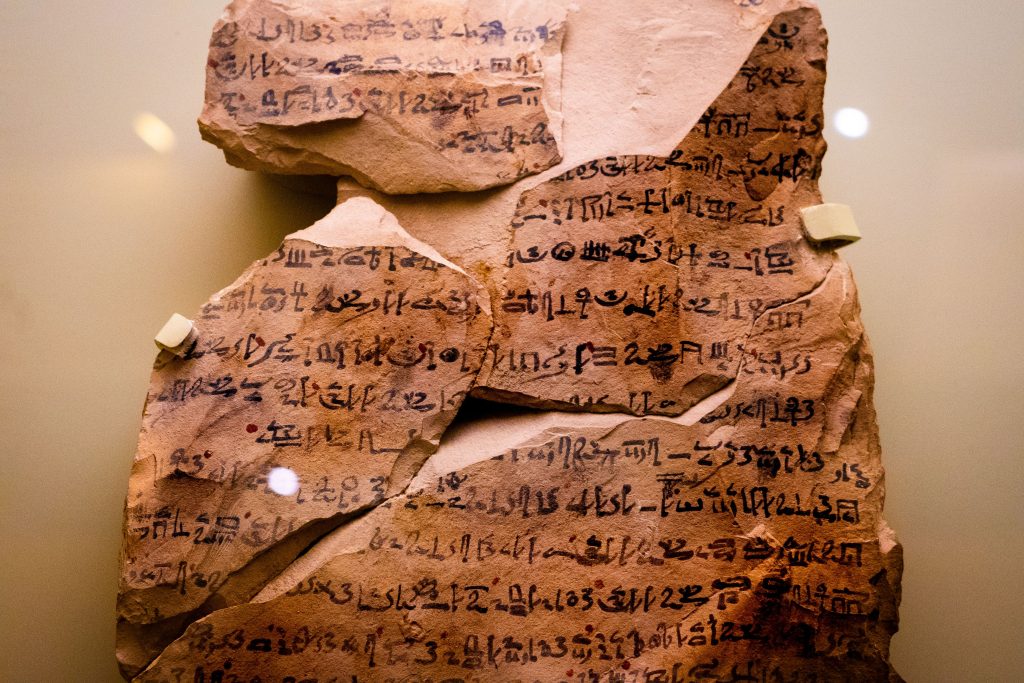
A better analogy might be a community agreement. Have you ever been part of a team or group that creates a community agreement? Simply, a community agreement is a list of commitments that the community makes to one another so that the community can be the kind of community it seeks to be and achieve what it desires to achieve. Another analogy could be wedding vows — commitments that are made when entering an agreement to establish a special relationship.
These analogies are helpful because often the Ten Commandments have a reputation as a rigid, impersonal, strictly enforced set of rules. Instead, what if we understood them as commitments, guidance, a vision for what it means to be in a special relationship with God? This is what it looks like to live as God’s people. And when you don’t live as God’s people, there are consequences.
Remember, the Israelites are being formed in the desert. They are learning who this God is that has delivered them from Egypt. It makes sense that they would also need to learn what it means to live in a special relationship, a covenant, with God. They were learning what kind of relationship God wanted with them. They were learning who God was shaping them to be as his people. The Israelites have spent generations living as an enslaved community. They now have to learn how to live as God’s priestly nation. In this light, we can view the Ten Commandments as a way for God to begin to create his kingdom community.
Let’s take a closer look at the Ten Commandments. What kind of kingdom community do they describe? And what might this reveal about who God is, who he is making his people to be, and the relationship he wants with his people?
First and foremost, we see that what it means to be God’s people is grounded in who God is. God begins with a statement, a reminder, of who he is and who he is for his people. The character and action of God is foundational to how he shapes his people and creates a community that reflects who he is. God is not a distant God, an indifferent God, but a God that delivered Israel from Egypt.
We also consider the way that God presents the ten commands. This is the first time that God has a direct encounter with all the people, not just leaders. Some Biblical scholars suggest this is the only direct encounter between God and the people of Israel without an intermediary recorded in the Old Testament. What is so important about this that God wanted to have a direct encounter? Maybe God wanted these guidelines for what it means to be his people, establishment of covenant, to happen clearly within the context of relationship. That learning to be shaped by God, to be obedient to God, from the start, is grounded in who God is, and in relationship to him. It creates an obedience that is relational rather than arbitrary or purely legalistic.
In the Ten Commandments, we see a clear theme that relationships, and the quality of relationships, are important for God’s community. The first three commands speak into the relationship between the people and God. The fourth command speaks into the relationship between the people and God as well as the people and all of creation. The remaining six commands address the relationships between the people. All Ten Commandments address relationships. The quality of relationships is something that will set apart God’s kingdom community from human-made community.
Rather than prescribe specific behaviors, these ten commands appear to define the outer boundaries of the community. While nine of the ten commands are presented in a negative form, “shall not”, these prohibitions are not a form of control, but rather a form of liberation. Defining the outer boundaries of the community creates clarity and clarity gives room for the enjoyment of freedom. Rather than identify every single expected behavior within God’s community, the Ten Commandments identify the outer bounds, which defines not only what is “off limits” for the community, but where the community is free to be.
We can also note that the Ten Commandments are not what are called “case laws.” Case laws are specific laws that are based on relevant precedents and established legal procedures. The commands are established on the grounds of providing a loving relationship with God. This also suggests that the Ten Commandments are not static. They can be interpreted and reinterpreted for God’s community as directed by the Holy Spirit.
We see an example of this in Exodus 20:21–Exodus 23:33, where we do find case laws presented. These case laws serve as specific, contextualized interpretations of the ten commands for God’s people at this particular time and in this particular place. We see that throughout the Old Testament, and throughout the history of God’s people, there are nuanced interpretations that are discerned to be fitting for the context.
The Ten Commandments serve to shape the identity, character, and ways of God’s people. Israel needed to learn what it means to be God’s people — in relationship with him and with one another. And God reaches towards them in the form of the Ten Commandments to teach them. God creates his kingdom community.
The people are frightened by what they experience during this encounter with God. Moses reassures them in verse 20, “Do not fear, for God has come to test you, that the fear of him may be before you, that you may not sin” (ESV).
As in the previous tests in the wilderness, this seems to be a test that strengthens relationship with God. This is the kind of test where the objective is learning and formation. It is not a pass/fail or conditional test where their relationship is on the line. This is an opportunity to know God more, to grow in relationship with him, and to be shaped by him.
And when we take a minute to meditate on the ten commands, doesn’t that sound like an incredible community? A community where we live in right relationship with God and others. A community where we do not manipulate and abuse one another in the “name” of God. A community where we do not cause harm to one another. A community where we care for the well-being of one another. A community where we rest and enjoy the sacredness of God’s creation. A community with no murder, no betrayal, no manipulation, no selfish ambition, no disregard for dignity. That sounds like a community that we would want to live in.
If we continue to follow Israel’s journey documented in Scripture and if we reflect on our own lived experience, we find that this kind of community is far from our reality. Truthfully, it seems outright impossible.
Thank God for Jesus Christ!
God comes to us, as one of us, in Jesus Christ. It’s an infinitely more intimate encounter than the encounter at Mt. Sinai. Once again, through his life and his teachings, he gives us a vision for what it means to be God’s people. Except this time, Jesus fulfills this vision, living in perfect relationship with his Father and others. And he does it on behalf of all humanity. By doing this, he fulfills the Ten Commandments, remaining faithful to humanity’s covenant commitments to God. He lives out what it means to be a member of God’s kingdom community. In Jesus Christ, God creates his kingdom community on earth.
Not only does Jesus live as a human member of God’s kingdom community on this earth, but he also dies a human death and is raised to life in a glorified human body. When he rises to life again, he does so on behalf of all of humanity, bringing us into his new and redeemed humanity. He then brings us with him in his ascension to be with God the Father. In Jesus, we are drawn into his perfect relationship with God the Father and the Holy Spirit. We are drawn into experiences of God’s kingdom community, even in this life.
In Jesus, a new special relationship, or covenant, is formed between God and his people. This covenant made the first one obsolete and extends beyond Israel as a representative for humanity. It includes all of humanity in Jesus Christ. This covenant is also made complete in Jesus Christ. In Jesus the covenant is fulfilled in both directions — from God to humanity and humanity to God.
God is creating his kingdom community in Jesus through the Spirit even now. And, just as the Israelites at Mt. Sinai, we have the great joy and privilege of participating in God’s creation of his kingdom community. We can be emboldened to move through the world in a way that reflects God’s kingdom community because we are confident that in Jesus all of humanity has been brought into a complete and whole kingdom community. We can do this confidently knowing that the establishment of God’s kingdom community is not dependent upon our capabilities or willpower but is made complete in Jesus. And it’s made real in us by the Spirit.
It is in this confidence that we are free to live as members of God’s kingdom community. We can live as those that worship only God and reject temptations to worship self, leaders, ideology, wealth, accomplishments, praise, and more. We can live as those who value the dignity of every human and make decisions that uphold the dignity of humanity.
We can refuse to take advantage, manipulate, oppress, and use people for our own benefit. We can refuse to treat people like objects. We can refuse to gossip. We can choose to be generous, compassionate, and kind. We can make choices that support our neighbors to have abundant lives. We can refuse to act selfishly, ambitiously, violently, or corruptly in the name of God. We can commit to rhythms of peace and rest for ourselves, our neighbor, creation, and even our enemy.
Living in this way is a reflection of the special relationship that Jesus has created with all of humanity. It gives witness to us and all the world about who this God is shaping us to be, and the relationship he wants to have with us. When we participate in God’s works of creating his kingdom community in our very midst, we proclaim the kind of community that God has establish for us to enjoy with him and one another forever.
God is creating his kingdom community, and in Jesus Christ, we belong. Let us rejoice in this beautiful relationship with God and one another.
Go Deeper:
Exodus 34:28 says, “So he was there with the Lord forty days and forty nights. He neither ate bread nor drank water. And he wrote on the tablets the words of the covenant, the Ten Commandments.” This is fundamental to what applies today and what doesn’t. Ten commandments in Hebrew means the “10 words.” They are the shorthand for the whole covenant made with Israel. They, like all of us, were incapable of keeping the law. Jesus kept it perfectly on our behalf.
Matthew Hester—Year A Proper 22




Listen to audio: https://cloud.gci.org/dl/GReverb/GR080-Hester-YearA-Proper22.mp3
Program Transcript
Matthew Hester—Year A Proper 22
Anthony: So, let’s get to the text. Our first passage of the month is Exodus 20:1–4, 7–9, 12–20. I’ll be reading from the New Revised Standard Version, the updated edition. It is a Revised Common Lectionary passage for Proper 22 in Ordinary Time, October 4.
Then God spoke all these words, 2 “I am the LORD your God, who brought you out of the land of Egypt, out of the house of slavery; 3 you shall have no other gods before me. 4 “You shall not make for yourself an idol, whether in the form of anything that is in heaven above or that is on the earth beneath or that is in the water under the earth. … 7 “You shall not make wrongful use of the name of the LORD your God, for the LORD will not acquit anyone who misuses his name. 8 “Remember the Sabbath day and keep it holy. 9 Six days you shall labor and do all your work. “Honor your father and your mother, so that your days may be long in the land that the LORD your God is giving you. … 13 “You shall not murder. 14 “You shall not commit adultery. 15 “You shall not steal. 16 “You shall not bear false witness against your neighbor. 17 “You shall not covet your neighbor’s house; you shall not covet your neighbor’s wife, male or female slave, ox, donkey, or anything that belongs to your neighbor.” 18 When all the people witnessed the thunder and lightning, the sound of the trumpet, and the mountain smoking, they were afraid and trembled and stood at a distance 19 and said to Moses, “You speak to us, and we will listen, but do not let God speak to us, lest we die.” 20 Moses said to the people, “Do not be afraid, for God has come only to test you and to put the fear of him upon you so that you do not sin.”
So, Matthew, before giving any of his words, the commandments, God identifies himself, the indicative of grace here, as the one who brought you out of the land of Egypt, out of the house of slavery.
I’m curious. The Scripture’s always reshaping our imagination about Jesus. How does this introduction shape our apprehension of God and the commandments, and what does it reveal about God’s relationship with Israel?
Matthew: Yeah. That’s a great question. Honestly, I think that opening line just right there at the start of the reading: “I am the Lord your God who brought you out of the land of Egypt,” for me that is what sets the tone for what’s being communicated.
Because God doesn’t begin with, “Obey these commands and then I’m going to deliver you.” No, he says, ” I am the Lord your God. I’ve already brought you out.” And I think of it this way: liberation comes before legislation, right? Grace precedes the command.
And of course in the experience, Israel, they don’t keep The Commandments in order to become the people God rescued. They’re given these commandments because they’ve already been rescued.
And I think that distinction is huge because religion has often reversed the order, right? We can easily turn to the biblical story and we can say it this way, “Behave correctly, believe correctly, perform correctly and perhaps God will accept you.”
But Exodus begins somewhere entirely different. God hears the cry of an oppressed people, and he enters their suffering, and he delivers them from Pharaoh, brings them through the sea, and only then what he’s actually doing here is he’s teaching them how to live like free people.
You don’t even know how to live. You’ve lived in bondage for so long and so I’m trying to show you some ways to live freely. And so, I actually don’t primarily hear or even navigate the 10 Commandments as like this arbitrary list of like divine demands.
I receive them as like ethics of a liberated community, and I think that even helps us approach the topic just a little … it lets it breathe. So, you think about it. You’ve been delivered from an empire that’s built on exploitation, built on violence. It’s built on hierarchy, slavery.
But listen, guys, I honestly, I think what’s happening here is God is saying, “Don’t recreate Egypt among yourselves.”
Because usually what we do is we default to what brings us comfort. If you think about it, when Israel is up against the Red Sea they complain very quickly and it’s so interesting. What’s their initial complaint? At least back in Egypt we had beef stew. That’s my paraphrase. In the King James, it says the flesh. We had the flesh pots of Egypt. So, if nothing will speak to you, your stomach will. That’s for sure. And so, you think about how they were treated.
Pharaoh treated human beings as commodities. So, then, look: so don’t steal. There, there’s so much here that we could unpack. Egypt, it was sustained and expanded by violence. So, you know what, guys? Don’t murder. Empire ― it survives through deception, accusation. You know what? So don’t bear false witness.
You can see it’s really an antithesis is what’s going on here. It’s an antithesis of what you came out of. Pharaoh’s economy, it’s built on endless acquisition. So, you know what? Don’t covet. Don’t covet what belongs to your neighbor.
And then probably most radically for me, is that Pharaoh demanded endless production. But Yahweh says, “You’re going to have to rest. This is going to be so important.”
Anthony: That’s right. Oh, wow.
Matthew: Sabbath actually becomes this embodied declaration that your worth is not determined by how many bricks you produce. That is beautiful to me.
And I think God isn’t simply saying, “Here are the rules required to keep me happy.” What he’s doing is actually forming a people who’ve been delivered from one way of being human, and now they’re learning another way to be freed humans.
And ultimately, I would say as a Christian, I think Jesus brings that whole trajectory into its fullest clarity. He doesn’t just intensify legal codes. You ever notice that in his ministry? No. He reveals the life toward which the law was pointing. Love God, love your neighbor, love your enemy, forgive, serve reconcile, refuse retaliation.
And so, the relationship ― it begins not with Israel’s performance but with God’s initiative. I brought you out. So, the whole start of their relationship was, “I’m your deliverer. I’m not your taskmaster.” And so, for me that’s beautiful.
Anthony: It is beautiful. And we see in Jesus he’s always reshaping imagination. “You’ve been told this, but I say to you,”
As he reshapes the way that we think, and that’s … I’m going to hang on to what you said: liberation before legislation. That’s beautiful. I may steal that one and not give you credit. I hope that’s okay. But, …
Matthew: You have permission.
Anthony: All right. So, the people’s response to this God was fear and awe. Yeah. Why do you think the narrative includes this reaction immediately after these words are given, and what might that reaction teach us today?
Matthew: Yeah. First I want to say this. I want to give Israel here a little bit of grace because I’ve tried to put myself in whatever capacity that I can in their position. So ,you look at these hundreds of years of slavery. The way that they relate to a master is, it’s suffering. It’s unreasonable. It is… It’s just terrible.
And so, now they’re being told to trust someone else and I think we’d be foolish to just imagine, “Oh, yeah, I’d completely trust. I’d fully trust.” Yeah, I wonder, again this has been generationally experienced at this point.
And that distance language to me is actually not surprising. It’s unfortunate, but it’s not surprising. So, you think about the manifestation there. There’s the thunder, the lightning, smoke, trumpet blasts, the trembling earth.
And their conclusion is, “Hey Moses, you talk. You go talk to God for us. We don’t want God speaking directly to us because we’re afraid that we’re going to die.” And so, right there, their fear produces distance.
It’s not literal distance. It’s the same kind of distance that I think Paul is picking up on in the New Testament when he says that we were enemies of God in our own minds because of our wicked behavior.
So, the fear component is a master at producing perceived distance, and so that really becomes kind of one of the, I would say, one of the recurring tensions in the whole Biblical story. Humanity continually perceives God through fear. And so they approach God through distance, through mediation, boundaries, sacrifice. It evolves into priesthood, temple curtains, categories of clean and unclean.
But this is still fascinating, and if we’re not careful, we miss it because we’ll just read right over it. Moses immediately says, “Don’t be afraid.” He’s telling them, “Don’t be afraid.” And it’s almost a paradox in the text because they are. They’re experiencing something terrifying. But Moses says, “Don’t be terrified.”
I think that’s important because Scripture records humanity’s developing encounter with an understanding of God. And as Christians, we don’t stop at Sinai to determine what God is ultimately. What do we do? We keep reading until the arrival of Jesus, because Jesus brings that perfect clarity that was hidden, that was still that veiled perspective in these moments.
Even Moses wasn’t seeing God clearly. He was still seeing, he was still seeing God as it was through a veil. And so, you think about Hebrews, Hebrews even brings us a beautiful contrast and I know we’re jumping way into the different part of the overall text, but Hebrews brings this contrast, and it even tells us, “You have not come to the mountain of terror, darkness, gloom, tempest. You haven’t come to Sinai. You’ve come to Mount Zion.” and then it’s pretty astonishing. Hebrews says, “We’ve come to Jesus, the mediator of a new covenant.” So, the distinction is Sinai and Moses ― that’s not it. No. You’re at Mount Zion, and Jesus is the mediator of this new covenant.
And so, I’m not … I wouldn’t say we dismiss Sinai, but we also don’t embrace it as like the final lens through how we understand God. Jesus is the lens. And so, at Sinai, the people stand at a distance; but in Jesus, God closes that distance. The word becomes flesh. You can’t get any closer than that.
And once we’re exposed to the beauty of Christ, all of that apprehension begins to melt away. And with that, the vain imaginations, the things we built even psychologically. What do I mean by that? Like we preach Jesus, but our imagination of God is, there’s still thunder and smoke and distance, and we’re afraid of getting too close. We’re convinced that God is perpetually disappointed, easily angered, waiting for us to cross the line. But Jesus reveals a God so different than we ever imagined, and it’s who God had always been.
Yeah. And I just love that thought, “You don’t have to stand at a distance anymore.” and I hope that we can hear that today.
Anthony: Absolutely. Love moves toward the other, doesn’t it?
Jesus, the Father, the Son and the Father in face-to-face relationship, everything hinges on that and the communion of the Spirit. God moved toward us. The Word became flesh. There’s no need to be afraid. He has revealed Himself most vividly in the person of Jesus, and I like to think of it we fix our gaze on Jesus, and it’s okay to stare because the more you stare the more you fall in love with this God who loved us first.
Matthew: Yes. Amen and amen.
Program Transcript
Matthew Hester—Year A Proper 22
Anthony: So, let’s get to the text. Our first passage of the month is Exodus 20:1–4, 7–9, 12–20. I’ll be reading from the New Revised Standard Version, the updated edition. It is a Revised Common Lectionary passage for Proper 22 in Ordinary Time, October 4.
Then God spoke all these words, 2 “I am the LORD your God, who brought you out of the land of Egypt, out of the house of slavery; 3 you shall have no other gods before me. 4 “You shall not make for yourself an idol, whether in the form of anything that is in heaven above or that is on the earth beneath or that is in the water under the earth. … 7 “You shall not make wrongful use of the name of the LORD your God, for the LORD will not acquit anyone who misuses his name. 8 “Remember the Sabbath day and keep it holy. 9 Six days you shall labor and do all your work. “Honor your father and your mother, so that your days may be long in the land that the LORD your God is giving you. … 13 “You shall not murder. 14 “You shall not commit adultery. 15 “You shall not steal. 16 “You shall not bear false witness against your neighbor. 17 “You shall not covet your neighbor’s house; you shall not covet your neighbor’s wife, male or female slave, ox, donkey, or anything that belongs to your neighbor.” 18 When all the people witnessed the thunder and lightning, the sound of the trumpet, and the mountain smoking, they were afraid and trembled and stood at a distance 19 and said to Moses, “You speak to us, and we will listen, but do not let God speak to us, lest we die.” 20 Moses said to the people, “Do not be afraid, for God has come only to test you and to put the fear of him upon you so that you do not sin.”
So, Matthew, before giving any of his words, the commandments, God identifies himself, the indicative of grace here, as the one who brought you out of the land of Egypt, out of the house of slavery.
I’m curious. The Scripture’s always reshaping our imagination about Jesus. How does this introduction shape our apprehension of God and the commandments, and what does it reveal about God’s relationship with Israel?
Matthew: Yeah. That’s a great question. Honestly, I think that opening line just right there at the start of the reading: “I am the Lord your God who brought you out of the land of Egypt,” for me that is what sets the tone for what’s being communicated.
Because God doesn’t begin with, “Obey these commands and then I’m going to deliver you.” No, he says, ” I am the Lord your God. I’ve already brought you out.” And I think of it this way: liberation comes before legislation, right? Grace precedes the command.
And of course in the experience, Israel, they don’t keep The Commandments in order to become the people God rescued. They’re given these commandments because they’ve already been rescued.
And I think that distinction is huge because religion has often reversed the order, right? We can easily turn to the biblical story and we can say it this way, “Behave correctly, believe correctly, perform correctly and perhaps God will accept you.”
But Exodus begins somewhere entirely different. God hears the cry of an oppressed people, and he enters their suffering, and he delivers them from Pharaoh, brings them through the sea, and only then what he’s actually doing here is he’s teaching them how to live like free people.
You don’t even know how to live. You’ve lived in bondage for so long and so I’m trying to show you some ways to live freely. And so, I actually don’t primarily hear or even navigate the 10 Commandments as like this arbitrary list of like divine demands.
I receive them as like ethics of a liberated community, and I think that even helps us approach the topic just a little … it lets it breathe. So, you think about it. You’ve been delivered from an empire that’s built on exploitation, built on violence. It’s built on hierarchy, slavery.
But listen, guys, I honestly, I think what’s happening here is God is saying, “Don’t recreate Egypt among yourselves.”
Because usually what we do is we default to what brings us comfort. If you think about it, when Israel is up against the Red Sea they complain very quickly and it’s so interesting. What’s their initial complaint? At least back in Egypt we had beef stew. That’s my paraphrase. In the King James, it says the flesh. We had the flesh pots of Egypt. So, if nothing will speak to you, your stomach will. That’s for sure. And so, you think about how they were treated.
Pharaoh treated human beings as commodities. So, then, look: so don’t steal. There, there’s so much here that we could unpack. Egypt, it was sustained and expanded by violence. So, you know what, guys? Don’t murder. Empire ― it survives through deception, accusation. You know what? So don’t bear false witness.
You can see it’s really an antithesis is what’s going on here. It’s an antithesis of what you came out of. Pharaoh’s economy, it’s built on endless acquisition. So, you know what? Don’t covet. Don’t covet what belongs to your neighbor.
And then probably most radically for me, is that Pharaoh demanded endless production. But Yahweh says, “You’re going to have to rest. This is going to be so important.”
Anthony: That’s right. Oh, wow.
Matthew: Sabbath actually becomes this embodied declaration that your worth is not determined by how many bricks you produce. That is beautiful to me.
And I think God isn’t simply saying, “Here are the rules required to keep me happy.” What he’s doing is actually forming a people who’ve been delivered from one way of being human, and now they’re learning another way to be freed humans.
And ultimately, I would say as a Christian, I think Jesus brings that whole trajectory into its fullest clarity. He doesn’t just intensify legal codes. You ever notice that in his ministry? No. He reveals the life toward which the law was pointing. Love God, love your neighbor, love your enemy, forgive, serve reconcile, refuse retaliation.
And so, the relationship ― it begins not with Israel’s performance but with God’s initiative. I brought you out. So, the whole start of their relationship was, “I’m your deliverer. I’m not your taskmaster.” And so, for me that’s beautiful.
Anthony: It is beautiful. And we see in Jesus he’s always reshaping imagination. “You’ve been told this, but I say to you,”
As he reshapes the way that we think, and that’s … I’m going to hang on to what you said: liberation before legislation. That’s beautiful. I may steal that one and not give you credit. I hope that’s okay. But, …
Matthew: You have permission.
Anthony: All right. So, the people’s response to this God was fear and awe. Yeah. Why do you think the narrative includes this reaction immediately after these words are given, and what might that reaction teach us today?
Matthew: Yeah. First I want to say this. I want to give Israel here a little bit of grace because I’ve tried to put myself in whatever capacity that I can in their position. So ,you look at these hundreds of years of slavery. The way that they relate to a master is, it’s suffering. It’s unreasonable. It is… It’s just terrible.
And so, now they’re being told to trust someone else and I think we’d be foolish to just imagine, “Oh, yeah, I’d completely trust. I’d fully trust.” Yeah, I wonder, again this has been generationally experienced at this point.
And that distance language to me is actually not surprising. It’s unfortunate, but it’s not surprising. So, you think about the manifestation there. There’s the thunder, the lightning, smoke, trumpet blasts, the trembling earth.
And their conclusion is, “Hey Moses, you talk. You go talk to God for us. We don’t want God speaking directly to us because we’re afraid that we’re going to die.” And so, right there, their fear produces distance.
It’s not literal distance. It’s the same kind of distance that I think Paul is picking up on in the New Testament when he says that we were enemies of God in our own minds because of our wicked behavior.
So, the fear component is a master at producing perceived distance, and so that really becomes kind of one of the, I would say, one of the recurring tensions in the whole Biblical story. Humanity continually perceives God through fear. And so they approach God through distance, through mediation, boundaries, sacrifice. It evolves into priesthood, temple curtains, categories of clean and unclean.
But this is still fascinating, and if we’re not careful, we miss it because we’ll just read right over it. Moses immediately says, “Don’t be afraid.” He’s telling them, “Don’t be afraid.” And it’s almost a paradox in the text because they are. They’re experiencing something terrifying. But Moses says, “Don’t be terrified.”
I think that’s important because Scripture records humanity’s developing encounter with an understanding of God. And as Christians, we don’t stop at Sinai to determine what God is ultimately. What do we do? We keep reading until the arrival of Jesus, because Jesus brings that perfect clarity that was hidden, that was still that veiled perspective in these moments.
Even Moses wasn’t seeing God clearly. He was still seeing, he was still seeing God as it was through a veil. And so, you think about Hebrews, Hebrews even brings us a beautiful contrast and I know we’re jumping way into the different part of the overall text, but Hebrews brings this contrast, and it even tells us, “You have not come to the mountain of terror, darkness, gloom, tempest. You haven’t come to Sinai. You’ve come to Mount Zion.” and then it’s pretty astonishing. Hebrews says, “We’ve come to Jesus, the mediator of a new covenant.” So, the distinction is Sinai and Moses ― that’s not it. No. You’re at Mount Zion, and Jesus is the mediator of this new covenant.
And so, I’m not … I wouldn’t say we dismiss Sinai, but we also don’t embrace it as like the final lens through how we understand God. Jesus is the lens. And so, at Sinai, the people stand at a distance; but in Jesus, God closes that distance. The word becomes flesh. You can’t get any closer than that.
And once we’re exposed to the beauty of Christ, all of that apprehension begins to melt away. And with that, the vain imaginations, the things we built even psychologically. What do I mean by that? Like we preach Jesus, but our imagination of God is, there’s still thunder and smoke and distance, and we’re afraid of getting too close. We’re convinced that God is perpetually disappointed, easily angered, waiting for us to cross the line. But Jesus reveals a God so different than we ever imagined, and it’s who God had always been.
Yeah. And I just love that thought, “You don’t have to stand at a distance anymore.” and I hope that we can hear that today.
Anthony: Absolutely. Love moves toward the other, doesn’t it?
Jesus, the Father, the Son and the Father in face-to-face relationship, everything hinges on that and the communion of the Spirit. God moved toward us. The Word became flesh. There’s no need to be afraid. He has revealed Himself most vividly in the person of Jesus, and I like to think of it we fix our gaze on Jesus, and it’s okay to stare because the more you stare the more you fall in love with this God who loved us first.
Matthew: Yes. Amen and amen.
Small Group Discussion Questions
- What has your relationship with the Ten Commandments been like? Did the sermon cause you to rethink it?
- How is the community that God creates through the Ten Commandments different than communities you have been part of?
- What does it feel like to know you belong to God’s kingdom community, not because you earned it, but because of what Jesus has done for you?
- How is the Holy Spirit inviting you to participate in God’s kingdom community on this earth today? In the next month?

Please note that comments are moderated. Your comment will not appear until it is reviewed.