GCI Equipper

The Power of the 4 Es

I would not be where I am today if others hadn’t been practicing the 4 Es in my life.

Allow me to share a personal story of the effectiveness of engaging, equipping, empowering, and encouraging.  Because of others speaking life into me, I have had opportunity to serve in various forms of leadership and ministry for almost 48 years. It started my senior year of high school when I was asked to be the president of our youth group.

I didn’t feel at all qualified and found it hard to believe I was asked. But my pastor saw something in me he wanted to see developed. I was known for my quick wit (aka jokes and sarcasm) and would often get the youth group laughing. My pastor determined to help me grow in maturity. He mentored me through my role as president of the youth group – helping me use my quick wit for good, rather than for just making people laugh. He was my pastor, but he became my mentor and my friend.

After college, I was a bit lost – not sure which direction God was leading me. I wanted to make a difference, but I still lacked maturity and needed opportunity to grow in leadership. Again, my pastor (a different one) gave me leadership opportunities by asking me to coach girls volleyball, and later to be president of our local speaker’s club. Again, he saw something in me I didn’t see in myself. He started by asking me to go to lunch so we could get to know each other – engagement. When he first asked me to coach volleyball, I admitted it was outside my skill level, so he sent me to a coaching clinic and asked others to work with me – equipping and empowering. Then we would get together every two to three weeks for lunch to talk and continue to build the relationship – encouragement. He continued to give me learning opportunities which often led to leadership opportunities.

I got involved with writing for the denomination through another mentor. I had written an article and turned it in. It was a mess. The manager of the denomination’s editorial department called me and asked me to come to his office – engagement. There he told me I had good ideas, but I didn’t know how to put thoughts on paper. He saw potential and asked me to take his writing class – equipping. He asked other writers and editors to help me develop a writing style, and he gave me several opportunities to write for our publications – more equipping and empowering. A year after taking his class, he asked me to work full-time in the editorial department and to write for all our publications – encouragement. Eventually, I became the editor of one of our publications, and I’ve been writing ever since.

When the denomination went through all our doctrinal changes, I was asked to go into full-time ministry. Again, I knew I had a lot to learn. There was much I didn’t know, and there was much I didn’t know I didn’t know. Fortunately, I was blessed with a supervisor whose greatest desire was to see me succeed. We spent a lot of time together – engagement. He was always available for calls and to answer questions. He was quick to send me training materials and to send me to conferences – equipping. When we had team meetings, he often asked me to present something I’d learned – empowering. And he was quick to call, email, visit, or find different ways to encourage me.

There have been others who have practiced the 4 Es with me, and I can honestly say I am where I am today because of the men and women who have spoken into my life. Yes, I very much believe I am where I am because God had a plan for me – and that plan included several others who were participating with him in leading me.

I am so thankful these men and women didn’t judge me for my quick wit (sarcasm), for my immaturity, or for my lack of experience. I am indebted to each one for choosing to engage with me, equip me for a specific opportunity, empower me by giving me responsibility, and encouraging me along the way.

Here are some questions for reflection:

  • Who has engaged, equipped, empowered, and encouraged you? Who has God placed in your life that has helped you be where you are today? (As a side note, have you thanked them?)
  • Who in your circle has the potential to be more than they are today? (Don’t let age, immaturity, sarcasm, or their past prevent you from seeing a potential leader or team member.)
  • What impact are you making in the life of another?
  • How often are you asking God to lead you to someone to engage?

Together, we can help engage, equip, empower, and encourage the next generation of leaders for GCI.

Rick Shallenberger
Editor

PS. You might be interested in a podcast I am cohosting with GCI friend Josh McDonald. Geocaching Scriptures is finding tiny treasures in the big truth. You can find it on Spotify or just Google the title.

The Possibilities of Ordinary

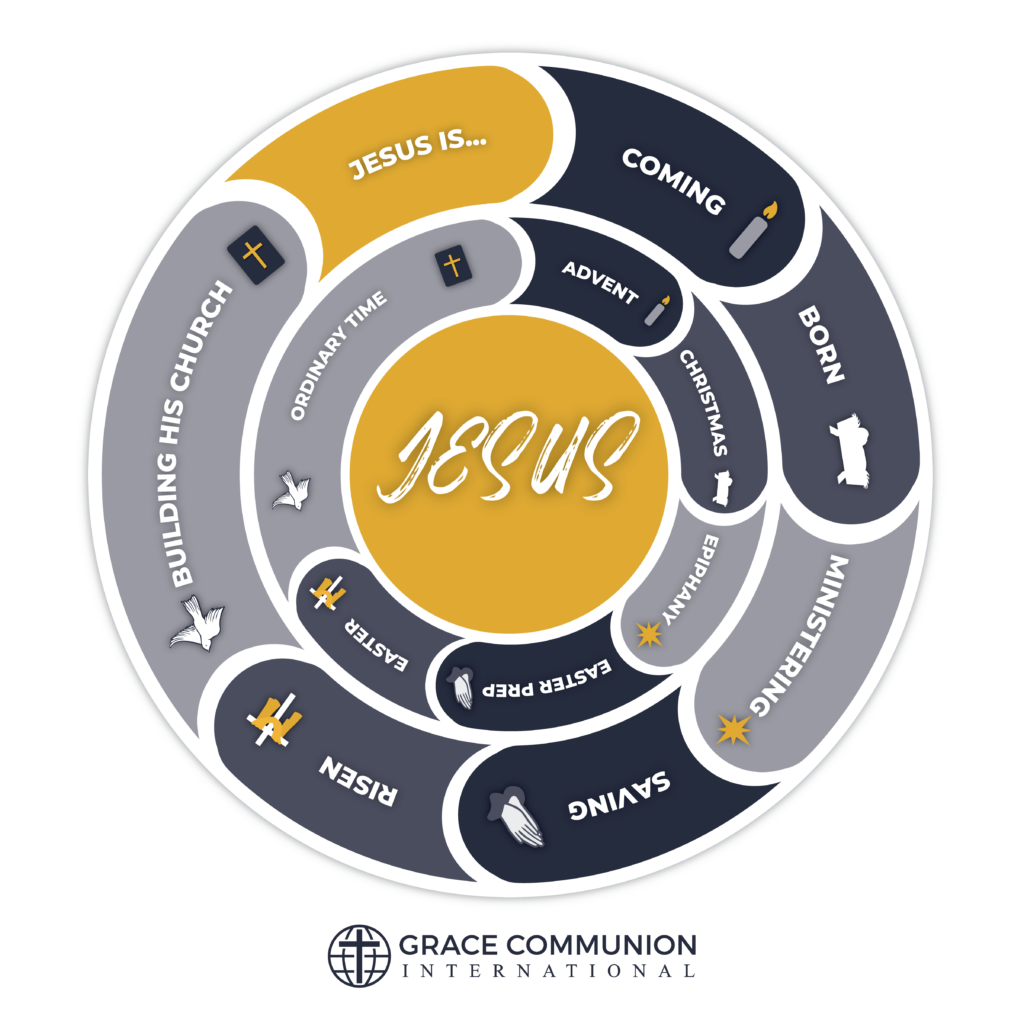
Ordinary Time enables us to engage the “angels of the hour.”

By Tim Sitterley, US Regional Director, West.

I was having a conversation with a bright 9-year-old at church the other day. I asked her if she was excited that school would soon be over, and it would be summer vacation. Her smile turned down and I actually thought she was about to cry. It seems that she absolutely loves the busyness and activities of school, and the months of summer are nothing more to her than an eternity of boredom until school starts back up.

But that’s because time moves so slowly for a child. When you’re nine years old, one year constitutes one-ninth of your life. That’s a long time. When you reach my age, one year is a tiny fraction of your life and so time speeds up – so much so in fact that, at a point, you also sometimes long for special occasions to be over with, for visitors to go home, and for distractions to disappear so that you can return to a more ordinary rhythm in your life. Routine might be boring, but we sleep a lot better when our lives are being visited by the angels of routine and the ordinary.


For those of us who follow the Christian calendar, it’s once again time to deal with that word “ordinary.” And I hope we can come to see the incredible possibilities that accompany the word and the season.

As has been stated previously, in Equipper and other GCI articles, “ordinary,” in this context, comes from the Latin term ordinalis, meaning numbered or ruled. This title simply refers to the ongoing and rhythmical nature of the season. The “first” Sunday after Pentecost. The “second” Sunday after Pentecost. And so on.

Just like everyday life, there is a rhythm to the days and the weeks. And that rhythm is reflected in the Christian calendar. We have holidays and special occasions that we look forward to that change the pace. But those special occasions aren’t the whole picture, just like there is more to the life of Christ than what we celebrate in other liturgical seasons.

Ordinary Time begins the day after Pentecost and ends the day before the First Sunday of Advent. It may include twenty–three to twenty–eight Sundays, depending on the date of Easter, but the first Sunday is always Trinity Sunday, and the last Sunday is always the Sunday of the Reign of Christ or Christ the King.

And while Advent (culminating in Christmas) and Easter (culminating in Pentecost) focus primarily on the incarnation, death, resurrection, and ascension of Jesus Christ, followed by the descent of the Holy Spirit at Pentecost, the passages of the Revised Common Lectionary during Ordinary Time contain the rest of Jesus’ earthly ministry and some of the major events of the Gospels we have come to know and love. The miracles, the parables, the calling of the twelve, the sermon on the mount, the bread of life discourse — we get all that and more during this season.

Ordinary Time is a time for personal growth and maturation. It’s a time to walk through the life and ministry of Jesus. To experience vicariously through scripture what Jesus’ disciples experienced firsthand. It is a time to celebrate, day by day, this incredible, eternal relationship we have been invited into.

In a marvelous little book entitled, The Music of Silence, David Steindl-Rast highlights how each hour of the day has its own special light and its own particular mood, and how we are more attentive to the present moment when we recognize and honor these “special angels” lurking inside each hour.

During the hectic and focused seasons of Advent and Easter there can be many distractions in our lives, both inside and outside our church experience. It can become a challenge to overcome the difficulties of being attentive to the present moment – of meeting, as Richard Rohr puts it, “the naked now.” Those “angels of the hour” that David Steindl-Rast writes about get shoved aside by the activity and noise.

But during the season of Ordinary Time, we can find the quiet necessary for meditation and contemplation. (See Jillian Morrison’s article on Spiritual Practices during Ordinary Time.) Like summer vacation for a student, where the bombardment of knowledge ceases for a period, we too are free to receive the life and teachings of Jesus in small doses. And since we are not in a rush to prepare for the next big thing, we can take the time to soak in the Word, to breath it in, and to find exciting new ways to bring it to life in our daily walk.

I learned early on that summer vacation was only as fun and exciting as I made it. I did not grow up with the wealth to make trips to Disneyland and exotic locations a reality. But there were woods to explore, creeks to swim in, friends to get into mischief with, and books to get lost in.

My prayer is that we, as followers of Jesus and students of his life and teachings, can look at Ordinary Time the way I looked at summer vacation. That we take every opportunity between Trinity Sunday and Christ the King Sunday to engage the angels of the hour, the small things, the quiet times of personal introspection. Instead of simply counting down the days until the joyous busyness of Advent, may we embrace each of those days as an opportunity to grow deeper in our relationship with our triune God. The possibilities of how we do that are endless.

Spiritual Practices for Ordinary Time

Ordinary Time is a season of participation with Jesus in the building of his church.

By Jillian Morrison, Associate Pastor, Glendora, CA

GCI President, Greg Williams recently reminded us that Ordinary Time is the season to be attentive to the call of discipleship and disciple making. He encouraged us to use the season to focus more on what we are called to do and what we are called to be, as we participate with Christ.

Followers of Jesus go through this season with a posture of being sent and joining Jesus in disciple making. Followers of Jesus must also be mindful to honor God and our human limitations through restful rhythms.


Rest

Human beings were not made to work 24/7, but I think many of us wish we could. Living in a culture that rewards productivity and accepts workaholism makes the spiritual discipline of rest one of the most difficult to practice. We must learn to view rest not only as a treat, but a necessity.

The first pages of the Bible reveal a God who works and then rests. Since humans are made in God’s image, we therefore honor our God-given image when we honor our God-given limits. Rest reminds us that we are finite beings and that our value is not based on what we accomplish. We are perfectly loved and completely valuable simply when we do nothing but spend time resting, meditating, enjoying hobbies. It’s also a good time to sit and think – about God, about our family, about our blessings, about our congregations.

It is common to feel tired when we push ourselves day in and day out. We tend to be so hard on ourselves, so we need to learn self-care. We need to learn to relax and be gentle with our emotions. Life can be very emotional and demanding, but we should not feel guilty about needing to stop and recharge.

If we offer ourselves a more balanced rhythm of work and rest, there’s a much smaller risk of us burning out. If we take our work seriously, then we must also take rest seriously.

Saint Augustine of Hippo states this famous passage from his autobiographical work Confessions, “You have made us for yourself, O Lord, and our heart is restless until it rests in you.” We cannot give to others what we ourselves are not receiving from the Lord.

Reflection Questions:

  1. What exhausts you or keeps you working past your limits?
  2. When and where do you most deeply rest? Who helps you rest?
  3. What is it like for you to set aside time to play? How regular and inviolable is that time?[1]

Spiritual Exercises:

  1. Write down what a perfect day of rest and recreation would look like to you. Is it within the realm of possibility? Plan when you can take this day or a version of it. Schedule it on your calendar.
  2. Intentionally place yourself in the presence of God, then do something you delight in: go for a walk, take a nap, talk to a friend, have a cup of coffee, play a game. Enjoy yourself in God. Receive the gift of rest and talk with God about what happens in you as you try to rest.
  3. Consider whether or not your tiredness is about body or soul. What kind of rest would refresh your body: exercise, a nap, going to bed early? What kind of rest would refresh your soul: retreat, sleep, music, reading, centering prayer? Choose two times each week when you will intentionally enter into rest for body and soul.
  4. Think about your childhood experience of play. What was it like for you? How does your past experience affect your ability to play today? What is fun for you right now? Plan some time for play and fun into your week.[2]

Disciple Making

Making disciples is the church’s main role in the world. The church was created by God to be sent into the world to participate in what he is already doing: God’s redemptive mission to renew and restore all things through the transforming power of Jesus. Followers of Jesus (i.e. the church) make disciples and disciple people through our relationships, both old and new.

The words “discipline” and “disciple” come from the Latin root discipulus, meaning “student,” “learner,” or “follower.” Being a disciple of Jesus means learning from Jesus, humbly following his ways, and being teachable. Jesus teaches us to make disciples and disciple others by first learning to live like him. We help people learn to live like Jesus as we model the life and teachings of Jesus and articulate his truth expressed in God’s Word.[3]

Bobby Gross says this on inhabiting Ordinary Time:

In this season, we settle into the spiritual rhythms of living as disciples of Jesus. We gather in our churches and disperse into our neighborhoods. We worship and we witness. We seek to grow as individuals and we serve the needs of others. We rest our bodies and refresh our souls and we set out to do our God-given work. We engage in these rhythms day in and day out, week in and week out.[4]

Every follower of Jesus is already a missionary in their own context. Through healthy rhythms of work and rest, every missionary can confidently join God’s mission of ongoing restoration.

Reflection Questions:

  1. Talk to God about the desires and fears you have related to being a dedicated disciple of Jesus.
  2. Who do you want to become? What do you want to be remembered for when you die?
  3. What is it like for you to share your faith with others?
  4. What would make it easier and more comfortable for you to talk about what Christ has done for you?
  5. What is it like for you to interact with people who have different beliefs than you?[5]

Spiritual Exercises:

  1. What disciplines resonate with the desires of your heart today? Do you sense God calling you into a new practice, relationship, or experience that can help you grow as a disciple?
  2. Make a list of people you are praying will respond to God. Beside each name list one intentional way you can embody Christ to them in the next month.
  3. Write an account of how God has been at work in your life in the past six months. Ask the Holy Spirit to make you sensitive and open to an opportunity to share your experience with a friend.[6]

God bless you church, as you participate with Jesus’ extraordinary rest and work in this season of Ordinary Time.


[1] Adele Ahlberg Calhoun, Spiritual Disciplines Handbook: Practices That Transform Us (Downers Grove, IL: InterVarsity Press, 2005), 65.
[2] Ibid.
[3] Jon Ritner, Positively Irritating: Embracing a Post-Christian World to Form a More Faithful & Innovative Church (100Mpublishing.com: 100 Movements Publishing, 2020), 47.
[4] Bobby Gross, Living the Christian Year: Time to Inhabit the Story of God (Downers Grove, IL: InterVarsity Press, 2009), 234.
[5] Adele Ahlberg Calhoun, Spiritual Disciplines Handbook, 137, 161.
[6] Ibid.

Process of Development: Empower

When people are empowered to participate in an area of ministry that is a good fit for them, they often end up bringing something new or doing things better.

By Cara Garrity, Development Coordinator

Have you ever had the frustrating experience of finding the perfect outfit, but the event gets cancelled? Or maybe you trained really hard to make the soccer team, but all you do is sit on the bench. Or maybe your parents always lingered while you were doing chores to make sure you did it their way. It brings to mind that time old phrase “all dressed up with nowhere to go”.

We create similar frustrating experiences when we engage and equip people for ministry but then do not empower them to participate and lead in ministry. Relationships are built, and people are equipped to participate in ministry as an expression of discipleship and response to their calling. Imagine the frustration when the event gets cancelled, they get benched, or someone constantly hovers over them to make sure they do things the “right way.”

Without effective empowerment, effective engaging and equipping falls flat – people are kept from fulfilling their purpose. We engage and equip so that we can empower. Think about Ephesians 4:11-16, a guiding passage for development in GCI. For what purpose are God’s people equipped? For works of service so that his body may be built up. God’s people are equipped to participate in his present ministry. We are equipped to get in the game, not sit on the sidelines!

To empower in GCI ministry is to create space and to commission.

To empower is to create space for the person to participate or lead. Sometimes this means creating a new space that didn’t exist before. Sometimes this means a seasoned leader needs to step aside to create space for an emerging leader to be empowered. Sometimes this means expanding a team to create space. There are many ways to create space, and it is critical that space is created.

Within the space that is created, we then have to set folks free to do what they’ve been equipped to do. The challenging part is that this means letting others do things differently than we would do or have been doing. We need to stop hovering over others to make sure they do it “the right way.” The beauty of this is when folks are empowered to participate in an area of ministry that is a good fit for them, they often end up bringing something new or doing things better.

Commissioning is one way to affirm the empowerment of leaders in front of the community. It is a public declaration that a person has been gifted, equipped, and now empowered to lead an area of ministry in the neighborhood and local church. Commissioning in front of the community is one way a pastor can recognize another’s authority to lead and move towards a more team-based ministry.

As we create ministry space and commission, clarity is our friend. Ministry descriptions can help with that. Ministry descriptions outline the key responsibilities of a ministry leader, their commitments, areas of oversight and authority, and bring clarity to the boundaries of their authority and ministry space. Clarity nurtures trust. Where there is trust, empowerment can be realized to its fullest potential.

Some questions to consider:

  1. Where does clarity need to be established?
  2. Where does ministry space need to be created?
  3. What ministry space needs to be created for ministry leadership? For ministry participation?
  4. Who is leading ministry in a capacity where they should be commissioned in the coming year?

Faith, Hope, and Love (FHL) in Action

 The benefits of team-based learning through community of practice (COP) and team coaching.

By Glen A Weber, Central Region Support Rep and Coach

The first Hope Avenue training was held in early 2020. Some of us were asked to coach those who went through the training. For many, that was a six-month commitment, but in our Central Region, we have continued the coaching monthly for three years. Soon after I began coaching the Hope champions, the Love and Faith champions wanted to know why they weren’t being coached. So, we added separate calls for each group, even though their official training did not take place until much later. Once a month I have been honored to coach the pastors as a group, and in separate groups the Faith champions, Hope champions, and Love champions. (Thank God for Zoom!)

These sessions continue to be transformational for our champions as they were able to share and hear what the other champions in their respective Avenue were planning and accomplishing.

In early March, three of our teams were invited to the FHL Training in Jacksonville, where they worked through a congregational MAP (ministry action plan) together with a coach. Those three teams were deeply impacted by the experience. Later in March, our region hosted a similar training to which the six Vision Team congregational teams were invited. The three that went to Jacksonville were given a coach to lead them beyond their MAP to focus on preparation for a neighborhood day camp. Five of our Vision Team congregations will be hosting neighborhood day camps in early summer. The two church teams who did not attend in Jacksonville were coached on working as a team to develop a congregational MAP by Mike Rasmussen and me.

Again, this was a tremendous learning experience for the teams. The teams realized that in spite of all the coaching we had been doing, there were still areas where the teams had not yet learned to work together and communicate as effectively as possible. The results have been better communication and greater cooperation between the three Avenues, and with their pastor. We are already seeing improved interaction, which impacted the results of activities during Holy Week and Easter (primarily with Easter Egg Hunts or similar). I’ve haven’t yet heard the exact figures, but the five congregations in our coaching group had more than 1,400 children and parents attend the activities they offered! That is very exciting for five congregations whose total average weekly attendance is between 200-250 people and the average age is probably 60 years or above for four of those congregations!

During their Easter interaction with their neighborhood, each of the congregations advertised their “what’s next” activity, which will be a neighborhood day camp. And we are now coaching them in the preparation process of having an even greater impact as they show the love of the Father to their neighborhoods.

In the Central Region we are looking forward to how we can continue coaching our Avenues as a group, while also coaching the congregational teams (F,H,L and pastor) together to continue to develop the communication and interaction that will lead us to be more effective as we participate with Jesus in our neighborhoods. I cannot stress enough the value of being coached as a team along with your pastor. It’s given the Central Region teams clearer vision, better planning, and greater collaboration.

Church Hack: Finding a New Facility

A healthy church is known and valued in their community. An essential step in making this happen, is finding a facility suited for your local needs.
Check out the June Church Hack for some helpful steps in finding a facility for your congregation. #gcichurchhacks


The Signs of the Times

Ordinary Time is a good season to connect our neighbors to our congregants and congregations.

According to the Christian calendar, we are in the midst of Ordinary Time — a time when many Christians focus on discipleship and our identity as the sent people of God. This is a good opportunity for congregations to reflect upon the ways in which they are bearing witness to the King and his kingdom in their neighborhoods. Many GCI congregations have planned Love Avenue events in the summer months and are preparing to deepen their community connections. In an effort to connect our neighbors to our congregants and congregations, we should not overlook the ministry that new people often look for first.

In a 2022 report released by the Barna Group titled, Children’s Ministry in a New Reality, data suggests that for parents of children aged 5-14, a quality children’s ministry was the most important factor in choosing a new congregation. Even when non-parents are put into the mix, 51% of congregants see children’s ministry as the most important ministry of their congregation. When churches engage in Love Avenue activities, they typically have a hope that some people would choose to visit the Sunday gathering. However, without ministry offerings for children, many families will not consider visiting, no matter how much they enjoy the Love Avenue event.

For the congregations who are praying for God to grow their church, it is important to pay attention to data like this. Of course, the Spirit can do as he wills and God can do the miraculous. However, Jesus advises us to also be practical and consider our times. Notice his words in Matthew 16:

The Pharisees and Sadducees came to Jesus and tested him by asking him to show them a sign from heaven. He replied, “When evening comes, you say, ‘It will be fair weather, for the sky is red,’ and in the morning, ‘Today it will be stormy, for the sky is red and overcast.’ You know how to interpret the appearance of the sky, but you cannot interpret the signs of the times. (Matthew 16:1-3 NIV)

The Barna Group’s data gives us one of the signs of the times. What are we to do with this information? For congregations without a children’s ministry, the key next step is to get prepared; begin to develop a plan to disciple any young people the Holy Spirit may guide to you. If you do not have someone – preferably a team – gifted and willing to disciple children, start by getting your congregation to pray for God to send the right people. At the same time, begin researching curriculum resources, looking for one that matches the personality of your congregation and your available resources. The idea is that when a child comes through your doors, you are ready to swing into action. Consider visiting congregations with thriving children’s ministries; this is a great way to learn best practices. Here are some children’s ministry resources, many of which align with the Revised Common Lectionary (RCL). GCI is not formally endorsing any of these curriculums, so congregations should do their due diligence when choosing resources.

Resources for children and teens aligned to the RCL:

Congregations with children’s ministries should make sure it is of the highest quality possible. A great place to start is to survey your parents and children about their experiences. Also, make sure your children and youth have lots of opportunities to practice their faith and demonstrate what they are learning about Jesus. It is a good idea to have children’s ministry leaders attend conferences, networking groups, and other opportunities to learn about best practices. Additionally, make sure the community knows about your children’s ministry. Is your children’s ministry prominently displayed on your website and social media platforms? What about in the materials about your congregation? If a children’s ministry is one of the first things people look for when learning about your congregation, make sure the information is easy to be found.

When it comes to children’s ministry, the most important outcome of interpreting “the signs of the times” is that the children God brings into our path will feel seen and connected to Jesus. All the strategies in this article fall apart if we are motivated by increasing our numbers instead of loving our neighbors. I pray that the love of God compels you to help your children and youth experience that same love.

Dishon Mills,
Generations Ministries Coordinator

Rhythms of Change, Growth, Innovation w/ Jon Ritner

Gospel Reverb – His Mercy Is More w/ Jeremy Begbie

Sermon for August 6, 2023 – Proper 13

Psalm 17:1-7, 15 • Genesis 32:22-31 • Romans 9:1-5 • Matthew 14:13-21

The theme for this week is transformation through relationship. In this week’s scripture readings, we can understand that an encounter with divine love will transform us in ways we can’t anticipate. Psalm 17 contrasts our tendency to justify ourselves and our actions, whereas God wants to transform us through relationship. The story of Jacob wrestling with God in Genesis 32, illustrates that God is willing to let us prevail, ultimately blessing us if we have the perseverance to engage in relationship. Matthew 14:13-21 recounts the story of feeding the crowd with five loaves and two fish, revealing that God transforms who we are and what we possess to be much more than we think. Our sermon text comes from Romans 9:1-5 where we learn that transformation is the result of Great Love: a kenotic, self-emptying love.

The Transforming Power of Kenotic Love

Romans 9:1-5 (NRSVUE)

In this week’s scripture readings, we learn that an encounter with divine love will change (transform) us in ways we can’t anticipate.

Love can be a difficult word to define. We love pizza, but we also might love our mothers or our spouses. We might say we love human beings, and as Christians, we may hold sharing God’s love with others as a personal value. But what does love, specifically transforming love, look like, and how are we changed by it?

The New York Times bestseller Project Hail Mary by Andy Weir is a science fiction novel that tells an interesting story about transforming love. The main character, Ryland Grace, is a junior high science teacher who finds himself sent without his consent on a suicide space mission to save the earth from a single-celled organism that is threatening to extinguish the sun. Grace unexpectedly connects with an alien (whom he names “Rocky”), who is on a similar mission, and after they work together to develop a solution using a predatory organism called Taumoeba, they part ways to return to their respective planets with the Taumoeba. However, Grace discovers that Rocky won’t be able to get back to his planet because the Taumoeba can eat through the material of the container housing them, the same material that Rocky’s entire spaceship is constructed of. Grace faces a dilemma: does he leave Rocky stranded to die in space and head back to earth with barely enough food to make it or does he go after Rocky to help, knowing that he will starve to death with no way to replenish his food supply on Rocky’s planet?

When Ryland Grace was asked to participate in the suicide mission to save humanity, he didn’t want to go. He wasn’t willing to give up his life, even though he would say he cared about his students, humanity, and the state of the planet. But [spoiler alert] when faced with the prospect of his friend being stranded, alone, and destined to die in space, Grace goes after Rocky to save him. This is the power of transforming love, a kind of love that changes us and makes us willing to sacrifice ourselves to help the one we love.

This type of love is kenotic. The word kenosis is found in Philippians 2:7 which says in reference to Jesus, he “emptied himself, taking the form of a slave, assuming human likeness” (NRSVUE). This self-emptying love is a sign of great transformation, and proof of the Divine at work in and through human beings. We first witness Jesus, reducing his divinity to fit into human flesh and then willingly letting himself be executed to take human feelings and actions spurred by hate and isolation (i.e., sin) into himself to put them to death, free us from them, and include us in relationship with the triune God. Jesus shows that there is no evil in human beings that is too big to be encompassed and overcome by this self-sacrificing, divine love.

Our sermon text comes from Romans 9:1-5, and here we see Paul showing similar anguish as he expresses his deep emotions for the Jewish people who refused to acknowledge Jesus as the Messiah.

Read Romans 9:1-5, NRSVUE

What’s the context?

Romans 9:1 – 11:36 begins Paul’s discussion about God’s providence and the rejection of Jesus Christ by Abraham’s descendants (i.e., the heirs of the covenant). To prepare the readers for his exposition, Paul sets forth this theme in the first chapter:

For I am not ashamed of the gospel; it is God’s saving power for everyone who believes, for the Jew first and also for the Greek. For in it the righteousness of God is revealed through faith for faith, as it is written, “The one who is righteous will live by faith.” (Romans 1:16-17, NRSVUE)

Paul points out that neither Jews nor Gentiles possess a privileged standing with God, for all are part of the universal human reality that all have fallen short (Romans 1:18-3:20), and are subject to the egoic pull of the old self. Because both Jews and Gentiles benefit from being included in Abraham’s covenantal promise, all believers are free from God’s wrath (5:1-21), the control of sin (6:1-23), the law (7:1-25), and ultimately the power of death (8:1-39).

The first eight chapters of Romans set Paul up to explain how divine love transformed him from a persecutor of Christians to a believer and follower of Christ. It was relationship with Father, Son, and Spirit, not the law, that changed Paul’s heart.

A Closer Look – Romans 9:1-5

I am speaking the truth in Christ—I am not lying; my conscience confirms it by the Holy Spirit—I have great sorrow and unceasing anguish in my heart. (Romans 9:1-2, NRSVUE)

Paul conveys the deep emotion he feels about the Jewish people’s rejection of Jesus as the Christ. Those Paul is writing to understand his personal history, so for a former murderer of Christ followers to express anguish over others’ rejection of Jesus, his readers must find it compelling.

For I could wish that I myself were accursed and cut off from Christ for the sake of my own brothers and sisters, my own flesh and blood. (Romans 9:3, NRSVUE)

In this verse, Paul speaks of the kenotic love that only comes from a relationship with the Father, Son, and Spirit. He is communicating the very nature of Jesus himself because “Christ redeemed us from the curse of the law by becoming a curse for us” (Galatians 3:13, NRSVUE). This verse communicates how kenotic love behaves.

They are Israelites, and to them belong the adoption, the glory, the covenants, the giving of the law, the worship, and the promises; to them belong the patriarchs. (Romans 9:4-5a, NRSVUE)

Paul points out the advantages the Jewish people had: the rich history with the law; the Shekinah glory of the cloudy pillar and tabernacle; and the covenants with Abraham, Isaac, and Jacob, and the promise of the coming of the Messiah. They had a special relationship with God as a called-out people, a benefit the Gentiles did not have at first. These advantages Paul applies to non-Jewish believers in Romans 4.

And from them, according to the flesh, comes the Christ, who is over all, God blessed forever. Amen. (Romans 9:5b, NRSVUE)

He points out the honor the Jewish people had in participating in the birth of Jesus, the Son of God incarnate. Paul concludes his plea with acknowledging Christ’s supremacy over all human beings, the Son of Man (as Jesus called himself) AND the Son of God.

Application:

  • Realize that our transformation does not come through the rigid keeping of rules but from divine love connecting us to God and to others. Too often we fall into keeping score, comparing ourselves with others and then either feeling superior or inferior. Neither of these states lends itself to the transformation of our human hearts by kenotic Divine Love.
  • Recognize from Paul’s example that kenotic love comes from the Father, Son, and Holy Spirit. It’s not love that we can generate ourselves, much the same way Ryland Grace from the novel Project Hail Mary had no desire to go on a suicide mission to save the earth but didn’t think twice about giving up his life for his alien friend Rocky. Humanly speaking, we can’t drum up this kind of self-emptying love on our own, but we can trust that developing our relationship with the Father, Son, and Holy Spirit will put us in a position to grow in our awareness of the divine kenotic love at work in us and others.

Transforming love is difficult to define and impossible to generate on our own, though we know it when we see it. From reading Romans 9:1-5, we see that Paul understands that Jesus’ kenotic love has transformed him to the point that he also experiences self-emptying love on behalf of the Jewish people who rejected Jesus. May we know the depth of love God has for us, and may that love come through us to bless those around us.

For Reference:

https://cepreaching.org/commentary/2017-07-31/romans-91-5/

https://www.workingpreacher.org/commentaries/revised-common-lectionary/ordinary-18/commentary-on-romans-91-5-3


Small Group Discussion Questions

From Speaking of Life

  • As a result of his wrestling encounter with God, Jacob’s name is changed to Israel, “one who prevails with God and humans.” Sometimes we give people nicknames to mark certain accomplishments or traits, like LeBron James being called “King James” or Kobe Bryant “The Black Mamba.” Can you think of a nickname you or someone else received, and did that nickname inspire you or the person to perform better? What do you think is the power of a name?
  • How do we balance proper respect for God with honest engagement and wrestling, especially when life doesn’t make sense? What does that look like?

From the sermon

  • Can you think of any examples of kenotic love, either in Bible stories or in your life? How did that self-emptying form of love transform the relationship?
  • How does rigid rule-keeping and comparing ourselves with others keep us at arm’s length from God? How can letting ourselves be loved by God, showing ourselves kindness and grace, enable the development of transforming, kenotic love for others?

Sermon for August 13, 2023 – Proper 14

Psalm 105: 1-6, 16-22, 45b • Genesis 37:1-4, 12-28 • Romans 10:5-15 • Matthew 14:22-33

This week’s theme is remembering the Lord’s saving works. The call to worship Psalm includes a reference of Joseph’s rise to prominence, along with encouraging God’s people to recall the Lord’s wonderful works through thanksgiving, praise, and rejoicing. The Old Testament reading from Genesis recounts the beginning of Joseph’s saga that landed him in Egypt after being sold by his brothers into slavery. The epistolary text in Romans refers to the nearness of God’s word and the beauty of believing and sharing this word of good news with others. In the Gospel reading from Matthew, we are presented the dramatic story of Jesus and Peter walking on water where Jesus saves Peter from sinking when Peter’s faith falters.

God’s Work for All

Romans 10:5-15 (ESV)

If you have ever had to write an academic paper, you will know that when you are making a point it will be stronger if you can cite other sources to support what you are saying. There is an advantage to bringing in other voices who are saying the same thing to strengthen what you are saying. We have a passage today where Paul has an important point he wants his hearers to understand. And he certainly takes advantage of citing other sources for support. We will see in this section that Paul is going to quote many Old Testament scriptures to support his claim.

Admittedly, this section belongs to Paul’s longer argument from Romans 9:30-10:21 where he is seeking to establish Israel’s blame for its present predicament of being on the outside of God’s saving work in Jesus Christ. They have no excuse, Paul argues. And that argument falls within Paul’s longer discussion that runs from Romans 9 to Romans 11 regarding Israel’s fate. So, we are breaking into the middle of a longer issue Paul is addressing. We will have to reserve Paul’s conclusion about Israel’s fate for another day. But for today, we are going to see how Paul pulls in some Old Testament sources to support the claim that he makes just one verse prior to our reading.

For Christ is the end of the law for righteousness to everyone who believes. (Romans 10:4 ESV)

That’s a staggering claim that has implications for you and me today. So, let’s take a stroll through Paul’s scriptural proofs that he uses to substantiate the claim that Jesus is the end of the law as a means of attaining righteousness to everyone who believes.

For Moses writes about the righteousness that is based on the law, that the person who does the commandments shall live by them. But the righteousness based on faith says, “Do not say in your heart, ‘Who will ascend into heaven?’” (that is, to bring Christ down)” or ‘Who will descend into the abyss?’” (that is, to bring Christ up from the dead). (Romans 10:5-7 ESV)

Paul begins his argument by quoting Moses from Leviticus 18:5. Essentially, Paul is pointing out how keeping the law was seen as the path to righteousness. Paul is citing this as the reason for what he just said previously. In verse 3 Paul has pointed out that the Israelites were seeking to achieve their own righteousness apart from God’s righteousness. And then again, in verse 4, Paul is claiming that the whole goal of the law in the first place was to bring people to Christ to receive the divine righteousness in faith. In short, Paul is showing that Israel wanted to achieve their own righteousness, when in fact righteousness can only be received as a gift. Israel’s true sin is resisting God’s grace.

How does Paul arrive at this claim? He is looking at the Old Testament scriptures through the eyes of faith. He further makes his point by combining a quote from Deuteronomy 9:4 which says “Do not say in your heart” with a quote from Deuteronomy 30:12-13 which says:

It is not in heaven, that you should say, “Who will ascend to heaven for us and bring it to us, that we may hear it and do it?” Neither is it beyond the sea, that you should say, “Who will go over the sea for us and bring it to us, that we may hear it and do it?” (Deuteronomy 30:12-13 ESV)

Paul is interpreting this passage in light of who Jesus Christ is and what he has done. So, we shouldn’t be too surprised that how Paul uses this quote and how it was once understood will amount to a radical transformation. Paul seems to be interpreting Moses as the prophet who is pointing to Christ as the fulfillment of the law. By pulling in Deuteronomy 9:4 with the partial quote of “Do not say in your heart” Paul is able to make the same point about the Israelites’ desire to establish their own righteousness apart from God. Let’s look at that passage in the full to see how Paul finds the connection:

Do not say in your heart, after the LORD your God has thrust them out before you, “It is because of my righteousness that the LORD has brought me in to possess this land,” whereas it is because of the wickedness of these nations that the LORD is driving them out before you. (Deuteronomy 9:4 ESV)

Did you catch what Paul did there? He has powerfully quoted the words God gave to Moses to say to the Israelites as proof of what Paul is claiming. Namely, it is not their works that give them any standing with God. It is God’s work of grace all the way down. That’s a pretty strong source to say the least. And with that lead-in he construes Deuteronomy 30:12-13 in terms of Christ. He gives us his interpretation in parenthesis. “‘Who will ascend into heaven?’” (that is, to bring Christ down)” or ‘Who will descend into the abyss?’” (that is, to bring Christ up from the dead).” Paul is stretching the impossibility of attaining our own righteousness with these questions. There is only one who has ascended into heaven and descended into the abyss. We had no part in God’s grace to send his Son down to us from heaven or in raising us up in him. Our salvation, and hence our righteousness, is a work of God that is given to us by grace.

There’s a great line in the movie Forest Gump where Lieutenant Dan asks Forest, “Have you found Jesus yet, Gump?” To which Forest replies, “I didn’t know I was supposed to be looking for him, sir.” In that scene it is Lieutenant Dan who holds the view that our righteousness, or being with God, is something we must do. Whereas Forrest Gump gives a response that mirrors a life of faith. He never presumed that he should be looking, high or low, for Jesus. That is, in a sense, what Paul is saying here. God has found us and saved us. We were never intended to go looking for Jesus to find our own salvation.

Now Paul will go further by pulling in a quote from Deuteronomy 30:14:

But what does it say? “The word is near you, in your mouth and in your heart” (that is, the word of faith that we proclaim); because, if you confess with your mouth that Jesus is Lord and believe in your heart that God raised him from the dead, you will be saved. For with the heart one believes and is justified, and with the mouth one confesses and is saved. (Romans 10:8-10 ESV)

Paul is seeing the “word” that is near you as the word of the gospel which he is proclaiming. Or more to the point, Jesus is the Word proclaimed to us. Jesus is the one who has been sent by the Father to us. It is God’s own righteousness and faithfulness that result in Jesus being sent to us and raised from the dead on our behalf. And this “word” is nearer to us than we think. Jesus is not an ideal to live up to or a principle to put into practice. He is a person to receive as the gift of God. It is not our works that God responds to; it is his own works of righteousness and faithfulness that free us to respond to him. And the response we are now free to make is a response of belief. Paul sees this belief expressed by the mouth from the heart. When Paul says, “if you confess with your mouth that Jesus is Lord and believe in your heart that God raised him from the dead, you will be saved,” he is not giving us a new formula to follow for salvation. He is not giving us certain words to say or a sentiment to hold in our hearts that will now qualify us for salvation. That would run counter to Paul’s very argument. By confessing with our mouth and believing in our heart, we are agreeing with what God has done in Jesus Christ, and we are putting our full trust in that work of grace. We are confessing, which means to agree with, the reality that righteousness has now been secured in the death and resurrection of our Lord and Savior. And we are not just saying the words, we are believing them, meaning we are trusting in his work of salvation and not our own.

It may be worth clarifying at this point what Paul is not saying. He is not saying that it doesn’t matter anymore whether we obey God’s word to us or not. He is not saying that it doesn’t matter what choices we make or what actions we take in our lives. On the contrary, there is now all the more reason to obey the Lord. The confession we are making is essentially that Jesus is Lord. And he is a righteous Lord. Notice that Paul used the word “justified” – meaning made righteous, and the word “saved” – referring to salvation, as roughly equivalent terms. Also confessing and believing are put as parallel ideas. So, we trust our salvation is to be made righteous in the Lord. Why would we then go on to live unrighteously? We were saved to enter the righteousness that can only be found in Jesus. We were created to be holy. Our confession is to agree with this, and in our longing for God’s completed work in us, we strive to work out the salvation that Jesus has given us.

One of Paul’s favorite phrases is “obedience of faith.” That’s the difference between working for righteousness and working out righteousness. We do not obey the Lord in order to qualify for salvation; we obey the Lord because we trust that he has saved us. We obey him out of our trust in him, our faith. If we believe the Lord is good and righteous, and has saved us to be who we are created to be, why would we not want to do what he commands us? His commands are given to call us further into his righteousness. The Lord is not trying to weigh us down with arbitrary rules or regulations. He is calling us into the righteous life he shares with the Father by the Spirit.

Now that Paul has made his case regarding righteousness that comes as a gift over and against a righteousness earned by our own works, he goes further to show a wonderful implication from this reality:

For the Scripture says, “Everyone who believes in him will not be put to shame.” For there is no distinction between Jew and Greek; for the same Lord is Lord of all, bestowing his riches on all who call on him. For “everyone who calls on the name of the Lord will be saved.” (Romans 10:11-13 ESV)

Paul quotes from Isaiah 28:16, which refers to God’s cornerstone laid in Zion as a sure foundation and how those who put their trust in this cornerstone will not come up short. Again, he is reading this scripture considering Jesus Christ, who is our true cornerstone and foundation. Paul does not quote the entire verse as he zones in on the aspect of faith. Then he uses the word “everyone” and “all” twice to show the implication of salvation coming by grace and not works. If the works of the law were the only way to attain salvation, then the rest of the world will be left out, as the law was only given to Israel. Paul is making it clear there is no distinction between Jew and everyone else. What God has done in Jesus Christ is to make available for “everyone” and “all” the salvation given in Jesus. Israel should have known that this was God’s intention all along. After all, he called Abraham to be a blessing to all the nations. But somewhere along the line the Israelites turned that calling into a calling of elitism. They saw themselves as the only ones qualified for God’s favor on account of keeping the law, which of course they failed at. But in Jesus, God has fulfilled his promise to Abraham and his purposes in Israel to bring salvation to the entire world. And that salvation comes to “everyone who calls on the name of the Lord.” Paul is now quoting from Joel 2:32 to make this point. His references are adding up. It is evident how Paul wants to show the importance of and the implications of salvation by grace and not works. The entire world is at stake.

From Joel 2:32 we see the echo of scripture from beginning to end. God answers those who call out to him. This is the character of God. He does not turn a deaf ear to our cries. He sees us in our sins and runs to save us. He is not waiting for us to save ourselves before he will listen to our calls. And he is calling us to himself today. He has turned his ear to your call to him. What comfort in knowing that the Lord of the universe does not only listen to a few who think they have found a way earn his favor. No, in Jesus, his favor rests on you and in that favor, he moves to save you completely as you trust him to do so.

Then Paul concludes with a series of questions:

How then will they call on him in whom they have not believed? And how are they to believe in him of whom they have never heard? And how are they to hear without someone preaching? And how are they to preach unless they are sent? As it is written, “How beautiful are the feet of those who preach the good news!” (Romans 10:14-15 ESV)

With these rhetorical questions Paul launches into a different section with Romans 9-11, in which Paul will make the point that the gospel message has been proclaimed and heard, but not received by Paul’s fellow Jews. That discussion is reserved for another sermon. But for our purposes today, we can see in these questions that the church has a calling to participate in getting the message out to the entire world. As believers who have entered into the joy of the Lord’s salvation, we are compelled to bring the good news to others so they too can put their trust in the Lord and be saved. As we do this, we can anticipate, like Paul, that our words may also fall on deaf ears. However, it is not our words that gain a response; rather it is Jesus, the Word, who gets the response. So, we can rest in his good timing and purposes, knowing that his Father’s heart is turned to those we reach out to. Like Paul, we too may have to live in the mystery of why some respond to the gospel and others don’t. But also, like Paul, we can share the gospel in hope, knowing that it is God’s work and not ours that has the final say.

For the final verse, Paul chooses to quote from the Old Testament once again. This time from Isaiah 52:7. “How beautiful are the feet of those who preach the good news!” With this reference we may be given a picture of what God is working out in those we proclaim the gospel to. The quote gives the picture of the “beautiful feet” of those who are preaching the good news. In order to notice a person’s feet, one must bow their head. This description from Isaiah speaks of the humility that is needed. If one is to receive salvation as the gift it is, it can only be received with bowed head and open hands. In other words, like Paul’s fellow Jews, any pride that insists on working for our own salvation and justifying ourselves, leads to a position of achieving and not receiving. God works in the hearts of each one of us to bring us to a place of humility, a place where we are ready to receive from him and not from ourselves. It is only from this position of humility that we can receive the gospel of salvation held out to us in Jesus Christ. We can share with others that Jesus is Lord, in the hope and assurance that Jesus is working to bring about a response of faith, in his good timing and in his way. In this way, we too remain humble, and with bowed heads and open hands we receive from the Lord his work of sharing himself with others.


Small Group Discussion Questions

From Speaking of Life

  • Can you think of a story where your memory “saved you?”
  • Discuss the importance of reminding one another of who Jesus is and what he has done for us.

From the Sermon

  • What significance did you see in Paul relying so heavily on quoted Old Testament references?
  • Discuss ways we attempt to earn our salvation rather than receive it by faith.
  • The sermon made a distinction between working for our salvation and working out our salvation. How would you explain the difference?
  • What stood out to you in how Paul interpreted the Old Testament in light of Jesus Christ?
  • Paul’s implication of salvation by faith and not works was that everyone can now enter the salvation of the Lord. What does this say about who God is?
  • Discuss Paul’s quote from Isaiah, “How beautiful are the feet of those who preach the good news!” Did you see any additional insights from this verse?

Sermon for August 20, 2023 – Proper 15

Psalm 133 • Genesis 45:1-15 • Romans 11:1-2a, 29-32 • Matthew 15:21-28

This week’s theme is God’s unifying work. In our call to worship Psalm, the psalmist speaks of the beauty of unity. In Genesis, we see Joseph being reconciled to his brothers through forgiveness. In Romans, Paul emphasizes God’s mercy to Jews and Gentiles in unison, and in Matthew, Jesus heals a Canaanite woman’s daughter, showing that God’s mercy is for all people.

His Mercy Endures Forever

Romans 11:1,2a,29-32 (NRSVUE)

Read, or have someone read, Romans 11:1,2a and 29-32

A teacher is passing out graded assignments to his students. When he gets to Johnny he says, “On this assignment I’m giving you an 8.” Johnny replies, “Out of…?” “Mercy” says the teacher. “Out of mercy”.


While it’s good to have a merciful teacher, it’s way more important to have a merciful God. Some in the church of Rome assumed that God’s mercy had run out for some but was still in effect for others. Let’s dive deeper into the issue at hand and find if God’s mercy really does endure forever.

I ask, then, has God rejected his people? By no means! I myself am an Israelite, a descendant of Abraham, a member of the tribe of Benjamin. God has not rejected his people whom he foreknew. (Romans 11:1-2a NRSVUE)

Paul starts out this section with the question, has God rejected His people? To make sense of why Paul would ask that, we need to look at the context.

Throughout his letter to the Romans, he has been addressing the tension that has been ongoing between the Jewish believers and the Gentile believers. Some of the Gentiles were assuming that since the gospel had come to them, that could only mean that God has rejected the Jews.

Paul’s answers this question by emphatically stating this is not the case. Our modern versions of the Bible treat it politely, but Paul nearly swears with his response. The very idea to him was ludicrous. How dare anyone suggest such a thing!

As proof of the absurdity of arguing that God’s mercy ran out on the Jews, Paul offers himself as an example. He asserts that he, himself, the apostle to the Gentiles, is a descendant of Abraham. Not only that, but he is from a tribe (Benjamin) that, had it not been for God’s mercy, was nearly wiped out (Judges 20:46-48).

Paul had even been a persecutor of the church, and yet God chose to show mercy to him and went so far as to give him the great honor in bringing many people to faith in Christ. If God had wanted to stop showing mercy to the Jewish people, Paul would have been a good one to start with.

Throughout the Old Testament we see the Jewish people turning away from the covenant God had made with them. And each time, God spoke through a prophet to remind them that he is not going to break his everlasting unconditional covenant with them, but he will continue to show them mercy.

We can all think of things that we have done that were wrong. Things that were not at all what God would have wanted out of us. But in all our mistakes, all our sins, we can know that there is one who has shown us mercy and continues to do so daily. God has not given up on you, nor will he do so. His mercy endures forever.

For the gifts and the calling of God are irrevocable. (Romans 11:29 NRSVUE)

In the verses between 2 and 29, Paul makes his case that although many Jews have rejected Jesus, he has not rejected them, but he has also extended his invitation to the Gentiles.

Paul points out that the inclusion of the Gentiles did not diminish the importance of the Jews in God’s plan, and that through the Jews, blessings of God would come to the whole world, and have already done so.

Paul concludes then that God’s gifts and calling are irrevocable. What God has promised will come to pass. The calling that Abraham received in Genesis 12 to be a blessing to all nations has never been revoked. In fact, the fulfillment of that calling was accomplished in Christ.

If God has not given up on his people, Israel, then he will certainly not give up on us either. We have inherited the everlasting covenant established in Christ. God could no more give up on us than he could give up on his son, Jesus.

You may understand that God will continue to show you mercy, but do you ever feel like you have messed things up so badly that God could not really want anything to do with you? That his plans for you are to simply wait it out until eternity?

God is the God of infinite chances. Through his covenant with you, his love has no limits. He will never abandon you nor give up on you. To use a sports analogy, he will never kick you off the team or make you feel less than. Even if you are sitting on the bench, he reminds you of your significant contribution to the team. He will keep you in the game.

Earlier in Romans (chapter 8) Paul asked another rhetorical question. Who shall separate us from the love of Christ? The obvious answer was “nothing,” and “no one.” It is not possible to be separated from his love. One of the things in chapter 8 that was mentioned was “the future.” Not even the things that we will do in the future will cause God to withhold his love and mercy from us. His mercy endures forever.

Just as you were once disobedient to God but have now received mercy because of their disobedience, so also they have now been disobedient in order that, by the mercy shown to you, they also may now receive mercy. For God has imprisoned all in disobedience so that he may be merciful to all. (Romans 11:30-32 NRSVUE)

In these verses, Paul is explaining that God’s mercy extends to all people – both Jew and Gentile. He points out that the Gentiles, who were once disobedient have now received mercy because of the disobedience of the Jews. And similarly, the Jews have now become disobedient, but by seeing the mercy extended to the Gentiles, they may also long for that same mercy. The problem was that the Gentile believers were falling into the same trap that the Jews previously fell into. They started to conclude that mercy was only for them.

Paul’s point is that God’s mercy is not limited to any one group of people. God’s mercy is for all, regardless of their background or past behavior. And this is possible because God has bound all men to disobedience. All are prone to sin and in need of God’s mercy.

In WW2, a German pilot named Franz Stigler was ordered to shoot down a British plane flown by Lt. Charles Brown. Stigler saw how poor of a condition Brown’s plane was in and figured out that the Brit was just trying desperately to fly home. Brown was a sitting duck, and his death was certain.

Instead of obeying his orders, Stigler escorted Brown to a safe zone that was unoccupied by the Germans. After the English lieutenant landed safely, the German pilot saluted him and headed back where he lied to his commanders about destroying the wounded B-17.

Lt. Brown tracked down his unlikely merciful savior nearly fifty years after the war. The two remained friends until Stigler passed away in 2008.1

When it comes to mercy, God does not play favorites. His concern is not which side of the battle lines you are on, what tribe you are a part of, or where your political leanings lie. His design has always been to show mercy to all. None of us are beyond the mercy of God. Let us receive his mercy today, and let’s extend his mercy towards others. His mercy endures forever!

1) https://mindsetopia.com/inspiring-stories-of-mercy/


Small Group Discussion Questions

From Speaking of Life

  • Share a time when you felt that there was no way out, yet God made a way out for you.
  • How has God worked through your circumstances and tragedies to help others?
  • Where do we find the ability to trust God during unfortunate events in our lives?

From the Sermon

  • What would cause the Gentile believers in Rome to think that God’s mercy ran out on the Jewish people?
  • Share a time when you struggled with having to show mercy towards someone. Also, share a time when someone showed you mercy.
  • Find a few Old Testament passages that describe God’s enduring mercy towards his people.
  • What are some ways that we can extend mercy towards others, especially towards those who are very different from us?

Sermon for August 27, 2023 – Proper 16

Psalm 124::1-8 • Exodus 1:8-2:10 • Romans 12:1-8 • Matthew 16:13-20

This week’s theme is individual and communal callings. The call to worship Psalm is a communal thanksgiving song in response to God’s deliverance. The Old Testament reading from Exodus recounts the oppression of the Israelites by the Egyptians, and the beginning of God’s deliverance with the birth of Moses. The epistolary text in Romans carries the three themes of our relationship with God, our relationship with the world, and our relationship with fellow believers. In the Gospel reading from Matthew, we read of Peter’s revelation that Jesus is the Messiah, and Jesus’ revelation that Peter is the rock the church will be built on.

Mercies of Freedom

Romans 12:1-8 (ESV)

Today for our lectionary passage we encounter a shift in Paul’s letter to the Romans. Paul has spent eleven chapters in his letter talking about who God is and the grace he has for us. It’s from this buildup that Paul will “appeal” to his brothers and sisters on account of God’s mercies to be a “living sacrifice.” That’s why our passage begins with a “therefore” statement. Everything Paul wants to say in this section rests on what he previously established in his letter. That is an important pattern in scripture to be aware of. The commands and admonitions found in scripture always rest on a foundation that supports them. Namely, the heart and character of God is the foundation of all the commands we see in scripture. It is on the basis of who God is and what he has done for us that we obey him.

So, we see that God’s commands are not arbitrary or given to us to rob us of joy and life. Quite the opposite. God’s commands are invitations to live out the life of love and joy that he is giving us in Jesus Christ. When we come to see who God is in such a way that we can put our full trust in him, we find obeying him to be a joy and delight. Why would we not want to listen and follow the words of the one who loves us best and gives us everything? He is not an ogre God to avoid, he is the author of life to embrace.

Notice the passage begins with the words, “I appeal to you therefore, brothers, by the mercies of God.”

Paul has already listed these “mercies of God” in the first eleven chapters. He has already argued that justification comes by grace through faith. God has done something in Jesus Christ that sets the world on a whole new basis, and it’s not something we did, or could ever have done, on our own merits. It is all by God’s mercy. To state it in simple terms Paul has concluded that by God’s mercy we have been set free to live in righteousness.

Before this act of mercy in Jesus Christ, we are slaves to sin and its power. And slavery is not something you free yourself from. It is something that requires rescue. Paul holds freedom central to what God’s mercies have rescued us from:

  • Romans 5 – we have freedom from death.
  • Romans 6 – we have freedom from sin.
  • Romans 7 – we have freedom from the law. (This freedom from the law gave rise to some criticism of Paul’s teaching that accused him of promoting an anything-goes type of morality.)

Starting with today’s chapter and beyond, Paul will show these accusations to be a misunderstanding of what it means to be set free. And we should keep in mind a few other arguments that Paul has made before we proceed. As we set out to live in the freedom God has given us, we do so, not on our own, but in union with Christ.

  • Romans 8 – we receive the gift of the Spirit and see God’s plan to bring believers to conform to the image of his Son.
  • Romans 11 – we are reminded of God’s faithfulness to keep his promises.

So, we are not in a situation where God has set us free to live apart from him. That would not be the freedom we were created for. We have been freed in Jesus to be in relationship with the Father, Son, and Spirit, a freedom that will set us free in all our other relationships as well.

On that note, we will explore this passage by looking at three relationships that God has set us free to live out: our relationship with God, our relationship with the world, and our relationship with fellow believers. On account of God’s mercies setting us free to live out the freedom God has given us in Jesus Christ, we can see in Paul’s exhortations an invitation to live as God intended, not as slaves, but as his beloved children.

Relationship with God.

I appeal to you therefore, brothers, by the mercies of God, to present your bodies as a living sacrifice, holy and acceptable to God, which is your spiritual worship. (Romans 12:1 ESV)

Only on account of what Jesus has done can we have such paradoxical statements such as “living sacrifice.” Shouldn’t a sacrifice be dead? Being a living sacrifice is Paul’s way of speaking of our response to the overwhelming grace and mercy held out to us in Jesus Christ. In Jesus we have been embraced and included in the very life of the triune God. For Paul, worship is embracing this embrace in every aspect of our everyday lives. Or we could say, worship is living in the true freedom of what we were created for. And notice that this life of worship is carried out in bodies. If slavery can be defined by one major hallmark it would be the loss of control over one’s own body. A slave’s body was the property of their owners. On this ground, a master could use a slave’s body for labor or profit. Slave owners could treat the bodies of slaves with assault of any kind without repercussions. Slavery to sin also takes place in an embodied existence. Have you ever found yourself doing things with your body that you wish you hadn’t? Paul spoke of his own experience of this in chapter seven. That’s the power of the slave master of sin. That’s what the mercies of God has freed us from.

Now, on account of Jesus’ sacrifice, we are free to “present” our bodies in all that we do in worship of God. That is the way we were created to relate to God. To worship God is to enjoy him and truly live in freedom. And this worship entails sacrifice. But this is not a sacrifice that amounts to death but rather is a way of “living.” Paul is clearly using the word sacrifice in an entirely new way. The normal religious sacrifices of the day would amount to death as the body of the sacrifice was cut into pieces and the blood was drained. Not much chance that any life will come from that. The way Paul is using sacrifice implies living sacrificially. Jesus’ teachings were pregnant with the same admonition. Jesus spoke of laying down one’s life for a friend, and he told parables such as the Good Samaritan that had much of the same theme. Memorable statements like, “whoever loses his life for my sake will find it,” may come to mind. The sacrifice we now offer is dying to the sinful, self-willed self and living for another, namely God, which leads into living sacrificially towards others. We are free from living in the prison of having the world revolve around our wants and needs. There is incredible freedom to turn our inward gaze outward to others, seeking their best in light of the gospel, and using our bodies in ways to bless others and glorify God.

Relationship with the world

Do not be conformed to this world, but be transformed by the renewal of your mind, that by testing you may discern what is the will of God, what is good and acceptable and perfect. (Romans 12:2 ESV)

Embracing the life we have in Jesus means we will be free to think differently. Our minds must go through a renewal process. Before Christ, our minds were captured by “this world.” And to be clear, the word for “world” here is better translated as “age.” It is referring to the present evil age and the ways of thinking that pertain to it. Perhaps we can envision the “pattern of this world” as a box of bondage that Jesus climbed into in order to set us free. If our thinking conforms to this box, we will find ourselves hemmed in by the walls of fear, guilt and anxiety. But Jesus has destroyed these walls and has set us free to think outside the box. As our minds are renewed, we are transformed to live out the life of Father, Son, Spirit, a life that scripture articulates as faith, hope and love. This is the mind of Christ and the life he is sharing with us in the Spirit.

What marvelous freedom we have to move from conforming to transforming. We no longer let the world set the agenda. God’s word to us in Jesus Christ is our new calling and mission. As we are transformed by this Word, we will be better equipped in testing and discerning what God is up to, freeing us from the evil snares set before us in our world. In this discerning we are set free to relate to the world in a way where we can be a blessing. We serve as a witness to the world by not conforming to its walls of fear, guilt, and anxiety; rather, we live a transformed life of faith, hope, and love. Our witness can point to the good, acceptable, and perfect Lord and Savior who has set us free to relate to the world with the mind of Christ.

Relationship with the church

For by the grace given to me I say to everyone among you not to think of himself more highly than he ought to think, but to think with sober judgment, each according to the measure of faith that God has assigned. For as in one body we have many members, and the members do not all have the same function, so we, though many, are one body in Christ, and individually members one of another. Having gifts that differ according to the grace given to us, let us use them: if prophecy, in proportion to our faith; if service, in our serving; the one who teaches, in his teaching; the one who exhorts, in his exhortation; the one who contributes, in generosity; the one who leads, with zeal; the one who does acts of mercy, with cheerfulness. (Romans 12:3-8 ESV)

From here Paul speaks of the church – still referring to how our thinking must change. Paul points out that instead of aspiring beyond one’s gift, believers should recognize each member is part of the body and functions in collaboration. We are “not” to think in ways that exalt ourselves over others. That would not be the freedom Jesus has brought us into. This is a thought life of faith, hope, and love where relationships with one another flow out of the relationship of Father, Son, and Spirit. As believers who embrace his embrace, we live out this life in community with others as one body with many members. Paul goes on to speak of spiritual gifts that are given to the individual members in the body. The phrase,  “the measure of faith that God has assigned” does not indicate our faith can be measured or quantified; nor does it indicate that God predetermines and limits our faith to a measured amount or degree.   Understanding this phrase in context shows it refers to the spiritual gifting that has been measured out according to grace, whether that gift be in speaking, serving, teaching, giving, or comforting others. God has so shaped the church in her mission to the world that it must work from the ground of relationship that it is called into. There are no Lone Rangers in the church. No single member has all the gifts needed to fulfill God’s mission through the church. We are gifted in such a way as to share our gifts one with another in order to engage in the mission of proclaiming the Good News to the world. If the life of relationship found in the triune God has been poured out on God’s children, it is only fitting that the proclamation of this Good News would be heard from a body of believers who are living in relationship.

Here in chapter twelve Paul has certainly not lived up to the accusation that his teaching on justification by grace through faith amounts to a lackadaisical or immoral lifestyle. On the contrary, by showing what we are set free from and set free for, we are given a supremely high calling to live out. It’s a calling that demands our bodies and minds be completely devoted to the Lord. It’s a life turned to God in worship and turned to others in service. There’s no room for self-justifying or self-serving agendas. We are set free to live in Christ. This is the life of freedom for which God’s mercies have set us free.


Small Group Discussion Questions

From Speaking of Life

  • How did you understand the statement that Jesus is the savior of the personal?
  • In your own words how did you understand the video’s description of what it means to be a person?
  • What are the dangers of viewing personhood in terms of autonomous individualism.

From the Sermon

  • Discuss the importance of grounding the commands in scripture on the foundation of who God is and what he has done for us.
  • How is “freedom” often understood in our culture? Compare and contrast the freedom we have in Christ with the concepts of freedom in the world.
  • Discuss what Paul meant by being a “living sacrifice.”
  • Discuss Paul’s emphasis on the body in his exhortation to be a living sacrifice.
  • How would you explain worship being a sacrifice?
  • What are ways our minds can be renewed?
  • Can you think of any examples of not conforming to this world?
  • How do the various gifts to believers free us to live in relationship as a church?
  • Share any final thoughts you have on what freedom truly means in light of Paul’s teaching in Romans 12.